A buyer in Rotterdam, a buyer in Manchester and a buyer in Houston can open the same drawing and ask the same question: is this cable gland certified? The word hides four different things. In the EU it means an EU-type examination certificate against Directive 2014/34/EU and a CE mark. In Great Britain it means a UK-type examination under the 2016 Regulations and a UKCA mark, or, since October 2024, a CE mark accepted as equivalent. Under IECEx it means a Certificate of Conformity anyone can look up in a public database. In the United States it means a listing mark from a recognised testing laboratory, because the National Electrical Code issues no certificates to manufacturers at all.
One casting number can therefore need three or four separate files before the same gland is released in four countries. The technical test behind them is usually IEC 60079 series. The legal act is not, and that is where project schedules break.
The gland on site does one job. The certificate that allowed it there is a separate document, issued by a body with its own jurisdiction.
The four regimes at a glance
Read the third column first. It tells you who can stop your shipment.
Market
Legal basis
Who makes the decision
What is marked on the gland
EU / EEA
ATEX Directive 2014/34/EU
Notified body for Category 1 and 2; manufacturer self-declares Category 3
CE, Ex hexagon, equipment group and category, notified body number where a body is in production control
Great Britain
Equipment and Protective Systems Regulations 2016 (SI 2016/1107)
UK approved body; CE also accepted under the 2024 amendment
UKCA, Ex hexagon, group and category, approved body number
Northern Ireland
EU rules under the Windsor Framework
EU notified body
CE, with UKNI added if a UK body carried out the assessment
IECEx member countries
IECEx 02, a voluntary certification system
Ex certification body, testing by an Ex testing laboratory
CoC number on the label; the IECEx mark itself only under a separate licence
United States
NFPA 70 (NEC) plus the OSHA NRTL framework
An NRTL such as UL, FM, Intertek or CSA, then the authority having jurisdiction
Listing mark, plus Class/Division or AEx zone marking
Canada
CSA C22.1 (Canadian Electrical Code)
SCC-accredited certification body
cUL or CSA mark, bilingual labelling
The asymmetry matters commercially. In the EU and the UK a government-appointed body decides. Under IECEx a scheme decides, and the certificate is public. In North America no federal body certifies the product: a laboratory lists it and a local inspector accepts the installation. No supplier declaration replaces any of them.
ATEX is an EU directive, not an international scheme
Our ATEX versus IECEx comparison covered the two-directive structure; here the question is narrower. An Ex certificate is issued for a defined product, built at a named manufacturing location, under an audited quality system. Change the factory and the quality assessment no longer describes reality. Change the body material and the certificate may no longer describe the product. Assemble the gland into an enclosure certified with a different entry and the gland certificate stays valid while the assembly does not.
A CE mark on a brass gland tells you the gland conforms. It does not tell you the combination of gland, enclosure and cable on site conforms, because that judgement belongs to the installation standard and, at the end, to the inspector.
IECEx is three documents and a separate mark licence
Suppliers often send one PDF and call it the IECEx certificate. The scheme produces three documents, and they answer different questions.
Document
Issued by
What it proves
What it does not prove
ExTR, Ex test report
An Ex testing laboratory, endorsed by the certification body
The type was tested and assessed against the named IEC 60079 standard
That production copies the type
QAR, quality assessment report
The certification body, after an on-site audit
The manufacturing site’s Ex quality system meets ISO/IEC 80079-34
That a specific batch came off that audited line
CoC, certificate of conformity
The certification body, only after the ExTR and QAR exist
Design, manufacturing system and ongoing surveillance together
A right to print the IECEx mark
Conformity mark licence
The certification body, under IECEx 04
Permission to use the IECEx mark on the product
Any technical fact the CoC does not already state
Two habits follow. Ask for the CoC number and look it up in the IECEx online certificate system, because the scheme states that equipment not listed there is not IECEx certified. Then treat the mark and the certificate as separate rights: a gland with a CoC number and no logo is not automatically non-compliant, while a logo with no CoC behind it is the problem.
The UK route: UKCA exists, CE is still accepted
The most commonly outdated line on a datasheet is still “UKCA required for the UK”. The Product Safety and Metrology etc. (Amendment) Regulations 2024, in force since 1 October 2024, recognise CE marking indefinitely for a list of regulations that includes explosive-atmosphere equipment, so a CE-marked ATEX gland can be placed on the GB market without UKCA. Northern Ireland is not covered: EU rules apply there, so CE, with UKNI added when a UK body performed the mandatory assessment.
UKCA, or UKEX as the Ex scheme is usually called, remains a real route. A UK approved body carries out a UK-type examination under the 2016 Regulations, and the mark is followed by that body’s four-digit number where it is involved in production control, then the Ex hexagon, group and category. What changed is its status. For most GB placements it is now a customer requirement rather than a legal necessity, so budget for it when the buyer’s procedure asks.
North America: a listing, not a certificate, and usually a sealing fitting
The NEC is an installation code. It does not certify products; it says what may be installed and refers the question to listing. A US hazardous-location cable entry is expected to carry a listing mark from an OSHA-recognised NRTL, and the product standard covering cable fittings for classified locations is ANSI/UL 2225, whose scope runs across Class I Division 1 and 2 Groups A to D, Class II Division 1 and 2 Groups E to G, Class I Zone 1 Groups IIA to IIC and Zones 20 to 22 Groups IIIA to IIIC, all in accordance with NFPA 70.
The vocabulary differs too: explosionproof for Class I and dust-ignitionproof for Class II in North America, flameproof Ex d and protection by enclosure Ex t in the IEC world. A product can satisfy both technically and still fail one market’s paperwork, because the marking format is not the same.
The largest design gap is not the gland. In Class I Division 1 a cable leaving a raceway into an enclosure generally needs a cable seal, and the code accepts two ways of providing it: a listed sealing fitting filled with compound, or one of the gas-blocked constructions such as MC-HL, ITC-HL or TC-ER-HL, which is what Part I of UL 2225 covers. A European compression gland sealing on the sheath keeps water out; it does not stop gas migrating through the cable core. That is why a US drawing carries a sealing fitting the EU drawing of the same skid does not.
One machine, four document sets
For a single skid exported to four destinations, the evidence pack is not one file translated four times.
Destination
Evidence the buyer will ask for
Who signs it
What usually delays it
EU
EU-type examination certificate, declaration of conformity, quality assurance notification where module D or E applies
Notified body and manufacturer
Test slot, then the factory quality audit
Great Britain
The EU pack, or a UK-type examination certificate and a UKCA declaration
UK approved body
A separate application even when the same test evidence is reused
IECEx markets
CoC, ExTR and QAR
Ex certification body
The on-site quality audit, which is independent of the tests
United States
NRTL listing record for the fitting, evaluated to UL 2225, plus the installation detail the inspector expects
NRTL, accepted by the authority having jurisdiction
Sample submission and the factory follow-up inspection
Canada
cUL or CSA certification plus bilingual marking
SCC-accredited body
Marking artwork and label approval
Schemes outside these four, such as INMETRO in Brazil, TR CU 012/2011 in the Eurasian Union, PESO in India or ANZEx in Australia, normally accept an IECEx ExTR and QAR as the technical input and add their own certificate on top. That is the argument for holding IECEx first: it is the only regime whose documents are designed to be handed to somebody else.
What transfers between markets
From
To
What can be reused
What cannot
IECEx
EU
ExTR as supporting evidence in the technical file
The certificate itself; an EU-type examination is a separate act
IECEx
Great Britain
ExTR and QAR, accepted as input by UK approved bodies
The certificate; a UK-type examination is still required
ATEX
Great Britain
The whole CE file, since October 2024
Nothing, provided the certificate has not expired or been superseded
ATEX or UKCA
IECEx
Test data, if the laboratory is acceptable to the certification body
The certificate; a CoC is issued under IECEx rules only
Any Ex certificate
United States or Canada
Very little beyond design evidence
Listing and certification, which are national acts
Nothing European converts into a North American listing, and nothing North American converts into an Ex certificate. The test philosophies overlap; the administering bodies do not.
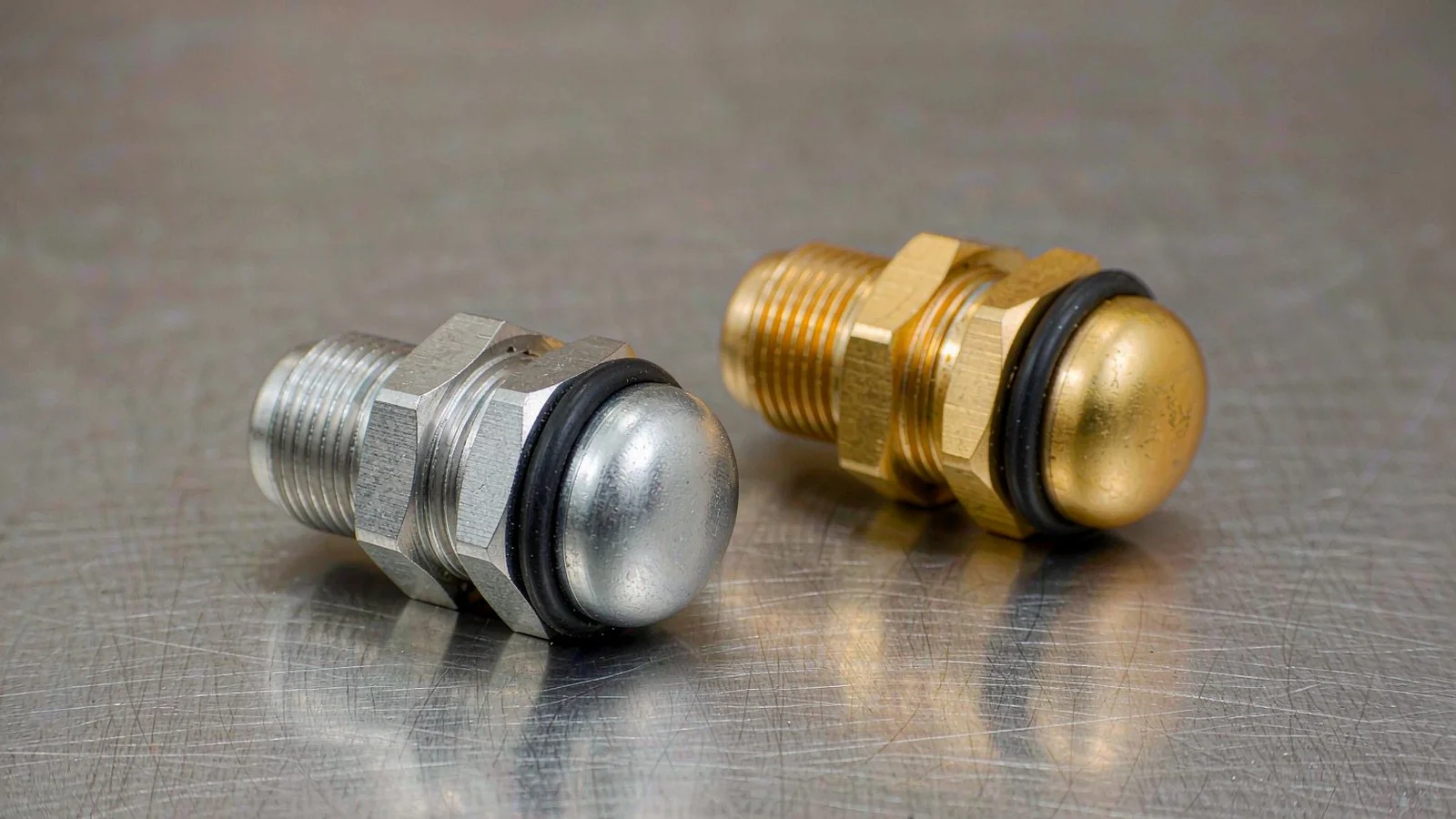
The same gland in two materials may share a certificate while differing in the markets that accept it and in how long it survives on site.
Five questions that settle the route before you quote
Most certificate disputes on a cable gland order are specification disputes that were never closed.
Where is the installation, not the delivery? A skid built in Asia for a Texas site needs a US listing even though nothing enters Europe.
What entry does the enclosure certificate permit? The gland certificate and the enclosure certificate have to name compatible entries, and that pairing is fixed before the gland is chosen.
Division or Zone? This decides the marking format and often the sealing arrangement, not the casting.
Does the buyer’s own procedure require UKCA on top of CE? Legal minimum and contractual requirement are different thresholds.
Who is the authority having jurisdiction, and what does it accept as evidence? On US and Canadian projects this question outranks the other four.
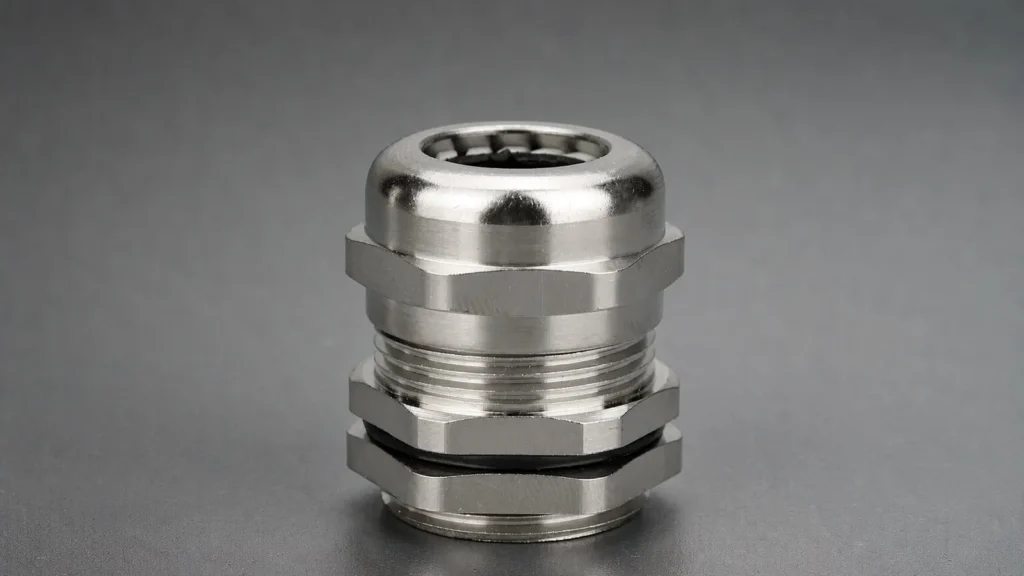
Once those are answered, ordering becomes a variant question rather than a compliance one. Our explosion-proof range ships as nickel-plated brass with ATEX and IECEx certification, or as certified 316L stainless steel for chloride and washdown exposure, at 300 pieces per size minimum, FOB Ningbo or Shanghai. Each shipment carries the Ex certificate, the IP68 test report to IEC 60529, the CE declaration, RoHS and REACH statements, and a material certificate to EN 10204.
Variant
Certification held
Where it is installed
Indicative FOB price
Explosion-proof brass, nickel-plated
ATEX and IECEx, IP66 to IP68 plus Ex
Zone 1 and Zone 2 gas, refinery skids, chemical plant
USD 3.10 to 4.80
Explosion-proof 316L stainless steel
ATEX and IECEx, IP66 to IP68 plus Ex
Offshore platforms, chloride-rich areas, washdown
USD 5.00 to 7.20
Standard nickel-plated brass
CE, RoHS, REACH
Safe area switchgear and machine tools
USD 0.44 to 0.75
EMC shielded brass
CE, RoHS, REACH
VFD motor and drive cabinets in safe area
USD 1.55 to 2.60
Prices are indicative FOB Ningbo or Shanghai for 1,000 pieces per size, Ex 300 pieces per size, and move with copper, nickel and freight.
Frequently asked questions
Is an IECEx certificate accepted in the European Union?
No. ATEX is the legal route into the EU, and the EU-type examination certificate is what the declaration of conformity refers to. An IECEx ExTR is useful evidence inside the technical file and can reduce the testing a notified body asks for, but it does not replace the certificate.
Do I still need UKCA marking for Great Britain?
For most placements, no. Since 1 October 2024 CE marking has been recognised indefinitely for explosive-atmosphere equipment on the GB market. Northern Ireland follows EU rules and needs CE, with UKNI where a UK body carried out the assessment.
Can ATEX-certified glands be installed in the United States?
Not on the strength of the ATEX certificate. US practice expects a listing mark from an OSHA-recognised NRTL, with the fitting evaluated to UL 2225, and Class I Division 1 usually adds a cable seal. The hardware may be identical; the approval is not.
Is a cable gland certified as equipment or as a component?
Ask, because the two are not interchangeable. Under IECEx rules an Ex component is defined as a part other than an Ex cable entry, so a gland is certified as equipment in its own right. ATEX allows a component certificate under Article 13(3), which carries no CE marking and ships with a written attestation instead.
Does the Ex certificate cover the gland once it is installed?
No. It covers the product as manufactured. Selection and erection are governed by IEC 60079-14 in IECEx countries and by the NEC in the United States, and final acceptance belongs to the inspector. Keep the installation record, because that is what a site audit asks for.
A control panel cable gland is usually chosen by hole size and paid for thirty centimetres later at the terminal block. Entry height, bend radius, door routing, shield bonding and the marking that makes a panel traceable.
A chemical resistant cable gland is a comparison, not a property. How to build the media list, where each housing material stops, why polyamide cracks, and what certification does not cover.
Nickel plating is a barrier and a hard surface, not a change of material. How thickness, process and salt spray claims actually read, where plating fails on site, and when to move to stainless instead.
We use cookies to enhance your browsing experience, serve personalised ads or content, and analyse our traffic. By clicking "Accept All", you consent to our use of cookies.