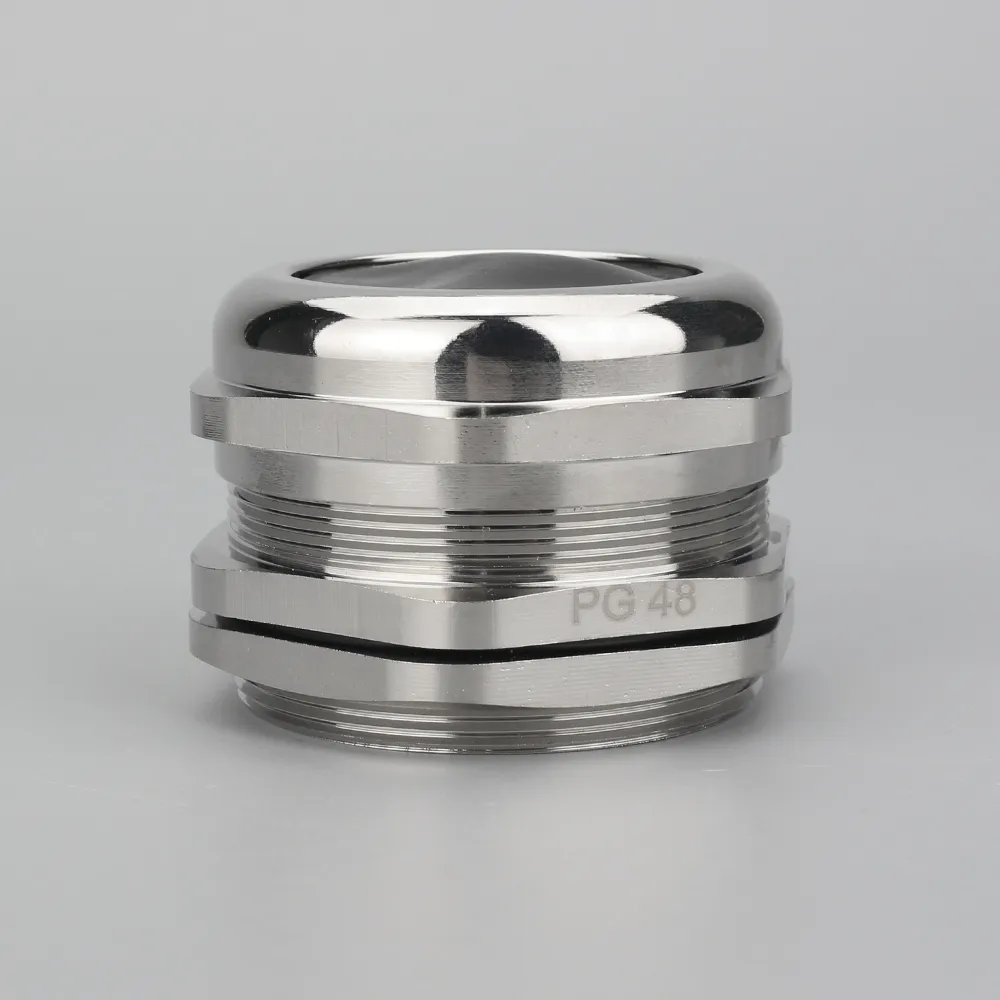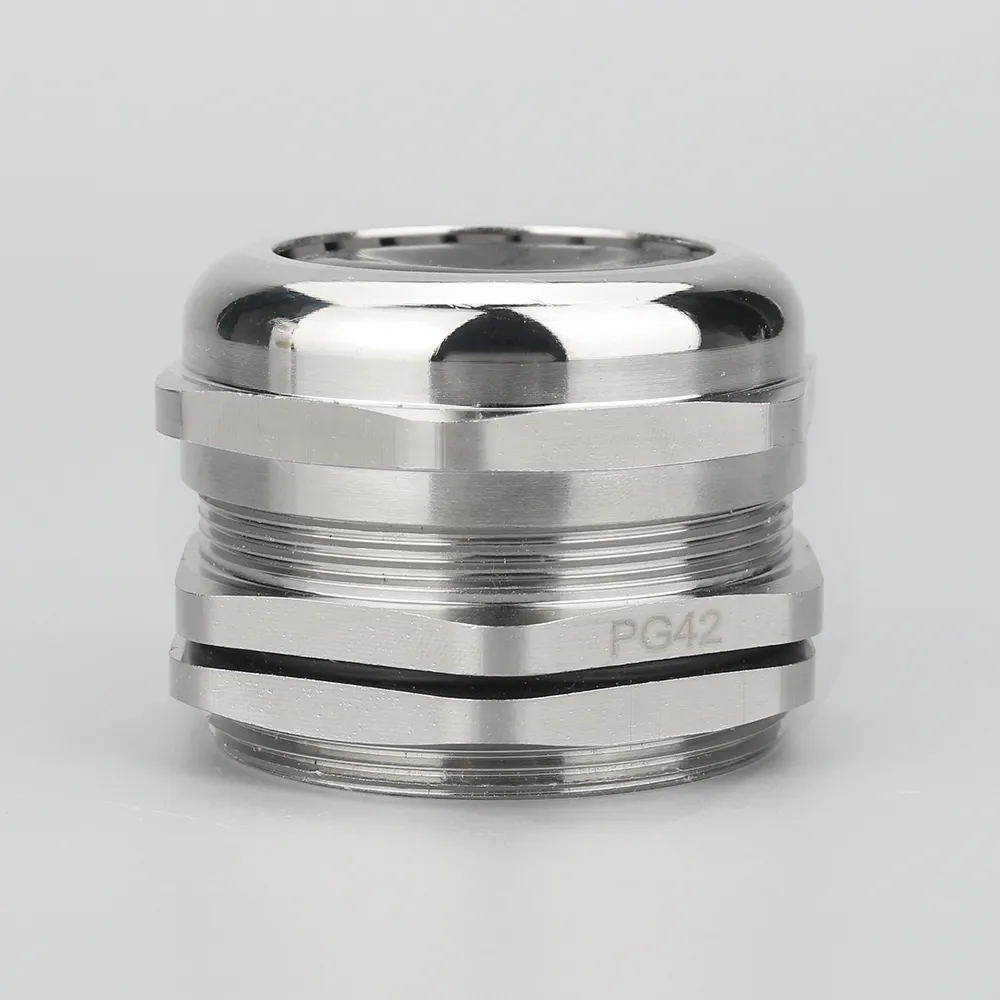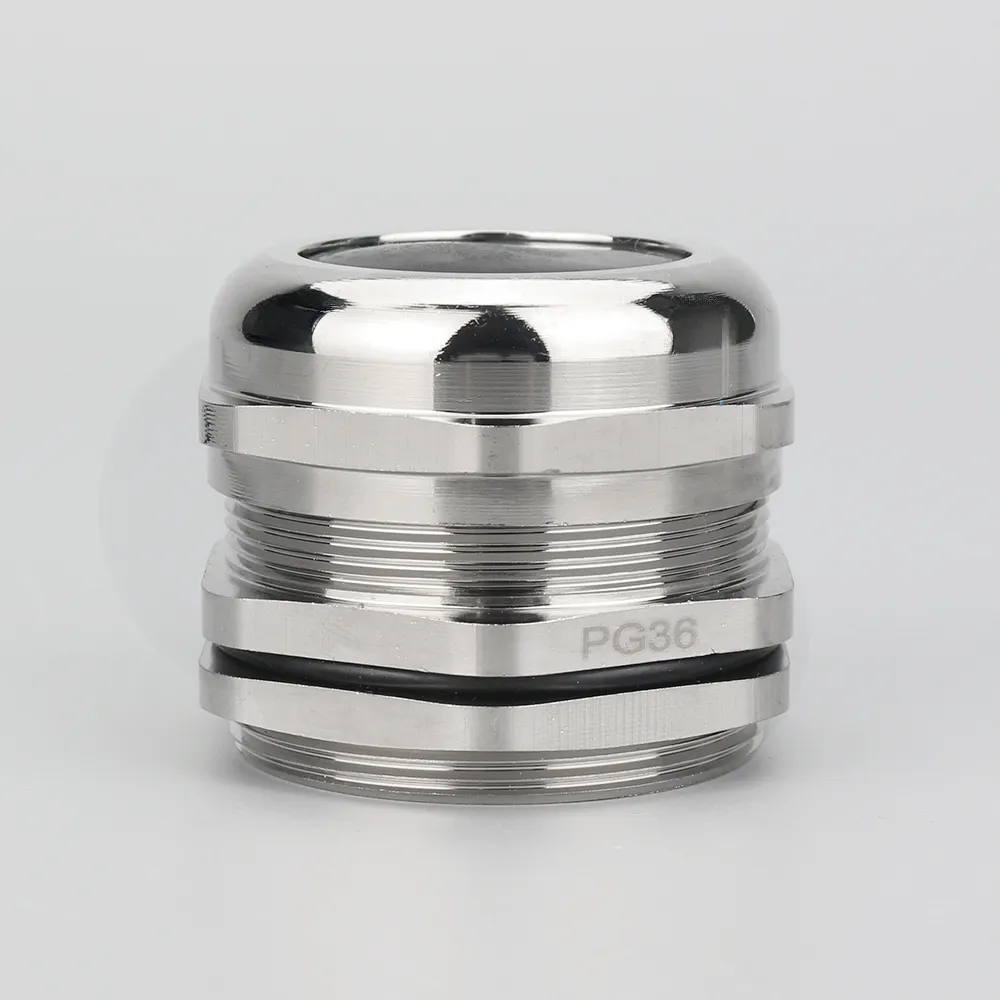


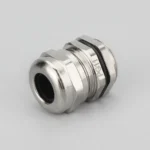
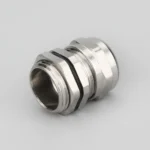
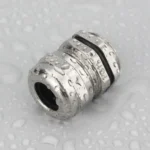

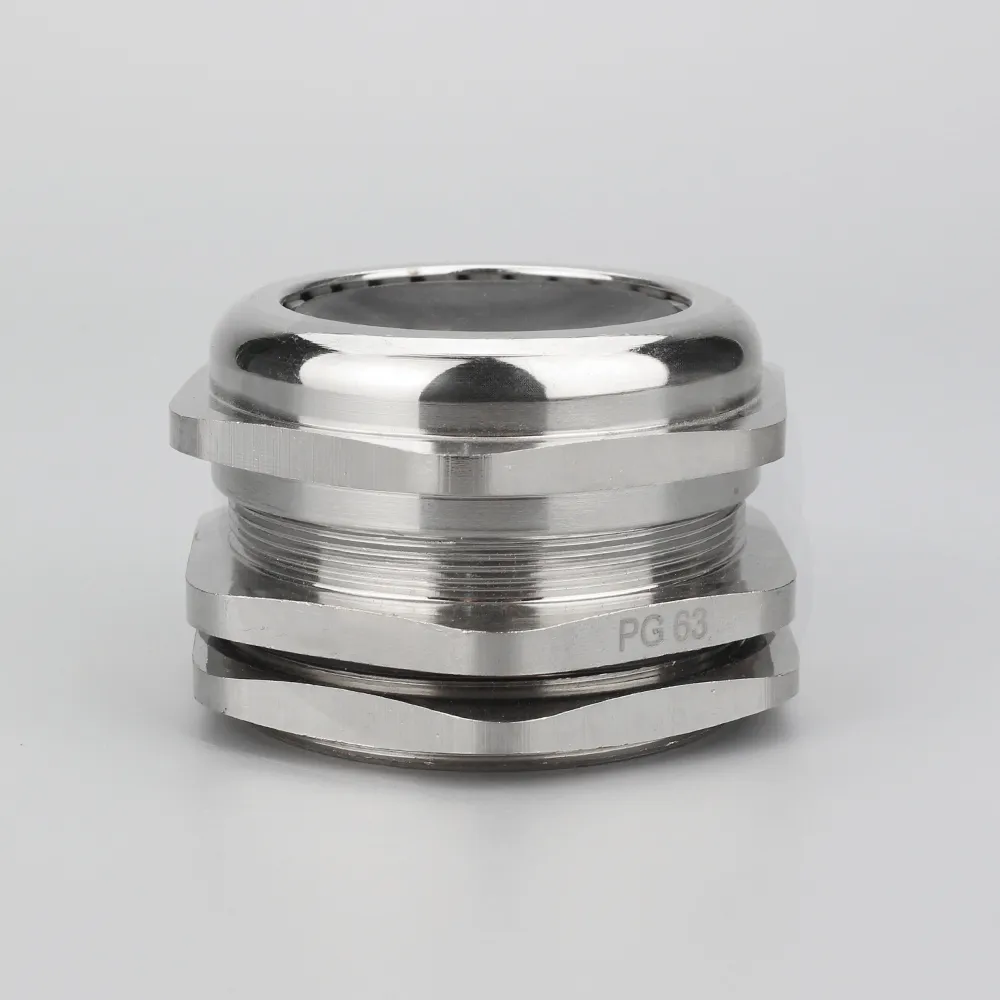
Corrosion resistant stainless steel cable gland, PG11 — 5–10 mm clamping range, cut-out 18.6–18.8 mm, thread length 8 mm, 20 mm body hex and 21 mm locknut hex, in 316L.
PG11 is the first size where a gland is doing real work on a small cable: sensors, solenoids, limit switches, instrumentation loops. It is also the size where corrosion failures are least visible — a 10 mm cable in a small gland can be pitted at the thread and still look fine from a metre away.

Where a small gland fails first
Three points, in order of frequency.
- The thread crest. The thinnest section of the body carries the highest local stress and the least material to lose. Pitting starts there, and once it starts the thread no longer holds its preload.
- The cut edge of the cut-out. A burr under the washer concentrates chlorides in a crevice that never dries out. Deburring is a corrosion-control step, not a cosmetic one.
- The locknut face. The face that bears on the panel keeps moisture longest after a washdown, and it is the last part anyone inspects.
None of these are solved by a thicker plating on a brass body. They are solved by using a body that does not rely on a coating.
316L against 304 in chemical service
304 is the atmospheric grade. In chloride, acid or continuous-wetting service it tea-stains first and pits afterwards, and the interval between the two is shorter than most maintenance schedules assume. 316L carries the molybdenum that delays pitting, and for a chemical plant, an effluent line or a coastal installation it is the grade to write on the order rather than to discuss afterwards.
Ask for the certificate with the heat number at the same time. A purchase order that says “stainless” will produce a gland, not a documented one, and the survey is where that gap shows up.
PG11, PG13.5 and M20
| PG11 | PG13.5 | M20 × 1.5 | |
|---|---|---|---|
| Thread O.D. | 18.6 mm | 20.4 mm | 20.0 mm |
| Panel cut-out | 18.6–18.8 mm | 20.4–20.6 mm | 20.0–20.2 mm |
| Cable range | 5–10 mm | 6–12 mm | 6–12 mm |
| Thread length GL | 8 mm | 8 mm | 8 mm |
| Spanner size | 20 / 21 mm | 22 mm | 22 mm |
If the cable is 9 mm, all three are in range. PG11 is the one that needs the smallest punch — 18.6 mm — and it is therefore the size that gets substituted upward when a panel has already been drilled for PG13.5.
Parameter table — around PG11
| Model | Thread | Cable range (mm) | Thread O.D. (mm) | Mounting hole Ø (mm) | Thread length GL (mm) | Bonding length (mm) | Spanner size (mm) |
|---|---|---|---|---|---|---|---|
| PG9-NP | PG9 | 4–8 | 15.2 | 15.2–15.4 | 8 | 20 | 18 |
| PG11-NP | PG11 | 5–10 | 18.6 | 18.6–18.8 | 8 | 21 | 20/21 |
| PG13.5-NP | PG13.5 | 6–12 | 20.4 | 20.4–20.6 | 8 | 22 | 22 |
Ordering corrosion resistant glands
MOQ is 300 pcs per size. Grade, certificate and quantity are the three lines that matter on this order: 316L, a material certificate with the heat number, and a quantity that covers the whole loop rather than one panel — replacement access on a chemical plant is what makes a short order expensive later.
Quotations are FOB Ningbo or Shanghai, per size, and include the grade on the face of the quotation so it can be checked without opening the certificate. Where the exposure is unusual — a specific acid, a temperature above the standard range — say so and we will answer on the compound and the grade rather than on the price alone. That is the practical difference between buying a corrosion resistant gland from a manufacturer and buying one off a shelf.
Documentation: CE, RoHS and REACH statements, an IP68 test report to IEC 60529, and a 316L material certificate.
Send cable OD, thread and quantity for a same-day price. Samples of 1 to 2 pieces are available for verification.
Request a Quote Now
Our team will get back to you within 24 hours.