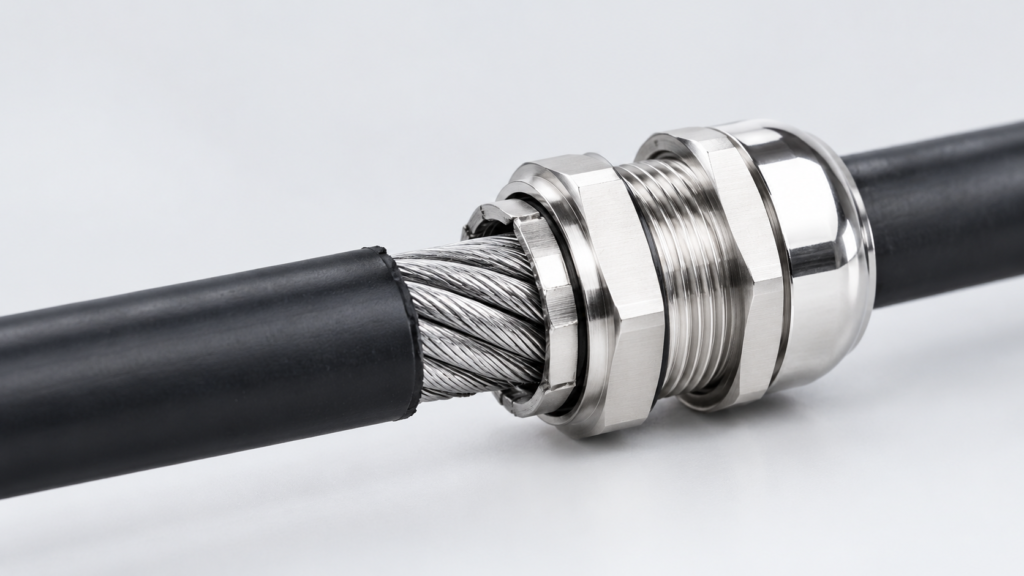
An armoured cable gland must grip the armour, bond it to earth and seal the sheath. This guide covers armour types, BW / CW / E1W sealing stages, and how two cable diameters set the gland size.
How to select hazardous area cable glands: read the classification drawing and enclosure certificate first, then match sealing method, cable range, material and IP to your process.
Zone 1 and Zone 2 cable glands are selected from the area classification, not the catalogue. See how the zone sets the minimum EPL, what the gland marking must show, and the mistakes to avoid.
Ex d and Ex e cable glands are not interchangeable: the protection concept comes from the enclosure, not the zone. Compare flame path design, internal sealing and cable entry consequences.
ATEX and IECEx both point at IEC 60079, but one is mandatory EU law and the other voluntary — and their assessment routes are not equivalent. How to read the certificate number before you order.
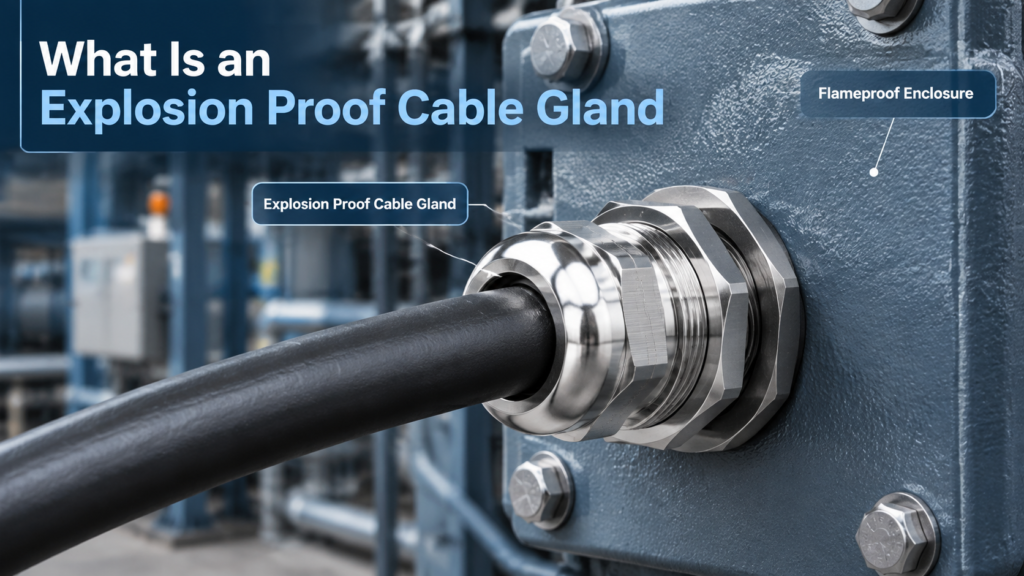
An explosion proof cable gland protects the one part of a flameproof enclosure that cannot be welded shut. How it works, why IP68 is not Ex, and the four compatibility checks that decide whether a correctly fitted gland is still the wrong one.
We use cookies to enhance your browsing experience, serve personalised ads or content, and analyse our traffic. By clicking "Accept All", you consent to our use of cookies.