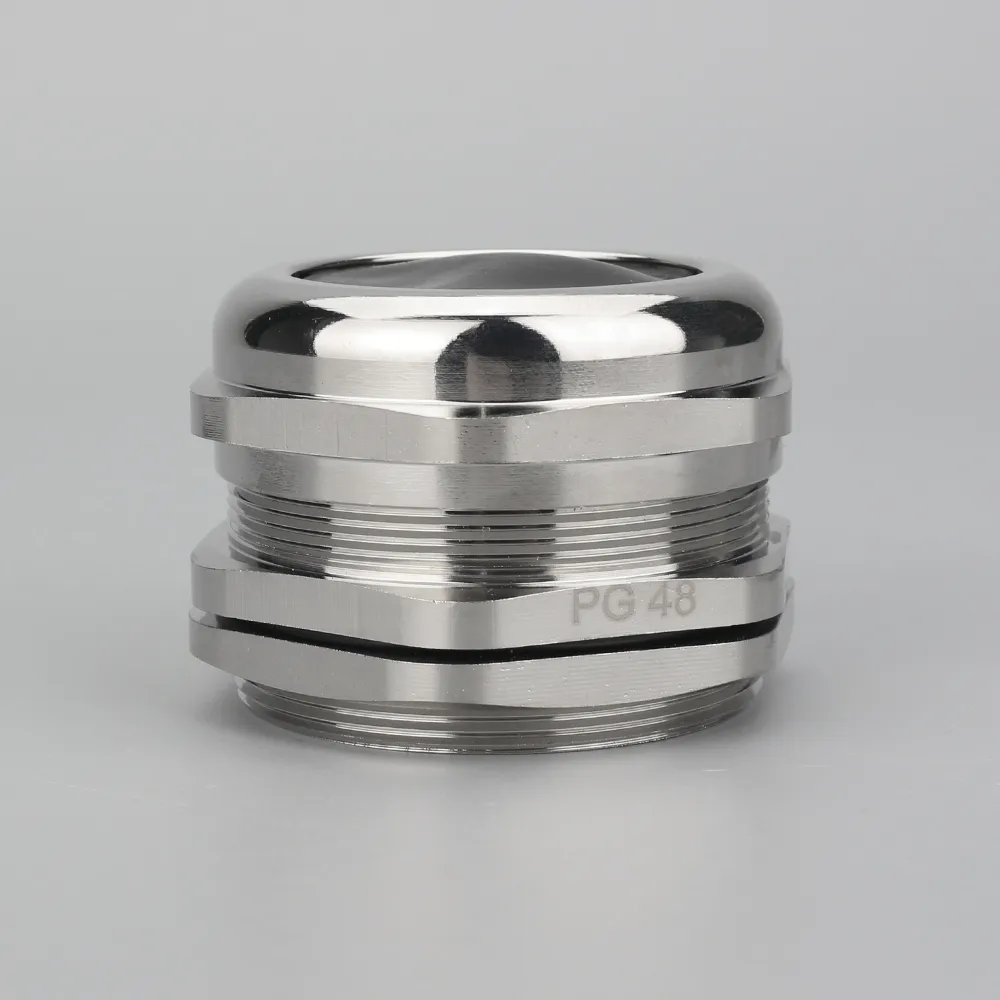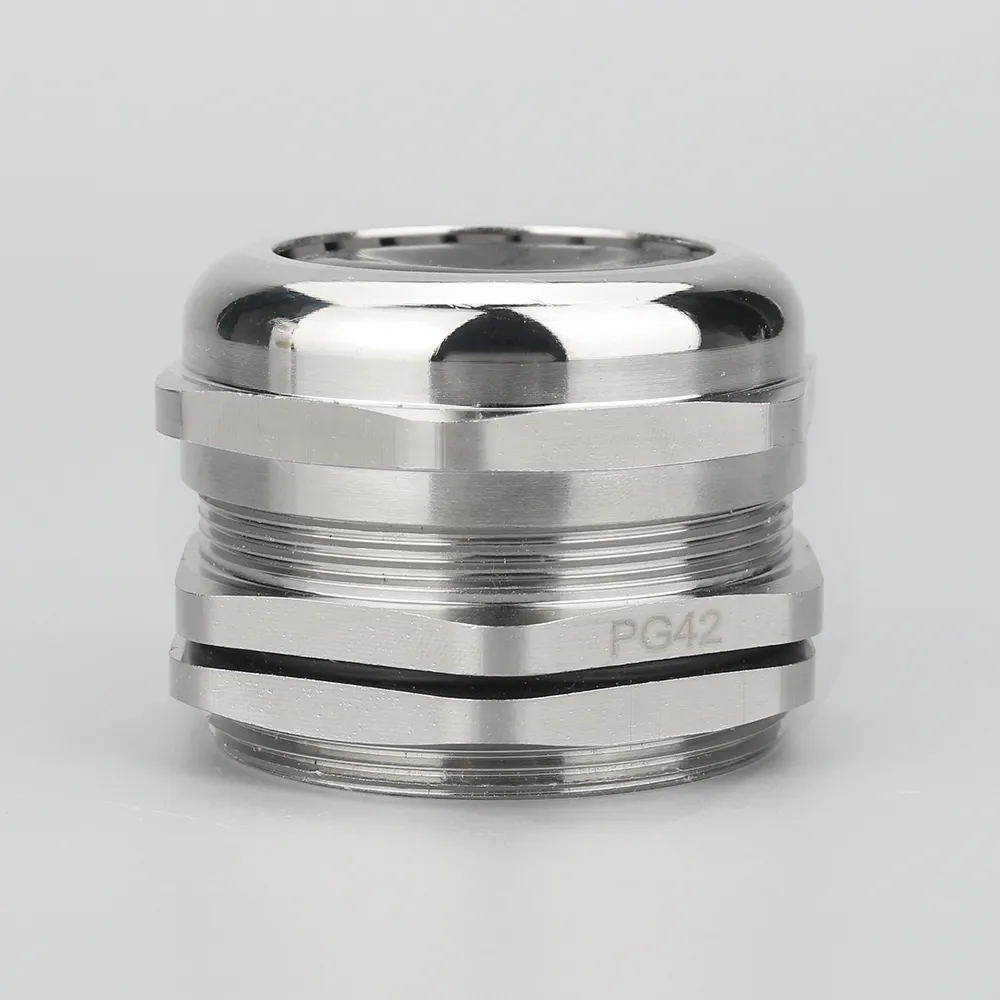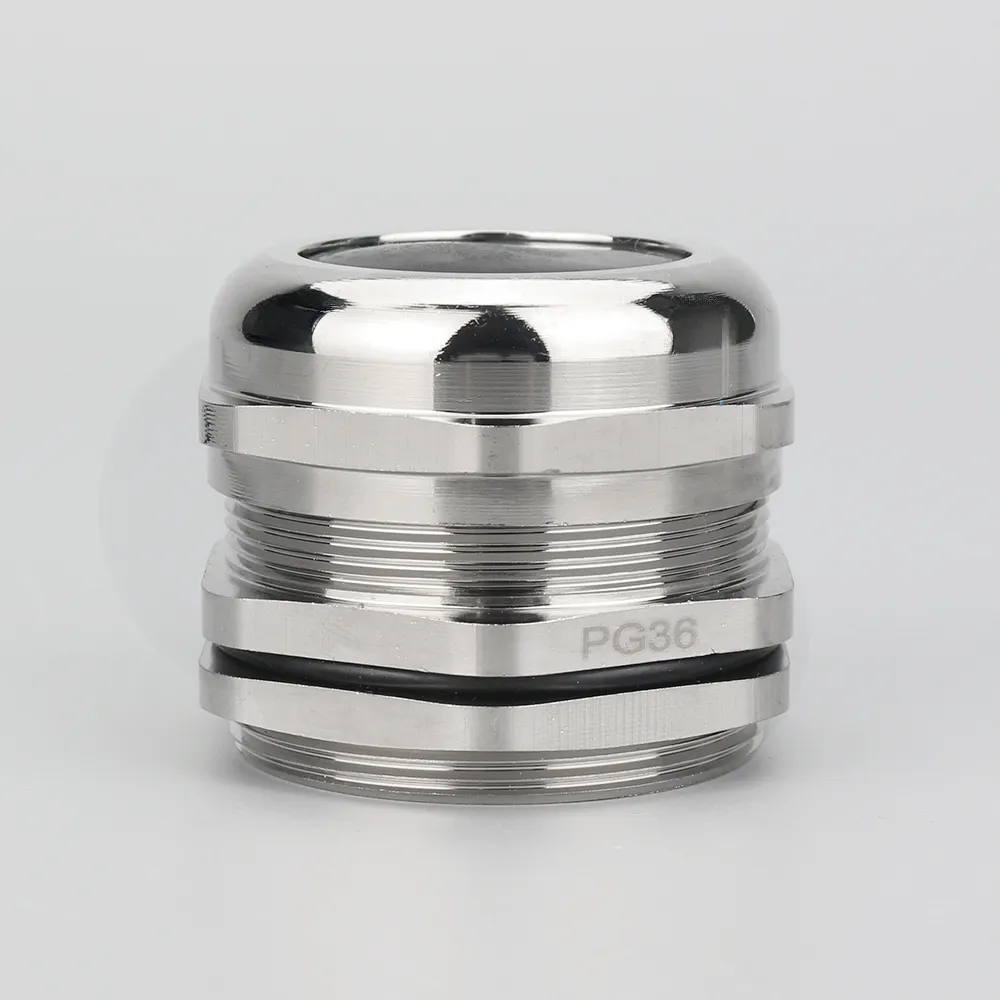
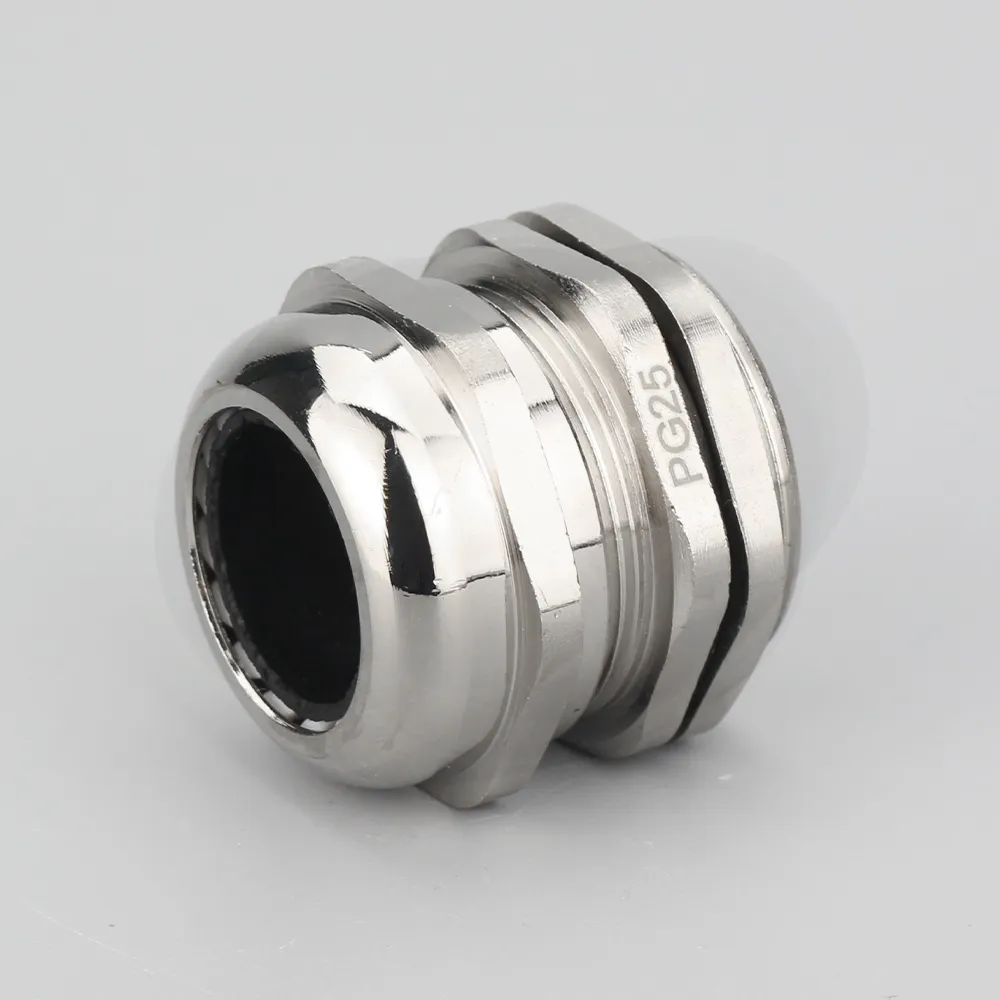
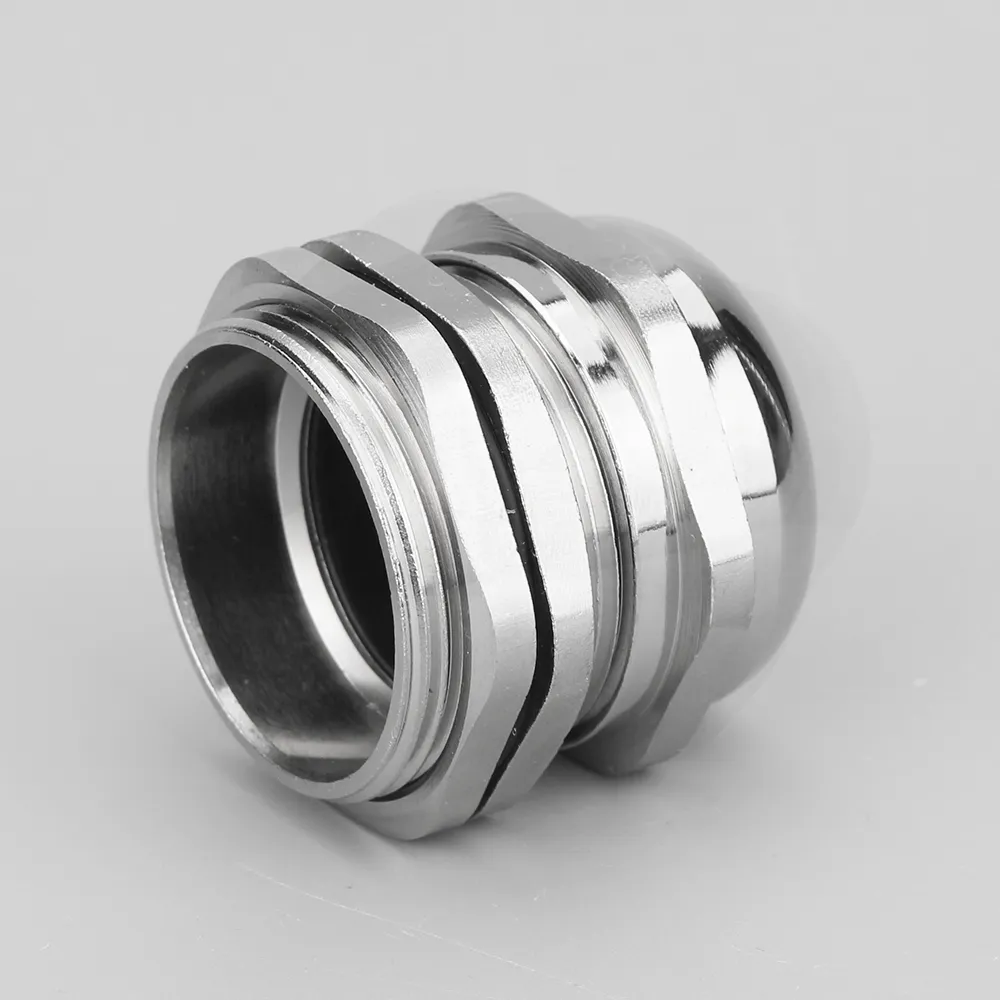
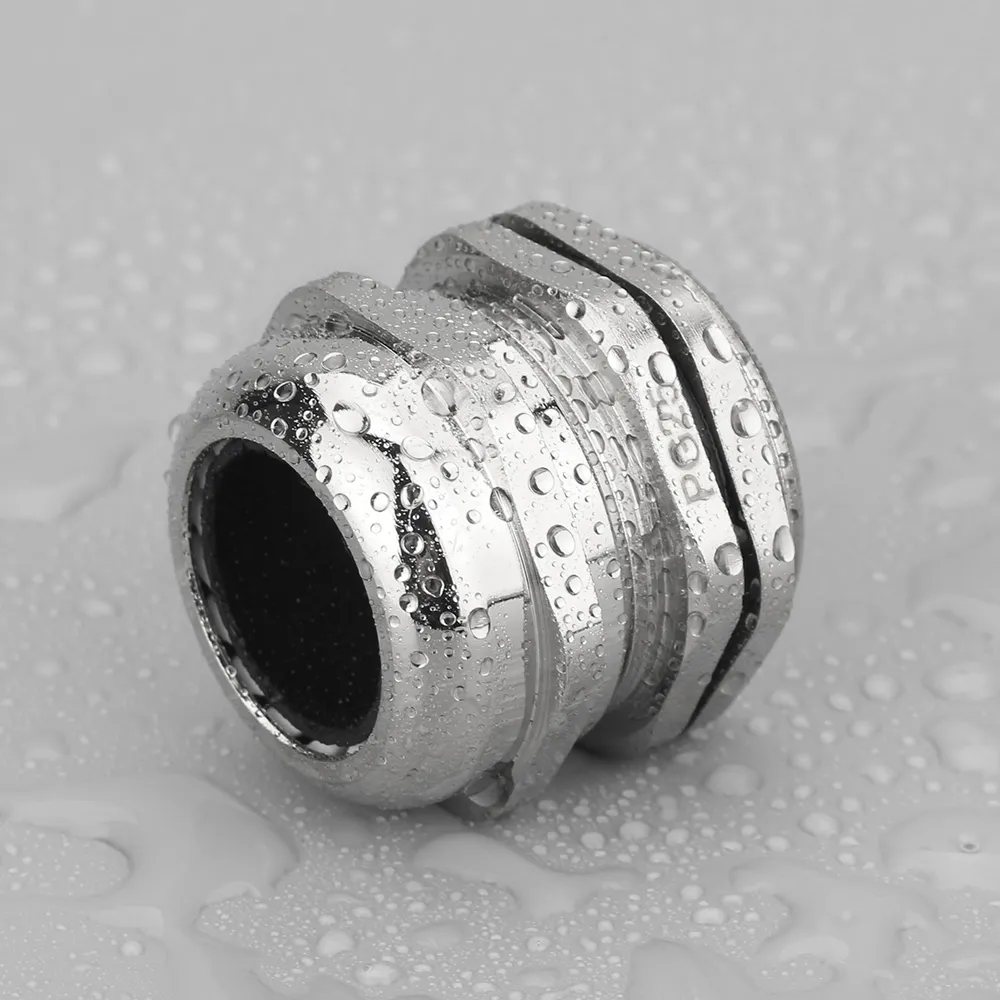


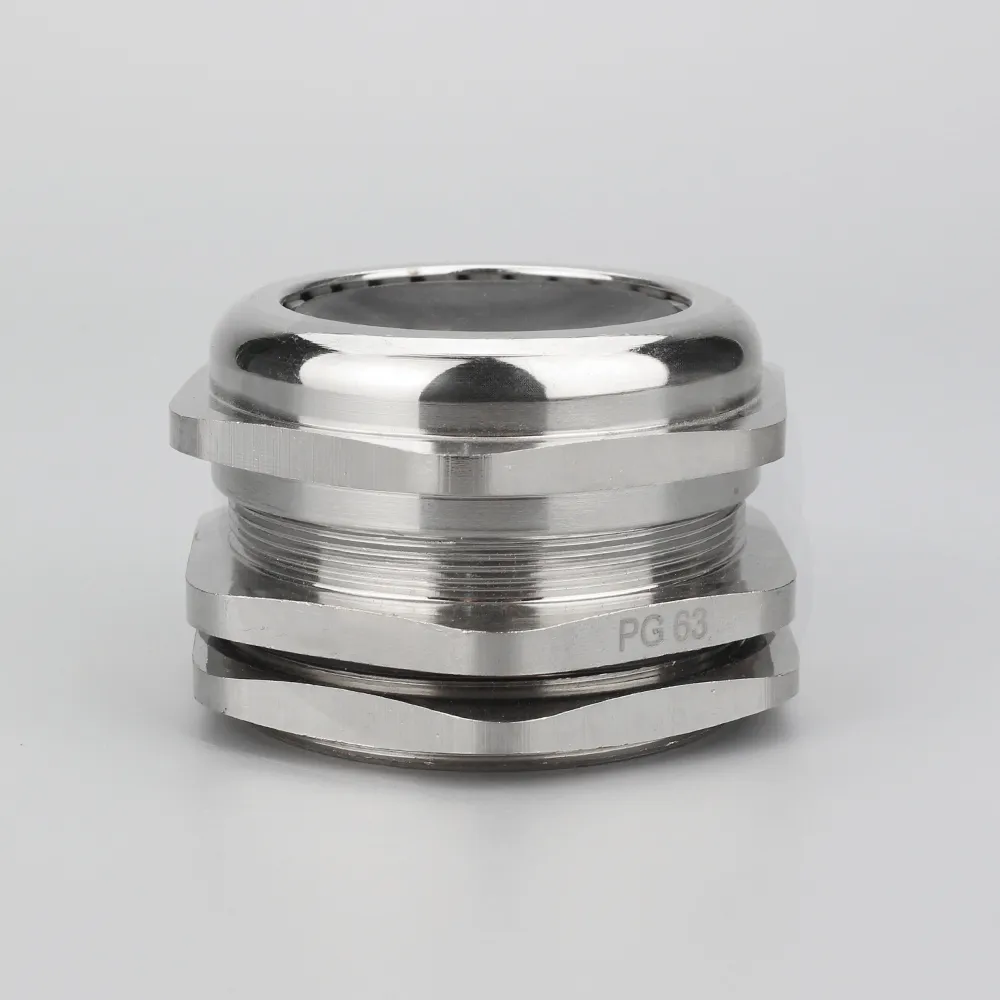
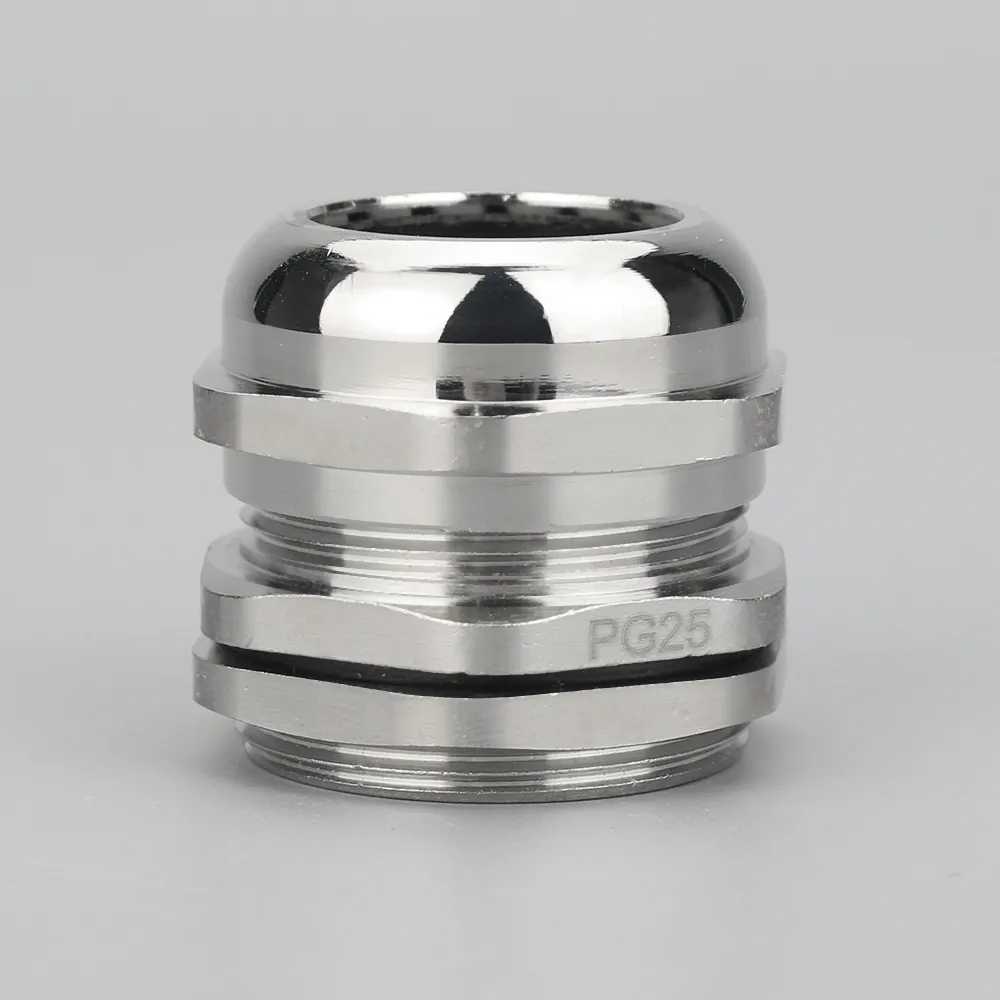
PG25 stainless steel cable gland for outdoor applications — clamping range 15–22 mm, cut-out 32.0–32.2 mm, thread length 10 mm, 35 mm across flats, IP68 rated, in 304 or 316L.
PG25 is the workhorse outdoor size: big enough for a pump or luminaire feeder, small enough that a panel can carry a dozen of them. What makes it an outdoor gland is not the label on the box, it is whether the insert and the washer still compress after two years of sun, rain and thermal cycling.
What “outdoor” actually requires
Three failure modes account for most outdoor gland failures, and none of them is the body.
- The washer, not the thread. An outdoor panel face collects water on the top edge. A washer that has gone hard will let water track under the flange while the thread is still perfectly tight.
- The insert under UV. Elastomer inserts age in sunlight; a compound chosen for the temperature range is not automatically chosen for UV. Specify the environment, not just the temperature.
- Condensation from inside. An IP68 entry in a sealed box that breathes through the day will collect water internally. The gland is not the leak path in that case, and no gland change will fix it.
The stainless body matters here for a different reason: it keeps the seal compressed after a plated brass body would have corroded at the thread and lost its preload.
PG25 and M32: the same cable, a different punch
| PG25 | M32 × 1.5 | PG29 | |
|---|---|---|---|
| Thread O.D. | 32.0 mm | 32.0 mm | 37.0 mm |
| Panel cut-out | 32.0–32.2 mm | 32.0–32.2 mm | 37.0–37.2 mm |
| Cable range | 15–22 mm | 15–22 mm | 18–25 mm |
| Thread length GL | 10 mm | 10 mm | 11 mm |
| Spanner size | 35 mm | 35 mm | 40 mm |
PG25 and M32 land on the same 32.0 mm cut-out and take the same 35 mm spanner, so the panel does not care which you buy. The thread does: they are different thread forms and should not be mixed inside one enclosure if a future replacement is to be a straight swap.
Choosing 304 or 316L for an outdoor panel
Inland and atmospheric exposure is 304 territory. Anything within reach of salt — coastal, offshore, roadside in a winter-salt region — is 316L. The price difference on a PG25 is small against the cost of re-entering a live outdoor enclosure to replace a gland that has tea-stained and then pitted.
If you are ordering a mixed outdoor panel, quote the whole bill of materials in one grade rather than mixing: the certificate then covers the lot, and the store cannot hand a fitter the wrong one. Panel builders and enclosure suppliers who pass these boxes on to a client standardise on one grade for the same reason.
Parameter table — around PG25
| Model | Thread | Cable range (mm) | Thread O.D. (mm) | Mounting hole Ø (mm) | Thread length GL (mm) | Bonding length (mm) | Spanner size (mm) |
|---|---|---|---|---|---|---|---|
| PG21-NP | PG21 | 13–18 | 28.3 | 28.3–28.5 | 9 | 27 | 30/32 |
| PG25-NP | PG25 | 15–22 | 32 | 32–32.2 | 10 | 29 | 35 |
| PG29-NP | PG29 | 18–25 | 37 | 37.0–37.2 | 11 | 31 | 40 |
MOQ, price and trial quantities
MOQ is 300 pcs per size. Outdoor panels usually need a mix rather than a single size, and mixed-size orders are priced per size, so a 900-piece order across three sizes keeps the same unit basis as a single-size one.
Quotations are FOB Ningbo or Shanghai and are issued against the cable schedule where one exists. If you are still at the design stage, take a sample of one or two pieces first: it is cheaper than discovering the grade question after the glands are on site.
Documentation: CE, RoHS and REACH statements, an IP68 test report to IEC 60529, and a material certificate stating 304 or 316L.
Send cable OD, thread and quantity for a same-day price. Samples of 1 to 2 pieces are available for verification.
Request a Quote Now
Our team will get back to you within 24 hours.