“Chemical Resistant” Is a Comparison, Not a Property
Every gland supplier offers a chemical resistant cable gland, and none of them is describing the same thing. The phrase has no test behind it: there is no standard that awards a “chemical resistant” mark, no pass criterion, and no defined set of media. It means the part is made of something that resists the chemicals the supplier had in mind.
That is why the specification has to start on your side of the table. A stainless steel cable gland that lasts fifteen years in a caustic wash destroys itself in months in wet chlorine. A nickel-plated brass gland that fails in an acid store gives a decade of service in a solvent handling area. The material is not the answer; the pairing of material and medium is.
Build the Media List Before Choosing Anything
A media list is the single most useful document in this selection, and it takes one walk around the plant. For each entry point, record what touches it.
Process chemicals — what is piped, stored or spilled nearby, including the ones that only appear during a fault.
Cleaning agents — caustic, acid, hypochlorite, solvent, steam. These are frequently more aggressive than the process fluid.
Atmospheric — acid mist, chlorine vapour, ammonia, salt, solvent vapour from an open bath.
Contamination paths — drips from a joint above, wash water running down a wall, bund overflow.
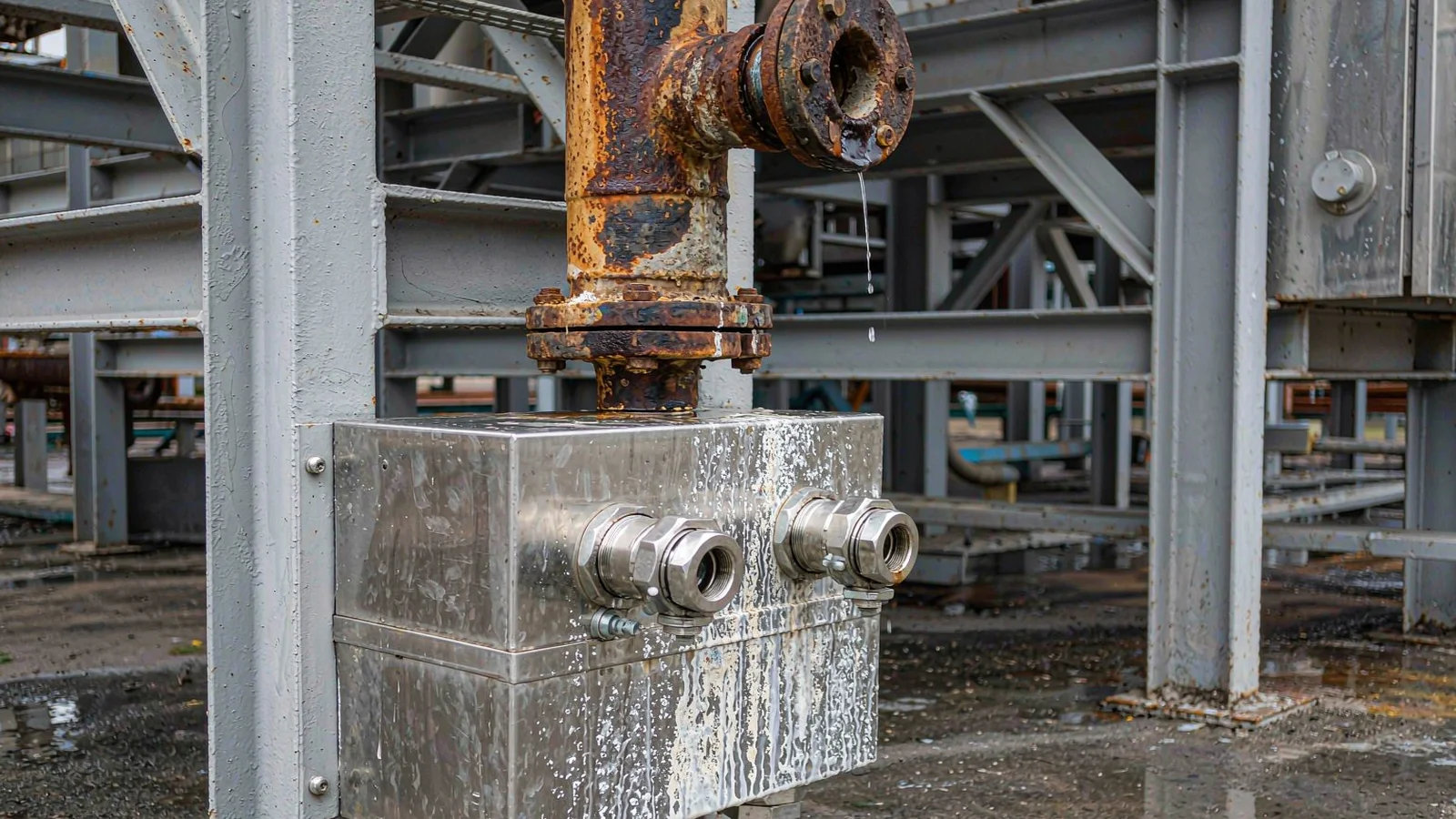
The entries that fail first are usually the ones nobody listed, because they are not process connections at all — a junction box under a leaking flange, a cabinet beside a drum store, an entry on the downwind side of a scrubber.
Three Variables Decide Everything
A material datasheet gives one word for resistance and the field gives three numbers. Compatibility is a function of concentration, temperature and contact time, and a rating that holds for one combination fails for the next.
Variable
What it changes
What to write down
Concentration
Aggression is not linear; dilution is not automatically safer
Nominal strength, plus the strongest it reaches in a fault or cleaning cycle
Temperature
Reaction rates rise steeply with heat, so a cold rating does not carry upward
Peak surface temperature at the gland, not the room temperature
Contact time
Splash, immersion, vapour and condensate attack differently
Continuous, intermittent, or only during washdown
Vapour deserves its own line because it is under-reported. A gland above a heated bath sees solvent or acid vapour continuously and condensation intermittently, and the condensate that forms on a cool gland is often more concentrated than the bath itself. An entry that never gets splashed can still be the first to fail.
Housing Materials and Where Each One Stops
Four housings cover most of the market, and the failures are specific enough to plan around.
Housing
Good for
Where it stops
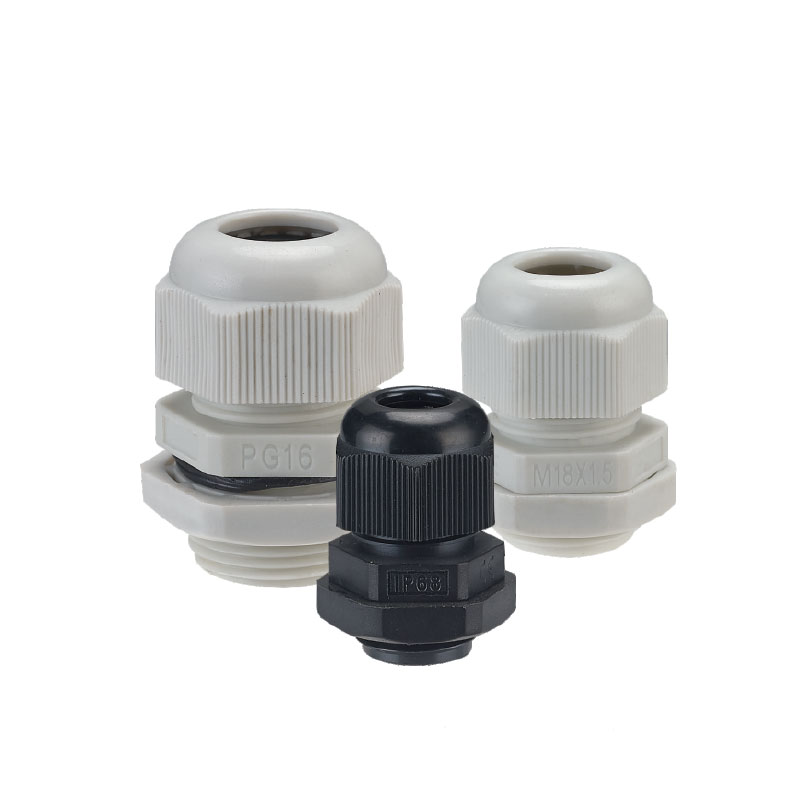
Polyamide (PA66)
Dilute acids and alkalis, water, most solvents; insulation and low cost
Strong acids, hot caustic, oxidisers; and it cracks under stress in the wrong medium
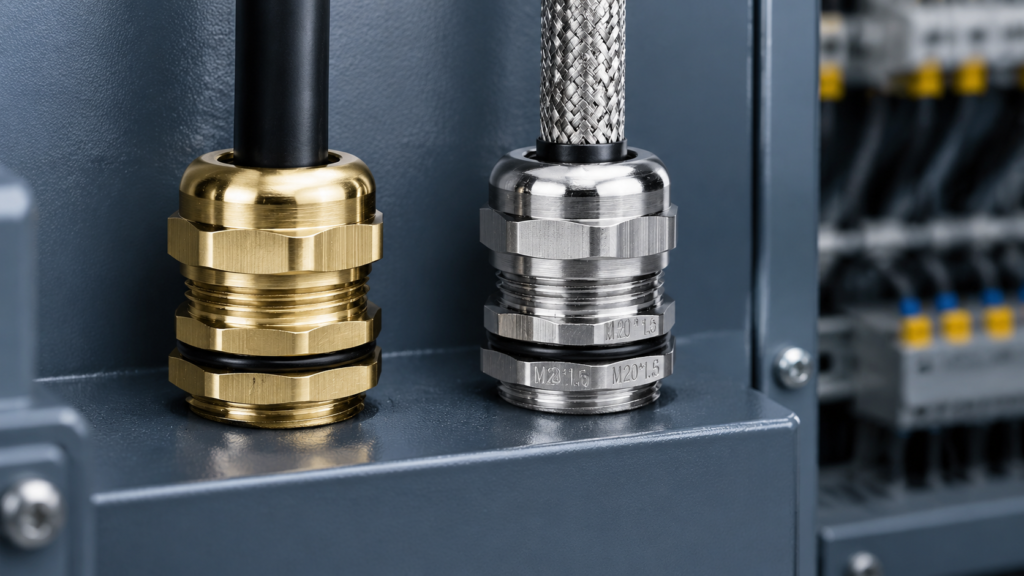
Nickel-plated brass
Neutral and mildly aggressive industrial atmospheres, oils, solvents
Acid and chlorine service where the plating is the first casualty
304 stainless
General chemical plant atmosphere, washdown, food areas
Chloride-bearing service at temperature; pitting starts at the thread and the crevice
316L stainless
Chloride, most acids, coastal and marine chemical sites
Hot concentrated chlorides, wet chlorine, and any stagnant crevice
The pattern to notice is that the two stainless grades fail by pitting and crevice attack, and a gland is a collection of crevices by design: thread roots, the gap under the face washer, the space behind the insert. That makes an aggressive medium harder on a stainless gland than its flat-coupon data suggests, and it is also why the brass versus stainless decision is not a simple ranking.
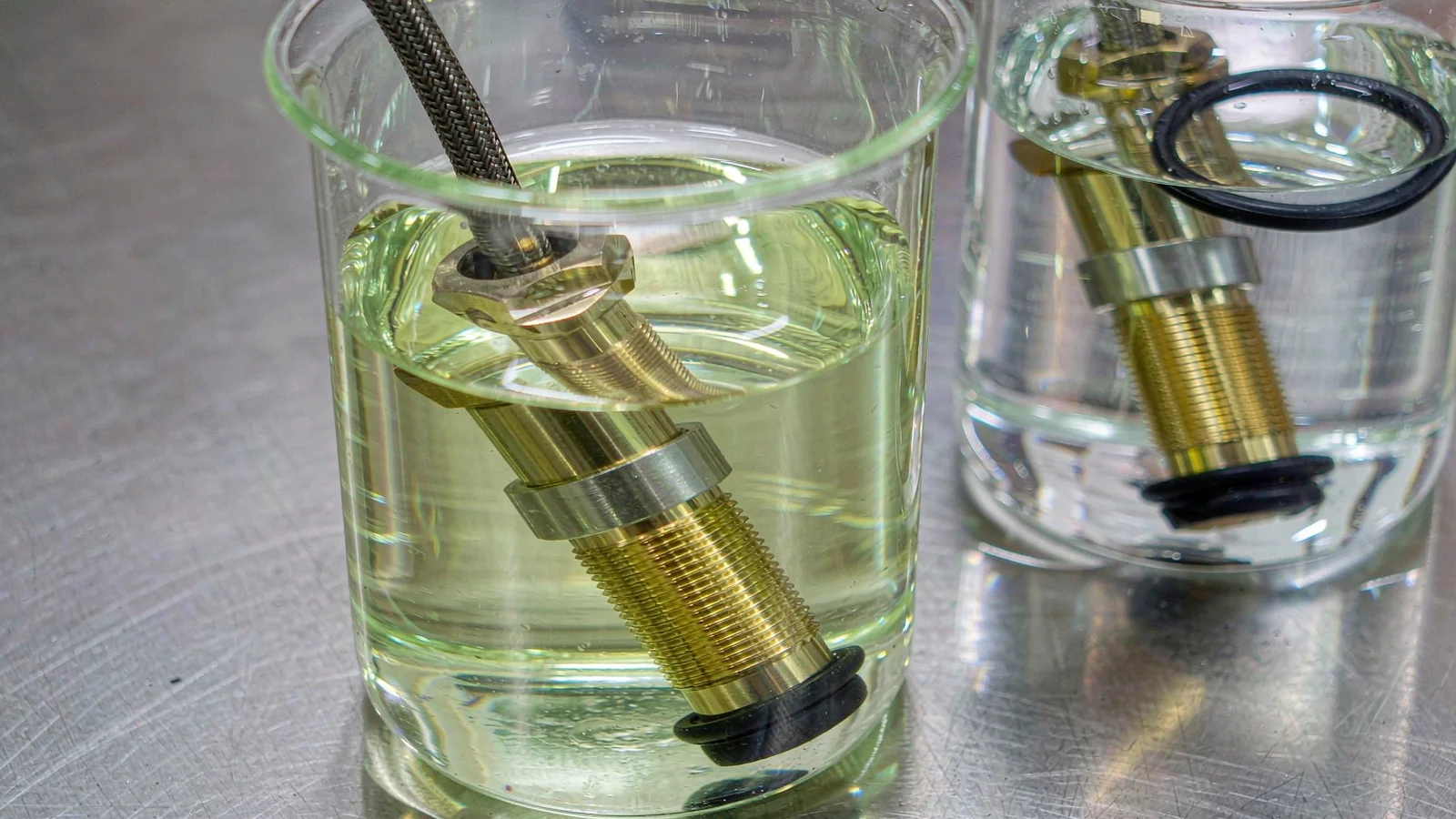
A sample immersion at service temperature costs less than a batch. Mass, hardness and dimensional change tell you more than a compatibility chart.
The Seal Is the Shortest Life in the Assembly
Housings are chosen once. Seals wear out, and they are what actually keeps the medium out of the enclosure. A chemical-resistant gland with the wrong insert is a metal shell with a consumable inside it that has been forgotten.
Three compounds dominate: EPDM for water, steam and many inorganic chemicals; nitrile for oils and fuels; fluorocarbon for solvents, acids and higher temperatures. None is universal, and the failure modes are different — nitrile hardens and cracks, EPDM swells in hydrocarbon, fluorocarbon is expensive and mechanically softer. The seal materials guide works through the compounds and their compatibility; what matters here is the procurement consequence: the insert should be named on the drawing, and spares should be the same compound.
There is also a cable interface to consider. Chemical attack on the sheath is what turns a sealing problem into a wiring problem, because a swollen or hardened sheath no longer seals against an insert that is still perfectly good.
Environmental Stress Cracking in Polyamide
The most common chemical failure in this product family is not corrosion. It is polyamide cracking, and it happens at stresses far below the material’s strength.
Zinc chloride is the classic culprit — it arrives as galvanised conduit debris, a galvanised bracket, or a plating leachate, and it attacks stressed nylon. Ammonia and ammonium compounds, some strong detergents and certain acids do the same. The crack starts at a thread root or a moulding line, propagates slowly, and appears as a clean split with no corrosion product to explain it.
This matters because the nylon gland is otherwise the cheapest sensible answer for chemical areas, and it gets chosen for the wrong reasons. If the area contains galvanised steel, ammonia, or a caustic cleaning regime, the polyamide option is a scheduled replacement rather than a solution.
Chloride Stress Corrosion and the Limits of 316L
Stainless in a chemical plant fails in two ways, and the distinction decides the fix. Pitting is localised loss of metal under a chloride-rich deposit; stress corrosion cracking is a crack that runs through the wall under tensile stress. Both need chlorides, both are worse hot, and cracking is the one that gives no warning.
For 316L, the practical risk zone is hot, concentrated chloride combined with residual stress and the presence of oxygen. A gland is not immune: the thread is cold-formed or machined, washers are compressed, and the assembly is under load for its whole life. Adding a crevice — a gasket face, a thread root, a deposit behind the locknut — makes it worse.
Where the medium is genuinely chloride-heavy and hot, the honest options are a higher grade, a different material family, or a change to the installation: a drip shield, a washdown routine, or moving the entry out of the wet zone. The last three are usually cheaper than the alloy upgrade and are the ones that actually stop the failure.
What Certification Does Not Cover
Chemical resistance is a common misreading of certification paperwork, so it is worth separating three documents that often get conflated.
RoHS and REACH say what the part does not contain. They say nothing about what it resists.
IP ratings describe water and dust ingress under defined test conditions. They do not describe chemical attack on the seal.
Material certificates confirm the alloy or compound supplied. They do not confirm behaviour in your medium.
None of these is worthless. None of them answers the question, and a supplier who offers a RoHS declaration in response to a chemical enquiry has not answered it either.
Verifying Compatibility Before You Buy a Batch
For anything outside dilute aqueous service, a simple immersion check on a sample is cheaper than a failed batch. Ask for a test in the actual medium and run the same test on a spare.
Immerse the gland and a loose insert, at the service temperature, for a period that scales with the ambient exposure.
Measure mass and dimensions before and after; record hardness of the insert, which often changes before anything is visible.
Inspect the thread roots and moulding lines for cracks, and the seal for swelling, tackiness or bloom.
Repeat the cycle two or three times, since a single immersion misses the wet-dry cycling that real plant conditions produce.
A supplier who can describe how their parts were tested on a named medium is worth more than one who offers an unqualified compatibility chart. Ask the question and note the answer.
The failure came from above, not from the seal. The entry that fails first is usually the one nobody listed as a chemical exposure.
Putting It on the Order
What gets delivered matches what the order says, so the order has to carry the medium rather than a general claim.
Order line
Example
Why it matters
Housing material and grade
316L stainless, machined body
Stops unqualified substitution of 304
Seal compound, named
Fluorocarbon insert and face washer
“Chemical grade” is not a compound
Medium, concentration, temperature
15% caustic, splash, 60 °C peak
Gives the factory something to test against
Spares
10% extra inserts, same compound
Prevents a maintenance replacement that resets the failure clock
Is stainless always better than brass in chemical service?
No. Stainless wins on acids, chlorine and washdown; brass wins where the medium attacks the plating slowly and the budget is fixed. The medium decides, not the price.
Can a nylon gland be used in a chemical plant?
For dilute aqueous chemicals at moderate temperature, yes. Avoid it where zinc chloride, ammonia or hot caustic is present, because polyamide cracks under stress in those media.
Why did a 316 gland crack instead of corroding?
Chloride stress corrosion cracking. It needs chlorides, heat and tensile stress, and a compressed thread provides the last one. The crack gives no warning and no visible metal loss.
Does an IP68 gland resist chemicals?
Not by itself. IP68 describes water and dust ingress under test conditions, not chemical compatibility of the seal or the housing.
How often should seals be replaced in chemical service?
On an interval set by inspection of the first few, not by a catalogue figure. Once one insert shows hardening or swelling, that interval is your replacement schedule.
Send the media list with concentration, temperature and contact pattern, and we will mark which entries can stay in polyamide and which need stainless with a named insert. The 316 stainless guide covers the marine and chloride side in more depth.
Waterproof cable gland play a vital role in modern industries, especially in the B2B sector. They not only ensure the sealing of cable connections, preventing water and dust ingress, but also enhance the overall safety and stability of electrical systems. Did you know that improper installation of cable glands can not only shorten equipment lifespan […]
EMC and standard cable glands seal and grip identically; only the screen termination differs. Compare specs, indicative FOB prices, and use a four-check test to decide per circuit.
We use cookies to enhance your browsing experience, serve personalised ads or content, and analyse our traffic. By clicking "Accept All", you consent to our use of cookies.