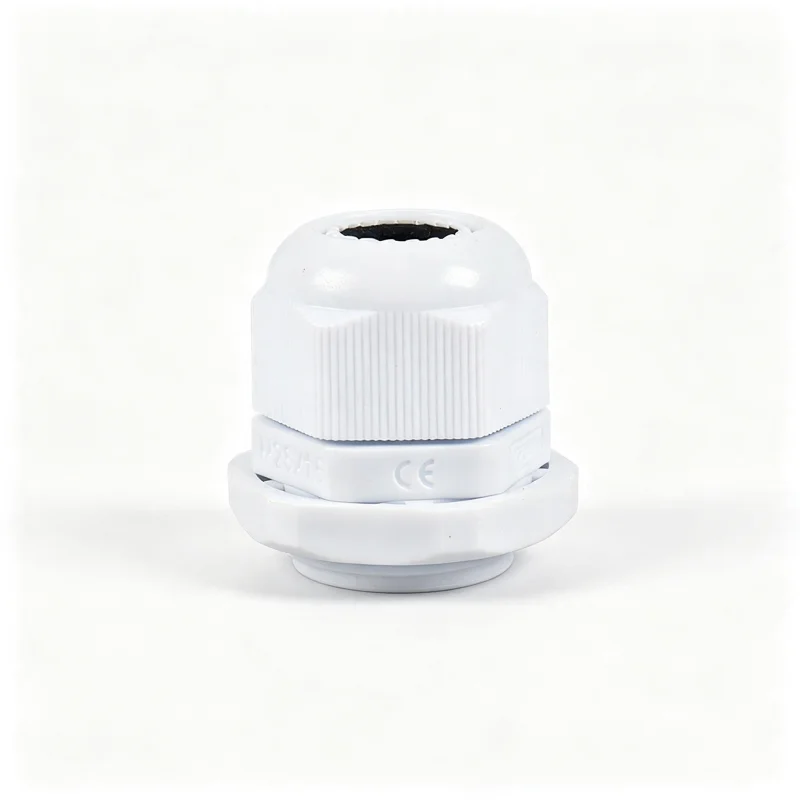
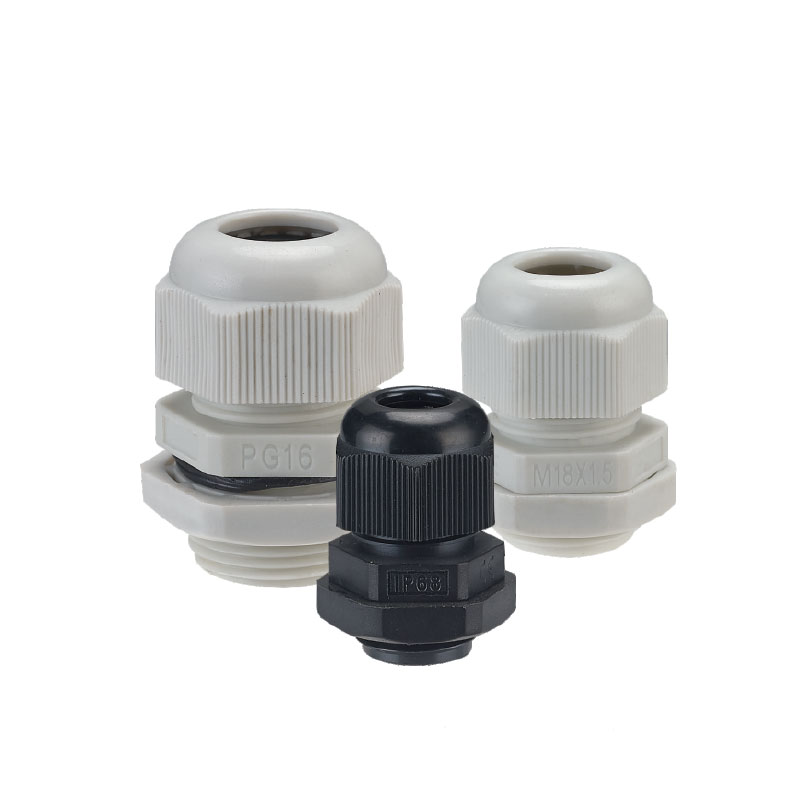
Longer Thread Nylon Cable Gland
| Thread systems | Metric, PG, G(PF), NPT |
|---|---|
| Body material | Polyamide; EPDM seal on the clamping parts |
| Protection degree | IP68 to 10 bar |
| Working temperature | −40 °C to +100 °C static; +120 °C short-term |
| Colours | Black RAL 9005, grey RAL 7035; other colours on request |

Longer Thread Nylon Cable Gland Advantages
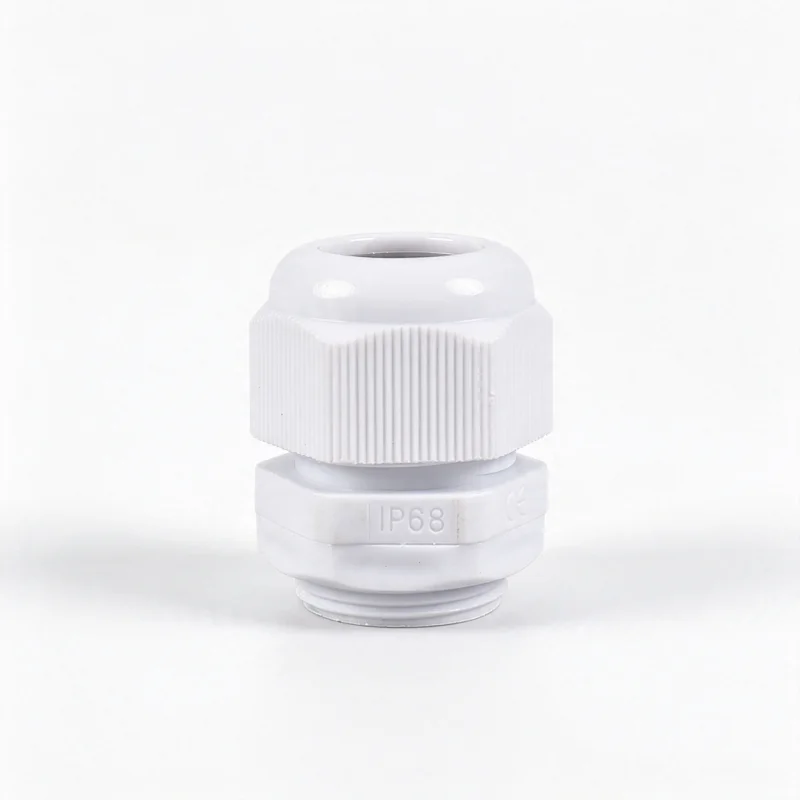
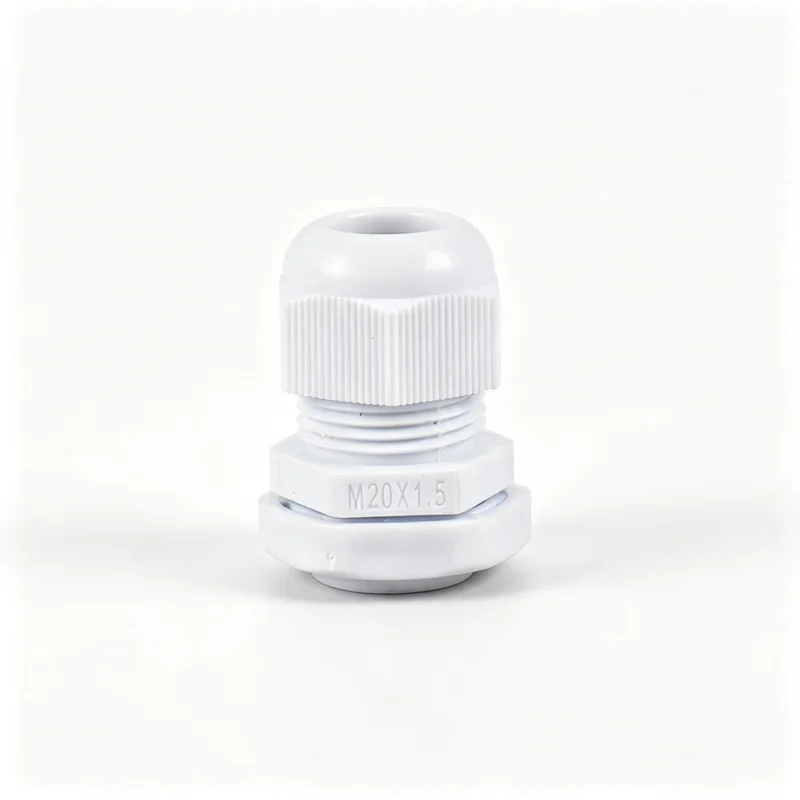
This gland is the standard nylon body with an extended thread: about 15 mm instead of roughly 9 mm. Body, seal, hole size and cable range are unchanged. One dimension differs, and it is the dimension that decides whether the standard part fits at all.
That makes this the least glamorous product on the site and, in thick-wall work, the one that prevents a site problem. A gland that runs out of thread cannot be fixed by tightening harder.
How to Calculate the Thread Length You Need
Wall thickness, plus locknut, plus sealing washer, must come to less than the thread length, with two or three threads left exposed so the nut engages properly. If the sum lands near 9 mm, the standard gland fits on the bench and fails on the panel.
Insulated panels are where this bites hardest: the sheet metal may be 2 mm, but the insulation behind it can add 30 mm or more. The washer must sit on the outer skin, never on the insulation.
| Model | Thread O.D. (mm) | Holesize (mm) | Thread Length (mm) | Body Thickness (mm) | Cable Range 0 (mm) | SpannerSize A&F(mm) |
| M12-L | M12X1.5 | Ф12.2-12.5 | 15 | 10 | 3-3.5 | 18/16 |
| M12-L | M12X1.5 | Ф12.2-12.5 | 15 | 10 | 2-5 | 18/16 |
| M16-L | M16X1.5 | Ф16.2-16.5 | 15 | 10 | 4-8 | 22/19 |
| M16-L | M16X1.5 | Ф16.2-16.5 | 15 | 10 | 2-6 | 22/19 |
| M18-L | M18X1.5 | Ф18.2-18.5 | 15 | 10 | 5-10 | 24/22 |
| M18-L | M18X1.5 | Ф18.2-18.5 | 15 | 10 | 3-7 | 24/22 |
| M20-L | M20X1.5 | Ф20.2-20.5 | 15 | 11 | 6-12 | 27/24 |
| M20-L | M20X1.5 | Ф20.2-20.5 | 15 | 11 | 5-9 | 27/24 |
| M22-L | M22X1.5 | Ф22.2-22.5 | 15 | 11 | 10-14 | 30/27 |
| M22-L | M22X1.5 | Ф22.2-22.5 | 15 | 11 | 7-12 | 30/27 |
| M25-L | M25X1.5 | Ф25.2-25.5 | 15 | 11 | 13-18 | 33/33 |
| M25-L | M 25X1.5 | Ф25.2-25.5 | 15 | 11 | 9-16 | 33/33 |
| M32-L | M32X1.5 | Ф32.2-32.5 | 15 | 11 | 18-25 | 39/36 |
| M32-L | M32X1.5 | Ф32.2-32.5 | 15 | 11 | 13-20 | 39/36 |
Longer Thread Nylon Cable Gland Applications
- Cold rooms, insulated panels and refrigerated trailers
- Double-wall cabinets, kiosks and cladded outdoor enclosures
- Skids and packages with insulation under the sheet metal
- Entries carrying a locknut, washer and earth tag in series
Limitations: What This Gland Does Not Solve
It does not change the cable range, the hole size or the IP rating, and it is not a substitute for a thread adapter. Adding an adapter to a standard gland creates a second joint that must be sealed separately and changes the overall length in a way that is rarely checked on the drawing.
Where the wall is thick and the cable is pre-terminated as well, neither this gland nor the standard one will work — that case needs the split body, and the thread length has to be confirmed against the wall at the same time.
M12 to M32: Size Bands That Need the Extra Thread
Which bands need the extra thread is decided by wall build-up, not by cable.
| Band | Cable OD | Where the extra thread is necessary |
|---|---|---|
| M12–M16 | 2–8 mm | Insulated or double-skin enclosures, cold-store panels and lined tanks, where wall plus insulation exceeds the standard thread. |
| M20–M25 | 6–18 mm | Double-wall cabinets and skids with cladding, plus any entry that carries a locknut, washer and earth tag in series. |
| M32 | 13–25 mm | Heavy cable through a thick wall, where the body also needs the larger spanner access. |
The test is arithmetic: wall thickness plus locknut plus sealing washer must be less than the thread length, with two or three threads left exposed for the nut to engage properly. If the sum lands near 9 mm, the standard gland will fit on the bench and fail on the panel.
Installation on a Thick Wall
Long thread introduces one risk that the standard part does not have: the exposed thread inside the enclosure becomes a lever. Where the entry is subject to pull or vibration, add a locknut on the inside face rather than relying on the thread alone. On insulated panels, the sealing washer must sit on the outer skin, not on the insulation.
Do not confuse this with a thread adapter. The longer thread is part of the body; adding an adapter to a standard gland creates a second joint that has to be sealed separately, and it changes the overall length in a way that is rarely checked.
Ordering, MOQ and Lead Time
The extended thread is identified by the code suffix in the table above. State the wall thickness when quoting — it is the only way to confirm that 15 mm is enough, and on some builds a second locknut is the cheaper answer than a special body. Pricing follows the standard nylon terms: 1,000 pcs per size, trial orders from 100 to 500 pcs.
Send the wall thickness, thread and cable OD. Wall build-up is the number that decides between this gland and the standard one.
Request a Quote Now
Our team will get back to you within 24 hours.