Waterproof Cable Gland
PG63 Cable Gland Size Guide
PG63 is not a 63 mm gland. The thread is 72 mm, the hole is 72 to 72.2 mm and the cable range is 42 to 52 mm. Dimensions, thread length and the tooling question at this size.
Read More
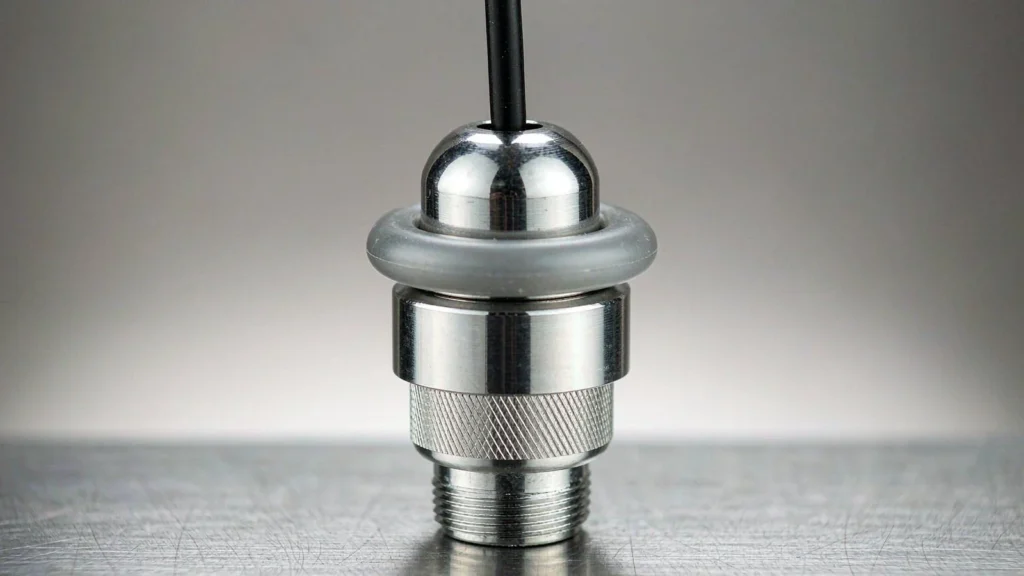
A hygienic cable gland is specified for what it lets you clean off, not for what it keeps out. That distinction reshapes the entire selection, because a gland can hold IP69K and still fail a swab taken from its thread root. The water jet never reached the place where the residue sits.
In a food or beverage plant the cable entry is one of the few components with an assembly gap, a metal-to-elastomer interface, and a surface the cleaning crew cannot see. Milk powder, brine, sugar syrup and foam cleaner all collect in the same small volumes, and none of them drain.
The usual datasheet answer is an alloy and an IP rating. Both matter and neither answers the question. An IP rating measures ingress under defined test conditions; hygienic design asks whether soil can be removed and whether a microorganism can find a retained film to grow in. Different tests, different failure modes.
What changes on a hygienic gland is external geometry: a continuous round profile, no exposed thread, radiused section changes, and a seal that covers the cable end rather than gripping it inside a stepped bore. 316L is the entry ticket. The geometry is the design.
| Feature | Standard gland | Washdown gland | Hygienic gland |
|---|---|---|---|
| External profile | Hex flats, thread exposed below the panel | Smooth dome nut, thread often still exposed | Continuous round section, no external thread |
| Sealing element | Insert compressed by the dome nut | Insert plus sealing washer | Membrane or sleeve covering cable and bore |
| Ingress rating | IP68 typical | IP66 to IP69K | IP69K plus documented cleanability |
| Judged by | Immersion test | Jet test | Cleaning test and geometry review |
| Typical failure | Water enters the enclosure | Water enters under the jet | Soil retained, biofilm forms |
A gland is a stack of threads and elastomer, and every interface creates a volume that cleaning fluid reaches last and air dries first. Four of them account for most hygiene findings on cable entries.
| Trap | What holds the soil | What it does over a shift |
|---|---|---|
| Exposed external thread | The thread root is a continuous channel | Product lodges, dries, and is not wetted by foam |
| Hex flats and spanner recesses | Sharp internal corners | Residue sits in the corner radius |
| Gap under the dome nut | Compression gap stays open after tightening | Rinse water enters and stays |
| Insert-to-bore step | Two diameters meet at a shoulder | Sheath debris and product pack into the step |
None of these is a material problem. A 316L body with an exposed thread and a compression gap is a stainless steel trap. That is why hygienic glands look featureless: every feature that helps a fitter helps soil.
The reference point is EHEDG’s hygienic design principles, and the mechanical consequences are consistent across certified products: no corners or edges on external surfaces, no exposed external thread, and a surface roughness at or below Ra 0.8 µm on the parts a cleaner touches. Those three requirements remove most of a standard gland’s shape.
In practice the dome nut becomes a smooth sleeve, the hex flats disappear or move under a cover, and the compression gap is closed by a membrane that also seals around the cable. The thread is sunk inside the enclosure wall or hidden behind a closed shroud; an open shroud with a gap under it is a trap, not a cover.
Drainage is the other half of the shape, and it is decided on site rather than in the catalogue.
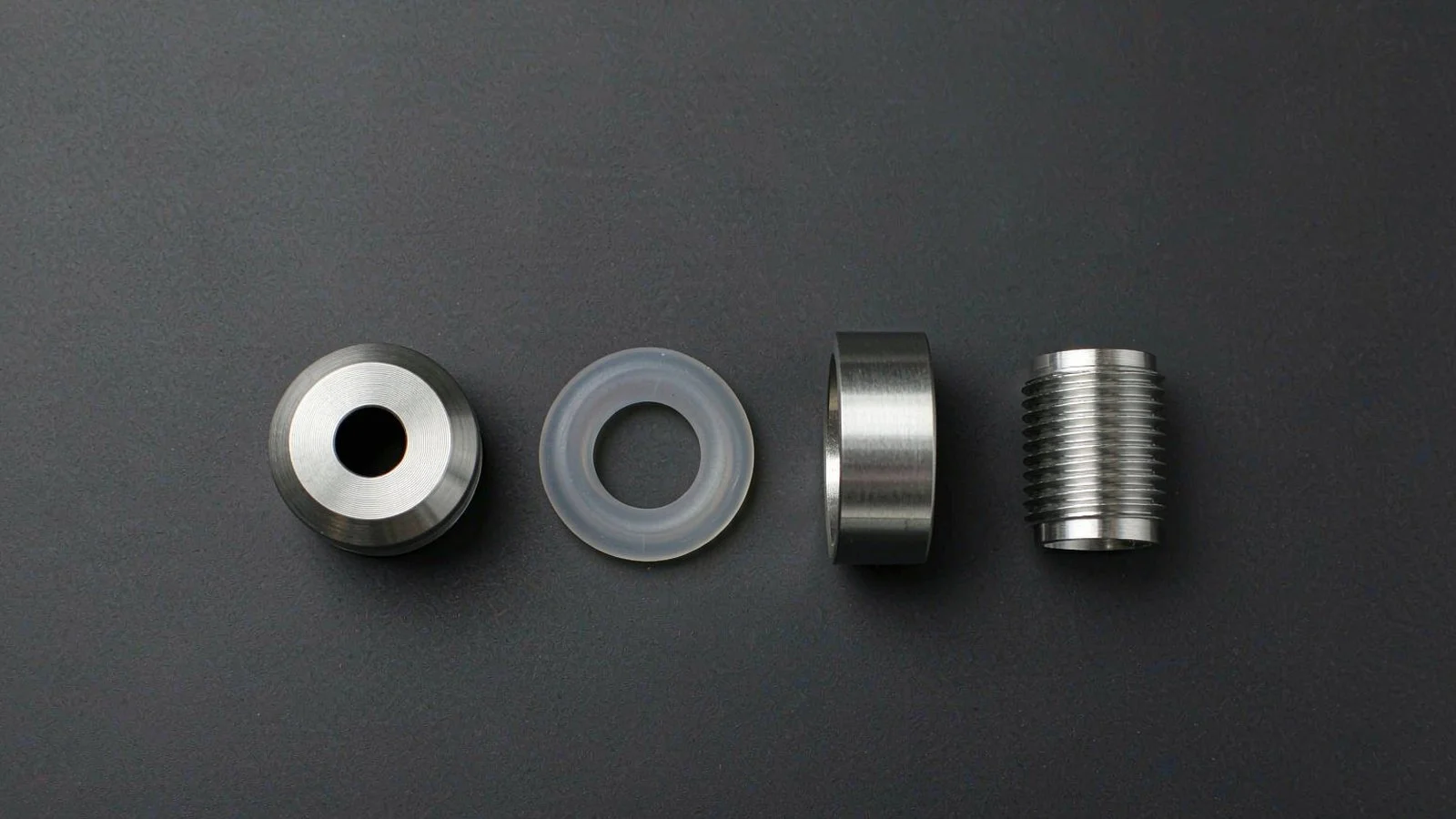
316L, EN 1.4404, is the baseline for bodies in direct food zones: the molybdenum content is what holds up against brine, hypochlorite sanitisers and the chloride load in dairy and meat plants. 304 is adequate only in dry, low-chloride utility areas, and brass or nickel-plated brass belongs outside the food zone in dry, non-contact positions.
The more common failure is not the body alloy but the assembly around it. A 316L body with a 304 locknut, a zinc-plated earth tag or a carbon steel screw puts a dissimilar metal in the wettest joint on the machine, and the rust stain that follows reads as a hygiene failure even when the gland is intact. Free iron picked up from tools and drilling swarf does the same within days.
Finish matters as well: a machined surface with visible tool marks cleans worse than an electropolished one, and weld heat tint on a gland plate removes the passive layer where product collects.
Two elastomer parts see different media and both are exposed. The insert or membrane touches the cable and the washdown spray; the sealing washer touches the enclosure face and whatever runs down the wall. Naming a single material for both is the usual mistake.
Clean-in-place chemistry is a sequence rather than one fluid: a caustic wash, an acid wash for milk stone or beer stone, a rinse, and a cold sanitiser, often peracetic acid and sometimes hypochlorite. Foam cleaning adds another surfactant set and a much longer dwell time.
| Elastomer | Caustic CIP | Acid CIP | Peracetic acid | Fats and oils | Steam |
|---|---|---|---|---|---|
| EPDM | Good | Good | Good | Poor | Fair |
| Silicone | Fair | Fair | Fair | Fair | Poor |
| NBR | Fair | Poor | Fair | Good | Poor |
| FKM | Good | Good | Good | Good | Fair |
These ratings are comparative and they shift between compounds, so confirm them against the seal supplier’s chart at the actual concentration, temperature and dwell time. Silicone is common in hygienic glands for its temperature range and flexibility, but it has low tear strength: a silicone membrane that has been over-tightened splits at the lip and then holds product in the split. EPDM is the better general CIP choice until fats are involved. The chemistry behind both statements is in the seal material comparison.
IP69K is a jet test. It subjects the assembly to a high-pressure, high-temperature water jet, of the order of 80 to 100 bar at 80 °C, from four directions at close range. Passing means the seal holds against that jet. It says nothing about whether product will come off the sleeve, or whether a swab from a thread root will grow.
IP68 is a different test: continuous immersion at a stated depth and time. Neither rating includes a soil-removal step, a crevice inspection or a bacterial retention test.
For a buyer the consequence is that an IP69K claim and a cleanability claim are not substitutes. The cleanability evidence is what the hygiene zone needs; the jet rating is what the washdown afterwards needs. Many plants need both, on the same part.
Four documents appear in food-industry gland specifications and they cover different things. Reading them as one “food grade” label is where procurement goes wrong.
| Document | What it covers | What it does not cover |
|---|---|---|
| EHEDG guideline 8 and certification | External geometry, cleanability, cleaning test performance | Ingress under jet, mechanical strength |
| FDA 21 CFR 177.2600 | Rubber articles for repeated food contact | Metal parts, geometry |
| EU 10/2011 | Plastic food-contact materials and migration limits | Elastomer performance, cleanability |
| 3-A Sanitary Standards | Product-contact surfaces in dairy equipment | Non-product-contact items such as cable entries |
| HACCP plan | Process controls for identified hazards | Component design approval |
Two honest notes. 3-A standards are written around product-contact surfaces, so a gland on the outside of a motor is normally out of scope, and a supplier leading with 3-A for a gland is usually using it as a badge. And a HACCP study does not approve a component: equipment design sits under prerequisite programmes, because there is no measurable limit to monitor at a cable entry.
A hygienic gland on a flat horizontal top is a cup with a certificate. Three decisions carry most of the risk: orientation, cable preparation, and what goes around the base.
Mount on a vertical or inclined face so water runs off the sleeve instead of standing on it. Form a drip loop before the entry so water tracking along the sheath breaks away below the gland. Run the jacket into the insert rather than stripping it back to the screen at the entry point.
Do not seal around the base with silicone or mastic. The bead is an unlisted material, it bonds unpredictably to stainless steel, and it creates a new crevice under a surface nobody inspects. If the hole is oversized, the answer is a correct hole, not a larger washer. Over-tightening splits the insert lip and opens exactly the crevice the design removed.
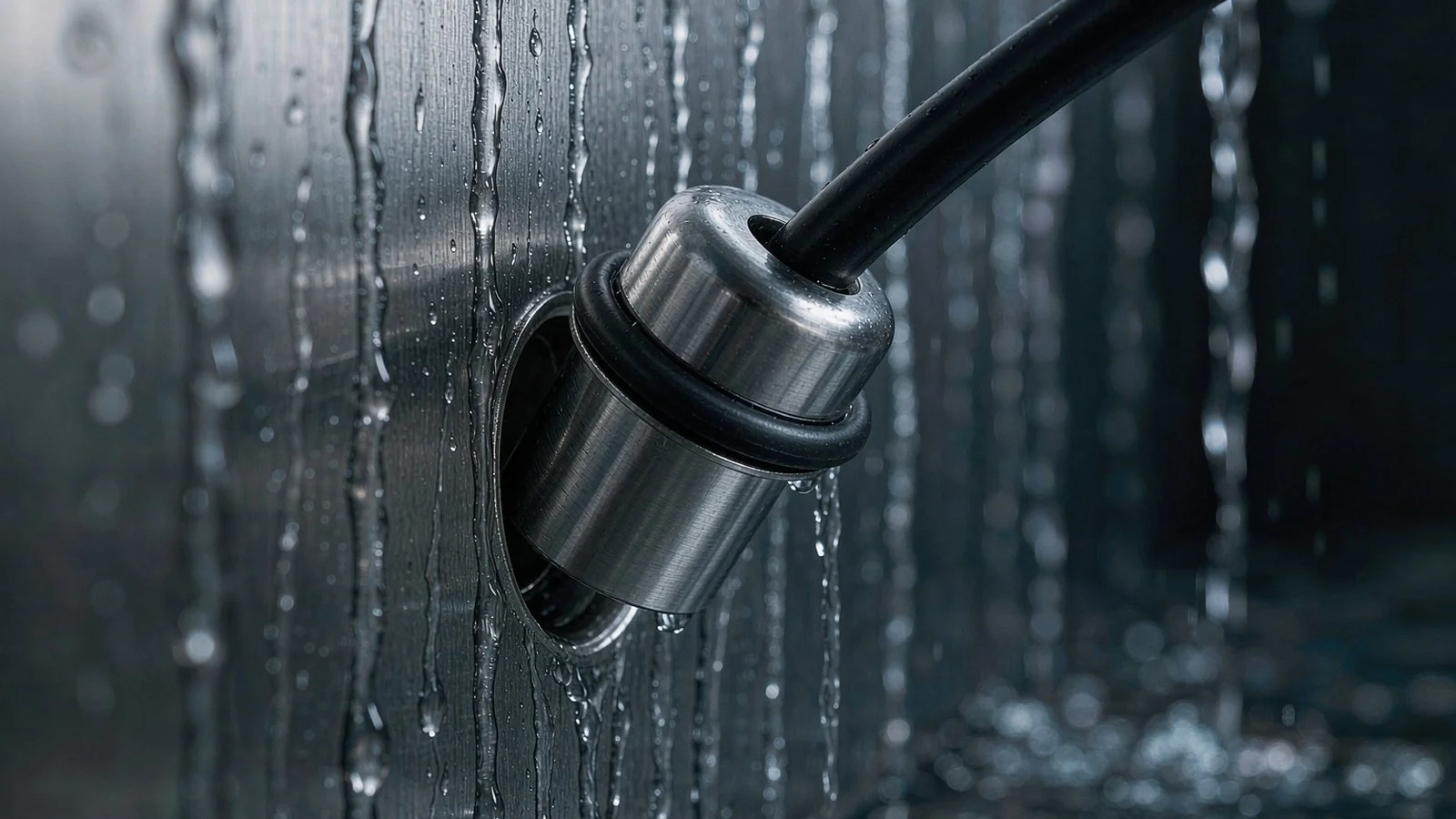
The same five findings appear in audits, and only one of them is about buying the wrong gland.
| Finding | Cause | Fix |
|---|---|---|
| Thread still visible below the panel | Smooth gland on an external threaded boss with a locknut | Sink the thread in the wall, or use a flush boss |
| Rust streaks at the entry | 304 locknut or plated tag on a 316L body | Same alloy family for every exposed part |
| Product film on the sleeve | Horizontal top mounting with no fall | Re-orient, or fit a sloped mounting pad |
| Sealant ring around the base | Oversized hole filled with mastic | Correct hole size and correct washer |
| Gland clean, enclosure not | Exposed fasteners and ponding on the box itself | The entry is not the only surface in the zone |
The last row is the one buyers least like to hear. Replacing the gland on a line whose enclosure has exposed hinges and a puddled top does not change the finding. It changes the photograph in the audit report, for one visit.
A hygienic gland is quoted from a geometry, not from a size list, so the enquiry has to carry more than a thread and a cable range.
| State on the enquiry | Why it decides the quote |
|---|---|
| Thread and cable range | Fixes the body and the seal bore |
| External profile required | Smooth sleeve, no external thread, radiused transitions |
| Seal material with FDA or EU statement | Two seals, two statements |
| IP rating and test standard | IP69K to ISO 20653, or IP68 with depth and time |
| Cleanability evidence | EHEDG certificate number, or a cleaning test report |
| Alloy for every part | Body, locknut, earth tag, washer |
| Quantity per size | Sets the tooling route |
| Documentation pack | Material certificate and declaration of conformity |
Stainless steel glands on this site run at 300 pieces per size, and a hygienic variant with a bespoke sleeve is a tooling decision before it is a price: the profile is turned from solid, the membrane is a separate mould, and the cleaning evidence follows the first article rather than the purchase order. Expect a quotation that separates tooling from unit price, and a unit price above a standard stainless gland rather than beside it. Lead time is confirmed per order, with first-article approval as the step that catches buyers out.
Not by statute in the way an ATEX certificate is mandatory in a hazardous area. What is mandatory is a food safety management system, and audits under it routinely treat a soil-retaining cable entry as a non-conformity. The requirement arrives through the customer’s hygienic design standard, not through a regulation naming glands.
Only if that zone is not also a hygiene zone. An IP68 gland keeps water out; it does not present a cleanable surface, and its thread and compression gap will retain product. In a dry, low-risk utility area a standard stainless gland with a sealing washer is usually accepted.
316L is the usual baseline for food-zone hardware because it resists chloride pitting and cleaning chemicals, but the alloy alone does not make an assembly hygienic. Surface finish, crevices, dissimilar metal joints and the elastomer decide the outcome.
It covers the cleanability of the design: external geometry, absence of crevices and exposed thread, surface roughness, and performance in a defined cleaning test. It does not certify the ingress rating or the mechanical strength, which are tested separately.
Usually yes for the thread, no for the assembly. A hygienic body often needs a counterbore or a flush boss so the thread does not sit proud of the panel, and the smooth sleeve is wider than a hex dome nut, so spanner clearance changes. Confirm both before ordering, starting from the mounting hole chart.
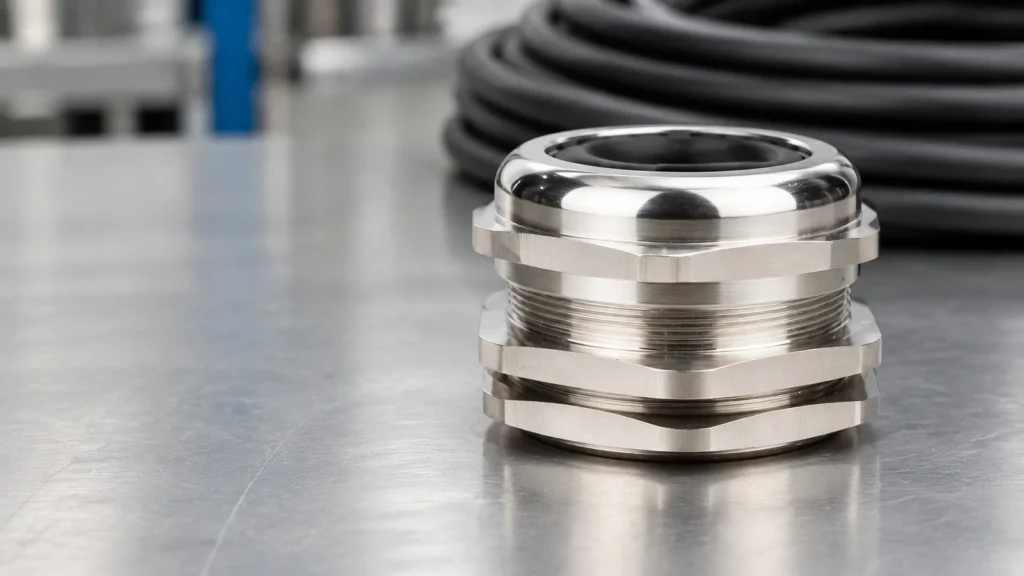
PG63 is not a 63 mm gland. The thread is 72 mm, the hole is 72 to 72.2 mm and the cable range is 42 to 52 mm. Dimensions, thread length and the tooling question at this size.
Read More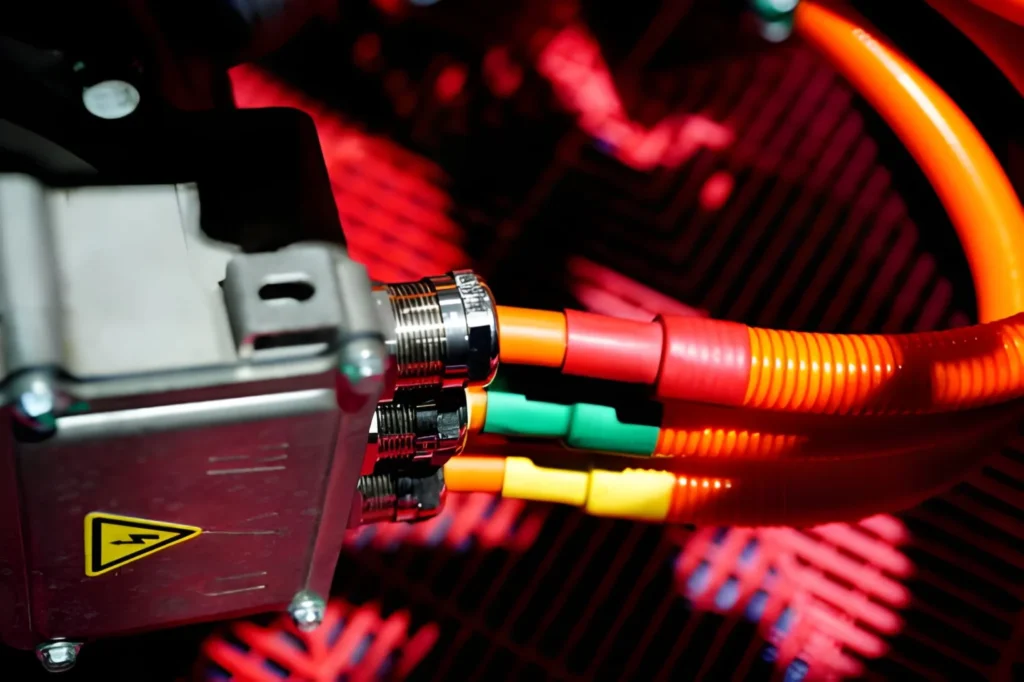
If you ever typed “are cable glands waterproof” into Google, you not alone. It one of those procurement-and-engineering questions that sounds simple, but it hides a bigger issue: “waterproof” is not a precise engineering specification. In real projects—outdoor telecom cabinets, marine sensors, washdown food lines, rooftop PV combiner boxes—what you really need is a cable […]
Read More
Strip to the insert seat, not to a copied number. How jacket strip length is set by gland design and cable construction, and the three failures a wrong cut causes.
Read More