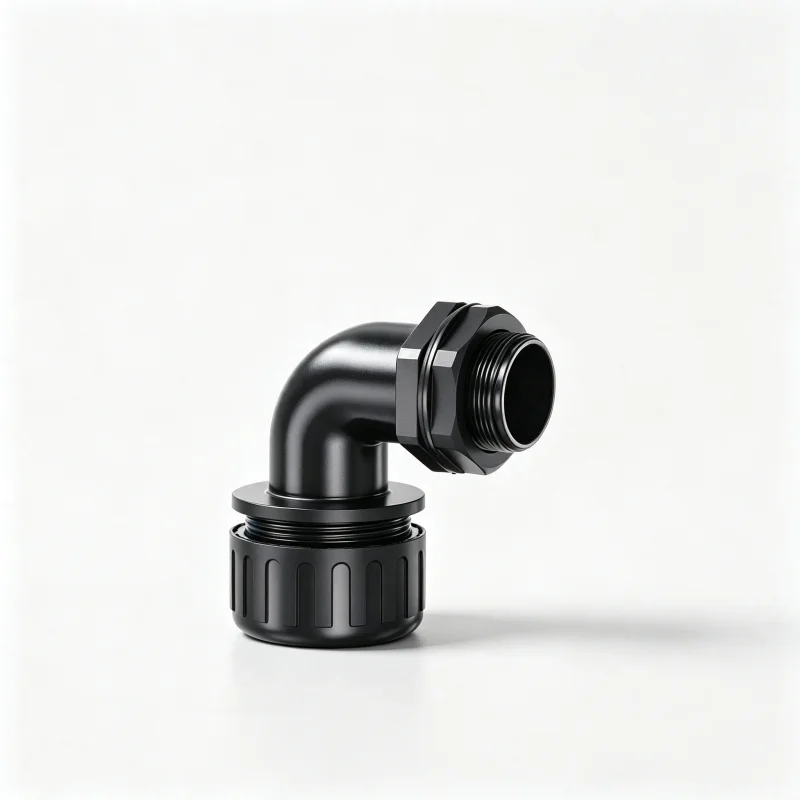
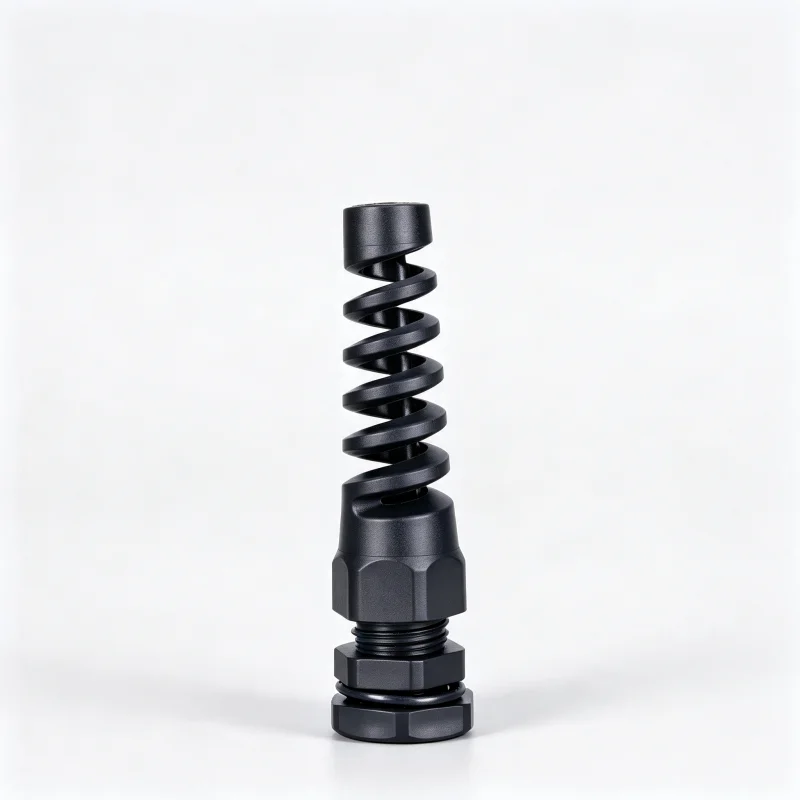
A bulkhead penetration looks like an enclosure wall entry that happens to be thicker. It is not. On an enclosure wall the far side is dry, open and reachable, so one seal on the outside face and a locknut inside is a complete answer. On a bulkhead, deck or tank shell the far side can be wet, blind, or at a different electrical potential, and each of those breaks the standard arrangement in a different way.
This guide works through the three things that change: sealing both faces rather than one, reaching a side that has no access, and bonding across a plate that divides two compartments. It also runs the thread length arithmetic for a bulkhead, where the numbers turn out worse than most drawings assume.
Types of Penetration
The word bulkhead covers several geometries that behave differently. Before choosing hardware it is worth deciding which one the drawing actually shows.
Penetration
Which faces see water
Access
Default arrangement
Enclosure wall
One face, normally the outside
Both sides
Gland, washer, locknut
Internal bulkhead or deck
Either face, often both
Far side may be blind
Seal on both faces, or a boss
Tank or shell
Product side, from inside out
Both sides, one is product contact
Washer on the product face
Cofferdam or void between plates
Both faces, and the void itself
Neither
Continuous sleeve, two independent seals
Only the first row is what a catalogue gland is designed for. The other three are why bulkhead entries are usually configured rather than bought off a shelf.
Why One Seal Is Not Enough
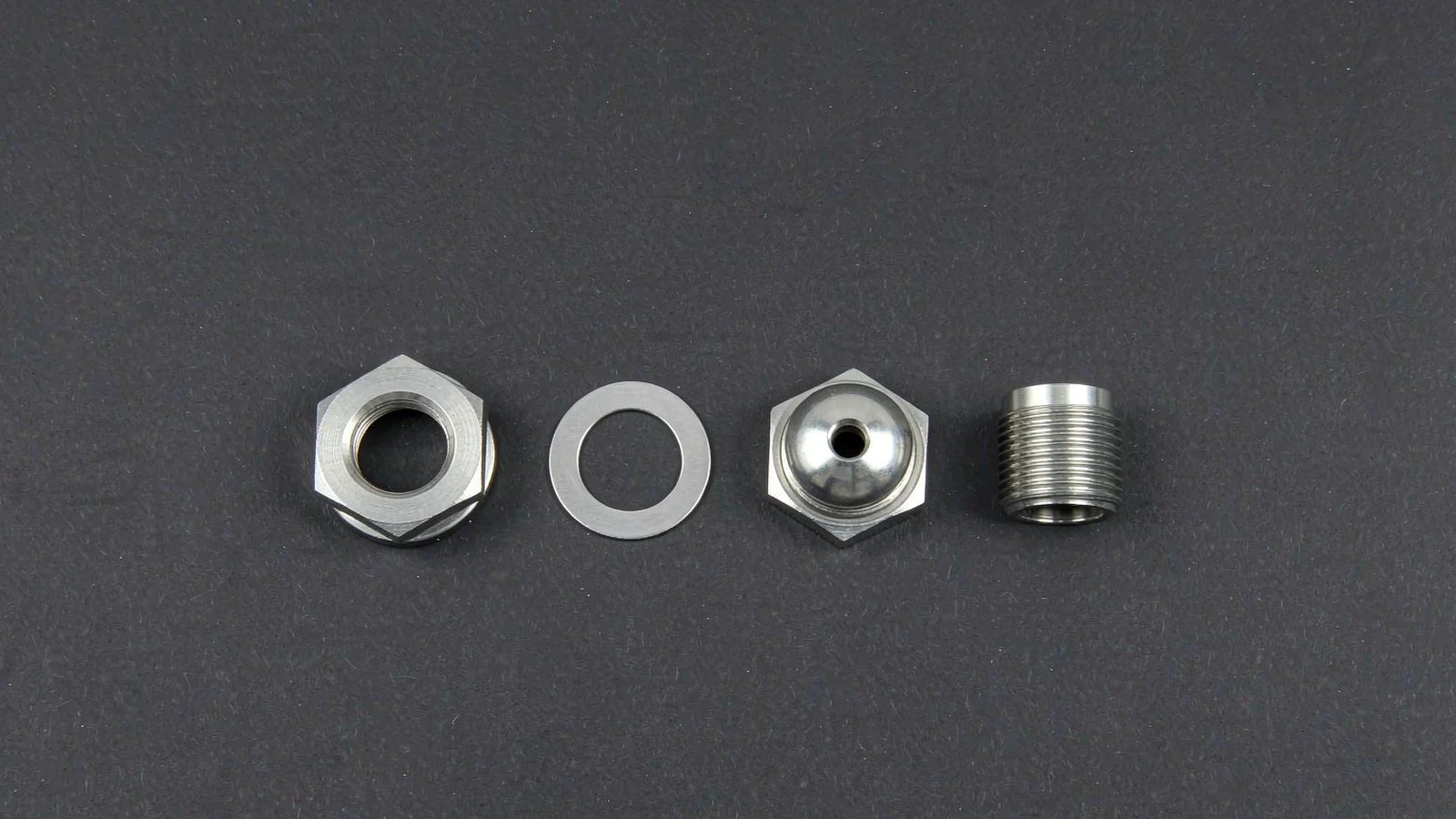
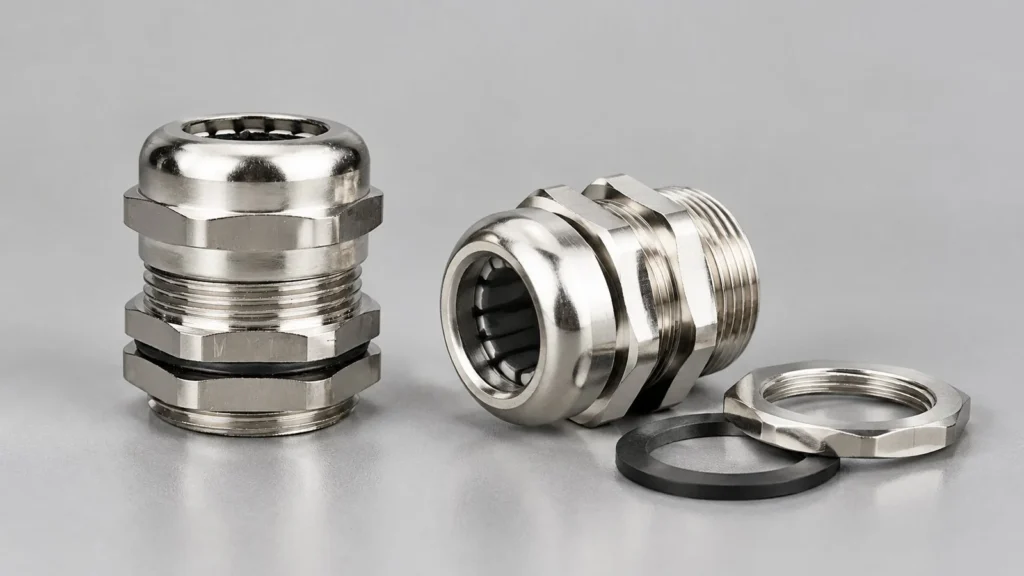
A standard gland seals to the panel in one place: the washer trapped between the body shoulder and the panel face. The locknut on the far side is a mechanical clamp with no elastomer and no sealing face.
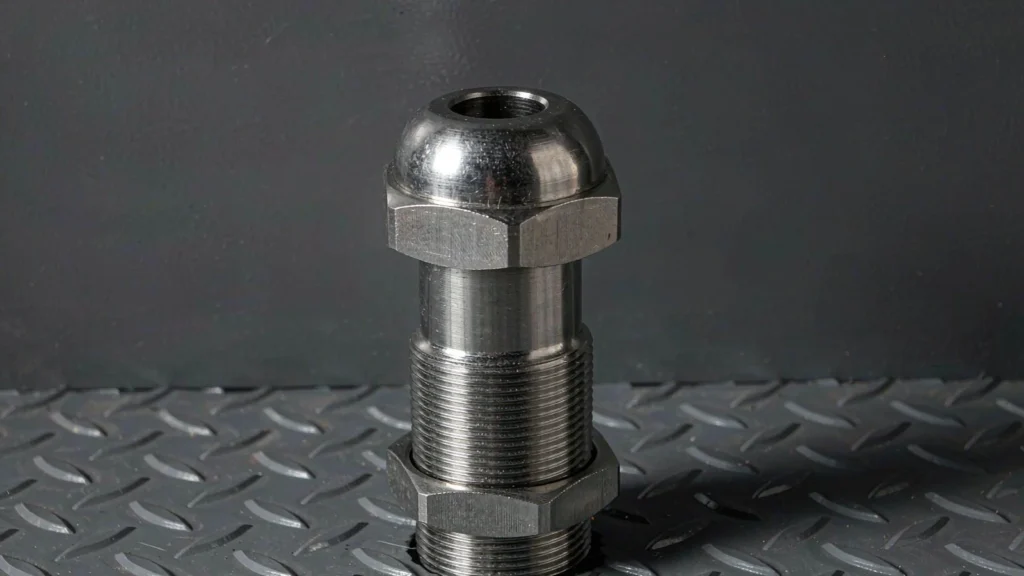
Four parts, one seal. On a bulkhead that single seal has to serve a plate that can be wet on both faces.
On a second bulkhead the far face can be wet from spray, washdown or a flooded void. Water collects between the locknut and the plate and follows the thread into the space behind it. That space is not the dry compartment, so nothing shows inside, and the plate corrodes from a face nobody inspects. The failure is silent until the paint blisters.
A second seal is therefore a requirement, not an upgrade, wherever both faces can get wet. It can be a washer under the locknut, an O-ring in a counterbore, or a bulkhead fitting with a gasket on each face. What it cannot be is a thread alone.
Which Face Carries the Washer
Where both faces are accessible, the seal belongs on the pressure side. The reason is mechanical: pressure acting on the body from the sealed side pushes the shoulder harder onto the washer, so the load tightens the joint. Pressure from the opposite side lifts the body off the panel and unloads the washer, and a compression seal that is unloaded is not a seal.
Pressure source
Washer face
Effect on the seal
External: rain, spray, sea, washdown
Outer face
Pressure adds to the clamp load
Internal: tank contents, pressurised void
Inner face
Pressure adds to the clamp load
Alternating: bilge, sloshing, tidal
Both faces
Two seals, each loaded in turn
Immersion from outside with a sealed void
Outer face
Pressure rises with depth, so does the load
The consequence on a tank is awkward. The pressure side is the inside, so the seal belongs on the inside face, the one that is hardest to reach. Where the inside cannot be reached at all, the washer has to be built into the plate instead.
The Unreachable Side
Some bulkheads have no access from one face: a welded tank, a sealed void, a double-bottom space. A locknut needs a spanner on that side, so it cannot be used, and the choices reduce to five.
Adds a welded interface that must itself be sealed
Gland plate or insert panel
Large plate, multiple entries, serviceable design
Two more sealed joints per plate
Removable access hatch
Space and inspection regime allow it
An extra opening to seal, and a habit of being left off
Sleeve with two outer seals
Void between plates, no access to the middle
Longest option, and the void must drain somewhere
The tapped hole is the option most often chosen and least thought through. It removes the nut, and replaces a clamped joint with a threaded one that has no elastomer anywhere in it.
Thread Length Across a Bulkhead
Thread length is a budget and a bulkhead spends it faster than a wall. On our stainless PG series GL runs from 7 mm at PG7 to 15 mm at PG63, and the PG13.5 gland that suits most instrument cables has 8 mm. Four items consume that budget: the plate, the washer, the locknut, and two threads left proud of the nut.
The table applies the strict rule: a 1.5 mm washer, a 3 mm thin locknut, and two full threads at the 1.41 mm PG pitch. Figures are rounded down.
Size
Thread length GL (mm)
Maximum bulkhead with a 3 mm locknut (mm)
PG7
7
0
PG9
8
0
PG11
8
0
PG13.5
8
0
PG16
9
1
PG19
9
1
PG21
9
1
PG25
10
2
PG29
11
3
PG36
12
4
PG42
13
5
PG48
14
6
PG63
15
7
Derived from the published GL figures of the stainless PG series. Each extra washer, or a 6 mm locknut instead of a 3 mm thin one, takes 3 mm off every line; allowing one thread proud adds 1.4 mm.
What the plate takes first: thickness at the hole is spent before the washer, the nut or the exposed thread get anything.
Read down the third column: a 6 mm deck cannot be crossed by any standard-thread stainless gland below PG48 with a locknut behind it, on one washer. A bulkhead entry is therefore a long thread gland, a boss, or a tapped hole. The long thread article covers what the longer variant returns size by size.
Tapped Holes and Welded Bosses
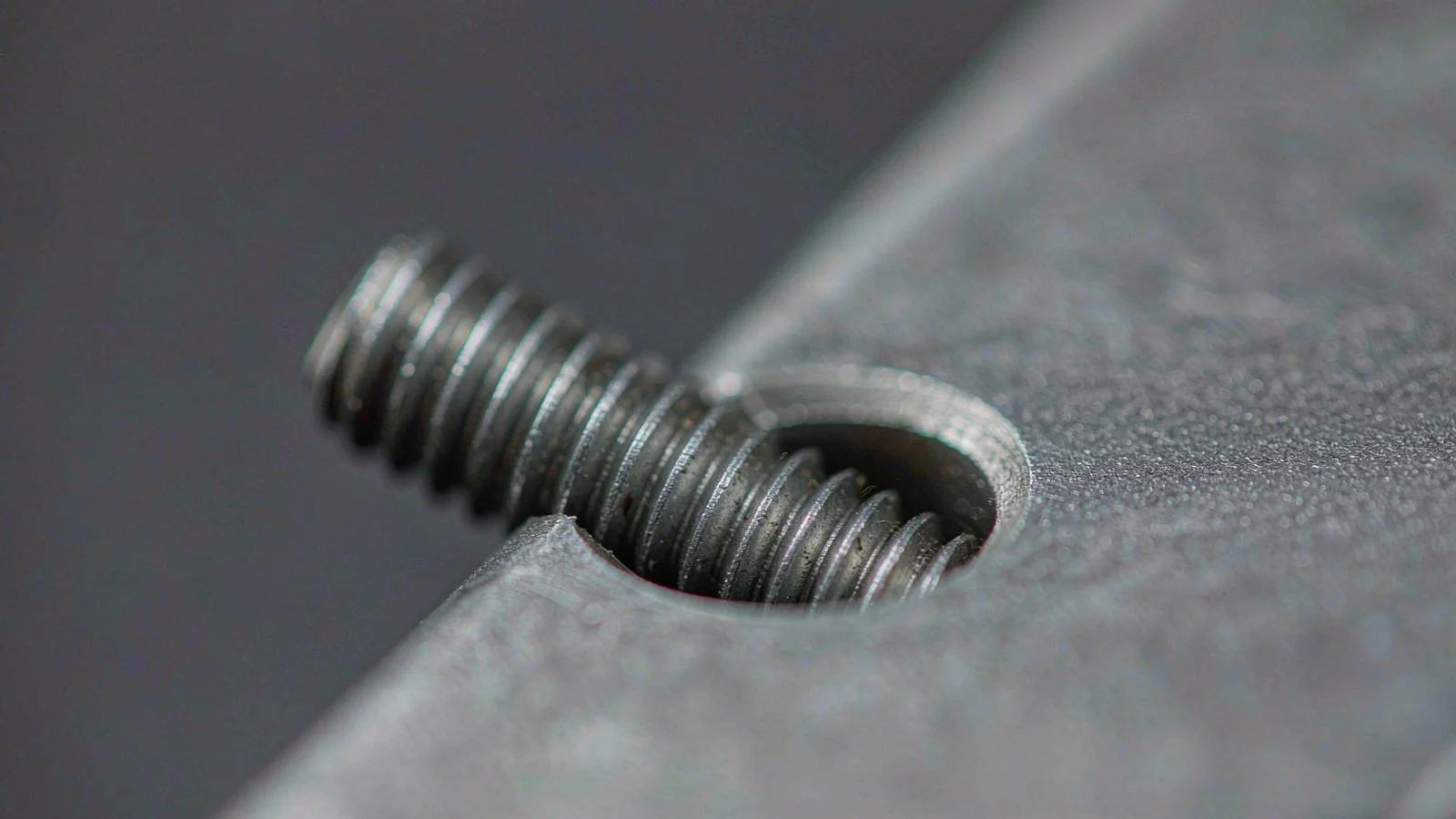
A tapped hole gives thread engagement equal to the plate thickness, so the number of full threads is the thickness divided by the pitch. A 6 mm plate at 1.41 mm pitch holds four threads, which is mechanically respectable and hydraulically useless: a parallel thread is a leak path, not a seal. Sealing a tapped entry means an O-ring in a counterbore or a thread sealant on the thread, and sealant on a blind bulkhead makes the joint permanent in practice.
A welded boss solves both: full thread depth, a machined face for the washer, and the sealing face lifted clear of the plate so thickness drops out of the budget. What it does not do is reduce the number of seals. The boss-to-plate weld is now a seal in its own right, and the one inspected least, being on the blind side and under paint.
The honest summary is that no arrangement removes a sealed interface on a blind bulkhead. The choice is only about which interface is easier to reach, inspect and redo.
Compartment Bonding
A metal bulkhead separates compartments, and each side may have its own bonding. The gland bonds to the plate it passes through and nothing else, so the entry becomes a bond point between two zones that may not have been meant to connect.
Bulkhead material
Bonding path through the entry
What to add
Steel, common bond on both sides
Body to plate, plate to structure
An earth tag, recorded on the drawing
Steel, isolated compartment
Only to the near side plate
A bonding jumper to the local bar on the far side
GRP or composite
None, the plate is an insulator
A separate conductor, and the entry declared isolated
Aluminium structure, stainless gland
Path exists but as a dissimilar couple
An isolating washer, or accept the couple and inspect it
Two duties get confused here. Equipment earthing is about fault current and comes from the protective conductor. Compartment bonding keeps two metallic masses at the same potential so no stray current runs through the structure or the screen. The earthing guide separates them, and the point for a bulkhead is that the gland serves one but not both by accident.
Deck Penetrations on Vessels
A penetration through a watertight deck is a subdivision question before it is a gland question. The opening reduces the integrity of an approved boundary, so position, height and protection are set by the vessel’s subdivision and load line requirements and belong on the penetration schedule before anything is drilled. A correct gland does not make an unapproved hole acceptable.
Two details follow. A single cable uses a gland; a bundle uses a transit block, and forcing eight cables through one large gland produces a seal nobody can verify. The entry should also sit inside a coaming or raised trunk where standing water is possible, because a seal sitting in a puddle is doing immersion duty rather than spray duty. Those depth and time figures are in the submersible gland guide.
Where a void sits between two plates, the two seals must be independent. A single sleeve passing through both, sealed only at its ends, turns the void into a chamber that collects condensate and cannot be drained or inspected. Material selection for the salt side is a separate question, covered in the 316 stainless steel article and the marine cable gland guide.
Ordering and Lead Time
Bulkhead assemblies are rarely a catalogue line. What ships is a gland plus a specified washer set, nut and often an earth tag, so the useful document is an envelope drawing showing which part sits on which face. Ask for it before the order.
On the stainless steel range the minimum is 300 pieces per size, in one material and one passivation throughout, because a plated nut on a stainless body is a galvanic pair in a wet void. Brass and nylon run at 1,000 pieces per size. Longer thread and non-standard washer combinations are configuration work with their own lead time.
FAQ
Can a standard gland be used on a bulkhead with a second washer?
Mechanically yes, and it is the cheapest way to get a seal on both faces. The catch is the thread budget in the table above: the second washer takes 1.5 mm off the available thickness, and small sizes have nothing left to give. Check the arithmetic before committing the hole.
What if the inside face cannot be reached at all?
Then the nut has to go, and the choice is a tapped hole, a welded boss, or a gland plate fitted before the space is closed. All three relocate the seal rather than remove it. There is no arrangement where a blind bulkhead entry has fewer than one sealed interface to maintain.
Does a tapped hole seal on its own?
No. A parallel thread is a leak path with mechanical strength. It needs an O-ring in a counterbore or a thread sealant, and sealant on a blind face makes the joint permanent for practical purposes.
Is a bulkhead fitting different from a cable gland?
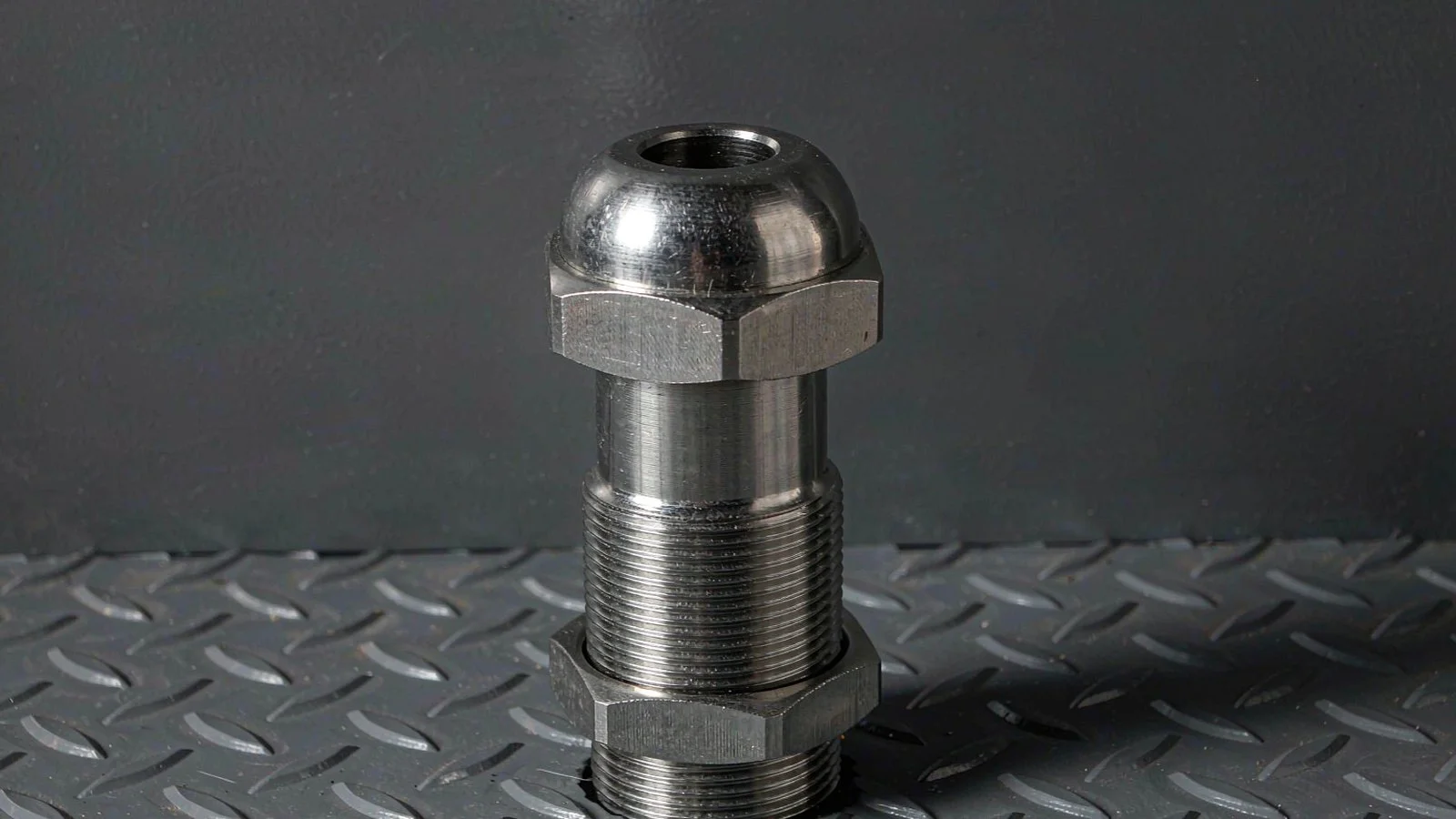
Usually it is a gland with sealing faces on both ends and no dome nut at one of them, or a double-ended barrel with a gasket at each face. The giveaway is the datasheet: two sealing faces will be listed separately, along with the thickness range each one covers.
How is a composite bulkhead bonded?
It is not, through the entry. A GRP or composite plate provides no conductive path, so the cable’s screen or armour has to be bonded with a separate conductor taken to the local bonding bar, and the entry should be recorded as isolated on the drawing rather than assumed bonded.
A deck entry is judged on what happens on both faces of the plate, not on how the gland looks from above.
M25 is the size people arrive at after an M20 range failure. This guide gives the published dimensions, the 25 to 25.2 mm hole, and the four sizes that share the same 10 to 14 mm cable band.
EMC and standard cable glands seal and grip identically; only the screen termination differs. Compare specs, indicative FOB prices, and use a four-check test to decide per circuit.
Nickel plating is a barrier and a hard surface, not a change of material. How thickness, process and salt spray claims actually read, where plating fails on site, and when to move to stainless instead.
We use cookies to enhance your browsing experience, serve personalised ads or content, and analyse our traffic. By clicking "Accept All", you consent to our use of cookies.