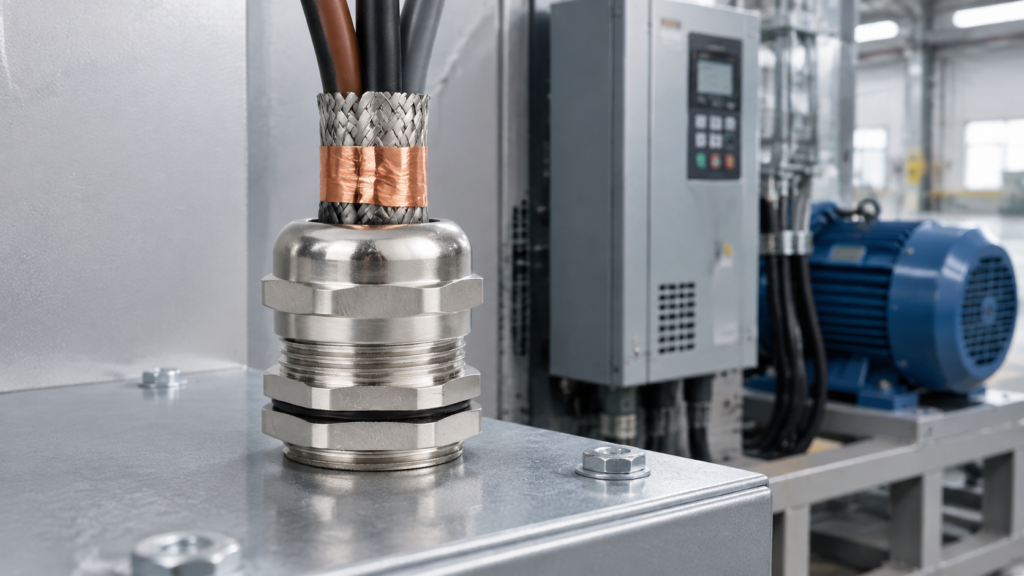
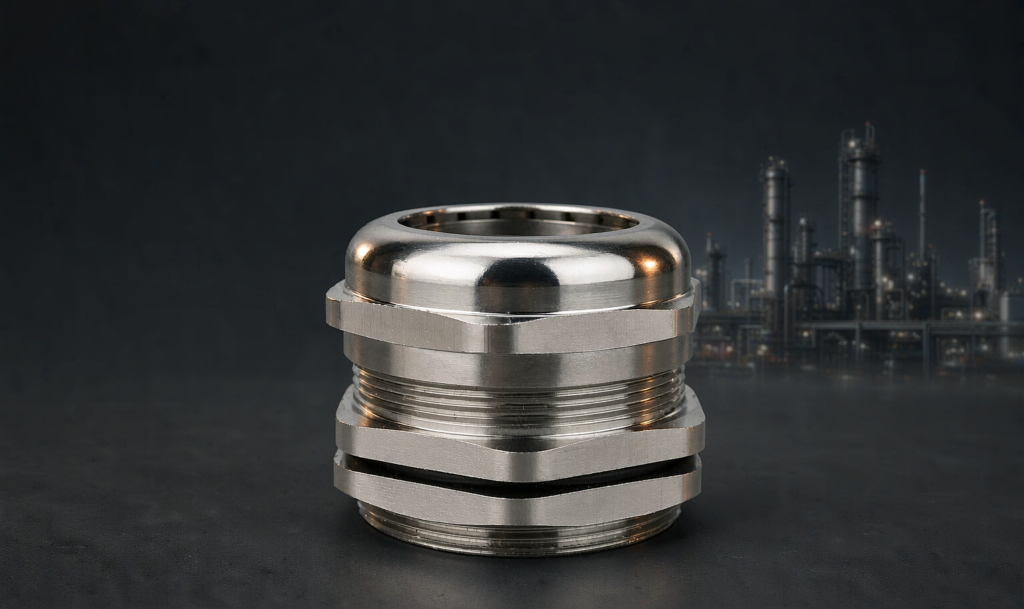
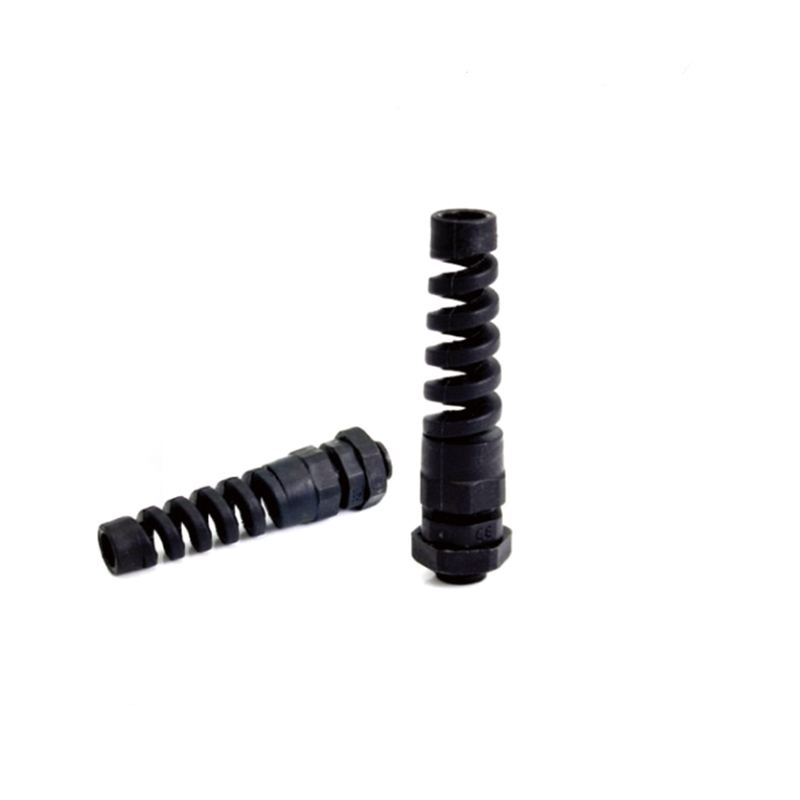
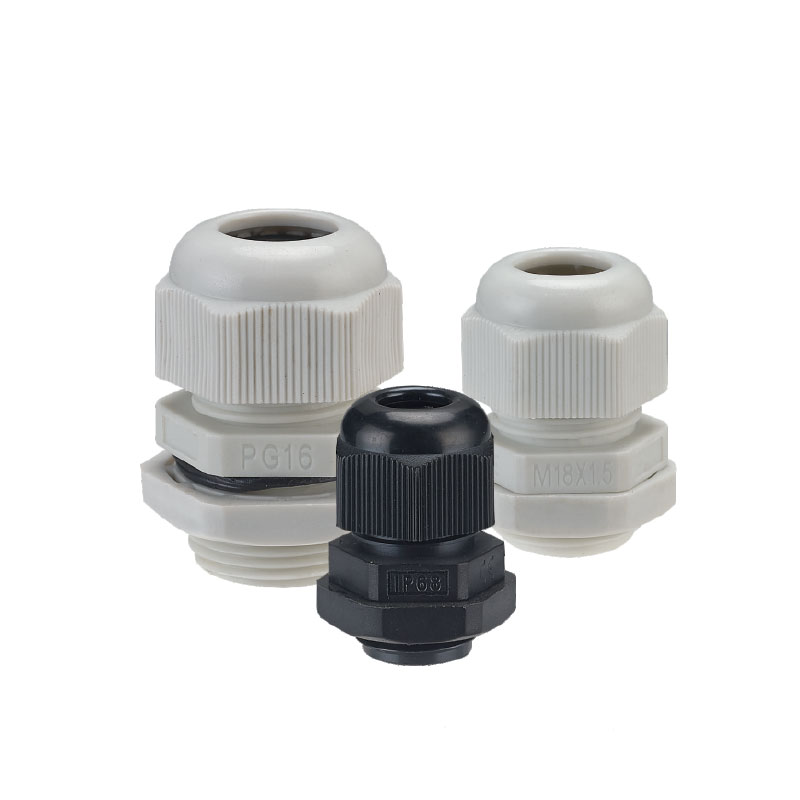
Waterproof cable gland play an indispensable role in modern industrial and commercial electrical equipment. They not only protect cable entries from dust and moisture but also ensure equipment safety and extend service life. Choosing the right IP rating for a waterproof cable gland can effectively prevent electrical failures or safety incidents caused by harsh environments.
If you have ever hesitated about which IP rating to choose or are unsure how to decide based on your application environment, this article is for you. Let’s explore how to judge and select the most suitable waterproof cable gland for your project.
Protect your cables “steadily and securely”—starting with the right IP rating choice!
Waterproof Cable Gland IP Protection Rating
The IP rating, which stands for Ingress Protection, is defined by the international standard EN 60529 and measures a product’s ability to resist solid objects and liquids. It consists of two digits:
The first digit indicates protection against solid objects (such as dust).
The second digit indicates protection against liquids (such as water).
IP Code
Protection Against Solids
Protection Against Liquids
IP65
Completely dust-tight
Protected against water jets
IP66
Completely dust-tight
Protected against powerful water jets
IP67
Completely dust-tight
Protected against temporary immersion (1m, 30 mins)
IP68
Completely dust-tight
Protected against continuous immersion
The IP rating tells you the level of dust and water protection a waterproof cable gland provides, which is a crucial reference for selection.
Common Waterproof Cable Gland IP Ratings Explained
Different IP ratings correspond to different protection levels and intended use environments:
IP Rating
Protection Overview
Typical Use Cases
IP65
Dust-proof and water jets proof
General outdoor use, gardens, street lighting
IP66
Dust-proof and powerful water jets proof
Industrial outdoor sites, heavy rain environments, machinery
Imagine you need to install cable entries exposed to seaside winds and waves; ordinary IP65 won’t be enough. IP66 or IP67 glands would be more suitable. If your project requires long-term underwater use, you must opt for an IP68 rated gland.
How Cable Gland IP Ratings Are Actually Tested
An IP code is not a marketing claim — it is the outcome of a defined laboratory procedure in IEC / EN 60529. Knowing what happens inside the test chamber explains why two glands both printed “IP68” can behave very differently once installed.
What each water test actually involves
Test code
Test method
Key test parameters
IPX4
Splashing water from any direction
Oscillating tube or spray nozzle; 10 L/min; 10 minutes
IPX5
Water jet
6.3 mm nozzle; 12.5 L/min; 3 m distance; at least 3 minutes
IPX6
Powerful water jet
12.5 mm nozzle; 100 L/min; 3 m distance; at least 3 minutes
IPX7
Temporary immersion
Lowest point 1,000 mm below the water surface and highest point 150 mm below it; 30 minutes
IPX8
Continuous immersion
Depth and duration agreed between manufacturer and buyer; must be more severe than IPX7
The IPX8 detail most buyers miss. IPX8 is the only water level in IEC 60529 where the standard leaves the numbers open. Depth and duration are “subject to agreement between manufacturer and user”, with one condition: the test must be more severe than IPX7. So 1.5 m for 30 minutes and 10 m for a week are both fully compliant, and a datasheet that says only “IP68” tells you very little. Ask for the declared depth and time in writing before you approve the drawing.
We therefore publish IP68 in three written grades rather than one vague label: IP68 – 1.5 m / 30 min, IP68 – 2 m / 24 h (the default for standard nickel-plated brass, nylon and stainless steel glands), and IP68 – 5 m / 72 h for offshore, tunnel and subsea-adjacent projects, with 10 m / 168 h available on request. When a project specifies only “IP68”, we confirm which grade is actually needed — the sealing geometry, O-ring squeeze and thread length all change with the pressure the gland has to hold.
Why an IPX7 / IPX8 sample is warmed before immersion. Immersion tests are never run on a cold, dry gland. Following IEC 60529, the assembled sample is conditioned to at least 5 °C above the temperature of the test water and immersed immediately. The cooling creates a slight negative pressure inside the enclosure — the same effect that draws water past a seal when a hot outdoor enclosure is hit by rain. A gland that survives a cold static soak can still fail this thermal-shock immersion, so we run it as part of every IP68 type test.
The first digit is tested separately. For IP6X (dust-tight) the gland is mounted on a test enclosure inside a chamber of circulating talcum powder for up to 8 hours, with a slight vacuum drawn on the enclosure so the powder is actively pulled towards the seal. “Dust-tight” means no powder is found inside at the end of the run.
The rating belongs to the assembly, not the gland alone. Every type test uses a cable — or calibrated mandrel — of the correct diameter, with the sealing nut at the specified torque. Fit an undersized or oval cable, over-tighten the nut until the seal deforms, or mount the gland on a painted enclosure face, and the tested IP68 becomes theoretical. We air-pressure decay test 100 % of production and supply the third-party IP68 immersion report with the first order, so you can compare declared test conditions against your project requirement instead of two identical-looking labels.
Key Factors Affecting Cable Gland IP Rating Selection
Choosing the right IP rating involves more than understanding the IP code. Consider these key factors:
Installation Environment
Indoor vs. outdoor
Humidity levels (dry, damp, submerged)
Presence of dust, oil, chemicals
Harsh conditions like marine or underground
Cable Type and Size
Matching cable diameter with gland size to ensure proper sealing
Multiple cores and different sheath materials affect selection
Material Choice
Plastic (lightweight, chemical resistant, good for light loads)
Brass (durable, corrosion-resistant, ideal for industrial use)
Stainless steel (high strength, high temperature and corrosion resistance, for extreme environments)
Operating Temperature and Pressure
High temperatures require heat-resistant materials
High-pressure water or impact environments need stronger materials
Explosion-proof Requirements
Special environments (oil, chemical plants) need explosion-certified glands
Steps and Suggestions for Choosing the Right IP Rating Waterproof Cable Gland
Follow these steps to make the right choice:
1️⃣Assess Environmental Needs
Think about the challenges the gland will face: rain, fog, dust, temporary water pooling, or continuous immersion?
2️⃣Match the Appropriate IP Rating
Application Environment
Recommended IP Rating
General indoor or slightly damp areas
IP54/IP55
Ordinary outdoor, rain, dust protection
IP65
Hazardous environment or heavy rain jets
IP66
Temporary water pooling or flooding
IP67
Continuous underwater use
IP68
3️⃣Confirm Material and Size Compatibility
Verify cable diameter matches the gland’s entry size
Choose the appropriate material based on environment and budget
4️⃣Consider Additional Requirements
Explosion proof certification
UV resistance, oil resistance, chemical resistance, etc.
Waterproof Cable Gland Industry Application Case Studies
Selection varies by industry needs. Here are some typical use cases and recommended IP ratings:
Industry
Typical Application
Recommended IP Rating & Material
Industrial Automation
Machinery, control panels
IP66/IP67, brass or stainless steel
Marine and Shipbuilding
Ship cables, underwater sensors
IP68, stainless steel
Solar Energy
Outdoor photovoltaic panels
IP65/IP66, plastic or brass
Communications
Outdoor base stations, cable protection
IP67, plastic
These examples show that selection is not one-size-fits-all but must consider the use environment, frequency, and budget.
Choosing the right IP rating for a waterproof cable gland is a cautious but straightforward process. It directly affects the safety and stability of cable entries and the long-term reliability of your equipment.
Clarify your installation environment and needs first, then combine IP rating, material, and cable size for the best decision. Remember, higher IP is not always better—what matters most is suitability.
If you want fast and accurate help finding the right waterproof cable gland, feel free to contact us. We provide professional guidance to ensure your project runs safely and efficiently.
Keeping the IP Rating After Installation: Maintenance and Inspection
An IP68 gland keeps its rating only while the seal is intact. Thermal cycling, UV exposure and vibration slowly harden and compress the sealing ring, so what is declared on the datasheet and what is measured at the enclosure drift apart over time. The schedule below is what we recommend to clients for waterproof cable gland installation on control panels, ducts and outdoor enclosures.
Maintenance item
Interval
What to check and why
Sealing ring and O-ring inspection
Every 6 months
Cracks, hardening and permanent compression set — a hardened ring can no longer follow cable movement
Re-torque the sealing nut and locknut
Every 3 months
Thermal cycling relaxes the joint; a loose nut is the most common reason a gland only drips in heavy rain
Cleaning the mounting face and thread
Monthly in dusty or oily areas
Dust and oil film stop the seal seating, and hide corrosion at the enclosure thread
Sealing insert replacement
At every re-termination or cable change
A new insert restores the tested geometry; re-using the old one invalidates the original type test
Enclosure-level re-inspection
After flooding, jet-washing or impact
Check gland, gasket and enclosure face together — the rating belongs to the assembly, not to the gland alone
Recommended inspection schedule for glands in service. Intervals follow the service environment — shorten them for coastal, chemical and high-temperature installations.
Two rules matter more than the intervals themselves. First, inspect on the short side of each range where the gland sees salt spray, solvent vapour or continuous heat, and on the long side inside a dry control cabinet. Second, once a cable has been re-terminated the assembly that passed the type test no longer exists, so replace the sealing insert instead of re-tightening the old one — and record which IP68 grade the enclosure was tested to (1.5 m / 30 min, 2 m / 24 h or 5 m / 72 h) so the next inspection knows what it is protecting.
FAQ
Q1: Is IP68 always the best choice?
While IP68 offers the highest protection, it is more expensive and requires stricter installation. If continuous submersion is not needed, IP65 or IP67 provide economical and reliable protection.
Q2: How do I select a gland for multi-core cables?
Choose based on the maximum cable diameter, ensuring proper sealing. Manufacturers provide sizing charts to assist matching.
Q3: What should I pay attention to during installation?
Make sure the mounting surface is clean, tighten the gland properly without overtightening, and avoid damaging the sealing ring.
Q4: Do waterproof cable glands lose their IP rating over time?
Yes — the sealing ring ages with UV, heat and chemical exposure, so an IP68 gland stays IP68 only while that ring is intact. Inspect it every 6 months and replace any hardened, cracked or permanently flattened insert. A gland that passed an IP68 immersion test in the factory is not automatically still IP68 after five years of outdoor service.
Q5: Are there glands for special cables such as fibre optic or flat cables?
Yes. Fibre-optic and other pre-terminated cables normally use a split or slotted sealing insert so the connector can pass through without being cut off, while flat or oval cables use a profiled insert rather than a round one. Send the cable type, its outer dimensions and whether the connector has to pass through the gland, and the insert is matched to that instead of to a nominal diameter.
If you want fast and accurate help finding the right waterproof cable gland, feel free to contact us.
A VFD cable gland has to bond the cable screen around the full circumference at both the drive and the motor end. How to size one for drive cable, where the bond path breaks, and what a gland cannot fix.
Zone 1 and Zone 2 cable glands are selected from the area classification, not the catalogue. See how the zone sets the minimum EPL, what the gland marking must show, and the mistakes to avoid.
Waterproof cable gland play a vital role in the B2B market. Whether you are a solar equipment manufacturer, marine engineering contractor, or industrial automation integrator, choosing the right waterproof cable gland directly affects the durability and safety of your devices. Have you ever wondered what keeps our cables safe and sound, even in heavy rain […]
We use cookies to enhance your browsing experience, serve personalised ads or content, and analyse our traffic. By clicking "Accept All", you consent to our use of cookies.