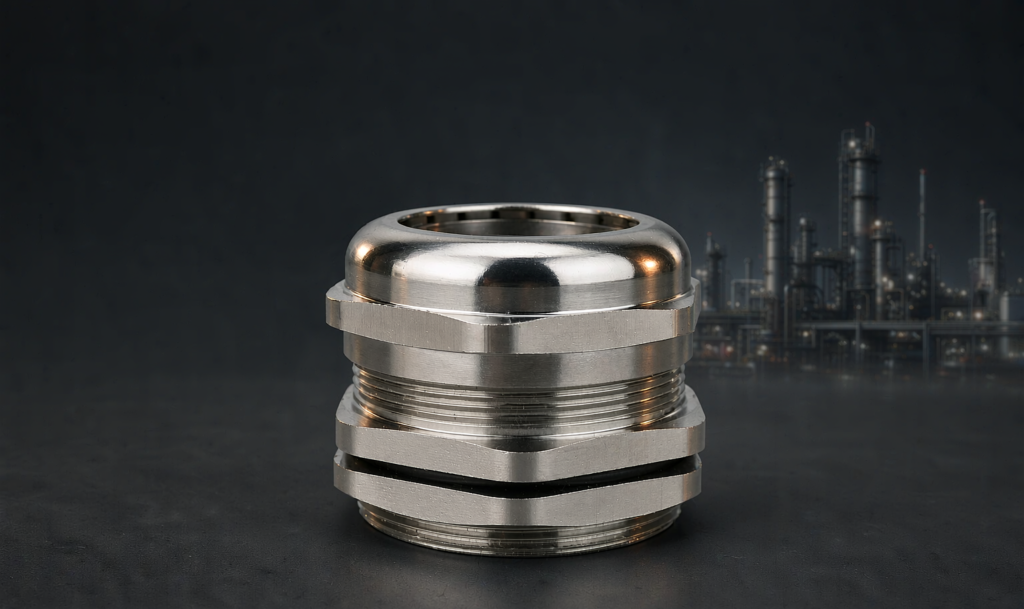
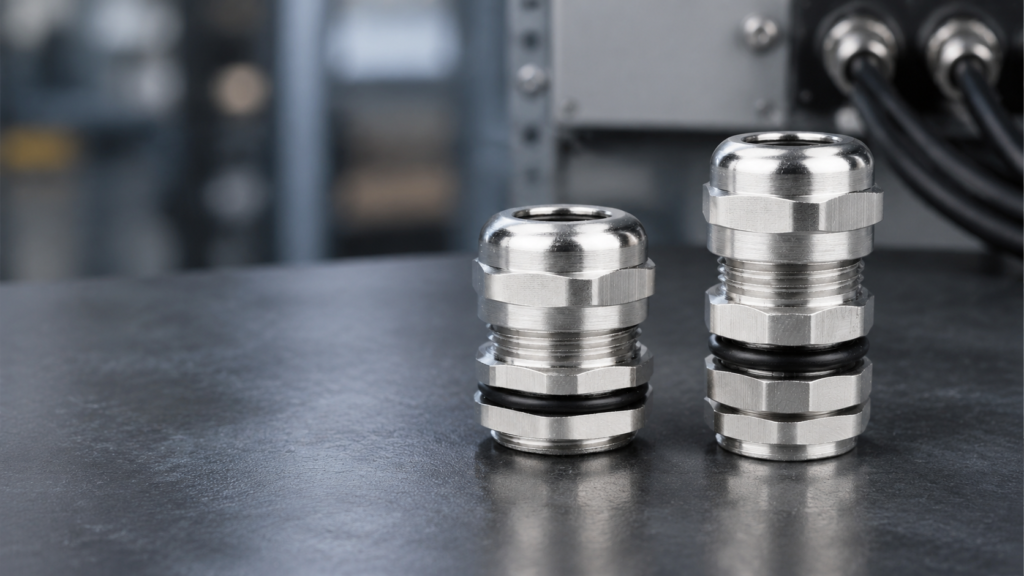
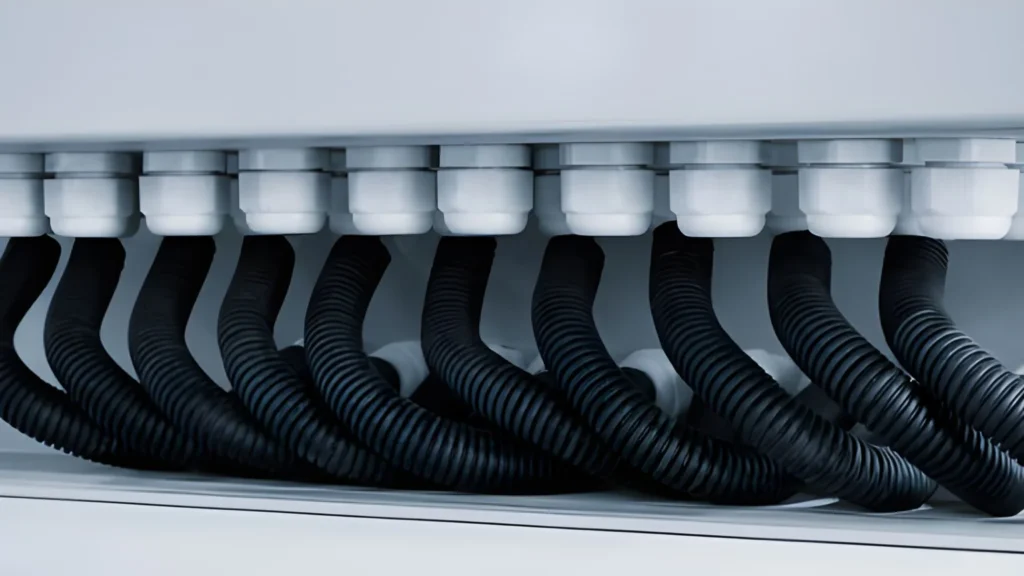
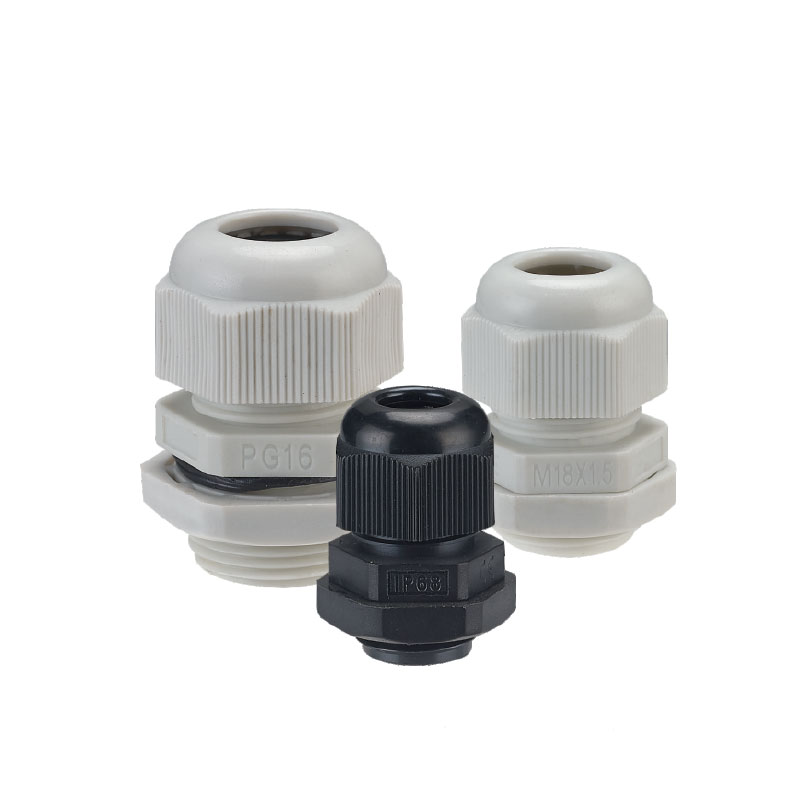
غدة كابل مقاومة للماء تلعب دورًا لا غنى عنه في المعدات الكهربائية الصناعية والتجارية الحديثة. فهي لا تحمي مداخل الكابلات من الغبار والرطوبة فحسب، بل تضمن أيضًا سلامة المعدات وإطالة عمر الخدمة. إن اختيار تصنيف IP المناسب لغدة الكابلات المقاومة للماء يمكن أن يمنع بشكل فعال الأعطال الكهربائية أو حوادث السلامة الناجمة عن البيئات القاسية.
إذا كنت مترددًا بشأن تصنيف IP الذي تختاره أو لم تكن متأكدًا من كيفية اتخاذ القرار بناءً على بيئة التطبيق الخاص بك، فهذه المقالة مخصصة لك. دعنا نستكشف كيفية الحكم واختيار غدة الكابلات المقاومة للماء الأنسب لمشروعك.
قم بحماية كابلاتك "بثبات وأمان" - بدءاً من اختيار تصنيف IP الصحيح!
غدة كابل مقاوم للماء بتصنيف حماية IP
يتم تعريف تصنيف IP، الذي يرمز إلى الحماية من الدخول، وفقًا للمعيار الدولي EN 60529 ويقيس قدرة المنتج على مقاومة الأجسام الصلبة والسوائل. ويتكون من رقمين:
الرقم الأول يشير إلى الحماية من الأجسام الصلبة (مثل الغبار).
الرقم الثاني يشير إلى الحماية من السوائل (مثل الماء).
رمز IP
الحماية من المواد الصلبة
الحماية من السوائل
IP65
محكم الغبار تماماً
محمية ضد نفاثات الماء
IP66
محكم الغبار تماماً
محمية ضد نفاثات المياه القوية
IP67
محكم الغبار تماماً
محمية ضد الغمر المؤقت (1 متر، 30 دقيقة)
IP68
محكم الغبار تماماً
محمية ضد الغمر المستمر
يخبرك تصنيف IP بمستوى الحماية من الغبار والماء الذي توفره غدة الكابل المقاومة للماء، وهو مرجع مهم للاختيار.
شرح تصنيفات IP الشائعة لغدة الكابلات المقاومة للماء الشائعة
تتوافق تصنيفات IP المختلفة مع مستويات الحماية المختلفة وبيئات الاستخدام المقصودة:
تصنيف IP
نظرة عامة على الحماية
حالات الاستخدام النموذجي
IP65
مقاومة للغبار ومقاومة لنفث الماء
الاستخدام الخارجي العام، والحدائق، وإنارة الشوارع
IP66
مقاوم للأتربة ومقاوم لنفث الماء القوي
المواقع الصناعية في الهواء الطلق، وبيئات الأمطار الغزيرة، والآلات
IP67
مقاوم للغبار ومقاوم للغمر المؤقت
تجمع مؤقت للمياه، والمناطق المعرضة للفيضانات
IP68
مقاوم للغبار ومقاوم للغمر المستمر
معدات تحت الماء، والمنصات البحرية، والقنوات تحت الأرض
تخيل أنك بحاجة إلى تركيب مداخل الكابلات المعرضة للرياح والأمواج الساحلية؛ لن تكون IP65 العادية كافية. ستكون غدد IP66 أو IP67 أكثر ملاءمة. إذا كان مشروعك يتطلب استخدامًا طويل الأجل تحت الماء، فيجب عليك اختيار غدة مصنفة IP68.
How Cable Gland IP Ratings Are Actually Tested
An IP code is not a marketing claim — it is the outcome of a defined laboratory procedure in IEC / EN 60529. Knowing what happens inside the test chamber explains why two glands both printed “IP68” can behave very differently once installed.
What each water test actually involves
Test code
Test method
Key test parameters
IPX4
Splashing water from any direction
Oscillating tube or spray nozzle; 10 L/min; 10 minutes
IPX5
Water jet
6.3 mm nozzle; 12.5 L/min; 3 m distance; at least 3 minutes
IPX6
Powerful water jet
12.5 mm nozzle; 100 L/min; 3 m distance; at least 3 minutes
IPX7
الغمر المؤقت
Lowest point 1,000 mm below the water surface and highest point 150 mm below it; 30 minutes
IPX8
Continuous immersion
Depth and duration agreed between manufacturer and buyer; must be more severe than IPX7
The IPX8 detail most buyers miss. IPX8 is the only water level in IEC 60529 where the standard leaves the numbers open. Depth and duration are “subject to agreement between manufacturer and user”, with one condition: the test must be more severe than IPX7. So 1.5 m for 30 minutes and 10 m for a week are both fully compliant, and a datasheet that says only “IP68” tells you very little. Ask for the declared depth and time in writing before you approve the drawing.
We therefore publish IP68 in three written grades rather than one vague label: IP68 – 1.5 m / 30 min, IP68 – 2 m / 24 h (the default for standard nickel-plated brass, nylon and stainless steel glands), and IP68 – 5 m / 72 h for offshore, tunnel and subsea-adjacent projects, with 10 m / 168 h available on request. When a project specifies only “IP68”, we confirm which grade is actually needed — the sealing geometry, O-ring squeeze and thread length all change with the pressure the gland has to hold.
Why an IPX7 / IPX8 sample is warmed before immersion. Immersion tests are never run on a cold, dry gland. Following IEC 60529, the assembled sample is conditioned to at least 5 °C above the temperature of the test water and immersed immediately. The cooling creates a slight negative pressure inside the enclosure — the same effect that draws water past a seal when a hot outdoor enclosure is hit by rain. A gland that survives a cold static soak can still fail this thermal-shock immersion, so we run it as part of every IP68 type test.
The first digit is tested separately. For IP6X (dust-tight) the gland is mounted on a test enclosure inside a chamber of circulating talcum powder for up to 8 hours, with a slight vacuum drawn on the enclosure so the powder is actively pulled towards the seal. “Dust-tight” means no powder is found inside at the end of the run.
The rating belongs to the assembly, not the gland alone. Every type test uses a cable — or calibrated mandrel — of the correct diameter, with the sealing nut at the specified torque. Fit an undersized or oval cable, over-tighten the nut until the seal deforms, or mount the gland on a painted enclosure face, and the tested IP68 becomes theoretical. We air-pressure decay test 100 % of production and supply the third-party IP68 immersion report with the first order, so you can compare declared test conditions against your project requirement instead of two identical-looking labels.
العوامل الرئيسية التي تؤثر على اختيار تصنيف IP لغدة الكابل
يتضمن اختيار تصنيف IP المناسب أكثر من مجرد فهم رمز IP. ضع في اعتبارك هذه العوامل الرئيسية:
بيئة التثبيت
الأماكن المغلقة مقابل الأماكن الخارجية
مستويات الرطوبة (جافة، رطبة، مغمورة)
وجود الغبار والزيوت والمواد الكيميائية
الظروف القاسية مثل الظروف البحرية أو تحت الأرض
نوع الكابل وحجمه
مطابقة قطر الكابل مع حجم الغدة لضمان إحكام الإغلاق المناسب
تؤثر النوى المتعددة ومواد التغليف المختلفة على الاختيار
اختيار المواد
بلاستيك (خفيف الوزن ومقاوم للمواد الكيميائية وجيد للأحمال الخفيفة)
الفولاذ المقاوم للصدأ (قوة عالية ودرجة حرارة عالية ومقاومة للتآكل، للبيئات القاسية)
درجة حرارة التشغيل والضغط
تتطلب درجات الحرارة العالية مواد مقاومة للحرارة
تحتاج بيئات المياه ذات الضغط العالي أو بيئات التصادم إلى مواد أقوى
المتطلبات المقاومة للانفجار
تحتاج البيئات الخاصة (النفط، المصانع الكيميائية) إلى غدد معتمدة للانفجار
الخطوات والاقتراحات لاختيار غدة الكابلات المقاومة للماء ذات التصنيف IP المناسب
اتبع هذه الخطوات لاتخاذ القرار الصحيح:
1️⃣تقييم الاحتياجات البيئية
فكر في التحديات التي ستواجهها الغدة: المطر، أو الضباب، أو الغبار، أو تجمع المياه المؤقت، أو الغمر المستمر؟
2️⃣طابق تصنيف IP المناسب
بيئة التطبيق
تصنيف IP الموصى به
الأماكن المغلقة العامة أو المناطق الرطبة قليلاً
IP54/IP55
حماية عادية في الهواء الطلق والمطر والغبار
IP65
البيئة الخطرة أو نفاثات الأمطار الغزيرة
IP66
تجمع مؤقت للمياه أو فيضانات مؤقتة
IP67
استخدام مستمر تحت الماء
IP68
3️⃣تأكيد توافق المواد والحجم
تحقق من تطابق قطر الكابل مع حجم مدخل الغدة
اختر المادة المناسبة بناءً على البيئة والميزانية
4️⃣النظر في المتطلبات الإضافية
شهادة مقاومة للانفجار
مقاومة الأشعة فوق البنفسجية، ومقاومة الزيت، ومقاومة المواد الكيميائية، إلخ.
دراسات حالة تطبيق غدة الكابلات المقاومة للماء في الصناعة
يختلف الاختيار حسب احتياجات الصناعة. فيما يلي بعض حالات الاستخدام النموذجية وتصنيفات IP الموصى بها:
الصناعة
التطبيق النموذجي
تصنيف IP الموصى به والمواد الموصى بها
الأتمتة الصناعية
الآلات، ولوحات التحكم
IP66/IP67، نحاس أصفر أو فولاذ مقاوم للصدأ
الملاحة البحرية وبناء السفن
كابلات السفن، وأجهزة الاستشعار تحت الماء
IP68، فولاذ مقاوم للصدأ
الطاقة الشمسية
الألواح الكهروضوئية الخارجية
IP65/IP66، بلاستيك أو نحاس أصفر أو بلاستيك
الاتصالات
محطات قاعدية خارجية، حماية الكابلات
بلاستيك IP67، بلاستيك
تُظهر هذه الأمثلة أن الاختيار ليس مقاسًا واحدًا يناسب الجميع ولكن يجب أن يأخذ في الاعتبار بيئة الاستخدام والتكرار والميزانية.
اختيار تصنيف IP المناسب لـ غدة كابل مقاومة للماء هي عملية حذرة ولكن مباشرة. فهي تؤثر بشكل مباشر على سلامة واستقرار مداخل الكابلات وموثوقية معداتك على المدى الطويل.
قم بتوضيح بيئة التركيب واحتياجاتك أولاً، ثم اجمع بين تصنيف IP والمواد وحجم الكابل للحصول على أفضل قرار. تذكّر أن IP الأعلى ليس دائماً أفضل - ما يهم أكثر هو الملاءمة.
إذا كنت تريد مساعدة سريعة ودقيقة في العثور على غدة الكابلات المقاومة للماء المناسبة، فلا تتردد في الاتصال بنا. نحن نقدم إرشادات احترافية لضمان سير مشروعك بأمان وكفاءة.
Keeping the IP Rating After Installation: Maintenance and Inspection
An IP68 gland keeps its rating only while the seal is intact. Thermal cycling, UV exposure and vibration slowly harden and compress the sealing ring, so what is declared on the datasheet and what is measured at the enclosure drift apart over time. The schedule below is what we recommend to clients for waterproof cable gland installation on control panels, ducts and outdoor enclosures.
Maintenance item
Interval
What to check and why
Sealing ring and O-ring inspection
كل 6 أشهر
Cracks, hardening and permanent compression set — a hardened ring can no longer follow cable movement
Re-torque the sealing nut and locknut
كل 3 أشهر
Thermal cycling relaxes the joint; a loose nut is the most common reason a gland only drips in heavy rain
Cleaning the mounting face and thread
Monthly in dusty or oily areas
Dust and oil film stop the seal seating, and hide corrosion at the enclosure thread
Sealing insert replacement
At every re-termination or cable change
A new insert restores the tested geometry; re-using the old one invalidates the original type test
Enclosure-level re-inspection
After flooding, jet-washing or impact
Check gland, gasket and enclosure face together — the rating belongs to the assembly, not to the gland alone
Recommended inspection schedule for glands in service. Intervals follow the service environment — shorten them for coastal, chemical and high-temperature installations.
Two rules matter more than the intervals themselves. First, inspect on the short side of each range where the gland sees salt spray, solvent vapour or continuous heat, and on the long side inside a dry control cabinet. Second, once a cable has been re-terminated the assembly that passed the type test no longer exists, so replace the sealing insert instead of re-tightening the old one — and record which IP68 grade the enclosure was tested to (1.5 m / 30 min, 2 m / 24 h or 5 m / 72 h) so the next inspection knows what it is protecting.
الأسئلة الشائعة
س1: هل IP68 هو الخيار الأفضل دائمًا؟
على الرغم من أن IP68 يوفر أعلى حماية، إلا أنه أغلى ثمناً ويتطلب تركيباً أكثر صرامة. إذا لم تكن هناك حاجة إلى الغمر المستمر، فإن IP65 أو IP67 توفر حماية اقتصادية وموثوقة.
س2: كيف يمكنني اختيار غدة للكابلات متعددة النواة؟
اختر بناءً على الحد الأقصى لقطر الكابل، مما يضمن إحكام الإغلاق المناسب. توفر الشركات المصنعة مخططات التحجيم للمساعدة في المطابقة.
س3: ما الذي يجب الانتباه إليه أثناء التركيب؟
تأكد من نظافة سطح التثبيت، وأحكم ربط الغدة بشكل صحيح دون إحكام الربط أكثر من اللازم، وتجنب إتلاف حلقة الختم.
Q4: Do waterproof cable glands lose their IP rating over time?
Yes — the sealing ring ages with UV, heat and chemical exposure, so an IP68 gland stays IP68 only while that ring is intact. Inspect it every 6 months and replace any hardened, cracked or permanently flattened insert. A gland that passed an IP68 immersion test in the factory is not automatically still IP68 after five years of outdoor service.
Q5: Are there glands for special cables such as fibre optic or flat cables?
Yes. Fibre-optic and other pre-terminated cables normally use a split or slotted sealing insert so the connector can pass through without being cut off, while flat or oval cables use a profiled insert rather than a round one. Send the cable type, its outer dimensions and whether the connector has to pass through the gland, and the insert is matched to that instead of to a nominal diameter.
إذا كنت تريد مساعدة سريعة ودقيقة في العثور على غدة الكابلات المقاومة للماء المناسبة، فلا تتردد في الاتصال بنا.
Zone 1 and Zone 2 cable glands are selected from the area classification, not the catalogue. See how the zone sets the minimum EPL, what the gland marking must show, and the mistakes to avoid.
Single compression uses one elastomer seal to both grip and seal the cable; double compression splits those duties across two seals. Here is where the difference decides an installation.
If you work in shipbuilding, port equipment, offshore systems, or coastal control cabinets, you already know one truth: water always wants in. Salt fog, vibration, UV, washdown, and tight panel space turn a simple cable entry into a surprisingly expensive weak point. That is why marine waterproof cable glands matter so much in real projects. […]
نحن نستخدم ملفات تعريف الارتباط لتحسين تجربة التصفح الخاصة بك، وعرض إعلانات أو محتوى مخصص، وتحليل حركة المرور لدينا. بالنقر على "قبول الكل"، فإنك توافق على استخدامنا لملفات تعريف الارتباط.