Waterproof Cable Gland
Top Waterproof Cable Gland Suppliers with Rated Custom Solutions
Find top waterproof cable gland suppliers offering IP68 rated, nylon brass and stainless steel glands with custom sizes and fast global shipping
Read More
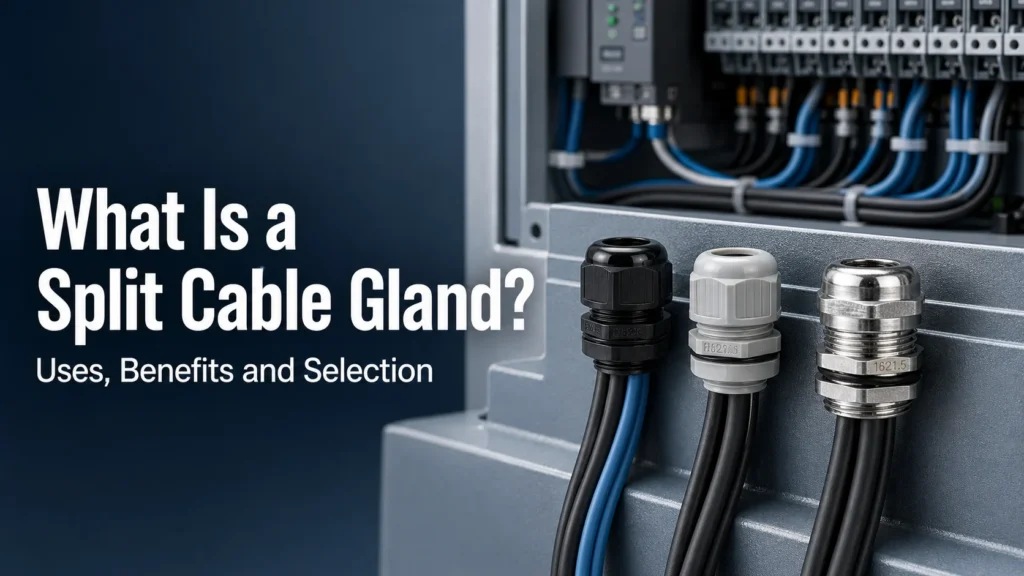
A split cable gland is a cable-entry fitting that opens into separate parts and is assembled around an existing cable. This lets you route and seal a pre-terminated cable—such as an M12 sensor lead, RJ45 cable, USB cable, or complete wiring harness—without removing its connector. The gland holds the cable, provides strain relief, and can help maintain the enclosure’s specified protection level when the correct product is selected and installed.
The defining feature is simple: unlike a conventional gland, the cable does not have to pass through a closed sealing ring and gland body. That makes the split design especially useful for retrofits, repairs, and equipment containing factory-terminated cables.
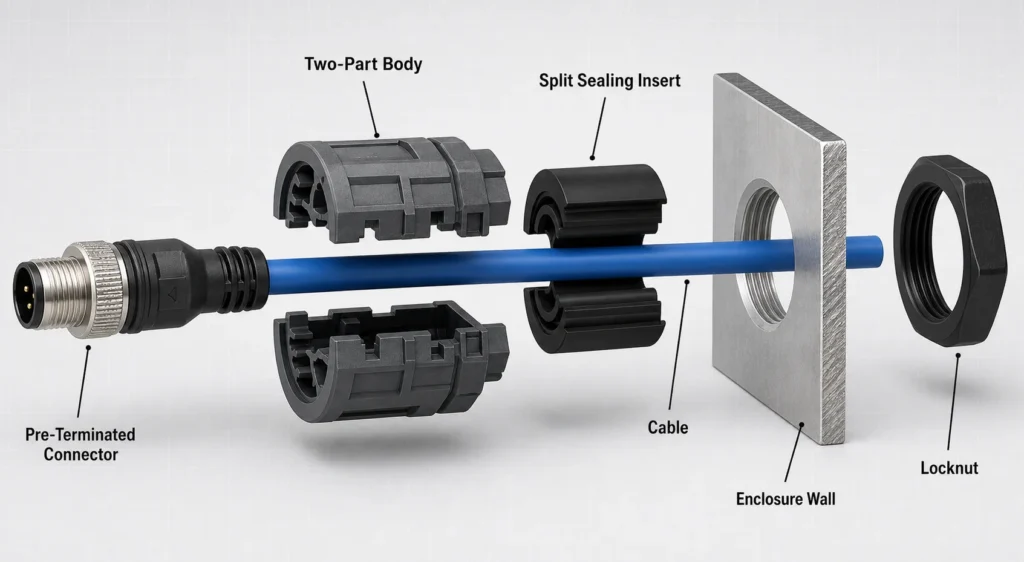
A typical split gland uses a two-part body and a slit elastomer sealing insert. The insert is placed around the cable jacket, then fitted into the body. The two body halves close around the insert, and the assembled gland is secured to the enclosure by a thread and locknut, a threaded hole, screws, or a snap-in mechanism, depending on the design.
As the parts are closed and tightened, the insert compresses around the cable. This compression performs three related tasks:
The actual performance depends on the complete assembly—not merely the word “split.” Cable diameter, insert size, enclosure surface, mounting-hole dimensions, gasket condition, tightening torque, and product certification all matter.
Both types can seal and retain cables, but they solve different installation problems. A standard gland is normally installed by passing an accessible cable end through its components. A split gland is assembled around a cable that is already routed or already has a connector.
| Selection factor | Split cable gland | Standard cable gland |
|---|---|---|
| Cable condition | Ideal for pre-terminated or fixed cables | Best when the cable end is accessible |
| Installation method | Assembled around the cable | Cable passes through the gland |
| Retrofit work | Usually faster and less disruptive | May require disconnection or re-termination |
| Connector preservation | Connector remains attached | Large connectors may not pass through |
| Available configurations | Single- or multi-cable inserts, depending on system | Commonly one cable per gland |
| Cost and simplicity | More components and typically higher unit cost | Often simpler and more economical for new wiring |
A split gland is not automatically better. For a new installation with unterminated cable and no expected changes, a conventional gland may be the simpler choice. You can review the broader range of waterproof cable gland options before deciding which construction fits the project.
Use a split cable gland when preserving the cable termination is more important than using the simplest possible entry fitting. Common examples include:
These situations are common in industrial automation, robotics, machine building, renewable-energy equipment, transportation, telecommunications, outdoor enclosures, and marine systems. For application planning beyond the gland itself, see GHX’s overview of cable gland application areas.
The most important benefit is that the connector stays attached. This avoids field re-termination, reduces the risk of wiring errors or damaged contacts, and helps preserve factory-tested cable assemblies.
Because the gland closes around the cable, technicians can often modify an entry without pulling the full cable run. That can reduce maintenance time and limit disruption to nearby equipment. Electrical isolation and the site’s safety procedure are still required; “retrofit” does not mean work should be performed on energized equipment.
A correctly matched assembly can provide environmental sealing and cable retention at the enclosure wall. However, never assume a particular IP or NEMA rating from appearance alone. Verify the exact rating for the complete gland, insert, cable range, and mounting arrangement.
Some systems accept interchangeable inserts for different cable diameters, multiple cables, or blank positions. This can simplify panel variants and later changes, especially where several connectorized cables share a compact entry area.
The separable construction introduces more interfaces than a one-piece gland, so correct assembly is critical. Split glands may also cost more, require a larger mounting footprint, or provide fewer material and certification options than established conventional gland ranges.
Check carefully before using a split gland in hazardous locations, fire-critical systems, high-pressure washdown, continuous immersion, extreme temperatures, aggressive chemicals, or EMC-sensitive installations. A standard split product does not automatically provide explosion protection, chemical resistance, or 360-degree shield termination. Each requirement must appear in the manufacturer’s documented specification.
Selection begins with the cable, the connector, and the enclosure—not with thread size alone. Use this checklist:
For a closer look at wet-environment selection, compare these points with the existing waterproof split cable gland guide. If a conventional construction is suitable, GHX also provides nylon cable glands, brass cable glands, and stainless steel cable glands for comparison.
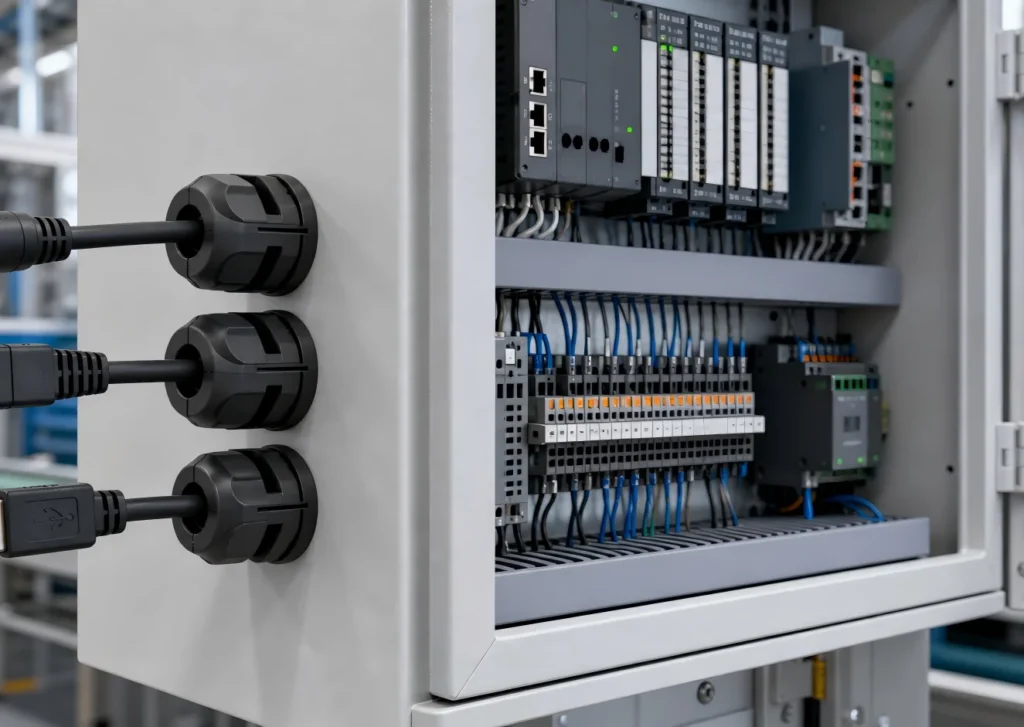
Always follow the product-specific instructions and have electrical work performed by qualified personnel. The general sequence is:
Common causes of poor sealing include using an insert outside its cable range, mounting on a rough or curved surface, trapping debris at the split, omitting the enclosure gasket, and over- or under-tightening the assembly. The cable gland installation guide provides additional preparation and sealing principles.
The terms are sometimes used loosely, but the products are not always identical. A split cable gland is generally a compact, gland-like fitting installed in a round opening and used for one or a small number of cables. A split cable entry system usually consists of a larger rectangular or circular frame with several modular inserts.
Choose a split gland for a compact entry with limited cable count. Consider a modular entry frame when many connectorized cables must pass through one cut-out, when frequent configuration changes are expected, or when cable density is the main design constraint.
Yes. That is its primary purpose. The body and sealing insert open and close around the cable behind the connector, so the connector does not need to pass through the gland.
No. Protection ratings vary by model and assembly. Check the tested IP or NEMA rating and all conditions associated with it, including cable range, insert type, mounting method, and enclosure interface.
Some models accept multi-hole inserts, while others are designed for one cable only. Every cable must fall within the specified range for its opening, and unused openings must be sealed with approved blanks.
Only models specifically designed and documented for shield termination should be treated as EMC cable glands. A metal body alone does not guarantee continuous, low-impedance contact with the cable shield.
Only when the product documentation explicitly supports the cable construction and required armor termination. Many split glands simply seal the outer jacket and do not provide the mechanical or electrical functions of an armored cable gland.
Provide cable outside diameter, connector dimensions, cable quantity, enclosure cut-out and thickness, required IP rating, material preference, temperature and chemical exposure, thread standard, strain-relief needs, and any mandatory approvals.
A split cable gland is the practical choice when a terminated cable must enter an enclosure without cutting off its connector. It combines a separable body and sealing insert to simplify installation while providing cable retention, strain relief, and—when specified and assembled correctly—environmental sealing. Choose it from documented cable range, mounting dimensions, protection rating, environment, and compliance requirements rather than from thread size alone.
If you are specifying a split entry for a new enclosure or retrofit, contact GHX with your cable and installation dimensions to compare a suitable configuration.
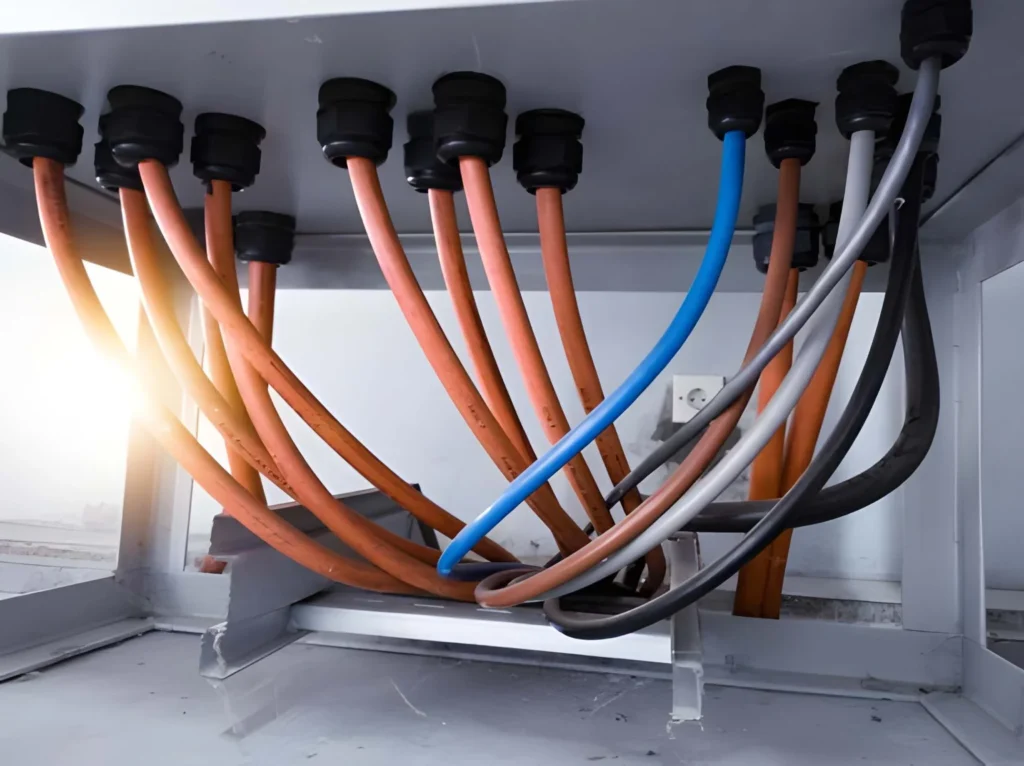
Find top waterproof cable gland suppliers offering IP68 rated, nylon brass and stainless steel glands with custom sizes and fast global shipping
Read More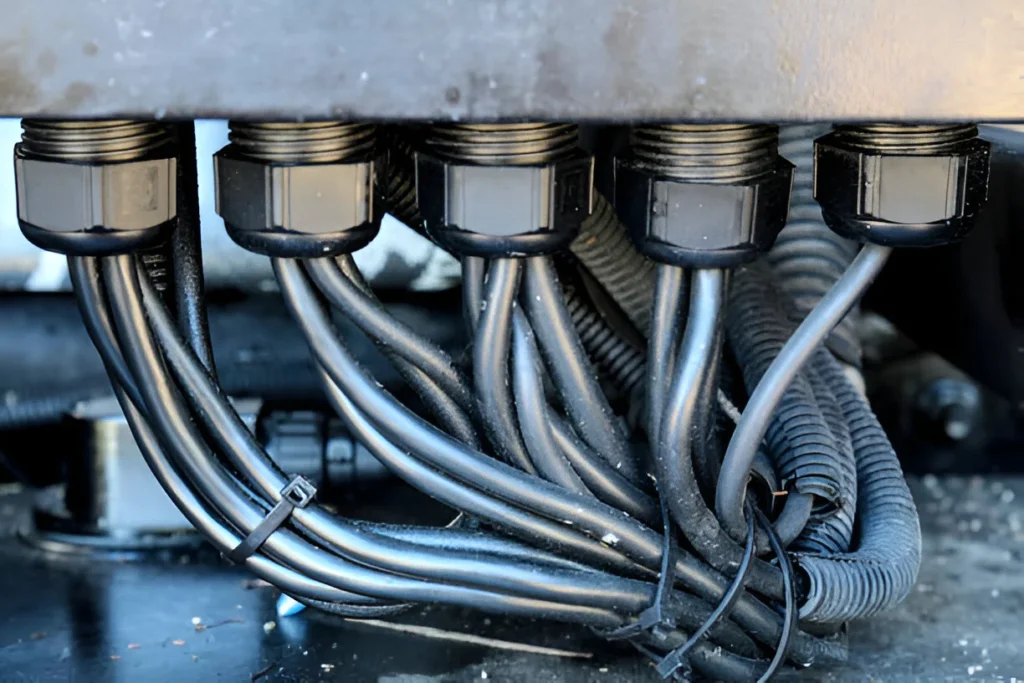
A brass waterproof cable gland helps protect cable entries from water, dust, and strain in industrial and marine installations. Learn how to choose the right model, size, and supplier.
Read More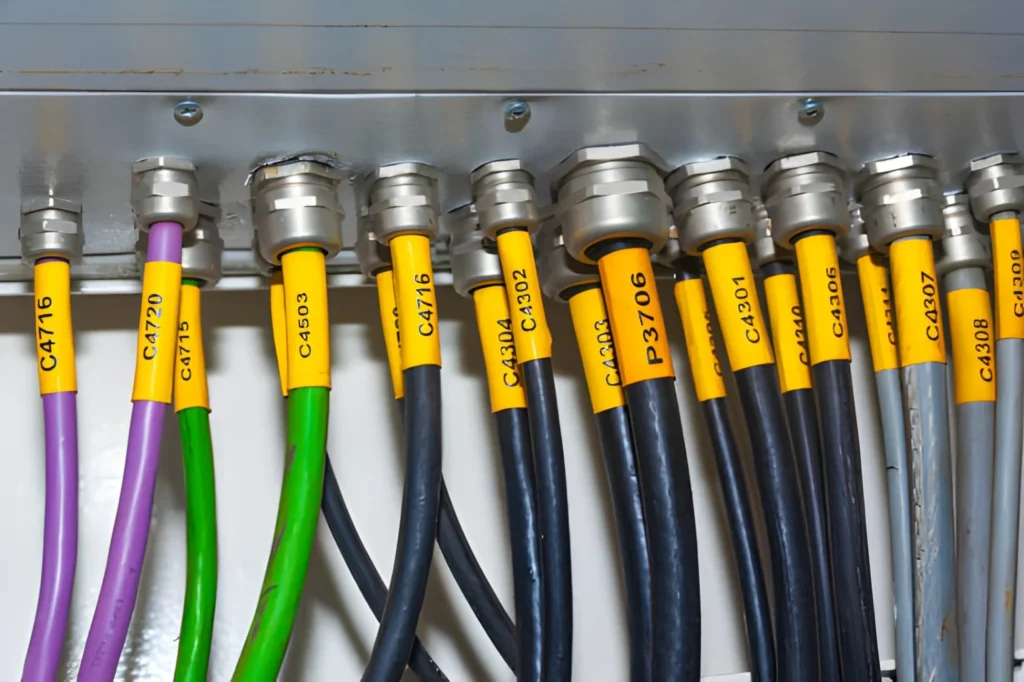
Discover premium waterproof cable gland connectors with IP68 ratings offering durable sealing, strain relief, and corrosion resistance for harsh environments.
Read More