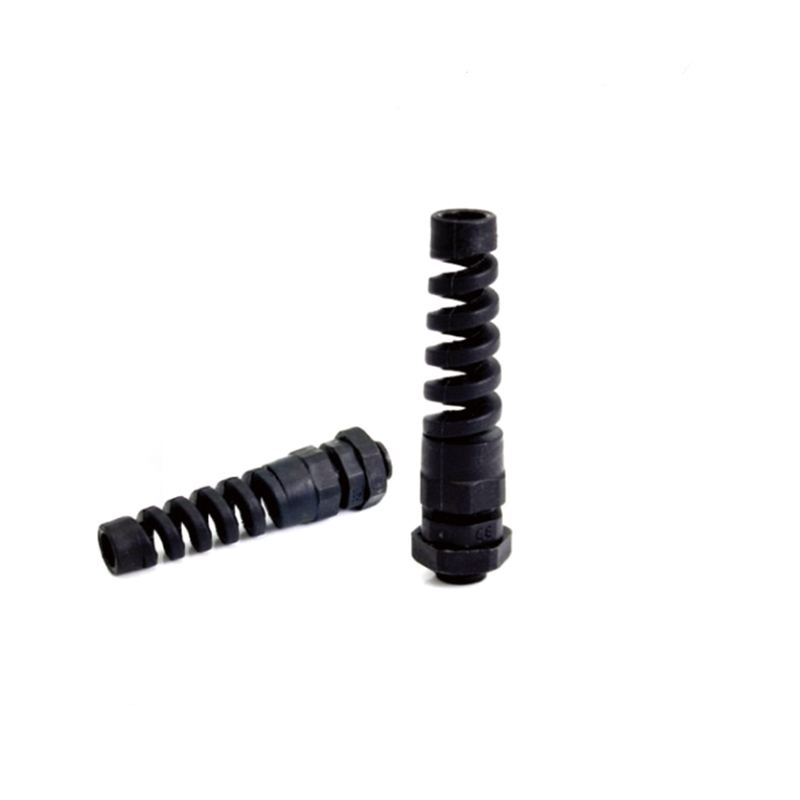
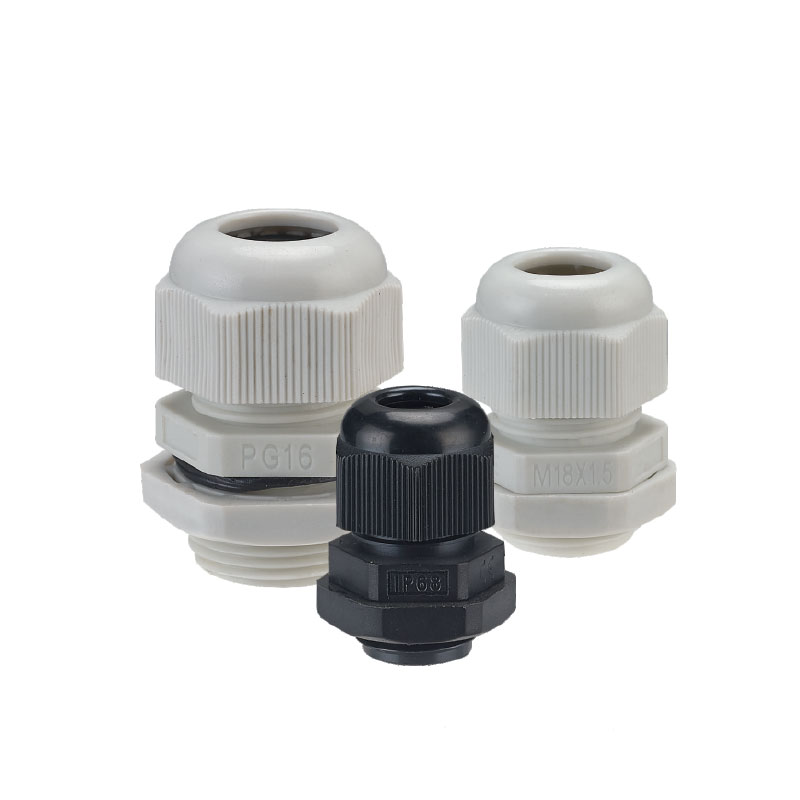
As a crucial accessory connecting cables and equipment, the cable gland plays a vital role in protecting cables, preventing water and dust ingress, and providing grounding. Whether in industrial automation, electrical control, marine, mining, or other demanding environments, choosing the right cable gland is essential. Today, let’s take a closer look at the main types of cable glands, their features, and how to select the best one for your needs.
What is a Cable Gland?
Simply put, a cable gland is a fitting installed at the cable entry point of equipment. It secures the cable, prevents accidental pull-out, and provides sealing against water and dust. It also offers grounding and shielding, ensuring safe and stable electrical connections.
Key functions include:
Securing cables and preventing accidental pull-out or breakage
Keeping dust and moisture out of equipment
Providing electrical grounding and shielding to reduce electromagnetic interference
Protecting cable sheaths and extending cable lifespan
Cable glands are widely used in machinery, industrial automation, marine, rail transit, mining, and many other fields. They are indispensable in any electrical system.
Main Types of Cable Gland
Cable glands come in many varieties. They can be classified by structure, material, protection level and thread standard. Here’s a detailed overview of each dimension, with the specifications and indicative FOB prices that decide most B2B orders:
1. By Structure
The five structural families below are compared on the three factors that decide most B2B orders: specification, application and price.
Type
Specification (threads & cable range)
Typical Application
Indicative FOB Price
Standard Cable Gland
PG7–PG48, M12–M63, NPT 1/4″–2″; cable OD 3–44 mm; nylon PA66 or nickel-plated brass; IP68 (IP66 option)
Control cabinets, junction boxes, indoor panels, light-duty outdoor
US$0.08–1.20 / pc
Heavy Duty Cable Gland
PG9–PG63, M16–M63; cable OD 6–52 mm; nickel-plated brass or stainless steel 304/316; IP66–IP68; thicker body, longer thread
M20×1.5, M25, PG13.5–PG29; cable OD 6–32 mm; brass or stainless steel 316; IP66/IP68; ATEX / IECEx Ex e & Ex d
Zone 1 and Zone 2, oil & gas, chemical plants, refineries, mining
US$2.50–14.00 / pc
EMC Cable Gland
M12–M63, PG7–PG48; cable OD 3–38 mm; nickel-plated brass with 360° contact spring; IP68
VFD motor cables, drives, instrumentation, data centres, telecom cabinets
US$0.90–6.50 / pc
Armoured Cable Gland (SWA / STA)
M20–M63, PG13.5–PG48; cable OD 10–52 mm; brass or stainless steel with armour clamp and earth tag; IP66/IP68
Buried and tray-run armoured feeders, process plants, rail, mining, petrochemical
US$1.20–7.50 / pc
Price basis: indicative FOB Ningbo / Shanghai unit prices for nickel-plated brass, 1,000 pcs per size, standard export packing. Stainless steel, Ex-certified, custom-thread and private-label versions are quoted separately — see the sourcing section below.
Standard Cable Gland
Body material nylon PA66 (UV-stabilised) or nickel-plated brass; threads PG7–PG48, M12–M63 or NPT; cable OD 3–44 mm; IP68, with IP66 available on request. The general-purpose choice for non-armoured plastic or rubber-sheathed cable, and the highest-volume item in most OEM programmes.
Application: control cabinets, junction boxes, indoor panels, light-duty outdoor equipment. Indicative price: US$0.08–1.20 per pc, FOB, 1,000 pcs per size.
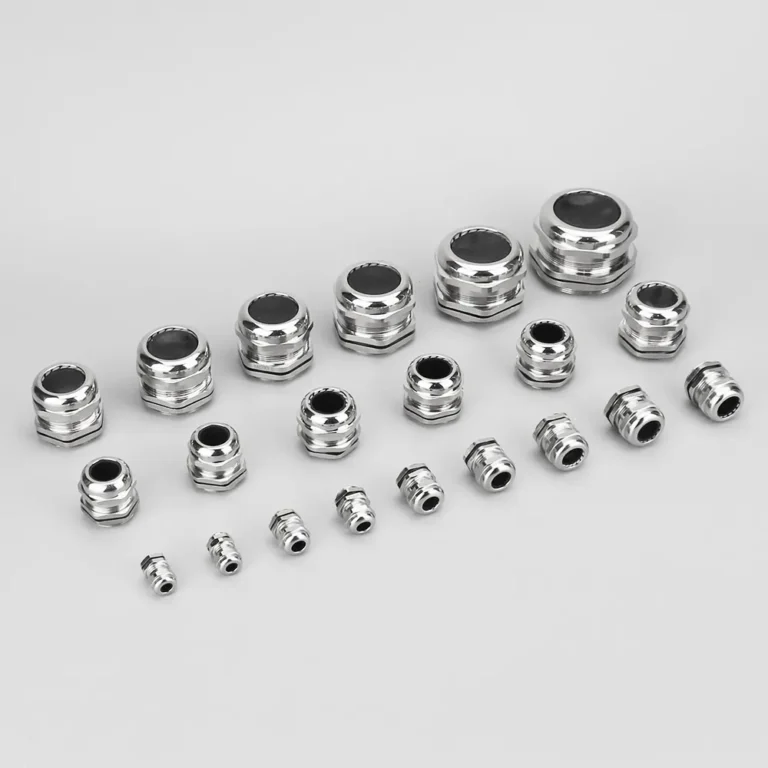
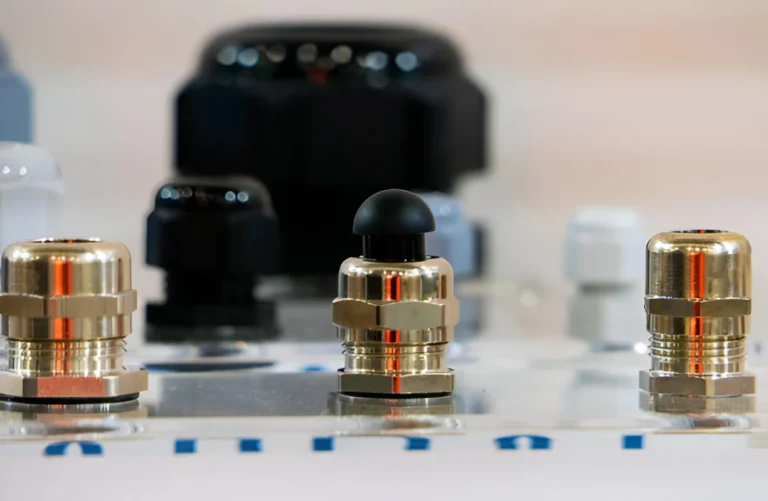
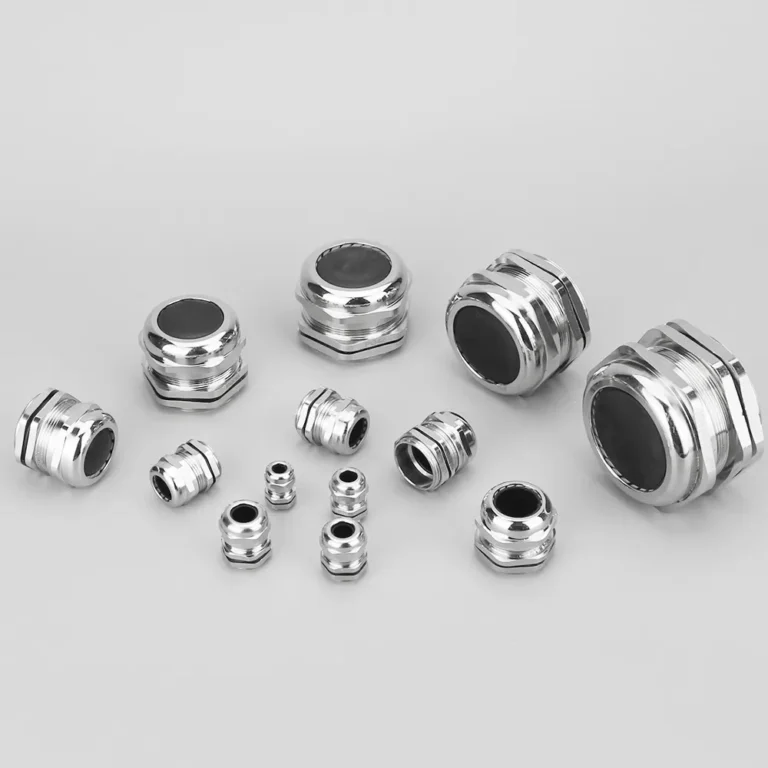
Standard nickel-plated brass cable glands — PG, metric and NPT thread, IP68.
Heavy Duty Cable Gland
The same sealing principle as a standard gland, but with a thicker body wall, a longer thread and a larger sealing nut; threads PG9–PG63 or M16–M63; cable OD 6–52 mm; nickel-plated brass or stainless steel 304/316; IP66–IP68. Specified wherever vibration, washdown or mechanical impact would fatigue a light-duty gland.
Application: machinery, food and beverage washdown, high-vibration equipment, outdoor enclosures. Indicative price: US$0.60–4.80 per pc, FOB, 1,000 pcs per size.
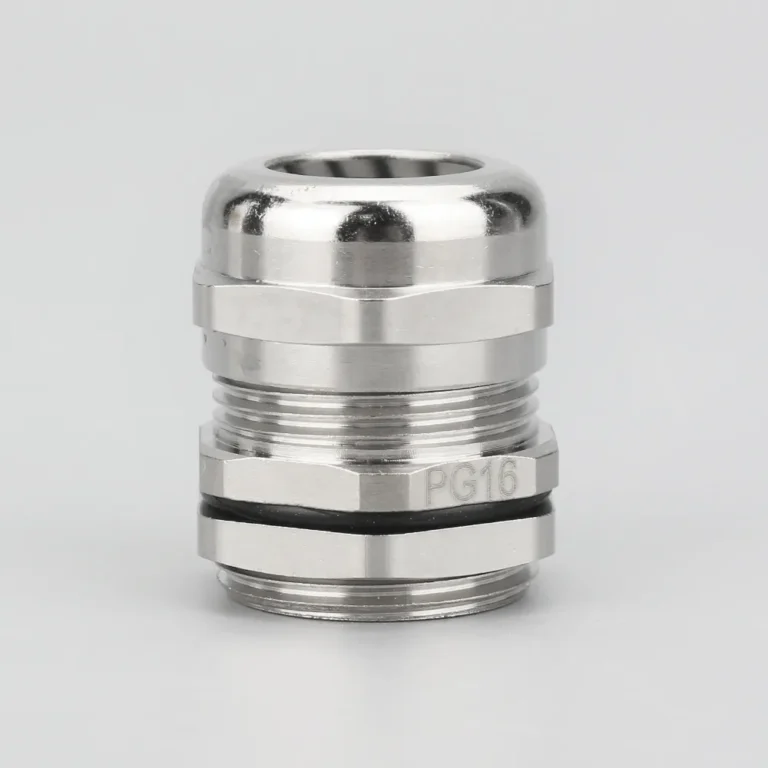
Heavy duty stainless steel cable gland PG16 — thicker body wall and extended thread.
Explosion-proof Cable Gland
Flameproof or increased-safety construction with a controlled flame path and a certified sealing arrangement; M20×1.5, M25, PG13.5–PG29; cable OD 6–32 mm; brass or stainless steel 316; IP66/IP68; supplied with ATEX / IECEx Ex e or Ex d certification. On site it is the certificate, not the thread size, that the inspector asks to see.
Application: Zone 1 and Zone 2, oil and gas, chemical plants, refineries, mining. Indicative price: US$2.50–14.00 per pc, FOB, 300 pcs per size.
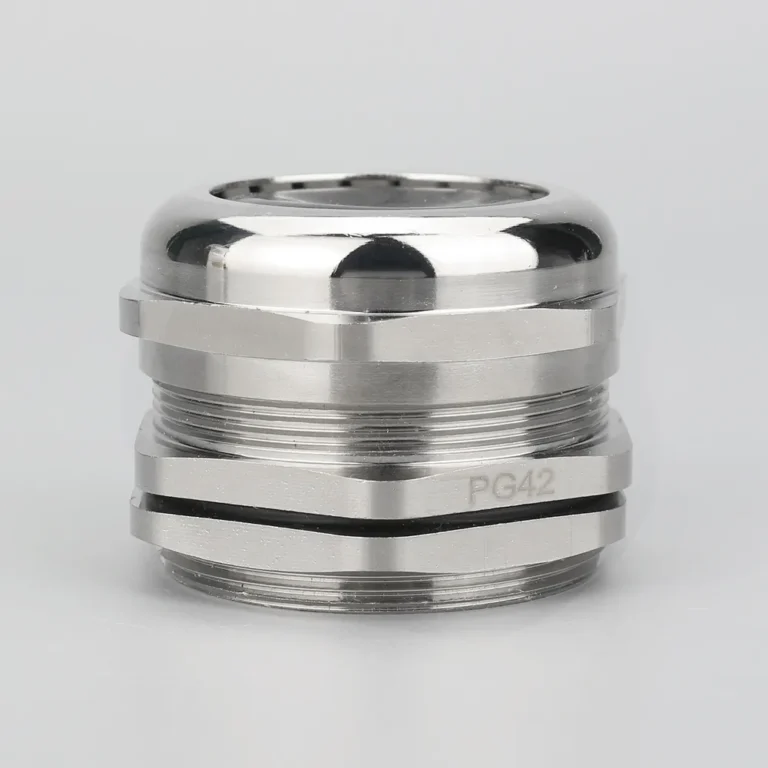
Explosion-proof stainless steel cable gland PG42 for hazardous areas.
EMC Cable Gland
Nickel-plated brass body with a 360° contact spring or grounding insert that bonds the cable screen to the enclosure; M12–M63 or PG7–PG48; cable OD 3–38 mm; IP68. Low transfer impedance is the whole point: the screen has to be terminated at both ends, or the gland is only doing half its job.
Application: VFD motor cables, drives, instrumentation, data centre and telecom cabinets. Indicative price: US$0.90–6.50 per pc, FOB, 1,000 pcs per size.
EMC / shielded brass cable glands for screened cable termination.
Armoured Cable Gland (SWA / STA)
Includes an armour clamping ring and an earth tag so the steel wire or tape armour is mechanically anchored and electrically bonded; M20–M63 or PG13.5–PG48; cable OD 10–52 mm; brass or stainless steel; IP66/IP68. These are sized on the armour wire count and diameter, not on the cable OD alone — send the cable datasheet when you request a quotation.
Application: buried and tray-run armoured feeders, process plants, rail, mining, petrochemical. Indicative price: US$1.20–7.50 per pc, FOB, 1,000 pcs per size.
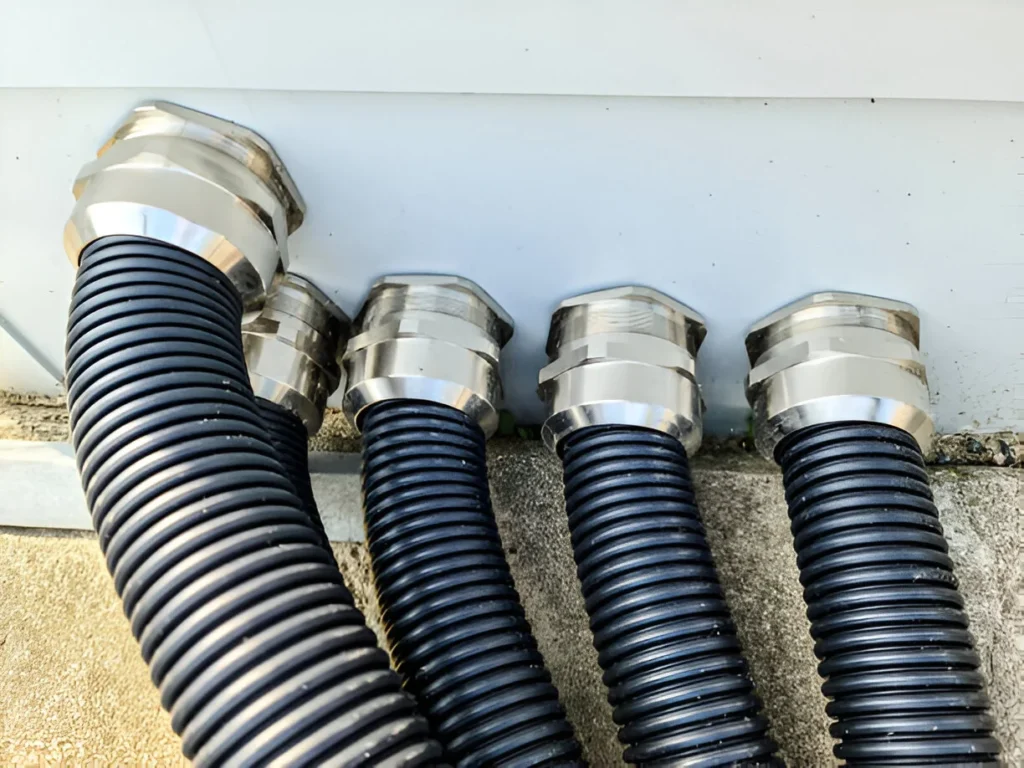
Brass armoured cable glands installed on a feeder run — armour clamp and earth tag.
Single vs Double Compression — and Other Structural Options
Alongside the five families above, gland bodies are also described by how many sealing stages they use and what the cable entry is made of. The distinction matters when you write the specification, because a single-compression gland is a different part from a double-compression gland at the same thread size, and the two are not interchangeable on the same cable.
Single compression One compression ring grips and seals the cable in a single action. Simple, fast to install, and the right choice for indoor control panels, junction boxes and general machinery.
Double compression Seals on both the inner and the outer layer of the cable, so the barrier holds even when the cable is flexed or pulled. Specified for factories, power plants and other high-sealing installations.
Flexible hose / spiral entry The cable enters through a flexible hose instead of a rigid body, absorbing vibration and mechanical stress in high-temperature or moving machinery.
PVC An economical body for instrument and control cables in light-duty indoor environments where corrosion and UV exposure are not a factor.
2. By Material
Metal Cable Gland: Common materials include brass, stainless steel, and aluminum. These offer corrosion and high-temperature resistance, ideal for outdoor and industrial use.
Plastic Cable Gland: Usually made of nylon, lightweight and cost-effective, suitable for light-duty cables and indoor applications.
Special Materials: Such as PVDF, offering superior corrosion resistance for chemical environments.
The specification differences matter more than the label, so here is the same comparison across materials:
Material
Temperature range
Corrosion & UV
Common threads
Best for
Indicative FOB price
Nylon PA66 (UV-stabilised)
−40 to +100 °C
Good UV resistance; limited resistance to solvents and aromatics
PG7–PG48, M12–M63
Indoor and light-duty outdoor, price-sensitive OEM programmes
US$0.05–0.35 / pc
Nickel-plated brass
−40 to +120 °C
Very good; resists washdown chemicals and saline air
PG7–PG63, M12–M63
Industrial, oil & gas, general outdoor, armoured feeders
US$0.30–4.00 / pc
Stainless steel 304
−40 to +200 °C
Excellent; pitting risk in chloride-rich environments
PG7–PG63, M16–M63
Food and pharma washdown, general marine
US$1.80–12.00 / pc
Stainless steel 316L
−40 to +200 °C
Best; resists chlorides and most acids
PG7–PG63, M16–M63
Offshore, chemical, coastal and subsea-adjacent
US$2.60–16.00 / pc
PVDF
−40 to +150 °C
Outstanding chemical resistance; lower mechanical strength
PG7–PG29, M12–M40
Aggressive chemical plants, chlorine and acid duty
Quoted on request
Stainless steel cable glands (304 / 316L) — for washdown, marine and offshore duty.
Nylon PA66 cable glands with sealing inserts — the cost-effective indoor and OEM option.
Thread compatibility decides whether the gland threads cleanly into your enclosure, and a mismatched thread is one of the most common reasons an order is rejected on arrival. Three standards cover almost every B2B requirement:
Thread standard
Origin & market
Marking example
Where it is specified
Metric (ISO)
International; ISO / IEC
M20 × 1.5
Europe, Asia, the Middle East and most new equipment designs worldwide
PG (Panzer-Gewinde)
German; legacy European
PG13.5
Older European-built machinery, retrofit panels and replacement orders
NPT (National Pipe Thread)
American; ANSI
NPT 1/2″
North American equipment, instrument ports and imported US machinery
PG and metric threads are not interchangeable. PG13.5 is not an M20 substitute — the outside diameters differ and the sealing face sits in a different position, so a gland that appears to thread in will still not seal. Metric, PG and NPT sizes are all produced on the same line, so the thread standard is a specification choice rather than a sourcing constraint. Confirm it against your drawing, or against the gland you are replacing, before you order.
In practice the type rarely stands alone. The same plant usually needs a nylon standard gland on a control cabinet, a shielded gland on the VFD motor feeder and a stainless steel armoured gland on the incoming supply — three different types, three different purchase channels, one bill of materials. The application scenarios below show how the environment itself dictates the type.
Cable Gland Application Scenarios
The choice of cable gland depends on the application environment. Here are some typical scenarios:
Industrial Automation: Requires dustproof, waterproof, and durable glands for machinery and control cabinets.
Marine & Rail Transit: Needs waterproof and corrosion-resistant glands for electrical safety.
Mining & Hazardous Environments: Explosion-proof cable glands are essential for safety.
Communication & Data Centers: EMC cable glands reduce electromagnetic interference and ensure stable signals.
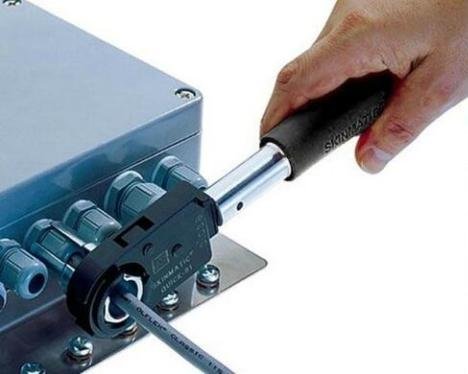
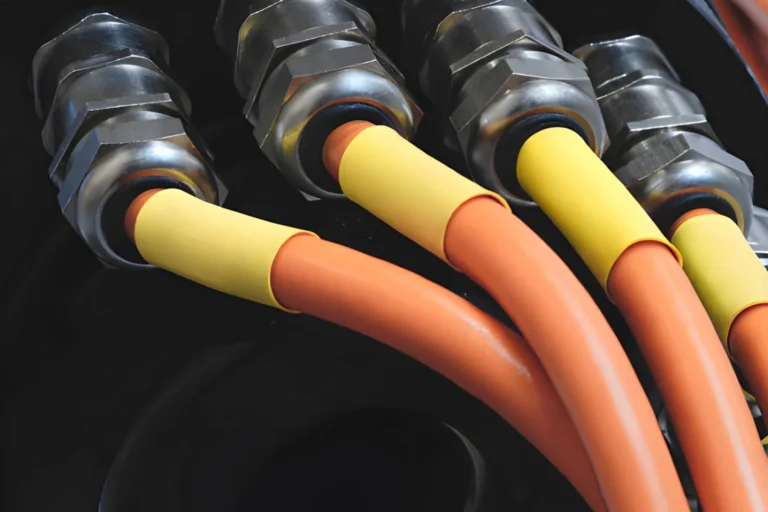
Typical industrial installation — brass glands in a machine-mounted control assembly.
How to Select the Right Cable Gland
Choosing the right cable gland ensures your electrical system is safer and more reliable. Consider these key factors:
Cable diameter and hole size Measure the cable’s outer diameter (OD), not the nominal wire size, and match it to the gland’s clamping range — a seal that is too loose lets water past, one that is too tight damages the sheath. Note whether the cable is armoured or non-armoured, because the two need different gland bodies.
Thread standard and size Confirm which thread your enclosure takes — metric, PG or NPT — and the exact size. This is the single most common cause of a rejected order, and it cannot be corrected on site.
Material selection Match the material to the environment and to lifecycle cost: nylon PA66 for economy and insulation, nickel-plated brass for industrial strength, and stainless steel 304/316 for washdown, marine and chemical duty.
Protection level Set the IP target from the real exposure — IP66 for outdoor weather, IP68 where immersion or washdown is possible — and add corrosion-resistant, explosion-proof or EMC construction if the site demands it.
Special functions Specify shielding for VFD and instrumentation cables, high-temperature construction for ovens and engine bays, or a chemically resistant body for chlorine and acid duty.
International standards and certifications Check the product against EN 50262, IEC 60529 and IEC 60079 where they apply, and confirm the paperwork your market requires: CE, RoHS, REACH, and ATEX / IECEx for hazardous areas.
Factory-Tested IP Data
A datasheet rating is only useful if it can be reproduced in production. Our in-house test bench verifies ingress protection on production samples in line with IEC 60529 and ISO 20653. The results below are sample-based and depend on the cable OD matching the gland’s clamping range and on correct tightening torque.
Test
Standard basis
Test condition
Sample
Result
IP68 static immersion
IEC 60529
1.5 m depth, 30 min
PA66 nylon IP68 gland, M20, cable OD 10–13 mm
Pass — no water ingress
IP67 immersion
IEC 60529
1 m depth, 30 min
316 stainless steel, M20
Pass
IP66 water jet
IEC 60529
100 kPa, 12.5 L/min, 3 m distance
Nickel-plated brass, M25
Pass
IP69K high-pressure washdown
ISO 20653
80 °C water, 100 bar, 4 positions
Hygienic 316 stainless steel gland
Pass
This is why the cable OD range matters as much as the IP number: an M20 gland rated IP68 still lets water in if the cable measures 8 mm while the gland’s clamping range starts at 10 mm. Send your actual cable OD and we will test and match the exact model rather than the nearest catalogue size.
Sourcing Cable Glands: OEM Inquiries, MOQ and Certifications
Once the type is settled, the buying decision comes down to tooling and branding, minimum order quantity, and paperwork.
OEM inquiries. For private-label orders we need four inputs before quoting: the gland type and thread standard (PG, metric or NPT), the cable OD range, the body marking you want laser-etched (brand, size, IP code), and the packing format — bulk bag, poly-bagged with your label, or retail blister. Custom bodies, non-standard thread lengths and colour-matched nylon (black, grey, white or a specific RAL) are tooled in-house: a new nylon mould takes 25–30 days, while laser marking on an existing mould starts with the first production run.
MOQ. Standard nickel-plated brass and nylon glands ship from 1,000 pcs per size with no tooling charge; trial orders of 100–500 pcs are available on stock sizes so you can validate the fit before committing to volume. Stainless steel and Ex-certified glands carry a 300 pcs per size MOQ because they are machined to order. Mixed containers are welcome — we build the size mix across types so one 20 ft container is filled at a single freight cost.
Certifications. Our glands are produced under ISO 9001, and the documents most buyers need ship with the first order: IP68 immersion test report, CE declaration, RoHS and REACH statements, and material certificates for brass and stainless steel. Explosion-proof models come with ATEX / IECEx certificates, and third-party inspection (SGS, TÜV, BV) can be arranged at cost. If your market needs a specific standard — EN 50262, EN 62444, UL 514B or a local approval — raise it at the inquiry stage: it changes the body design, not just the paperwork.
Send us the type, the thread and the annual volume and we will return a specification drawing, a certificate pack and an FOB quotation within one working day — contact us here.
FAQ
Q: How do I install a cable gland?
A: Clean the cable, strip the sheath, insert it into the gland, and tighten according to the manufacturer’s torque recommendations to ensure a secure and sealed fit.
Q: How do I maintain a cable gland?
A: Regularly check for cracks or looseness. Reseal or replace parts as needed.
Q: What’s the difference between an armoured cable gland and a standard cable gland?
A: Armoured cable glands are designed for steel wire armoured cables, securing the armour layer and providing grounding. Standard glands do not offer this feature.
Q: What is the difference between single and double compression cable glands?
A: Single compression glands seal at one point and suit standard indoor and general environments. Double compression glands seal on both the inner and outer layer of the cable, so protection is maintained under flexing or pull — specify them for factories, power plants and other high-sealing installations.
Q: How do I choose between metric, PG and NPT threads?
A: Match the thread on your enclosure, or on the gland you are replacing. Metric (for example M20 × 1.5) is the international standard, PG is the legacy German standard still common on older European machinery, and NPT is the tapered American standard used on North American equipment. They are not interchangeable — PG13.5 is not a substitute for M20.
Q: Can I use nylon cable glands outdoors?
A: Yes, provided the nylon is UV-stabilised and the exposure is light duty. For permanent outdoor, direct-sunlight or washdown service, specify nickel-plated brass or stainless steel 304/316 instead.
Q: What cable OD range does your M20 gland actually clamp?
A: It varies by model — a typical M20 nylon IP68 gland clamps 6–12 mm, while brass and stainless steel versions differ. Send us your cable OD and we will match the exact model instead of quoting the nearest catalogue size.
Q: Do you have test reports for the IP rating you quote?
A: Yes. We provide the IP test result sheet from our in-house lab together with CE, RoHS and REACH documentation. For explosion-proof products, tell us the zone and the standard you need and we will confirm the certificate on the specific model.
Q: What is your MOQ, and can you supply samples before we order in bulk?
A: Standard nickel-plated brass and nylon glands ship from 1,000 pcs per size, with trial orders of 100–500 pcs available on stock sizes. Samples of 1–2 pcs per size can be sent against freight cost, and the sample charge is credited on your first bulk order. Stainless steel and Ex-certified glands carry a 300 pcs per size MOQ. Different sizes and types can be combined in one container.
Waterproof cable gland play a vital role in modern industries, especially in the B2B sector. They not only ensure the sealing of cable connections, preventing water and dust ingress, but also enhance the overall safety and stability of electrical systems. Did you know that improper installation of cable glands can not only shorten equipment lifespan […]
In industrial and construction projects, Waterproof Cable Gland are essential components that ensure the safety and stable operation of cables. Whether facing rain and dust in outdoor environments or dealing with explosive hazards in dangerous areas, choosing the right cable gland is crucial. Today, let’s explore two common types of cable glands—waterproof cable glands and […]
We use cookies to enhance your browsing experience, serve personalised ads or content, and analyse our traffic. By clicking "Accept All", you consent to our use of cookies.