Waterproof Cable Gland
Cable Gland Thread Size Chart: Metric, PG, NPT and G
Metric, PG, NPT and G thread size charts in one place, with the reading method that turns a chart row into a correct purchase order.
Read More
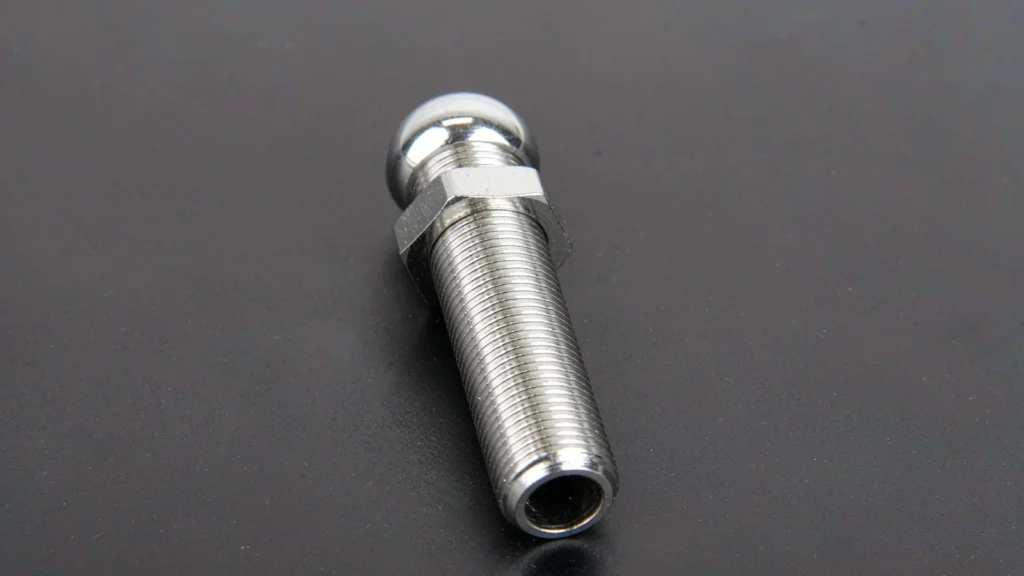
A barrier cable gland interrupts a path that most people do not know exists. A normal flameproof entry seals the outside of the cable sheath, which stops water and dust but does nothing about the gaps between the individual strands and between the cores inside the cable. Those gaps form a continuous tube from one end of the cable to the other, and gas can travel down it into an enclosure that was designed to contain an explosion. The explosion proof cable gland family splits into two jobs at exactly this point, and the barrier gland is the half that deals with the inside of the cable.
The sealing agent is a compound that is mixed, poured and left to cure into a solid plug around the separated cores. Everything that goes wrong with these glands goes wrong in that plug — its flow, its fill, its cure and the fact that nobody can see it afterwards. This guide covers the compound as a material and a process, not the enclosure’s choice of protection concept.
A standard Ex d gland and a barrier gland look similar from outside because the difference is a chamber and a seal inside the body. The barrier version adds a boot or sleeve that the cores pass through, a cavity that gets filled, and the compound itself.
| Part | Standard Ex d gland | Barrier gland |
|---|---|---|
| Body and dome nut | Present | Present, often with a longer chamber |
| Seal on the sheath | Compression seal on the outer sheath | Same, plus a boot around the cores |
| Sealing chamber | None | A void that is filled with compound and cured |
| Compound | Not used | Part of the certified assembly, not a consumable choice |
| What stops gas | The sheath seal only | The cured plug around each individual core |
The important line is the last one. The plug is not a better seal — it seals at a different place, further in, against a different surface. A barrier gland does not raise the IP rating and does not make a wet entry dry. It also sits at one end of a much wider family, which the main types guide maps out.
A stranded conductor is a bundle of wires with microscopic gaps running lengthwise. Between the cores, inside the bedding, the same thing happens at a larger scale. In a hazardous area the consequence is that a gas mixture present at one end of a cable can arrive inside an enclosure at the other end, bypassing the flameproof envelope entirely. Flame from an internal explosion can travel the same route in the opposite direction.
Whether a cable is gas-tight is a property of its construction, not its jacket. A solid conductor has no path. A compressed or sealant-filled stranded conductor is close to gas-tight. An ordinary stranded core in a multi-core cable is not, and neither is a cable whose bedding and filler are open. The gland cannot fix any of that; it can only block the route at the entry, which is why the pour has to reach every gap rather than simply fill a space.
Three methods appear in practice, and they are not interchangeable in certification terms.
| Method | How the plug forms | What it demands on site |
|---|---|---|
| Two-part compound | Resin and hardener are mixed and poured, then cure chemically into a solid | Correct ratio, correct ambient, a mixing record, and a cure period before energising |
| Hand-moulded putty | Mastic is kneaded around the cores and pressed into the chamber | Patient packing with no voids, and full coverage of every core |
| Pre-formed or gel insert | A shaped part or gel fills the chamber by compression | Exact size match, no cutting to fit, no reuse after disturbance |
Only the first produces a chemical bond to the cores. Putty and gel rely on being packed tightly, and both are sensitive to how well the installer worked around the outside of the bundle. Which of the three is acceptable on a given entry is decided by the approved assembly, not by what is on the van.
Compound flows like syrup when mixed and stops flowing within minutes as it starts to gel. That short window is the whole reason the pour is sequenced the way it is: the material has to reach the far end of the chamber before it stiffens, and it has to pass between the cores rather than around them.
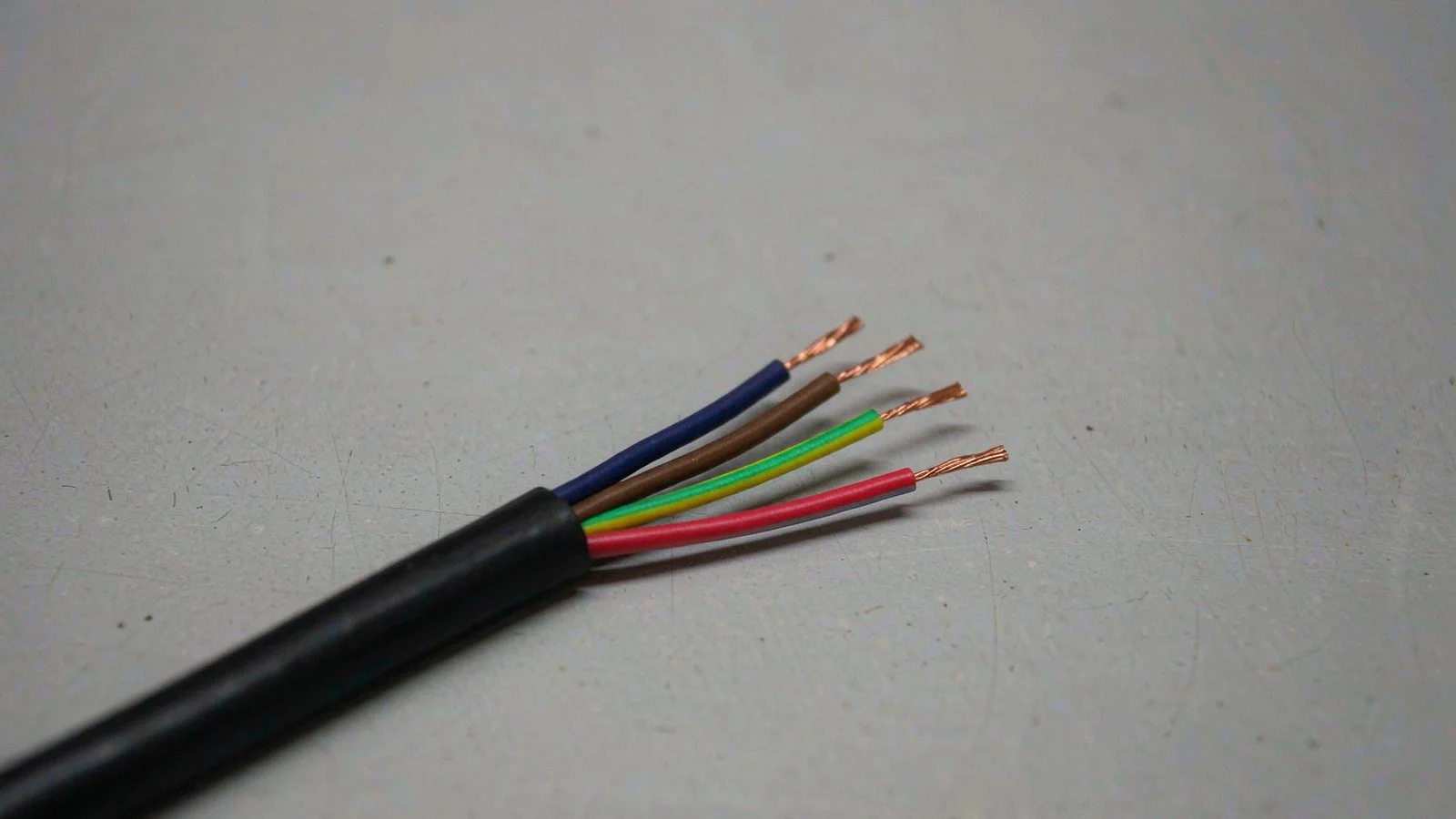
Which is why the cores are separated first. If they are still taped, bundled or twisted at the point where the compound enters, the resin flows around the bundle like water around a stone and leaves a channel down the middle. The plug looks full from the outside, the chamber is full, and the gas path is untouched. Separating the cores, spreading them slightly and keeping them apart until the compound has gelled is the single most important act in the process — more important than the mix ratio, because a slightly off ratio still cures into something solid, while a bundled pour cures into something useless.
Pot life is the time between mixing and the point where the compound can no longer be poured. It falls sharply as ambient temperature rises, and it is quoted for a stated temperature on the pack. A mix that gives comfortable working time in a cool workshop can gel before it reaches the chamber on a roof in summer.
The cure has a minimum as well. Barrier instructions commonly specify a period in the order of a day above roughly 10 °C before the circuit is energised, and the exact figures come from the compound and gland documentation rather than from a rule of thumb. Two practical consequences follow. Below the stated minimum the reaction stalls and the plug stays soft, so cold weather work needs either a warmed enclosure or a different compound. And a part-used mix must never be topped up: pot life shortens as the exotherm builds, and fresh resin poured onto a partly cured surface may not bond at all, leaving a plane inside the plug that separates under thermal cycling.
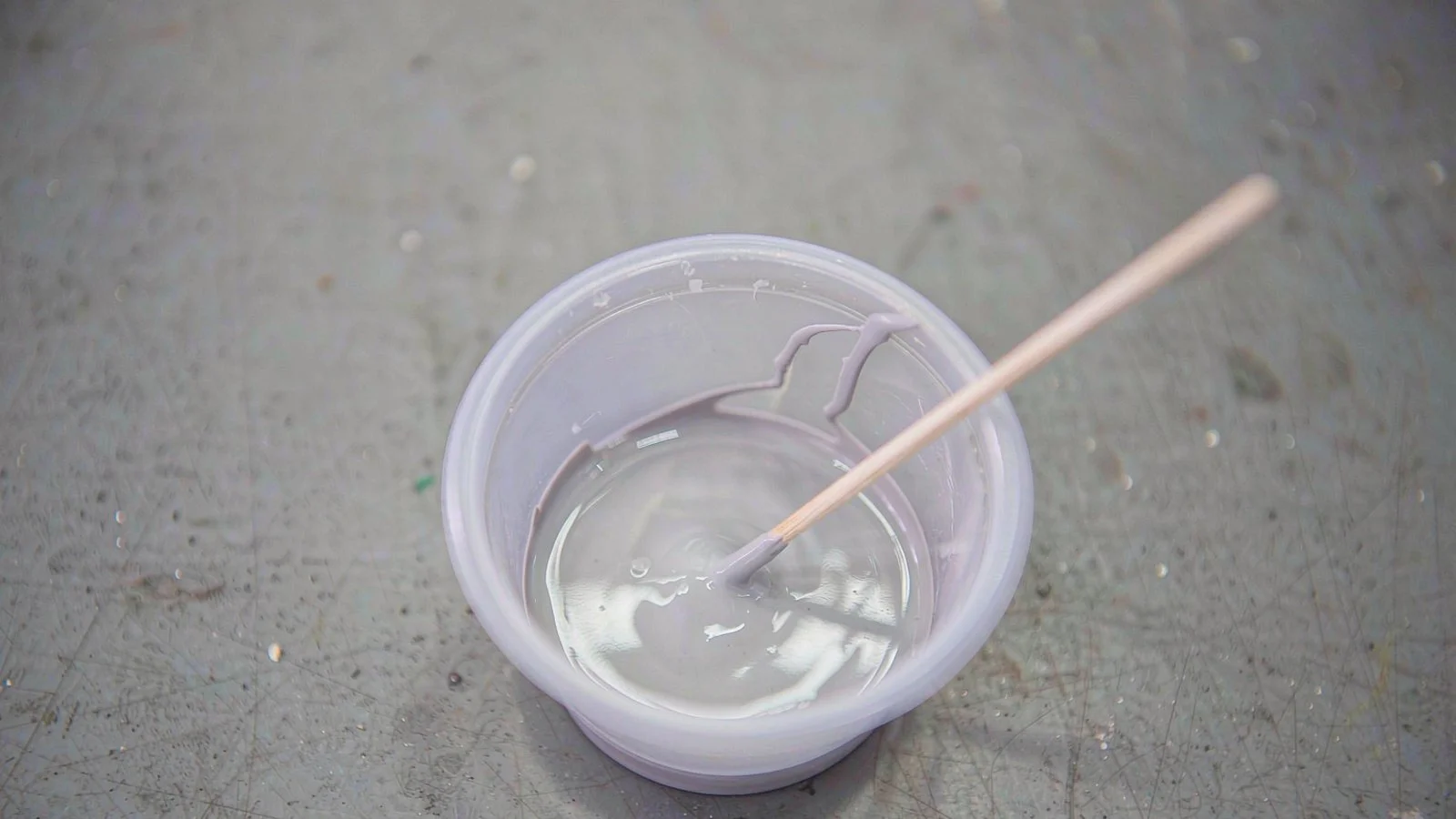
The quantity is fixed by the chamber volume of the gland size, not by the cable diameter, and the documentation states how many glands one pack covers. Three habits follow from that.
Nothing about the plug can be inspected once the enclosure is closed, and it cannot be sampled without destroying the termination. That is why the evidence has to be created during the pour rather than collected afterwards.
| Evidence | When it is captured | What it proves |
|---|---|---|
| Compound batch and expiry | Before mixing | The material was in date and traceable to a certificate |
| Mix ratio, time and ambient | At mixing | The batch was made as instructed and within the pot life window |
| Cores separated and spread | Before the pour | The compound had a route between the cores, not around them |
| Fill level at the chamber mouth | Immediately after pouring | The chamber was filled in one pass and not topped up later |
| No compound on the entry thread | Before closing | The flame path was not modified |
| Cure time and start-up release | Before energising | The plug reached full strength before the circuit went live |
Six lines on a sheet of paper, signed, are worth more than any amount of confidence. This record is also what an inspection of the installation will ask for, because the physical evidence is sealed inside. The rest of the assembly follows the same discipline, and the explosion proof installation guide covers the interfaces on either side of the pour.
Every failure below passes a visual check and fails the purpose of the gland.
| What was done | What it leaves behind | How it shows up later |
|---|---|---|
| Poured around a taped or bundled set of cores | A full chamber with a channel through the middle | Nothing visible; the entry is simply not a barrier |
| Poured from the gland end inwards | A void at the point where the cores emerge from the sheath | Gas enters at the crutch and bypasses the plug |
| Mixed or cured below the stated ambient minimum | A soft, cheesy plug that never hardened | Disturbed by cable movement, then leaks or passes gas |
| Fresh mix added to a part-cured batch | A bond line inside the plug | Separates under thermal cycling, months later |
| Compound pushed onto the entry thread | Resin in the flame path | Fails inspection, and the body has to be replaced |
| Re-terminated after cure | The plug is destroyed and cannot be rebuilt in place | A new gland and usually a shortened cable |
The trigger is a combination, not a single condition: a flameproof enclosure, and a cable whose internal construction does not block gas or flame on its own. If the cable is gas-tight by construction, the compound has nothing to add. If the enclosure is increased safety rather than flameproof, the question does not arise in the same form, because the protection concept is different — the Ex d and Ex e comparison covers that split.
In practice the decision arrives from the area classification drawing and the cable schedule at the same time, and it is made once for the whole installation rather than per gland. The hazardous area selection guide walks through that sequence. What matters here is the consequence: once a barrier gland is specified, the compound step becomes a hold point in the programme, because the cure period sits between termination and energising and cannot be compressed.
No. It seals at a different interface — around each individual core rather than around the sheath — in order to block a path that runs inside the cable. It does not improve the IP rating, and it will not fix a wet entry.
Not on a certified assembly. The compound is part of what was assessed, and substituting a hardware-store resin changes the assembly. The same applies to re-using compound from a different gland kit.
After the cure period stated for that compound and that ambient, commonly around a day above roughly 10 °C. Cold conditions extend it. The figure belongs to the documentation, not to a rule of thumb, and it should be recorded as a release condition.
Not without destroying the plug. The gland and the compound are committed once cured, and a re-termination means a new gland and usually a shortened cable. Plan the cable length and the spare cores before the pour, not after.
No. It is needed where the cable itself can carry gas or flame internally and the approved assembly calls for a barrier. With a gas-tight cable construction the standard flameproof entry does the job, and adding compound to it achieves nothing.
Metric, PG, NPT and G thread size charts in one place, with the reading method that turns a chart row into a correct purchase order.
Read More
The gland is only as good as the hole it sits in. How wall material, thread length, locknuts, knockouts and gland plates decide whether an enclosure stays at its stated IP rating.
Read More
NPT and metric cable glands seal in different places. Tapered versus parallel threads, hole preparation, the locknut problem, sealant rules and North American hazardous area entries.
Read More