Waterproof Cable Gland
Split Cable Gland: IP68 Waterproof, M/PG Sizes
Discover waterproof split cable glands with IP66 IP68 ratings nylon brass stainless steel options ideal for pre-terminated cable installations and retrofitting.
Read More
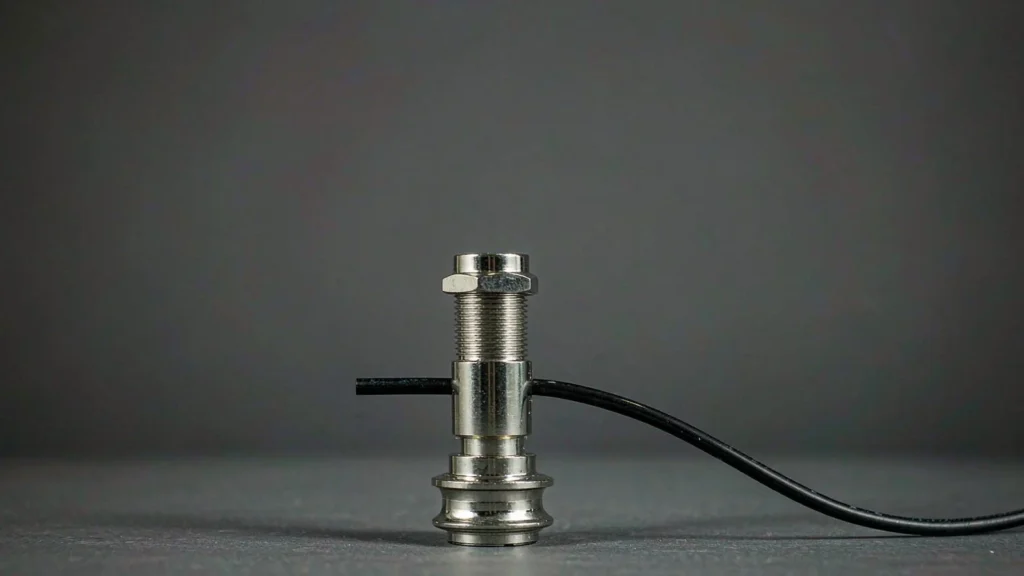
On a cable gland drawing, spanner size is the width across flats (WAF) of the hexagonal sections — the dimension a tool actually grips. It is not the thread diameter, and it is not the cut-out diameter. Those three numbers sit within a few millimetres of each other on the same gland, which is exactly why so many installation kits end up with a spanner that is one size out.
An M20 gland, for example, has a 20.0 mm thread, needs a 20.0–20.2 mm panel hole, and takes a 22 mm spanner on the body. Three numbers, one fitting, one millimetre or two apart. Read one of them as another and the job stalls at the enclosure wall.
The charts below cover every metric and PG size we produce, measured on our standard nickel-plated brass body. If you are replacing an unknown gland or building a tool list for a crew, the second table is the one you will come back to.
Where a single figure is listed, the body hex and the locknut hex are the same. Where two figures are separated by a slash, the first is the body hex and the second is the locknut — the pair is given rather than one number because both are needed to do the job with two tools.
| Thread | Thread O.D. (mm) | Cut-out Ø (mm) | Thread length GL (mm) | Spanner size (mm) | Cable range (mm) |
|---|---|---|---|---|---|
| M14 | 14 | 14.0–14.2 | 7 | 17 | 4–8 |
| M16 | 16 | 16.0–16.2 | 8 | 18 | 4–8 |
| M18 | 18 | 18.0–18.2 | 8 | 20 | 5–10 |
| M20 | 20 | 20.0–20.2 | 8 | 22 | 6–12 |
| M22 | 22 | 22.0–22.2 | 8 | 24 | 10–14 |
| M24 | 24 | 24.0–24.2 | 9 | 24/27 | 10–14 |
| M25 | 25 | 25.0–25.2 | 9 | 24/27 | 10–14 |
| M28 | 28 | 28.0–28.2 | 9 | 30 | 13–18 |
| M30 | 30 | 30.0–30.2 | 9 | 30/32 | 13–18 |
| M32 | 32 | 32.0–32.2 | 10 | 35 | 15–22 |
| M33 | 33 | 33.0–33.2 | 10 | 35 | 15–22 |
| M36 | 36 | 36.0–36.2 | 10 | 40 | 18–25 |
| M37 | 37 | 37.0–37.2 | 10 | 40 | 18–25 |
| M40 | 40 | 40.0–40.2 | 11 | 40/45 | 18–25 |
| M42 | 42 | 42.0–42.2 | 11 | 45 | 22–30 |
| M48 | 48 | 48.0–48.2 | 11 | 50/52 | 25–33 |
| M50 | 50 | 50.0–50.2 | 12 | 57/55 | 32–38 |
| M63 | 63 | 63.0–63.2 | 13 | 64/68 | 37–44 |
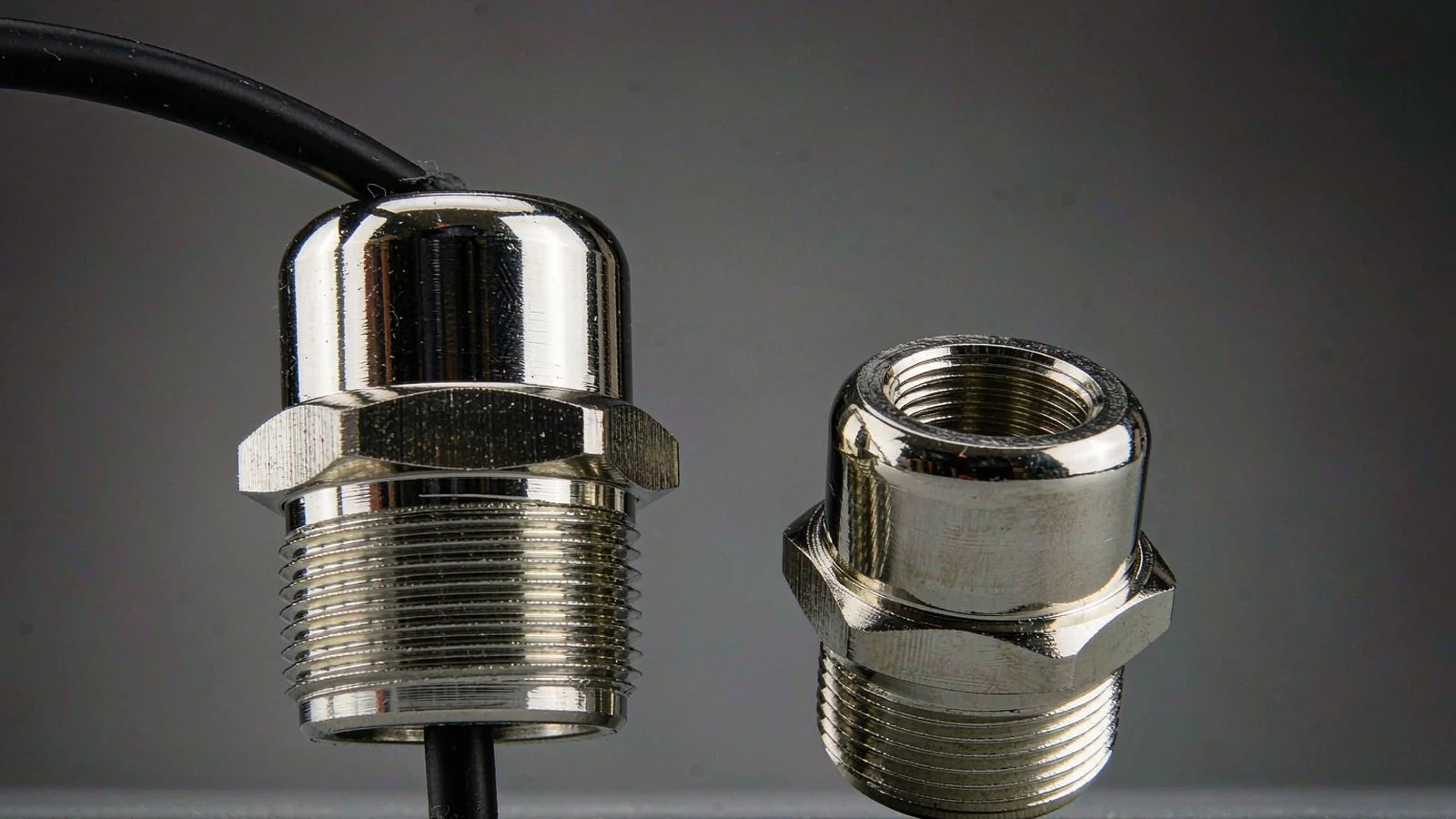
PG glands follow the same rule, but the numbers diverge from metric much earlier than most people expect. PG7 takes a 14 mm spanner — there is no metric gland in our range that small — and PG63 needs 78 mm, which is wider than any metric size we stock. The two families are not interchangeable at the tool level, let alone at the thread.
| Thread | Thread O.D. (mm) | Cut-out Ø (mm) | Thread length GL (mm) | Spanner size (mm) | Cable range (mm) |
|---|---|---|---|---|---|
| PG7 | 12.5 | 12.5–12.7 | 7 | 14 | 3–6.3 |
| PG9 | 15.2 | 15.2–15.4 | 8 | 18 | 4–8 |
| PG11 | 18.6 | 18.6–18.8 | 8 | 20/21 | 5–10 |
| PG13.5 | 20.4 | 20.4–20.6 | 8 | 22 | 6–12 |
| PG16 | 22.5 | 22.5–22.7 | 9 | 24 | 10–14 |
| PG19 | 25.0 | 25.0–25.2 | 9 | 24/27 | 10–14 |
| PG21 | 28.3 | 28.3–28.5 | 9 | 30/32 | 13–18 |
| PG25 | 32.0 | 32.0–32.2 | 10 | 35 | 15–22 |
| PG29 | 37.0 | 37.0–37.2 | 11 | 40 | 18–25 |
| PG36 | 47.0 | 47.0–47.2 | 12 | 50 | 25–33 |
| PG42 | 54.0 | 54.0–54.2 | 13 | 57 | 32–38 |
| PG48 | 59.3 | 59.3–59.5 | 14 | 64 | 37–44 |
| PG63 | 72.0 | 72.0–72.2 | 15 | 78 | 42–52 |
This table is worth printing for the workshop wall. Each row is the same M20 gland described three ways, and each of the three numbers has a different job.
| Number | What it measures | Where it appears | On an M20 gland | Typical error | What goes wrong |
|---|---|---|---|---|---|
| Thread O.D. | Outside diameter of the thread itself | Part number and thread callout | 20.0 mm | Read as the hole size | Gland will not start in an undersize hole, or rocks in an oversize one |
| Cut-out Ø | Diameter of the hole through the panel | Panel drawing and punch schedule | 20.0–20.2 mm | Punched to the spanner size | Hole 2 mm oversize; gasket never compresses; IP rating lost |
| Spanner size | Width across flats of the hex body | Tool list and assembly instruction | 22 mm | Chosen from the thread size | Spanner does not fit, or rounds the hex when forced |
The practical consequence: a cut-out punched to the spanner size is 2 mm oversize and will not seal, while a spanner chosen from the thread size is 2 mm undersize and will not fit. Neither mistake is visible until the gland is already in the panel.
The body is constrained by the thread and the sealing geometry; the locknut is constrained by how much material the wall thickness of a cheap nut can carry. Manufacturers solve those two problems independently, so the hexes often land on different sizes — 24/27 on M24 and M25, 30/32 on M30, 40/45 on M40, 50/52 on M48, 57/55 on M50, 64/68 on M63. A kit that carries only the body size will stop at the locknut.
On some drawings the second figure is not a locknut at all but a reduced hex on the dome nut, or the hex on an optional nickel-plated locknut sold separately. When the datasheet gives two figures, ask which component each belongs to before you buy a tool; the answer changes what you need in the bag.
Thread size fixes the thread, nothing else. Three factors still move the hex:
That last point is the one that costs money on a retrofit. Never order tools from the thread size alone — check the spanner size on the datasheet of the gland you are actually installing.
An M20 standard brass gland takes 22 mm. An M20 heavy duty gland, with its thicker wall and larger dome nut, typically needs 24 mm on the body. And an M20 gland with a separate nickel-plated locknut will often ask for 27 mm on that nut while the body stays at 22 mm. All three are correctly described as M20×1.5, all three fit the same 20.0–20.2 mm hole, and all three need different tools.
An open-end spanner is the default. Use the hex that sits fully on the flats, keep the handle plane perpendicular to the axis, and apply force on the handle rather than pulling the gland sideways — a gland loaded off-axis compresses its insert unevenly and leaks at the thin side.
An adjustable wrench is acceptable on brass for low-torque work if the jaws are tight and square, but it will round the hex on stainless and it cannot be trusted where a torque figure matters. A six-point socket is the better answer for stainless and for anything you intend to torque, because it loads all six flats at once. Strap wrenches belong on the round dome nuts of small nylon glands, where there is no hex to grip at all.
If you have the old gland but no datasheet, measure across two opposite flats — not corner to corner. Corner-to-corner on a hex is roughly 15% larger, which is enough to send a 22 mm gland to a 25 mm spanner and round it on the first turn. Measure the locknut separately; it is frequently the odd one out.
The spanner is a lever, so the hex size and the torque figure are one decision rather than two. A 22 mm hex on a PA66 body will tolerate far less torque than the same 22 mm hex on brass, and the small sizes are where the difference matters: on PG7 and M14 the gap between sealed and stripped is a fraction of a turn.
Our per-size torque figures for PA66, nickel-plated brass and stainless steel bodies are listed in the split cable gland assembly data and explained in the cable gland torque guide. Use the torque guide for the method and this page for the tool. If you are still choosing the fitting itself, the guide to cable gland main types puts the families side by side, and the thread size chart covers cut-outs and thread lengths for the same sizes.
Treat the charts above as the brass baseline. For stainless steel and heavy duty variants, take the brass figure for the same thread and expect to go one step up — and confirm it on the drawing rather than assuming. If you are ordering glands and tools together, send us the thread list and we will return the hex for each line item, so the crew is not improvising with an adjustable wrench on a stainless body at height.
22 mm on the body for our standard nickel-plated brass M20×1.5 gland. Heavy duty M20 bodies usually take 24 mm, and a separate locknut on the same gland can be 27 mm. Check the datasheet for the exact variant before you buy the tool.
No. PG13.5 takes a 22 mm spanner on our standard body, which happens to match M20, but its thread outside diameter is 20.4 mm against 20.0 mm and it needs a 20.4–20.6 mm cut-out. The tool may be the same; the hole is not.
On brass, at low torque, with jaws that sit flat on both faces — yes. On stainless steel it will round the hex, and anywhere a torque figure applies the reading becomes meaningless. Use a six-point socket for stainless and for torqued joints.
Because the gland is not a standard 22 mm body. Heavy duty construction, a stainless body, a different manufacturer’s hex standard, or a locknut rather than the body will each explain a 24 mm or 27 mm requirement on a gland that is still correctly called M20.
Usually one size up. Stainless bodies carry more material around the hex and are often machined to a larger flat. Confirm on the drawing — and never open a stainless hex with an adjustable wrench.
Spanner size is the width across flats, and it is the only one of the three gland dimensions that describes the tool rather than the hole. Read it from the datasheet of the exact variant you are installing, allow for a different locknut hex, and buy the socket for stainless. Everything else on the gland follows the thread; the tool follows the hex.
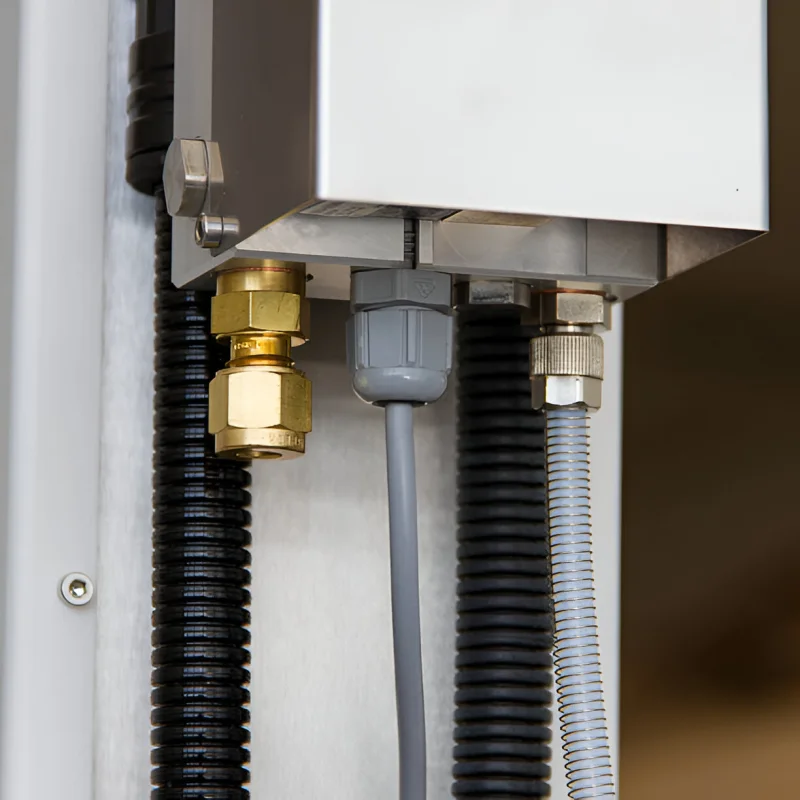
Discover waterproof split cable glands with IP66 IP68 ratings nylon brass stainless steel options ideal for pre-terminated cable installations and retrofitting.
Read More
As a crucial accessory connecting cables and equipment, the cable gland plays a vital role in protecting cables, preventing water and dust ingress, and providing grounding. Whether in industrial automation, electrical control, marine, mining, or other demanding environments, choosing the right cable gland is essential. Today, let’s take a closer look at the main types […]
Read More
IP68 says nothing about depth on its own. How immersion bands, compression set and cable load decide whether a submersible cable gland survives a pump, tank or wet well.
Read More


