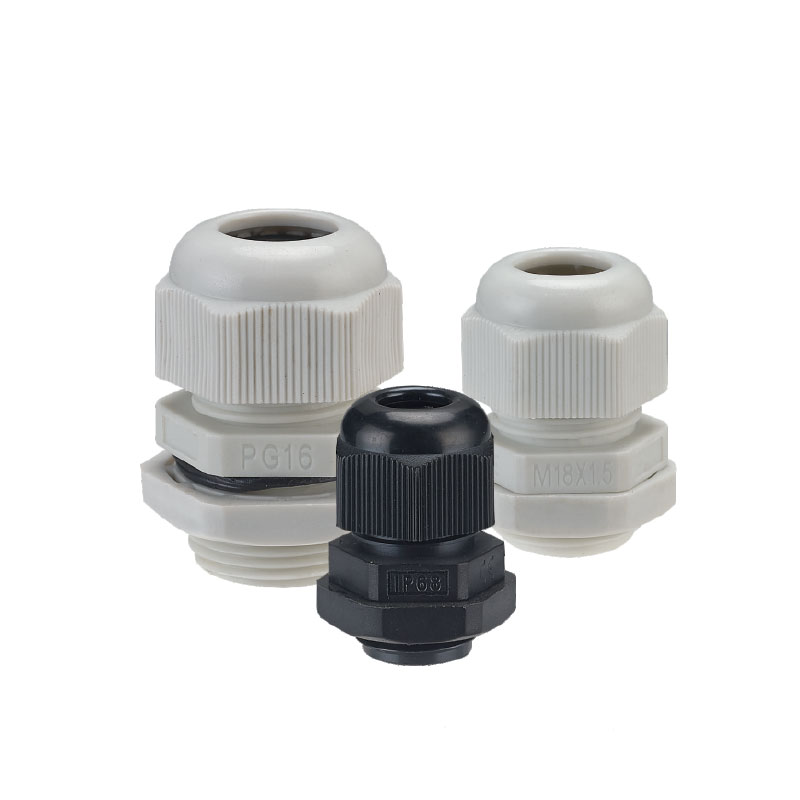
If you ever typed “are cable glands waterproof” into Google, you not alone. It one of those procurement-and-engineering questions that sounds simple, but it hides a bigger issue: “waterproof” is not a precise engineering specification.
In real projects—outdoor telecom cabinets, marine sensors, washdown food lines, rooftop PV combiner boxes—what you really need is a cable entry system that keeps water out for your exact environment, maintains strain relief, and doesn’t fail six months after commissioning.
So let’s do this properly: not just definitions, but how to choose, how to connect, and which type to buy—in a way that helps B2B buyers, MRO teams, panel builders, and engineers write clean specs and avoid returns.
What “Waterproof” Really Means for Cable Glands
Cable glands can be effectively waterproof, but only under defined conditions. The most common way to define those conditions is an IP rating (Ingress Protection). IEC explains that IP ratings grade enclosure resistance against intrusion of dust and liquids.
Here’s the practical translation: a gland isn’t “waterproof” because it looks sealed. It’s “waterproof” when the installed assembly (gland + cable + enclosure wall + sealing accessories) survives the test conditions you expect.
“Waterproof” claim
What it often actually means
What you should ask for on a PO/RFQ
“Water resistant”
Splash tolerant, not outdoor-safe
IP54/IP55 (basic indoor)
“Waterproof”
Usually “rain + hose-down,” not immersion
IP66/IP67 with proper gasket/locknut
“Submersible”
Intended for immersion if sized correctly
IP68 with stated depth/time conditions
“Washdown safe”
Withstands high-pressure jets and hot water
IPx9 / IP69K-style washdown requirement (see below)
“Marine grade”
Corrosion resistance + sealing
316 stainless + IP66/68 + salt fog notes
Key mindset: Cable glands don’t “create waterproofing” by themselves—they preserve the enclosure rating at the cable entry point.
IP Ratings That Matter
A common mistake is thinking IP numbers are a simple ladder where “higher is always better.” Liquid tests aren perfectly cumulative, and immersion ratings don automatically mean jet resistance. RS Components explicitly warns that IPX7/IPX8/IPX9 relate to immersion/high-temp jets and don’t imply all lower jet tests.
Also, IP is defined under IEC 60529 and related publications from IEC.
Rating (typical for glands)
What it’s good for
Where it fails in real life
IP65
Dust protected + water jets (limited)
Wind-driven rain, harsh washdown, cable movement
IP66
Stronger water jet protection
Long immersion, pressure cycling, poor installation
IP67
Temporary immersion (defined test)
Continuous submersion, high-pressure washdown
IP68
Continuous immersion (depth/time defined by manufacturer)
Wrong cable OD, wrong torque, capillary water tracking
IPx9 (or “IP69K-style”)
High-pressure, high-temp washdown
Submersion if not separately specified
A quick note about “IP69K”
In industry, “IP69K” is often used as shorthand for washdown resistance. Formally, the “K” codes are associated with road-vehicle-focused IP coding in ISO 20653; ISO’s current listing shows a newer edition exists (ISO 20653:2023). In procurement language, it’s usually safer to specify the washdown test requirement (pressure, temperature, distance, duration) rather than arguing about the letter.
Pick the Right Gland by Application
Let’s get practical. When someone asks “are cable glands waterproof”, what they really mean is: “Will this survive my job site?”
Use this selection map as your starting point:
Application
Exposure reality
Recommended gland spec
Notes that prevent failures
Indoor electrical panel
Occasional dust, maybe drips
IP54–IP65 nylon or brass
Focus on strain relief and cable OD match
Outdoor junction box
UV, wind-driven rain
IP66 brass/SS, UV-rated seal
Add drip loop and avoid top-entry when possible
Marine / coastal
Salt spray + corrosion
316 stainless + IP66/IP68
Corrosion kills threads before seals fail
Food & beverage washdown
Hot water, foam, pressure jets
IPx9 / IP69K-style + smooth body
Prefer stainless + hygienic design
Underground / submerged sensors
Continuous immersion
IP68 double-seal + correct compression range
Use cable with solid jacket; avoid braided sleeves at seal
EV/automotive equipment
Spray + wash + vibration
ISO 20653-aligned approach
Consider vibration locking + strain relief
If you’re buying for multiple sites, stop trying to standardize to “one waterproof gland.” Standardize to 2–3 families: indoor, outdoor, washdown/submersion.
Material and Seal Choices: Nylon vs Brass vs Stainless
The gland body material is not just about strength—it changes your corrosion risk, temperature range, and long-term sealing stability.
Material
Best for
Watch-outs
Typical B2B keywords you’ll see
Nylon (PA66)
General industrial, cost-sensitive panels
UV aging unless UV-stabilized; limited chemical resistance
Sizing: Cable OD, Thread Type, and Panel Thickness
Most “not waterproof” complaints trace back to one boring root cause: the cable OD doesn’t match the clamping range.
If the seal isn’t compressed correctly, water follows the easiest path. That can be:
around the outer jacket,
between gland and panel,
or even through the cable itself (capillary action along strands).
What you must measure/spec
What to do with it
Common mistakes
Cable outer diameter (OD)
Choose a gland where OD sits mid-range
Buying a “universal” size and hoping
Thread type
Match enclosure: Metric / PG / NPT / BSPP (G)
“M20” ordered for an NPT knockout
Panel thickness
Ensure thread length + locknut engagement
Too-thick wall → locknut barely bites
Hole size / knockout
Drill to the correct clearance
Oversized hole relies only on gasket (bad)
Cable construction
Consider soft jackets vs braided
Braided shield under seal = leak path
A quick thread cheat sheet:
Thread standard
Where it’s common
Notes
Metric (M12/M16/M20/M25…)
Most global industrial enclosures
Clean sourcing, lots of options
PG
Legacy industrial (EU)
Still common in retrofit/MRO
NPT
North America
Tapered; sealing method differs
BSPP (G)
Some instrumentation, UK/EU
Parallel; usually gasket-based
If you’re writing specs for suppliers, don’t say “one waterproof cable gland.” Say: “Metric M20 x 1.5, cable OD 9–13 mm, IP68 with panel gasket, material nickel-plated brass or 316SS.” That’s the difference between a quote you can trust and a guessing game.
How to Install a Waterproof Cable Gland (Step-by-Step)
Even a premium IP68 gland can leak if installed like a finger-tight cap.
Here’s a field-proven workflow that installers actually follow (and that QA teams can audit):
Deburr the hole (inside and outside). Burrs cut gaskets.
Confirm thread engagement. If using a locknut, make sure you have full seating.
Use the right sealing interface:
parallel threads → gasket/O-ring is usually the primary seal,
Tighten the compression nut until the seal grips the jacket firmly.
Verify strain relief: gentle pull test—cable should not slide.
Route with a drip loop outdoors so water doesn’t sit on the gland.
Installation checkpoint
What “good” looks like
What “bad” looks like
Panel seal
Gasket compressed evenly
Gasket pinched or missing
Compression seal
Jacket visibly compressed, no gaps
Seal barely touching cable
Cable entry angle
Straight-in
Side-load bending at the nut
Tightening
Firm with correct tool
Finger-tight “because it’s plastic”
Strain relief
Cable doesn’t move
Cable slips when tugged
Final routing
Drip loop, no pooling
Cable guides water into enclosure
One small habit that saves big money: after installation, run a quick spray test before energizing. It’s a 2-minute check that avoids a 2-week failure report.
How to Connect for Real Waterproofing: Inside the Enclosure Matters
When people ask “are cable glands waterproof”, they sometimes forget that water can still cause trouble after the entry, especially with condensation, vibration, and cable wicking.
Here are common B2B connection scenarios and what to do:
Scenario
“How to connect” the right way
Why it prevents leaks/failures
Outdoor junction box → terminal block
Add drip loop, leave service slack, mount terminals above entry
Water won’t run directly onto terminals
Sensor cable → controller cabinet
Use IP68 gland + strain relief clamp inside
Vibration won’t loosen compression
VFD cabinet with shielded cable
Use EMC gland (360° shield contact) + separate environmental seal
EMC performance without sacrificing sealing
Washdown machine → enclosure
Use stainless gland + hygienic seal + avoid crevices
Washdown failures often start at trapped residue
Submerged cable splice box
Double-seal gland + potting/gel inside as backup
Redundancy when downtime is expensive
If you only take one idea from this section: water management beats water resistance. Routing, strain relief, and internal layout decide whether a “waterproof” entry stays waterproof.
Which Type Should You Buy?
Not all “waterproof cable glands” are the same product category. Buying the wrong type is how projects drift into rework.
Gland type
Choose it when…
Avoid it when…
Typical procurement phrasing
Standard single-seal
Indoor/outdoor, moderate exposure
Submersion or heavy washdown
“IP66 cable gland”, “panel mount gland”
Double-seal (multi-layer)
Immersion risk, cable movement
You need lowest cost
“IP68 double seal gland”, “submersible cable entry”
EMC shielded gland
You need 360° shielding + sealing
You don’t have braided shield cable
“EMC cable gland”, “shielded cable entry”
Multi-hole / multi-cable
Space is limited, multiple small cables
You need strong strain relief per cable
“multi cable gland”, “multiple cable entry”
Hygienic design
Food/pharma washdown
Standard industrial panel
“hygienic cable gland stainless”
Explosion-proof (ATEX/IECEx)
Hazardous area compliance required
General industrial area
“ATEX cable gland”, “IECEx gland”
A good buying strategy for B2B: standardize on a short list of SKUs (e.g., M16/M20/M25 in 2–3 materials) and keep a controlled cross-reference for cable OD ranges.
If you want faster quoting and fewer wrong shipments, send your cable OD range, thread standard, enclosure material, and environment (outdoor/washdown/submersion). A supplier can recommend the exact gland family and sizes in one pass—and you can lock it into your BOM.
This is where procurement teams win. A clear spec prevents ambiguous substitutions.
RFQ line item field
Example you can copy
Why it matters
Thread
M20 × 1.5
Eliminates thread mismatch
Cable OD range
9–13 mm
Ensures seal compression works
Material
Nickel-plated brass / 316SS
Controls corrosion + life cycle
IP requirement
IP66 outdoor / IP68 immersion
Aligns to actual exposure
Temperature
-40 to +100°C
Avoids seal hardening/cracking
Sealing accessories
Include panel gasket + locknut
Prevents panel-side leaks
Compliance
RoHS/REACH; UL if needed
Reduces import and audit risk
Packaging
MOQ, lot traceability, labels
Helps MRO + warehouse control
If you need North American framing, you may also see NEMA enclosure language. The NEMA enclosure types document describes Type 4X as protection against windblown dust and hose-directed water plus corrosion resistance. (That’s enclosure language, but it affects how buyers specify the whole system.)
Quick Validation: How Engineers Verify Water Tightness
You don’t need a fancy lab to catch most issues early. What you need is a repeatable acceptance check.
Test
How it’s done
What it catches
Visual + tug test
Check gasket seating + pull lightly
Under-tightening, wrong OD range
Spray test
Hose spray from multiple angles
Panel-side leaks, routing mistakes
Short immersion
Controlled dunk (if allowed)
Seal gaps, capillary tracking
High-pressure wash simulation
If washdown rated, test worst angle
Weak compression, crevice leaks
Periodic re-torque check
After thermal cycling/vibration
Loosening over time
For immersion expectations, it helps to understand that IPX7 and IPX8 are defined differently (temporary vs continuous immersion). And if you’re in vehicle-grade environments, ISO 20653 is the core reference family for those IP codes.
So—back to the original question: “are cable glands waterproof”?
Yes, they can be. But in B2B terms, the better question is: “Which cable gland and installation method keeps my enclosure sealed for my environment?”
When you specify the right IP target, match the cable OD compression range, choose the right material, and install with the correct panel sealing + strain relief, cable glands become one of the simplest and most reliable ways to protect electrical systems from water.
And if you’re sourcing at scale, the fastest path to fewer failures is a clean standard: a small, controlled list of gland families sized around your real cable ODs and exposure levels—no guessing, no “should be fine,” and far fewer surprises after shipment.
FAQ
Are cable glands waterproof?
They can be, if you select an IP rating that matches the exposure and install it correctly (especially cable OD match + panel sealing).
What’s the most common “waterproof” rating buyers choose?
For outdoor boxes: IP66. For immersion risk: IP68 (with stated depth/time from the manufacturer).
Does IP68 automatically mean it survives pressure washdown?
Not necessarily. Immersion and high-pressure jets are different stress cases. Specify washdown performance separately.
Nylon vs brass—does nylon leak more?
Not inherently. Nylon fails more often from UV aging, overtightening, or temperature/chemical mismatch—not from being “less waterproof.”
Why do glands leak even when “IP68”?
Most often: wrong cable OD range, missing panel gasket, angled cable entry, insufficient tightening, or water wicking along the cable strands.
What should I send a supplier to get the right recommendation quickly?
Thread type, cable OD range, enclosure material/thickness, environment (indoor/outdoor/washdown/submersion), and whether you need EMC shielding or hazardous-area compliance.
Waterproof cable gland play a vital role in the B2B market. Whether you are a solar equipment manufacturer, marine engineering contractor, or industrial automation integrator, choosing the right waterproof cable gland directly affects the durability and safety of your devices. Have you ever wondered what keeps our cables safe and sound, even in heavy rain […]
Waterproof cable gland play an indispensable role in modern industrial and commercial electrical equipment. They not only protect cable entries from dust and moisture but also ensure equipment safety and extend service life. Choosing the right IP rating for a waterproof cable gland can effectively prevent electrical failures or safety incidents caused by harsh environments. […]
We use cookies to enhance your browsing experience, serve personalised ads or content, and analyse our traffic. By clicking "Accept All", you consent to our use of cookies.