
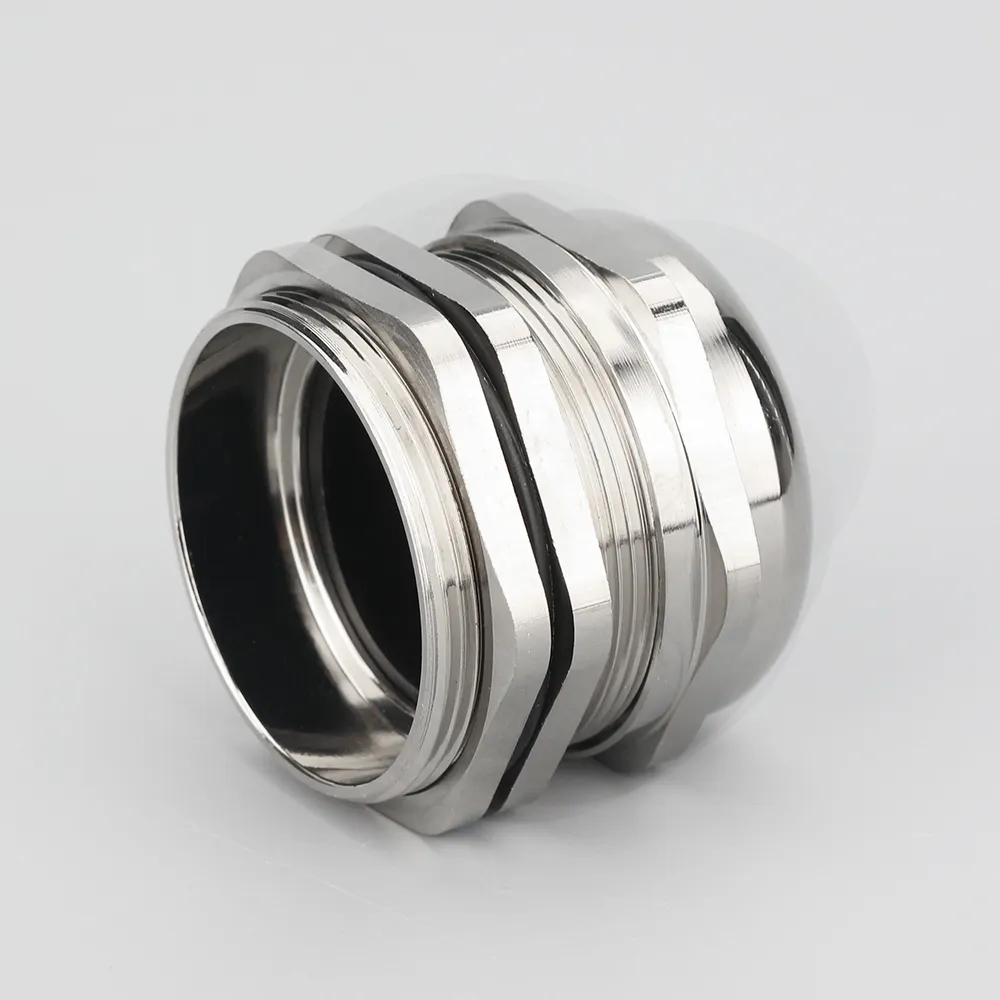
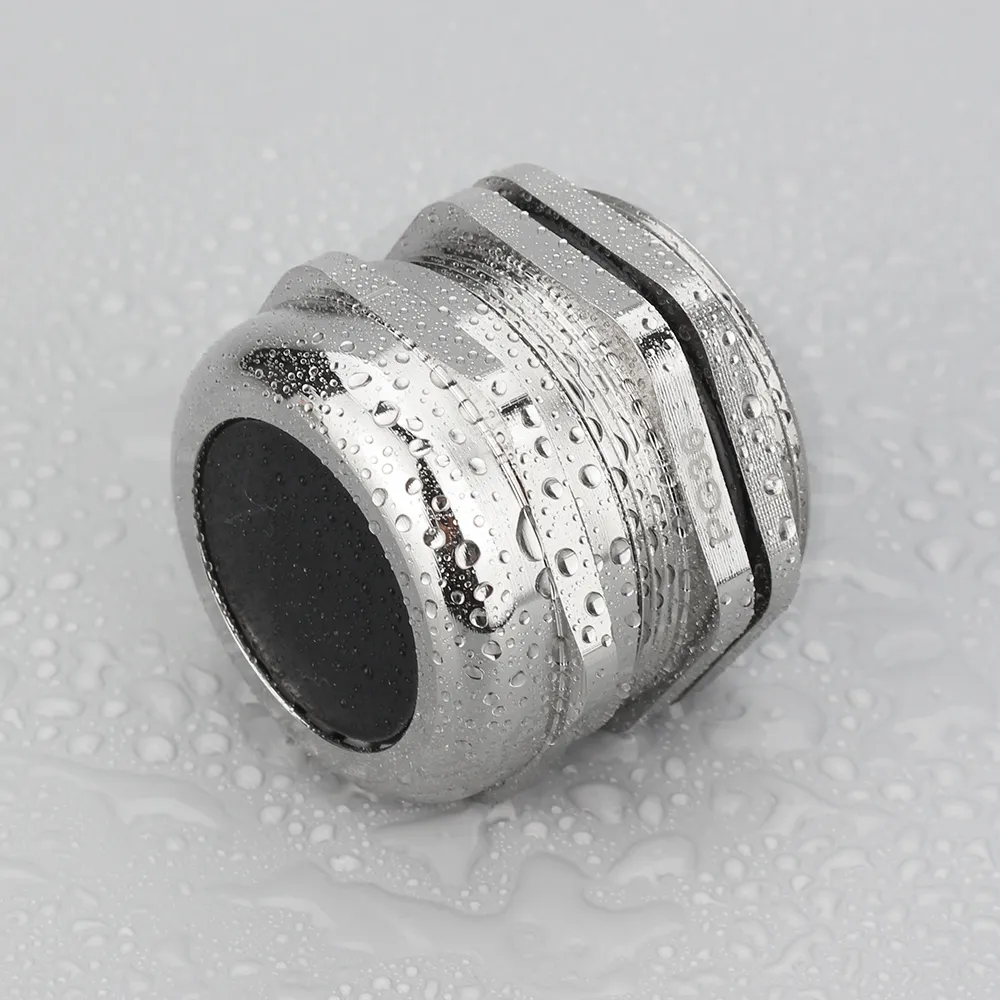


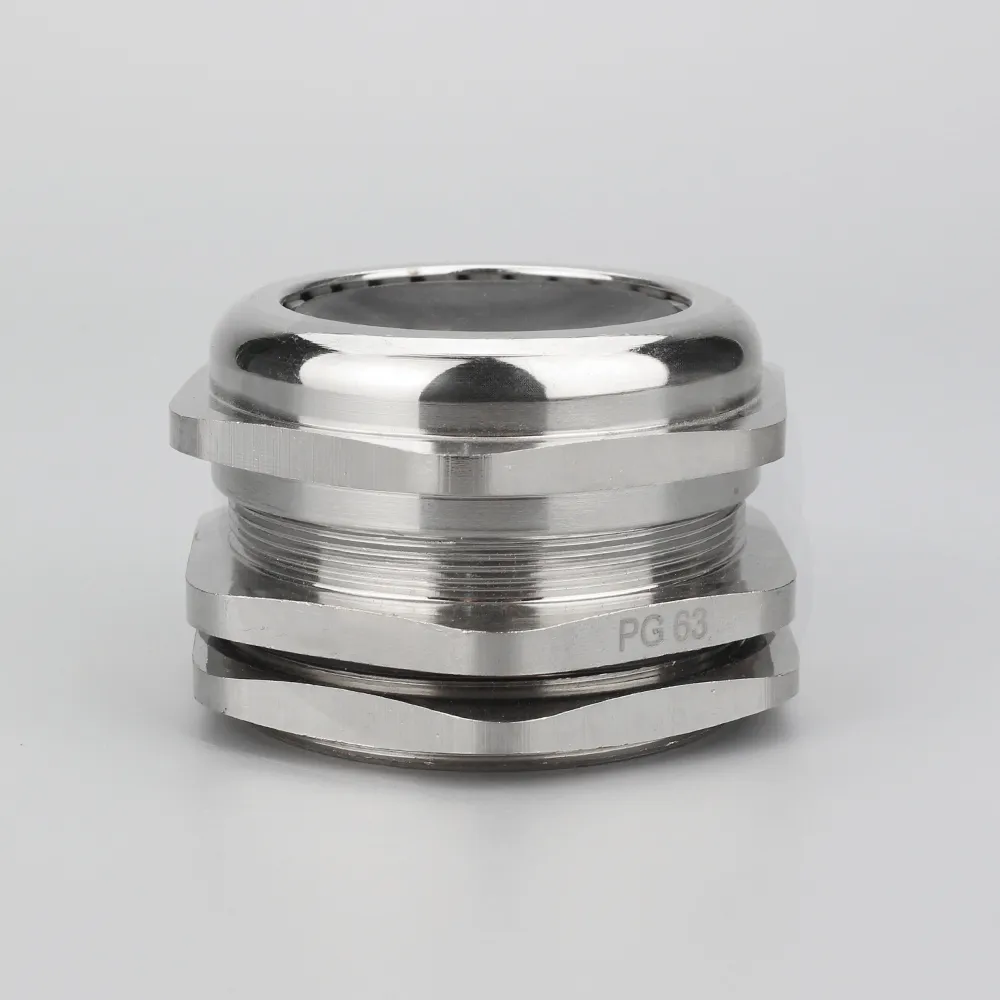
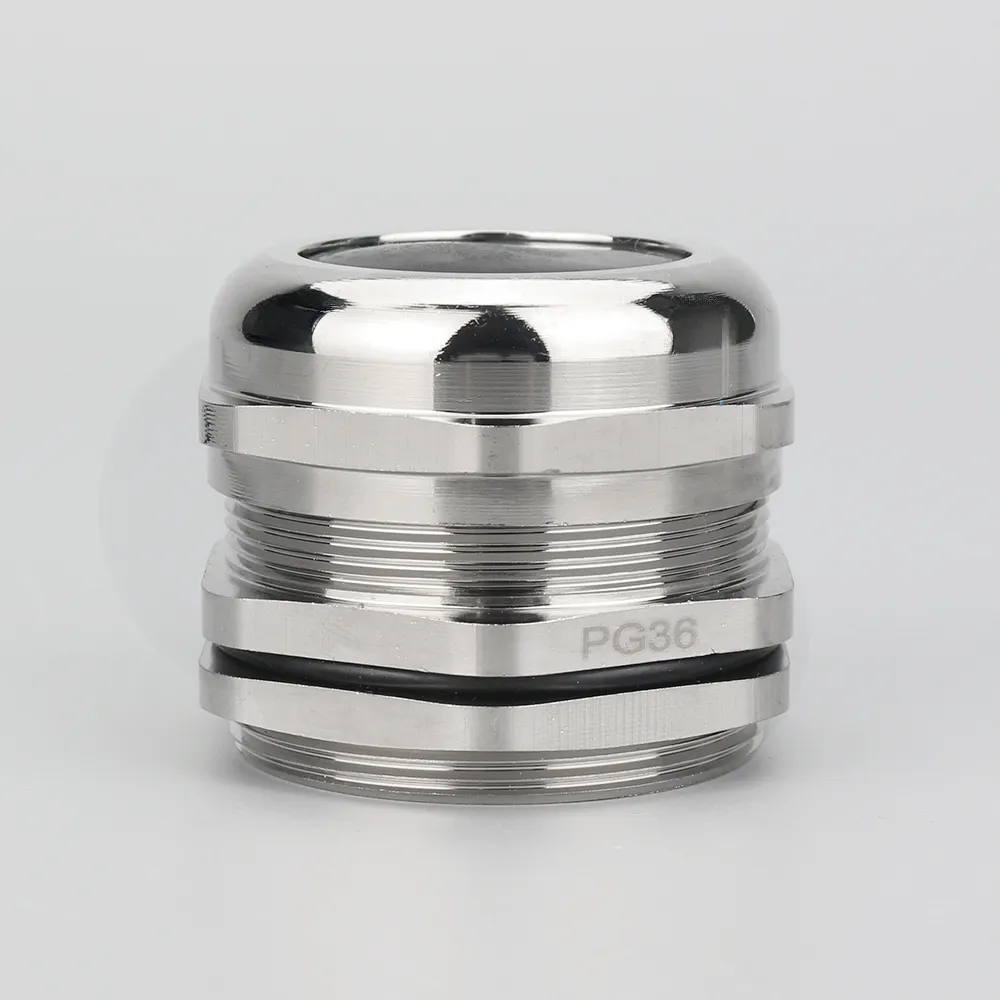
High temperature stainless steel cable gland, PG36 — clamping range 25–33 mm, cut-out 47.0–47.2 mm, thread length 12 mm, 50 mm across flats, rated from −40 to +200 °C with a silicone sealing insert.
This is the size we ship into oven, boiler and exhaust-adjacent enclosures most often, because PG36 is where heater and fan feeder cables land. The stainless body is not what makes it a high temperature gland — the insert compound is — and that distinction decides whether the joint survives the first month.
What actually limits a gland at +200 °C
Three materials are in play and they fail at different temperatures. The body is the easy part: 304 or 316L holds its section well past the point where anything else in the assembly has given up. The washer and the insert are the limits. Silicone is the compound that carries the range to the top; EPDM does not go there, and a gland quoted as “high temperature” with an EPDM insert is only high temperature in the body.
The third material is the one nobody mentions: the cable jacket. A gland rated to +200 °C on a PVC-sheathed cable is rated for a cable that will not survive the same box. Check the cable’s own temperature rating before specifying the gland to the enclosure temperature.
Thermal cycling: the re-torque that gets skipped
A hot enclosure does not hold a constant torque. The insert relaxes and recovers with every cycle, and the joint that was correct on commissioning is often under-torqued a week later. Two things follow: tighten to the datasheet figure rather than by feel, and put a re-check after the first thermal cycle into the work instruction — the same discipline that applies to a PA66 body applies here, for a different reason.
The cable gland torque guide covers how to read the figure per size and material, and the spanner size chart gives the 50 mm hex for this size so the tool is not improvised on site.
Specifying a high temperature gland on the order
Four lines make the difference between getting the right article and getting a standard gland with a different label: the thread and size (PG36), the body grade (304 or 316L), the insert compound (silicone), and the working temperature the assembly has to hold. Add the panel thickness if the wall is thicker than the standard 12 mm thread will reach.
If the enclosure is also a washdown or coastal one, say so at the same time — the grade and the insert are chosen together, and quoting them separately produces a gland that is right on one count and wrong on the other. OEM drawings usually name the insert compound for exactly this reason; if yours does not, we will ask before quoting.
Parameter table — around PG36
| Model | Thread | Cable range (mm) | Thread O.D. (mm) | Mounting hole Ø (mm) | Thread length GL (mm) | Bonding length (mm) | Spanner size (mm) |
|---|---|---|---|---|---|---|---|
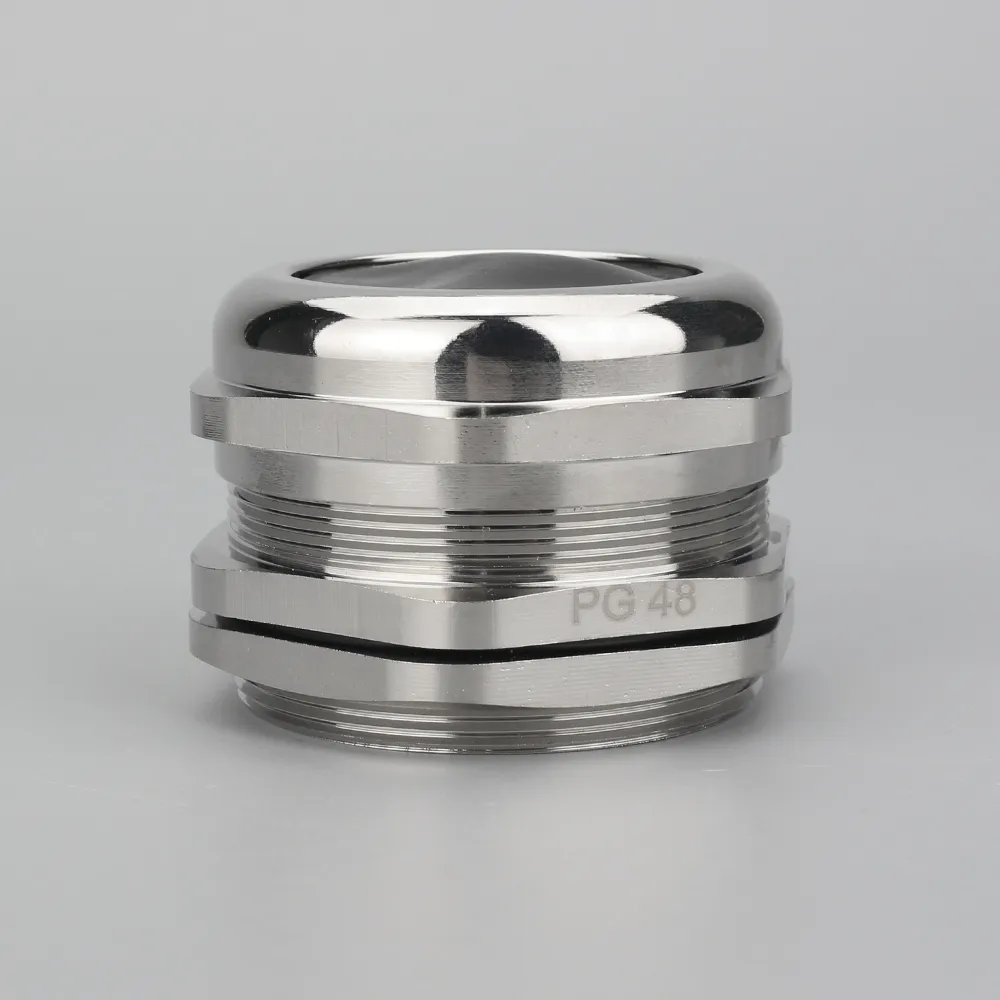
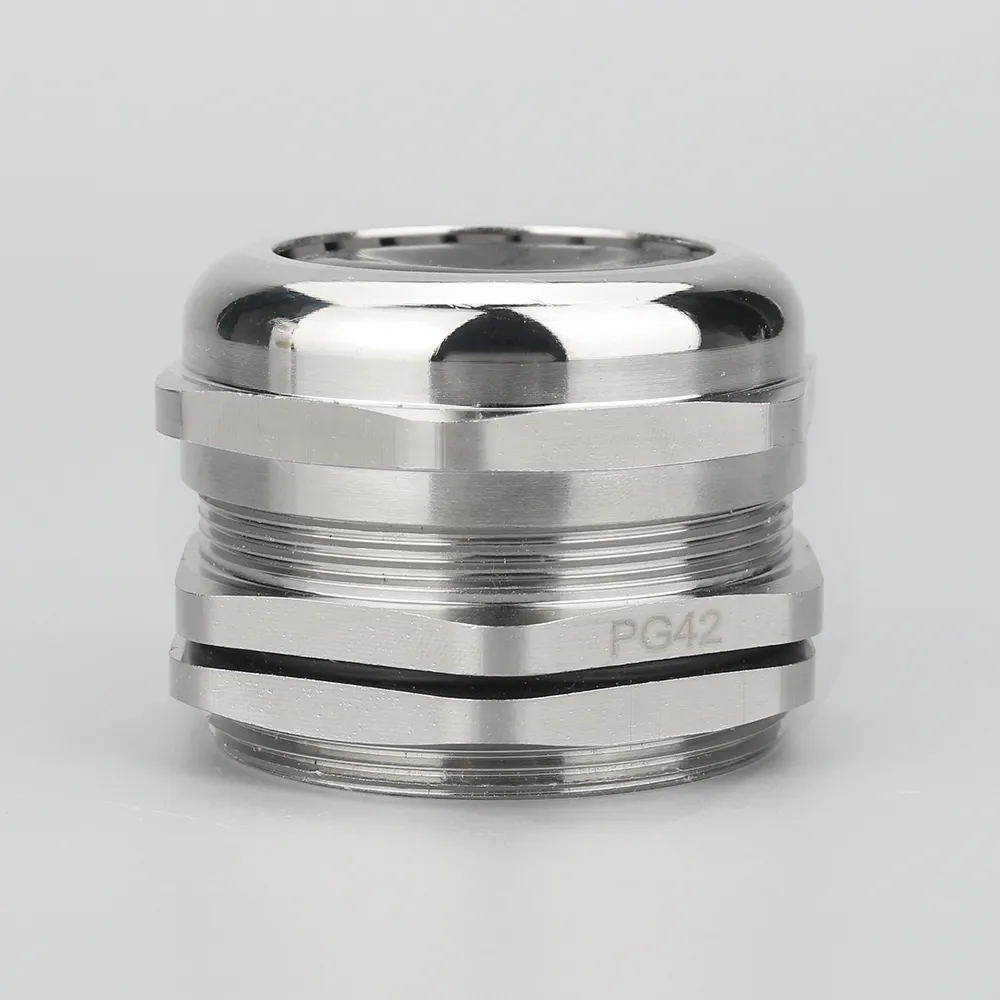
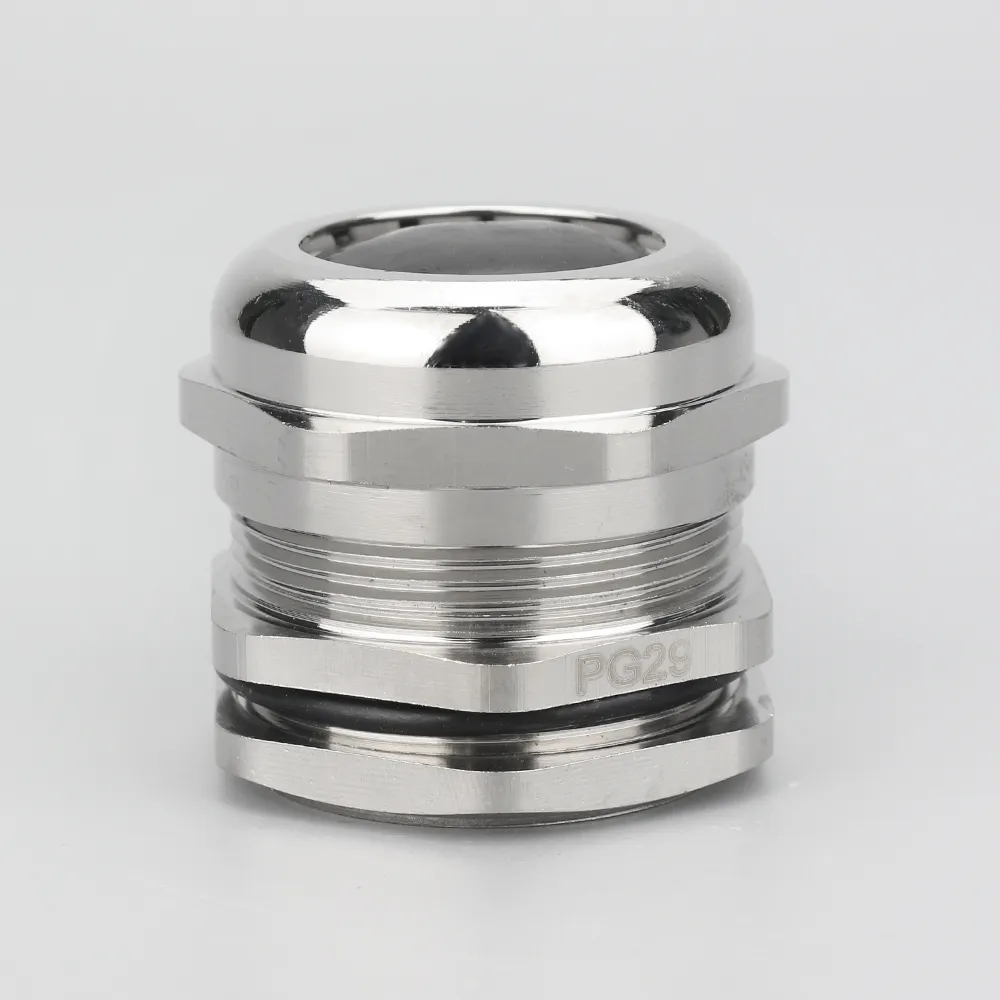
| PG29-NP | PG29 | 18–25 | 37 | 37.0–37.2 | 11 | 31 | 40 |
| PG36-NP | PG36 | 25–33 | 47 | 47.0–47.2 | 12 | 37 | 50 |
| PG42-NP | PG42 | 32–38 | 54 | 54.0–54.2 | 13 | 38 | 57 |
MOQ, price and lead time for heat resistant glands
MOQ is 300 pcs per size. Silicone-insert versions are built to order rather than held in stock, so the lead time runs longer than for a standard gland and should be booked against the installation date. Quotations are FOB Ningbo or Shanghai, per size, and the insert compound is priced as part of the article rather than as an accessory.
For a first order, a sample of one or two pieces is enough to check the insert compound and the thread against the enclosure — worth doing before a 300-piece run.
Documentation: CE, RoHS and REACH statements, an IP68 test report to IEC 60529, a material certificate for the body and, where the temperature claim matters to the customer, the insert compound stated on the same document.
Send cable OD, thread and quantity for a same-day price. Samples of 1 to 2 pieces are available for verification.
Request a Quote Now
Our team will get back to you within 24 hours.