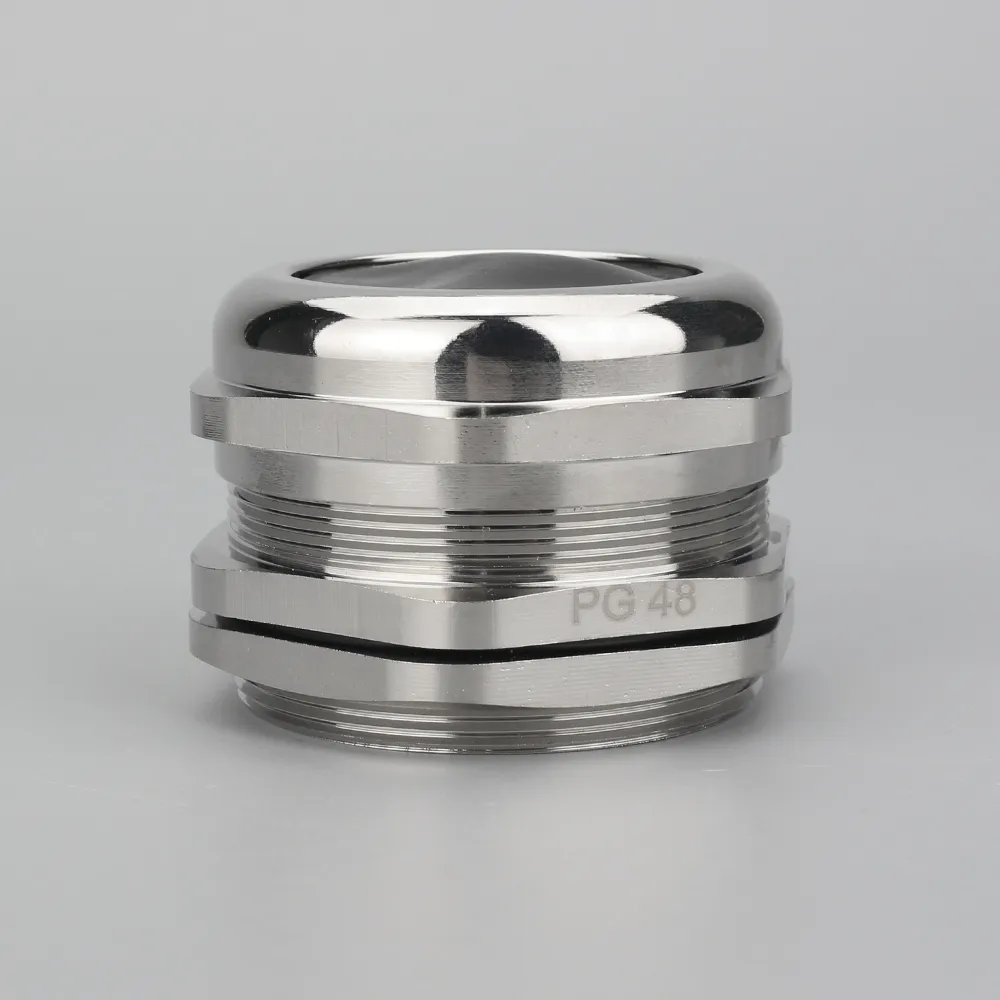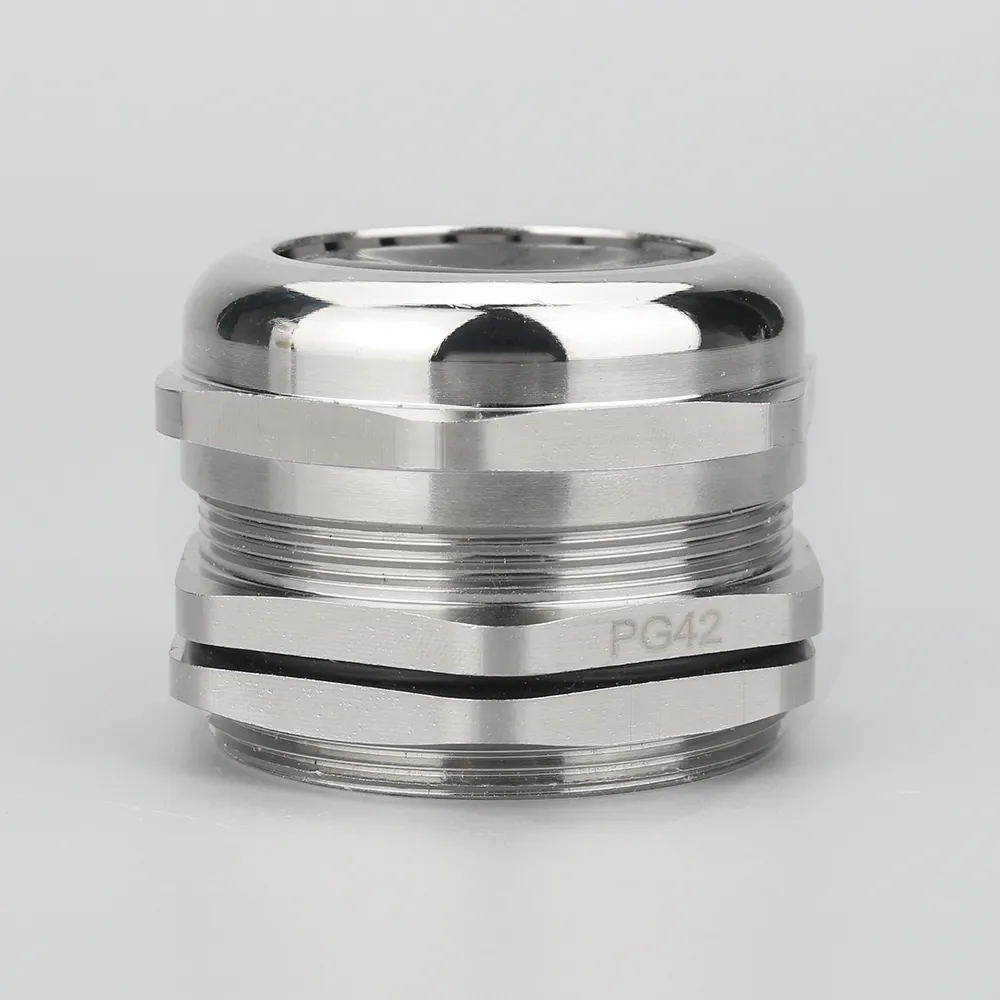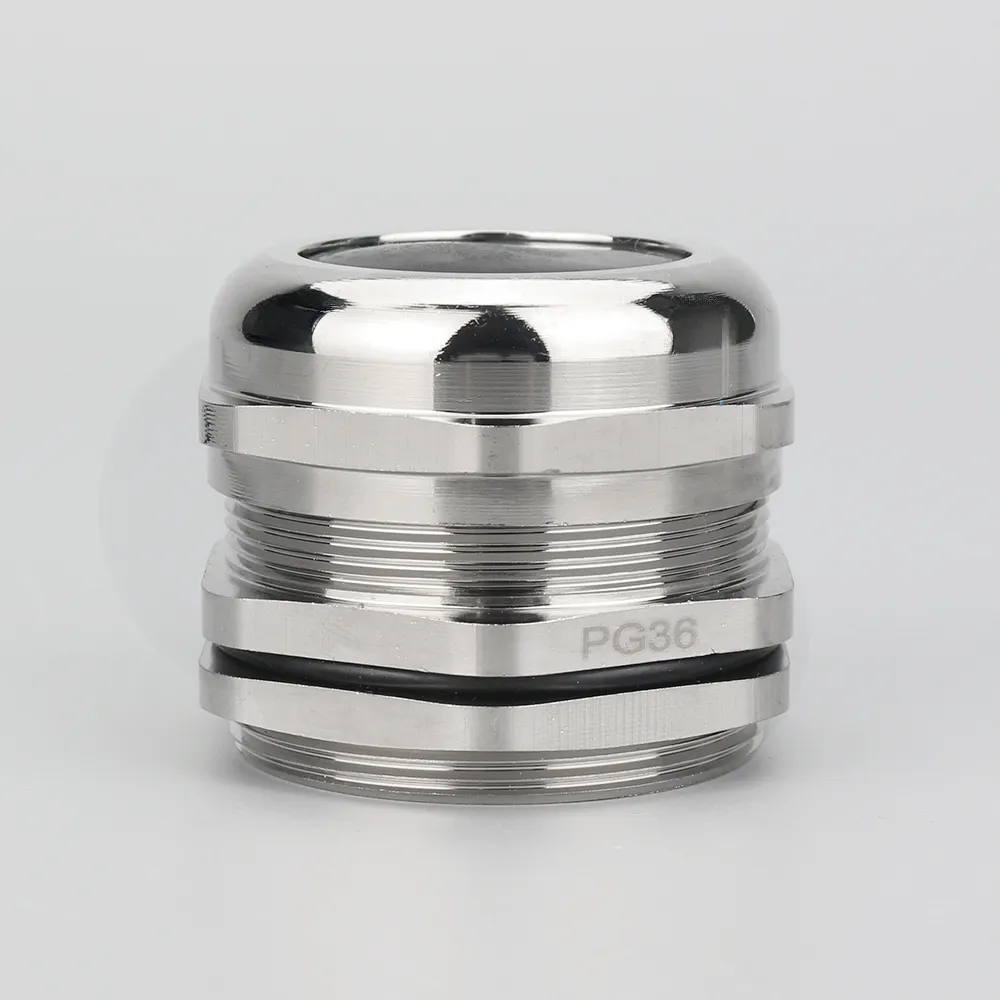
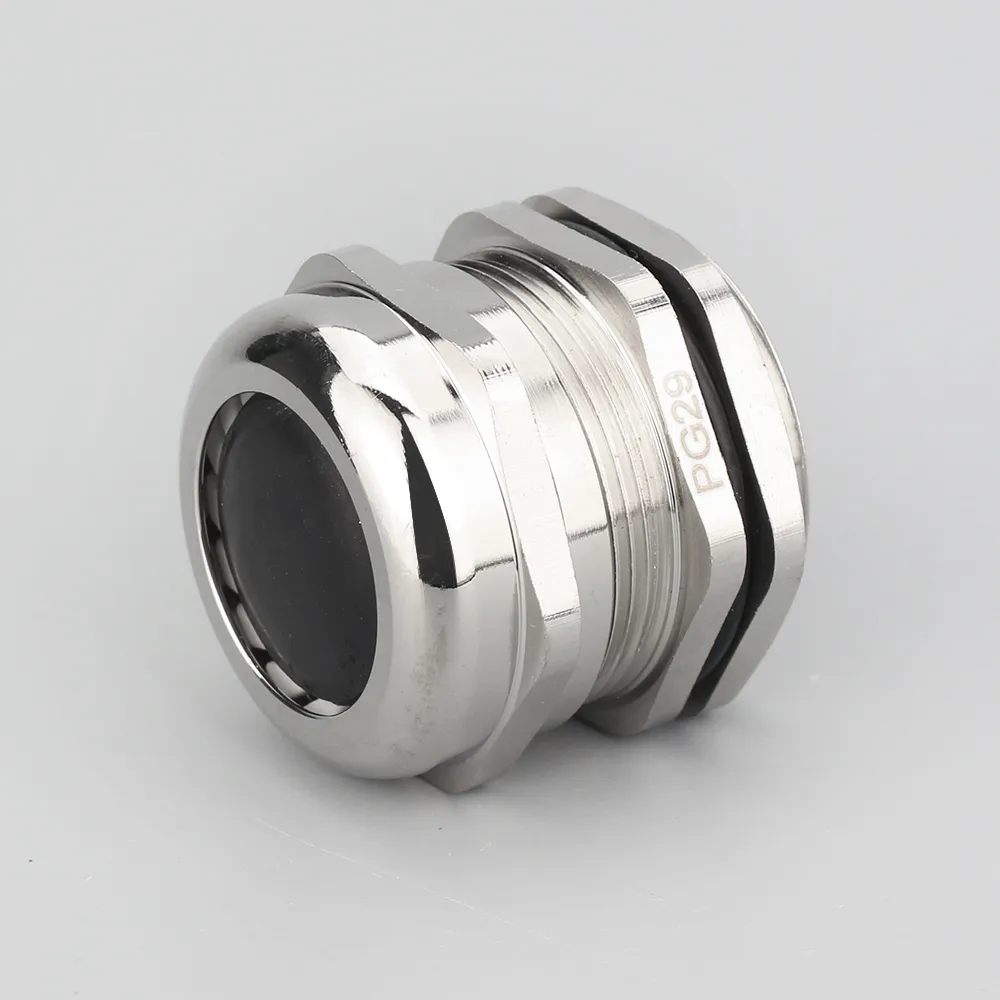
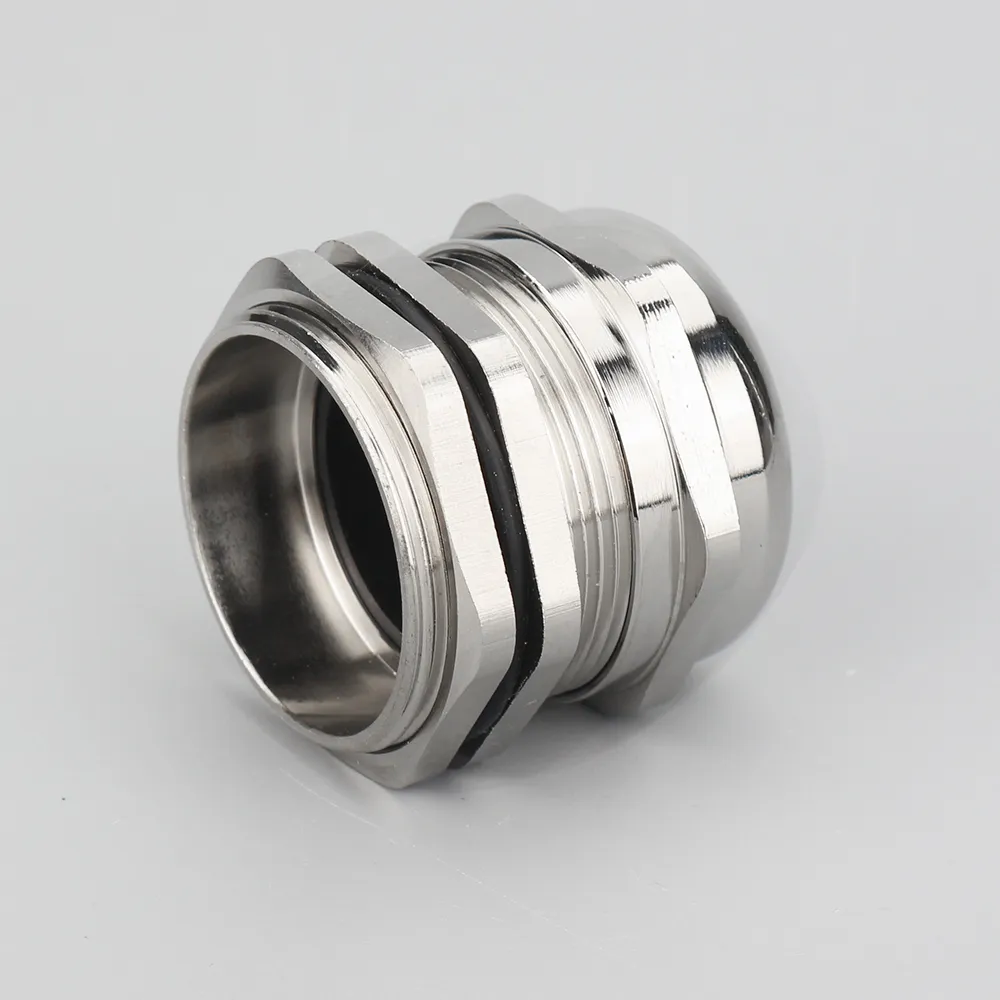


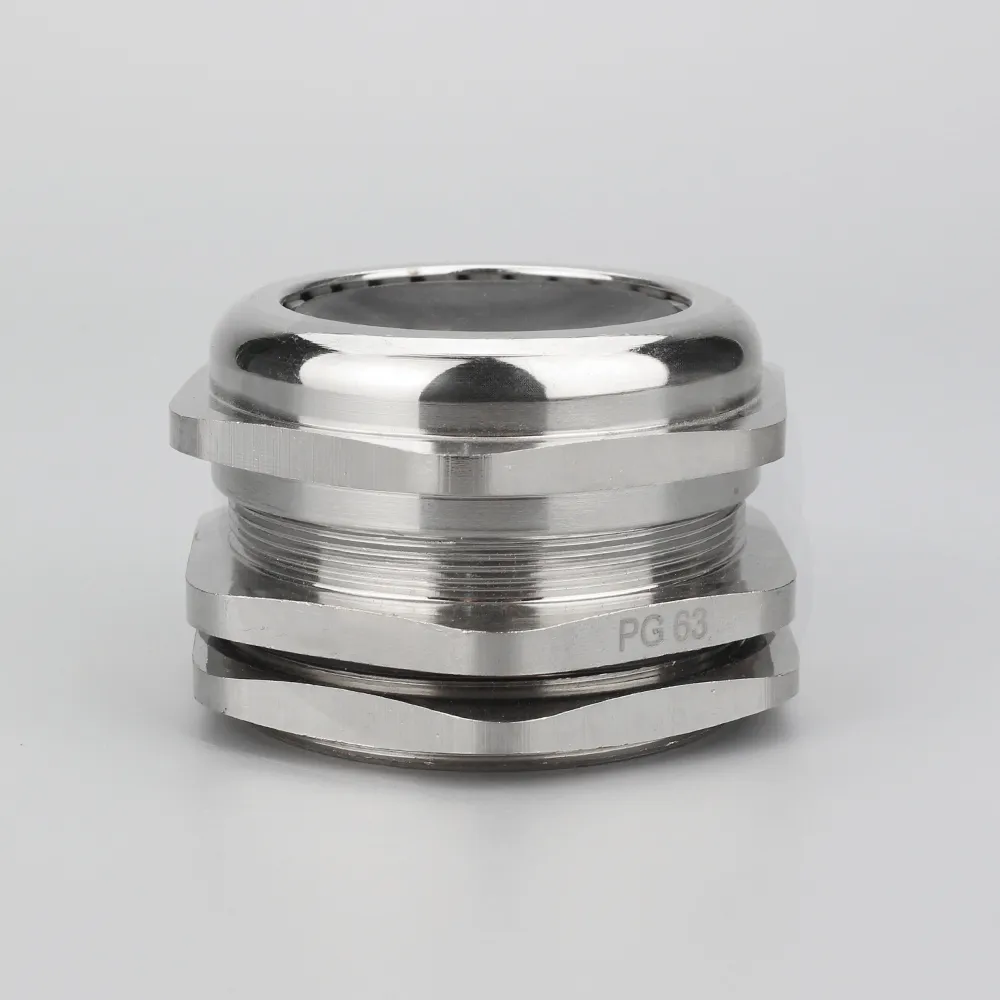
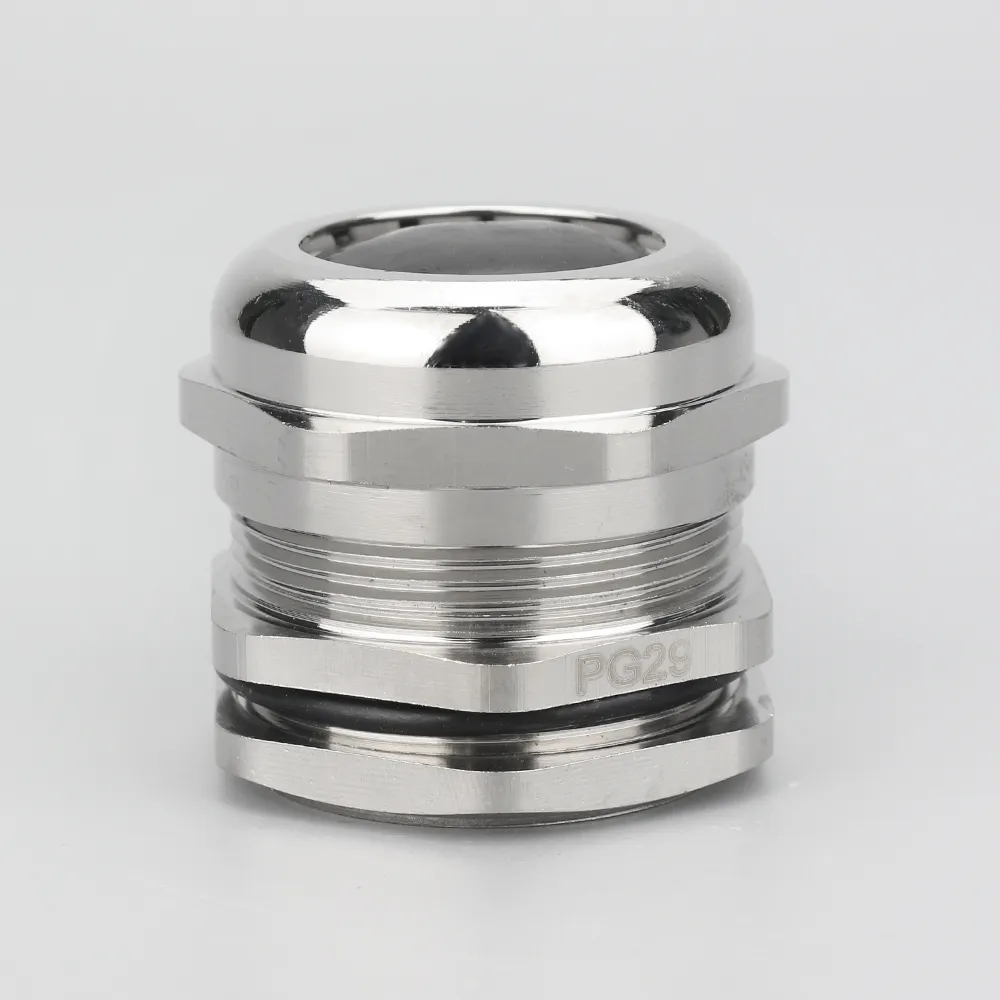
PG29 stainless steel cable gland — 18–25 mm clamping range, 37.0–37.2 mm panel cut-out, 11 mm standard thread length and a 40 mm hex. The size that sits between control-cabinet entries and the large feeder glands, and on marine work usually the entry for deck boxes, winch feeders and ballast runs.
PG29 is bought for two reasons, and they are rarely separated on the same order: the cable is too large for PG21 but below the 32 mm metric break, and the enclosure is somewhere chlorides and vibration arrive together. Both of those conditions push the specification away from plated brass and towards 316L.
PG29 or M32 — five millimetres decide the order
M32 and PG29 cover a similar cable range and neither will fit the other’s hole. The gap is 5 mm, which is large enough to be obvious on a drawing and small enough to be missed on a purchase order raised from a cable schedule.
| PG29 | M32 × 1.5 | PG36 | |
|---|---|---|---|
| Thread O.D. | 37.0 mm | 32.0 mm | 47.0 mm |
| Panel cut-out | 37.0–37.2 mm | 32.0–32.2 mm | 47.0–47.2 mm |
| Cable range | 18–25 mm | 15–22 mm | 25–33 mm |
| Thread length GL | 11 mm | 10 mm | 12 mm |
| Spanner size | 40 mm | 35 mm | 50 mm |
The practical rule: read the thread outside diameter off the gland you are replacing, not the cable size. A 23 mm cable will pass through either a PG29 or an M32 bore, so the cable does not tell you which one the panel was punched for.
Why 316L and not 304 on a vessel
304 fails by pitting in chloride-rich air, and a deck box breathes salt every time the wind gets up. 316L has the molybdenum that delays that failure, and on marine work it is the baseline rather than the upgrade. Ask for the material certificate with the heat number: class societies routinely ask for it at survey, and a purchase order that says “stainless” will not produce one.
316L also galls. Two stainless threads assembled dry can seize before they reach the sealing torque, so a lubricant approved for the service — not a general-purpose grease — belongs in the work instruction. The stainless steel guide covers the grade comparison and the −40 to +200 °C working range with a silicone seal.
Parameter table — PG thread series
The full PG series is listed so a replacement can be matched to the existing punch. Metric sizes are on the stainless steel cable gland category.
| Model | Thread | Cable range (mm) | Thread O.D. (mm) | Mounting hole Ø (mm) | Thread length GL (mm) | Bonding length (mm) | Spanner size (mm) |
|---|---|---|---|---|---|---|---|
| PG7 | PG7 | 3–6.3 | 12.5 | 12.5–12.7 | 7 | 19 | 14 |
| PG9 | PG9 | 4–8 | 15.2 | 15.2–15.4 | 8 | 20 | 18 |
| PG11 | PG11 | 5–10 | 18.6 | 18.6–18.8 | 8 | 21 | 20/21 |
| PG13.5 | PG13.5 | 6–12 | 20.4 | 20.4–20.6 | 8 | 22 | 22 |
| PG16 | PG16 | 10–14 | 22.5 | 22.5–22.7 | 9 | 23 | 24 |
| PG19 | PG19 | 10–14 | 25 | 25–25.2 | 9 | 25 | 24/27 |
| PG21 | PG21 | 13–18 | 28.3 | 28.3–28.5 | 9 | 27 | 30/32 |
| PG25 | PG25 | 15–22 | 32 | 32–32.2 | 10 | 29 | 35 |
| PG29 | PG29 | 18–25 | 37 | 37–37.2 | 11 | 31 | 40 |
| PG36 | PG36 | 25–33 | 47 | 47–47.2 | 12 | 37 | 50 |
| PG42 | PG42 | 32–38 | 54 | 54–54.2 | 13 | 38 | 57 |
| PG48 | PG48 | 37–44 | 59.3 | 59.3–59.5 | 14 | 38 | 64 |
| PG63 | PG63 | 42–52 | 72 | 72–72.2 | 15 | 42 | 78 |
On a 25 mm cable — the top of the PG29 range — the insert is compressed close to its limit. If the cable measures 24.5 mm or more, check whether PG36 is the honest answer rather than forcing the seal.
Vibration, torque and the first thermal cycle
A winch feeder is a vibrating joint and a deck box is a thermal-cycling one, so the gland has to stay tight under both. Tighten to the figure on the datasheet, then re-check after the first 24 hours or the first thermal cycle: stainless holds its torque better than PA66, but the sealing insert relaxes regardless of what the body is made of.
Over-tightening is the more common error on stainless, because the body feels like it can take it. Past the sealing point the insert extrudes and the joint gets worse, not better. The cable gland torque guide explains how to read a torque figure per size and material, and the spanner size chart gives the hex for every size so the tool is not improvised.
Installation sequence for a deck or bulkhead entry
- Confirm thread, cut-out and cable OD against the table above, and confirm the grade on the certificate before anything is drilled.
- Clean and de-burr the cut-out. A burr under the washer is a leak path that no torque figure will close.
- Seat the body with its washer, fit the earth tag under the body where the drawing calls for one, and tighten the locknut.
- Run the cable through, strip the sheath to the insert seat, and seat the insert so the sheath — not the screen, not the filler — sits inside the clamping range.
- Tighten the dome nut to the datasheet figure, then verify by hand-pull and by inspecting the insert for even compression.
- Re-check torque after the first thermal cycle or the first 24 hours in service, and record it on the commissioning sheet.
Sealing under washdown and green water
IP68 is published in grades — 1.5 m / 30 min, 2 m / 24 h as standard, 5 m / 72 h for marine and tunnel work, 10 m / 168 h by special order. For a deck entry, specify 5 m / 72 h and put the duration in the purchase order; the label alone does not distinguish between the grades. IP69K, where quoted, refers to high-pressure hot-water jet cleaning and is a separate test rather than a better IP68.

Where PG29 is specified
- Deck boxes, bulkhead penetrations and winch feeder cables on workboats and yachts
- Ballast, pump and treatment lines where chlorides are continuous rather than seasonal
- Offshore and port equipment exposed to salt spray and green water
- Process plants where a corroded entry cannot be replaced without a shutdown
For control-level entries on the same vessel, the matching gland one size family down is PG13.5 in stainless steel.
Documents, MOQ and quotation
MOQ is 300 pcs per size for stainless steel. Marine orders usually follow a vessel’s cable schedule, so send the schedule rather than one line: mixed sizes are priced per size and quoted together, and any line where the cable sits at the edge of a clamping range gets flagged before the order is confirmed.
Documentation: CE declaration of conformity, RoHS and REACH statements, an IP68 test report to IEC 60529, and a 316L material certificate with the heat number for class survey.
Send cable OD, thread and quantity for a same-day price. Samples of 1 to 2 pieces are available for verification.
Request a Quote Now
Our team will get back to you within 24 hours.