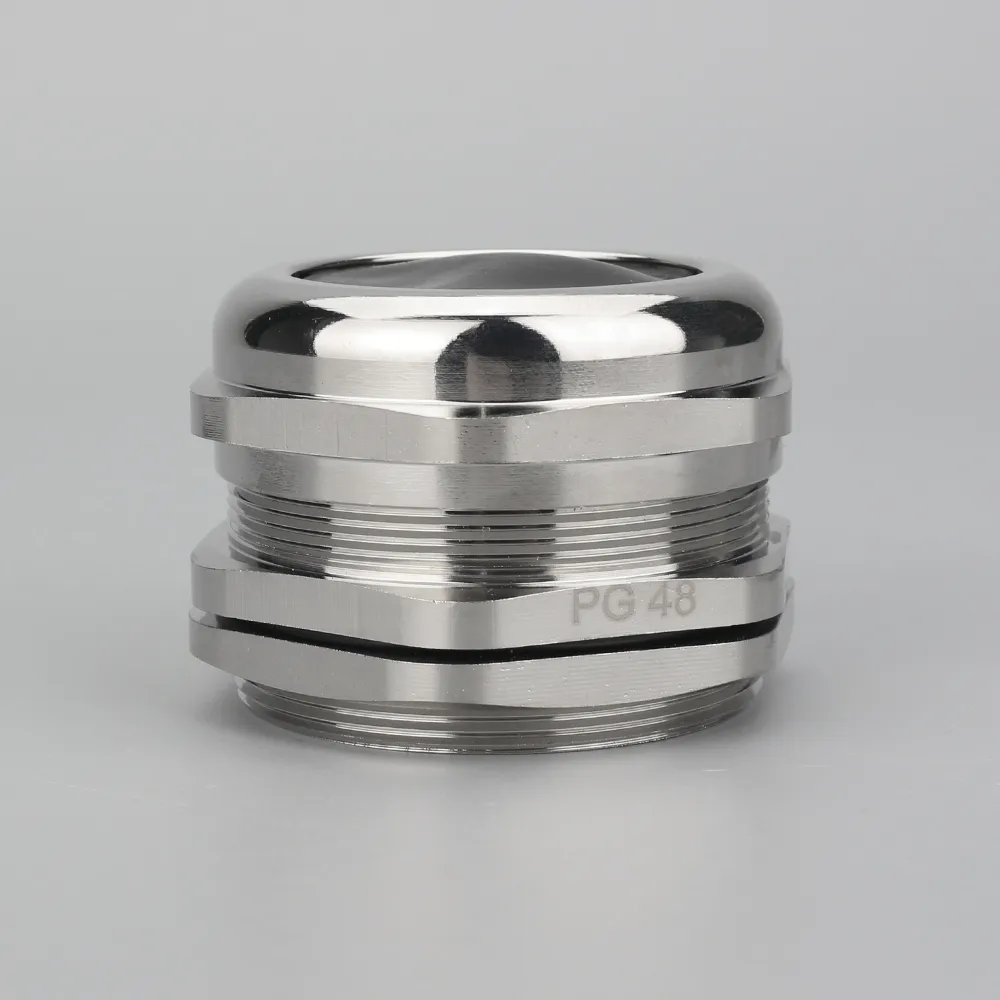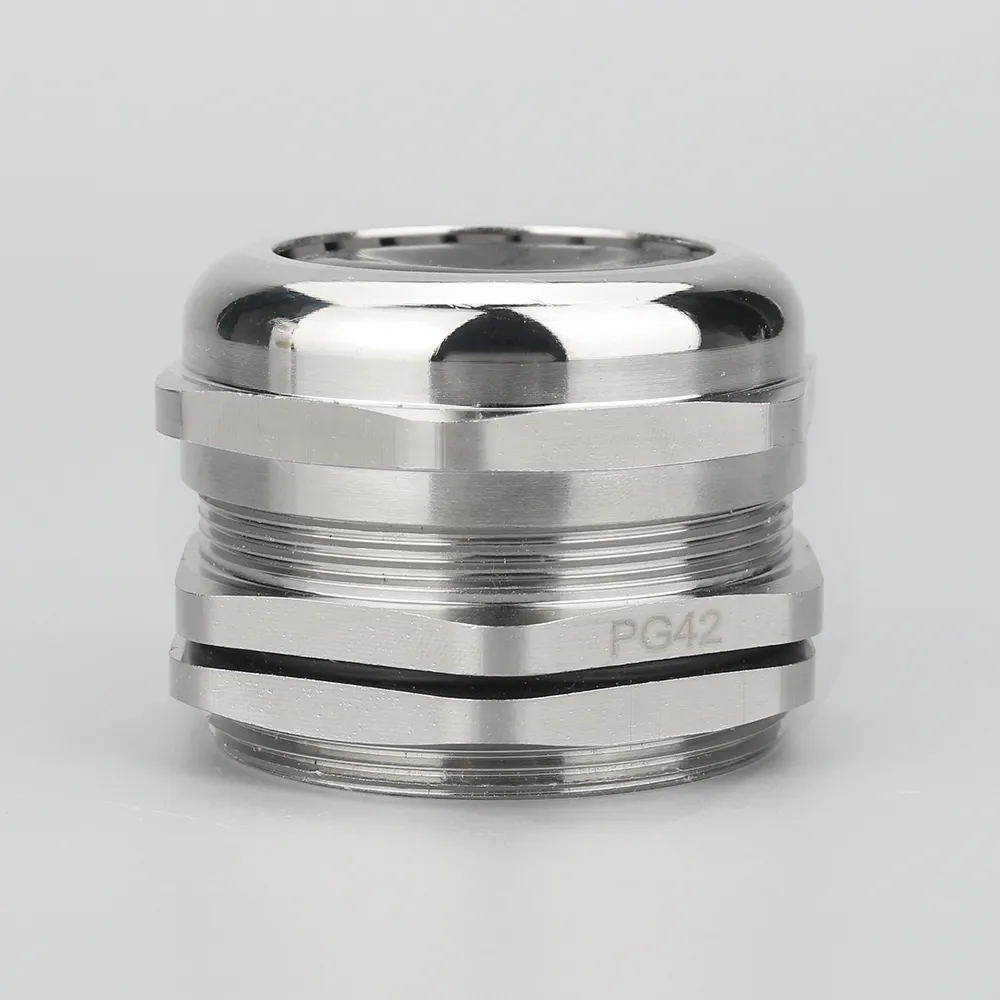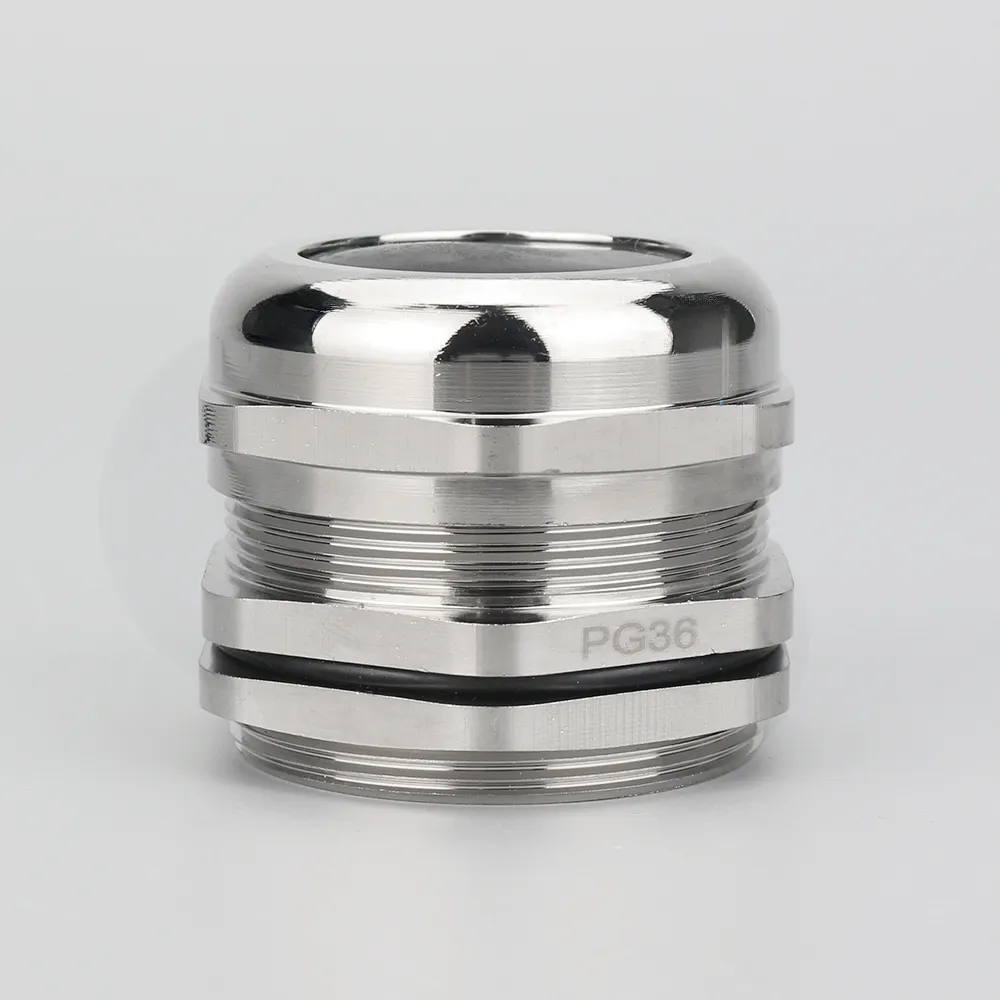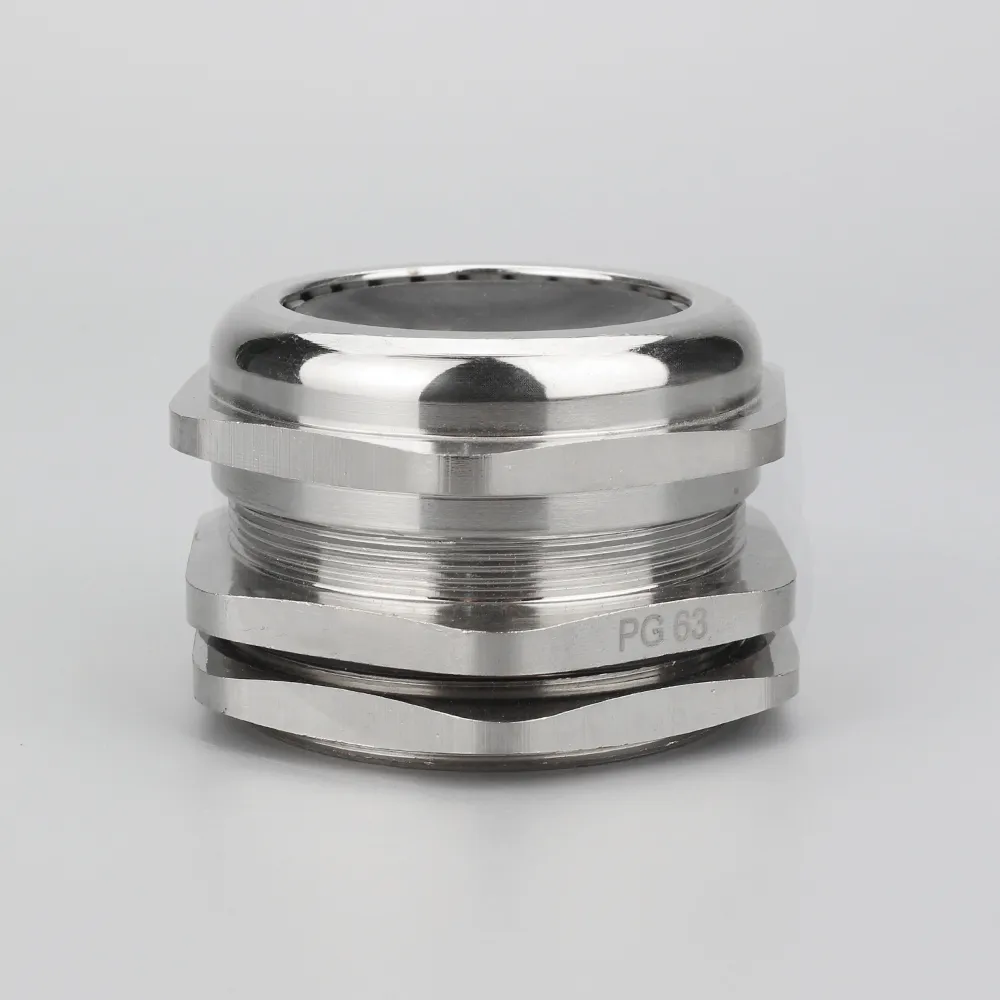
PG9 stainless steel cable gland for industrial use — 4–8 mm clamping range, cut-out 15.2–15.4 mm, thread length 8 mm, 18 mm across flats, IP68, in 304 or 316L.
PG9 is a panel-builder’s size. A single machine can carry thirty or forty of them on sensor, valve and signal cables, which makes the decisions different from the ones that matter on a feeder gland: consistency of the punch, consistency of the grade, and a supply that arrives bagged per size rather than loose.
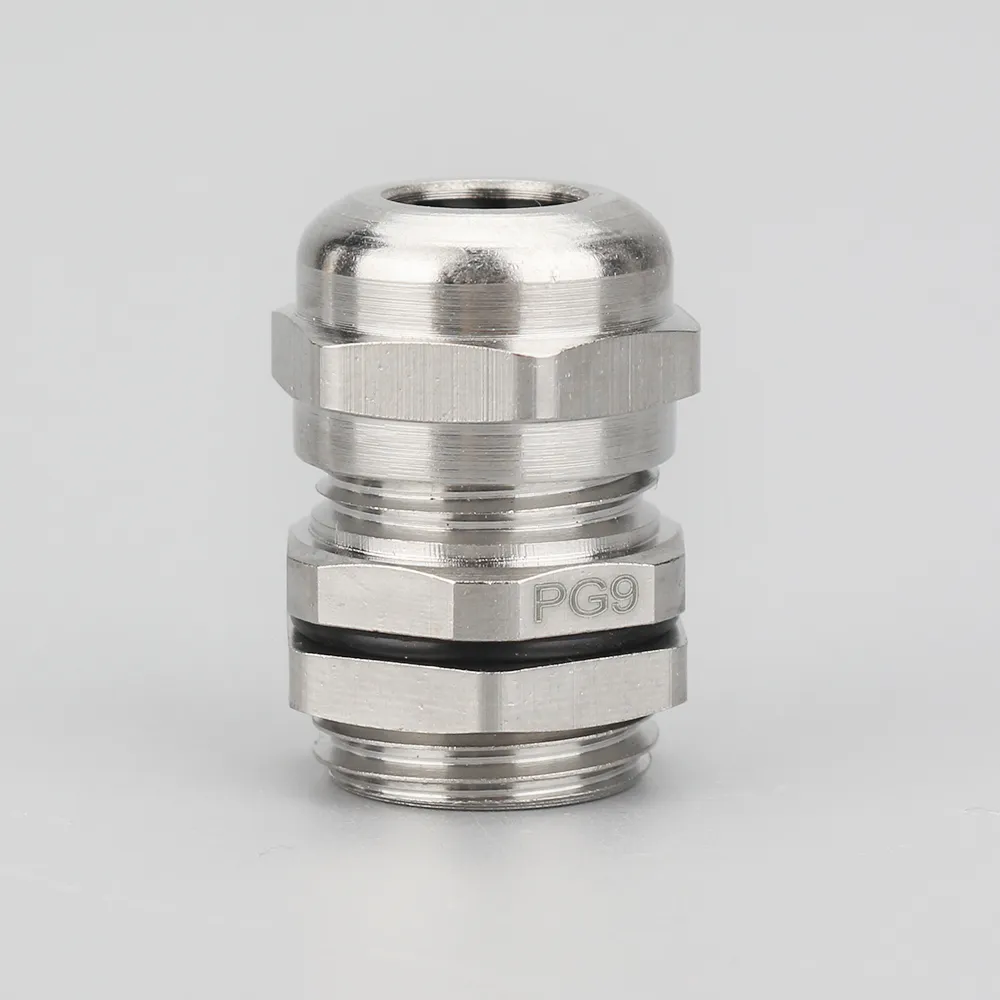
“Industrial use” means repeatability, not ruggedness
Thirty identical entries on one machine fail for one reason far more often than for thirty reasons: one of them was assembled differently. The variables that actually matter at this size are the punch diameter, the insert position on the sheath, and the torque — and all three are controlled by the drawing and the work instruction, not by the gland.
- Punch 15.2–15.4 mm, not 15 mm nominal. A 15 mm hole will not accept the thread without forcing it.
- Insert onto the sheath, not onto the cores. At 4–8 mm there is very little jacket to work with, so the strip length has to be right first time — see the stripping length guide.
- One torque figure for the whole panel, taken from the datasheet rather than from feel.
PG9 and M16: 0.8 mm apart
| PG9 | M16 × 1.5 | PG11 | |
|---|---|---|---|
| Thread O.D. | 15.2 mm | 16.0 mm | 18.6 mm |
| Panel cut-out | 15.2–15.4 mm | 16.0–16.2 mm | 18.6–18.8 mm |
| Cable range | 4–8 mm | 4–8 mm | 5–10 mm |
| Thread length GL | 8 mm | 8 mm | 8 mm |
| Spanner size | 18 mm | 18 mm | 20 / 21 mm |
Same cable range, same spanner, 0.8 mm apart on the punch. This is exactly the pair that gets swapped on a purchase order raised from a cable list with no thread column on it.
Volume buying on a small-size gland
The economics at PG9 are driven by the number of entries, not the unit price. Two practical notes for panel builders running this size in volume:
- Order by panel, price by size. Mixed-size orders are quoted per size, so a single order covering PG9, PG11 and PG13.5 for one machine keeps the same unit basis as a single-size line.
- Ask for bagged packing. Small glands arriving loose in a carton is the most common cause of a short count at the end of a build; bagging per size is a packing instruction, not an extra cost item.
Parameter table — the bottom of the PG range
| Model | Thread | Cable range (mm) | Thread O.D. (mm) | Mounting hole Ø (mm) | Thread length GL (mm) | Bonding length (mm) | Spanner size (mm) |
|---|---|---|---|---|---|---|---|
| PG7-NP | PG7 | 3–6.3 | 12.5 | 12.5–12.7 | 7 | 19 | 14 |
| PG9-NP | PG9 | 4–8 | 15.2 | 15.2–15.4 | 8 | 20 | 18 |
| PG11-NP | PG11 | 5–10 | 18.6 | 18.6–18.8 | 8 | 21 | 20/21 |
MOQ, packing and lead time
MOQ is 300 pcs per size. On a panel-building programme that is roughly one machine’s worth of a single entry, so the minimum rarely bites — what matters more is whether the delivery lands before the wiring stage.
Quotations are FOB Ningbo or Shanghai, per size and per grade, with the packing instruction stated on the quotation if you need bags per size. Lead time is confirmed per order; for a production line running the same panel repeatedly, a scheduled call-off against a blanket quantity is the cheaper arrangement and we will quote it that way on request. OEM panel programmes run on that basis as standard.
Documentation: CE, RoHS and REACH statements, an IP68 test report to IEC 60529, and a material certificate for 304 or 316L.
Send cable OD, thread and quantity for a same-day price. Samples of 1 to 2 pieces are available for verification.
Request a Quote Now
Our team will get back to you within 24 hours.