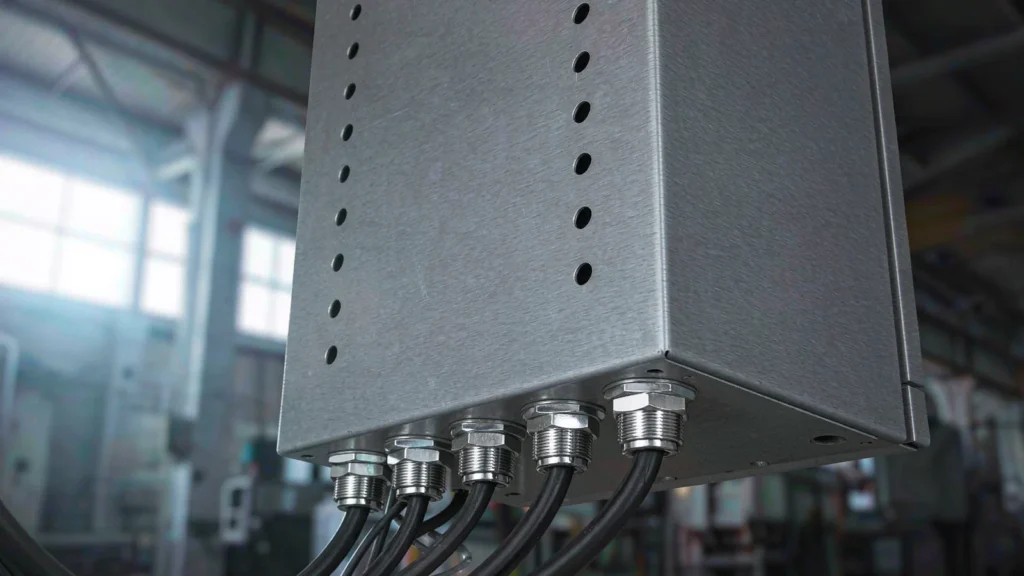
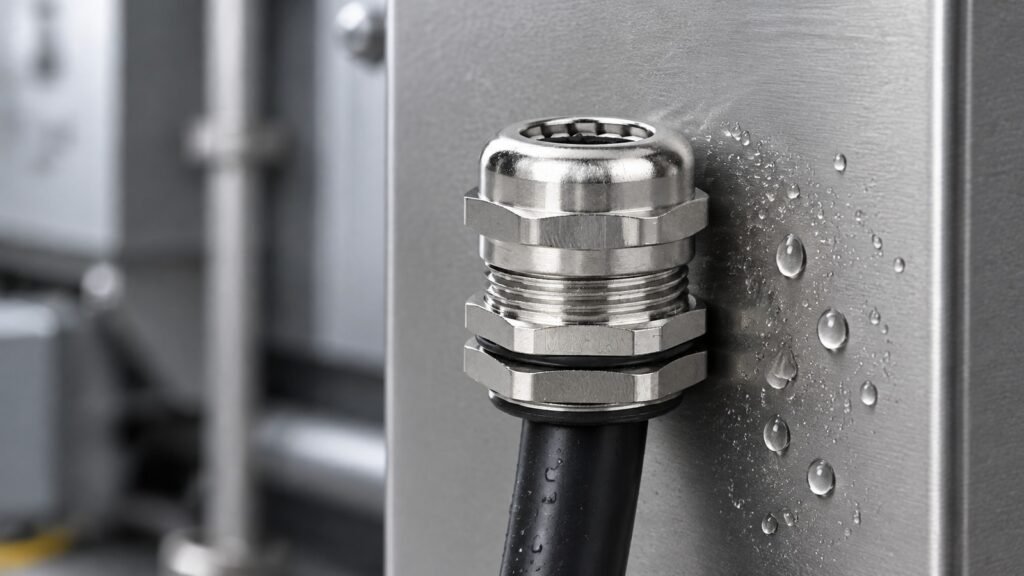
The gland is only as good as the hole it sits in. How wall material, thread length, locknuts, knockouts and gland plates decide whether an enclosure stays at its stated IP rating.
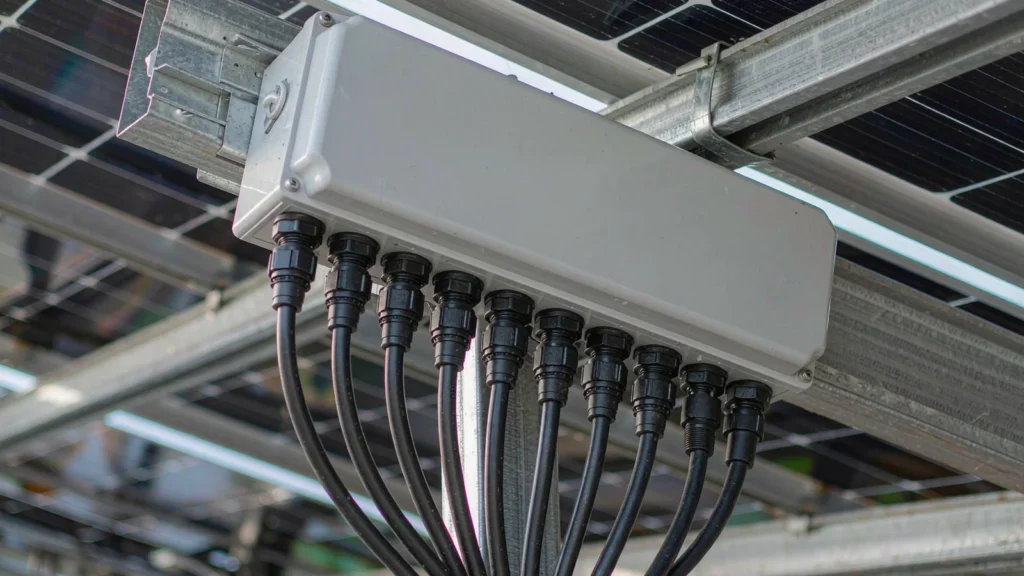
A combiner box is a density problem: too many entries, too little spanner room, and a thin moulded wall. How to schedule, space and seal the entries before anything is drilled.
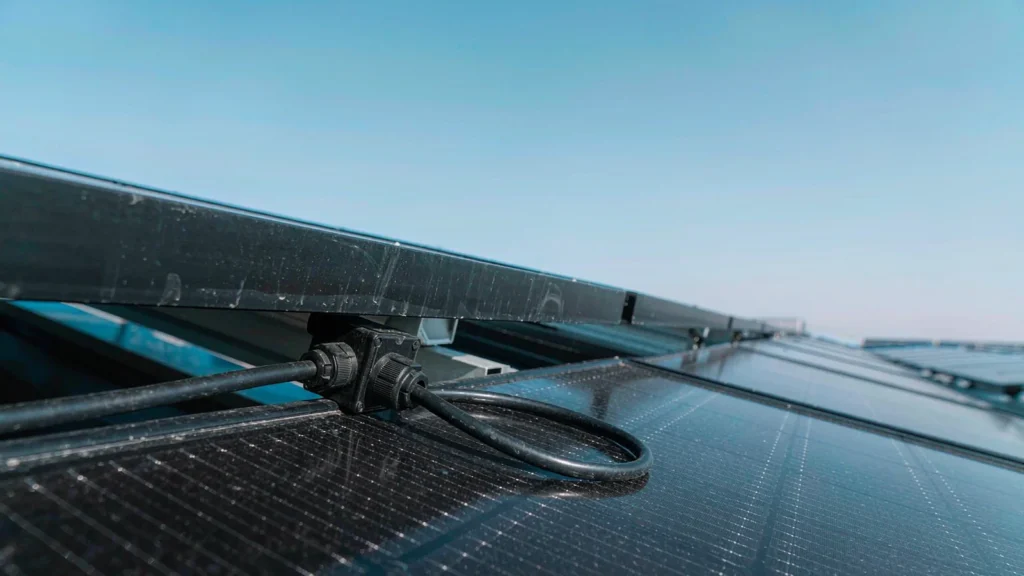
A PV cable entry has to survive twenty-five years of sun and thermal cycling with no maintenance access. What that changes about cable sizing, UV stability, material choice and entry geometry.
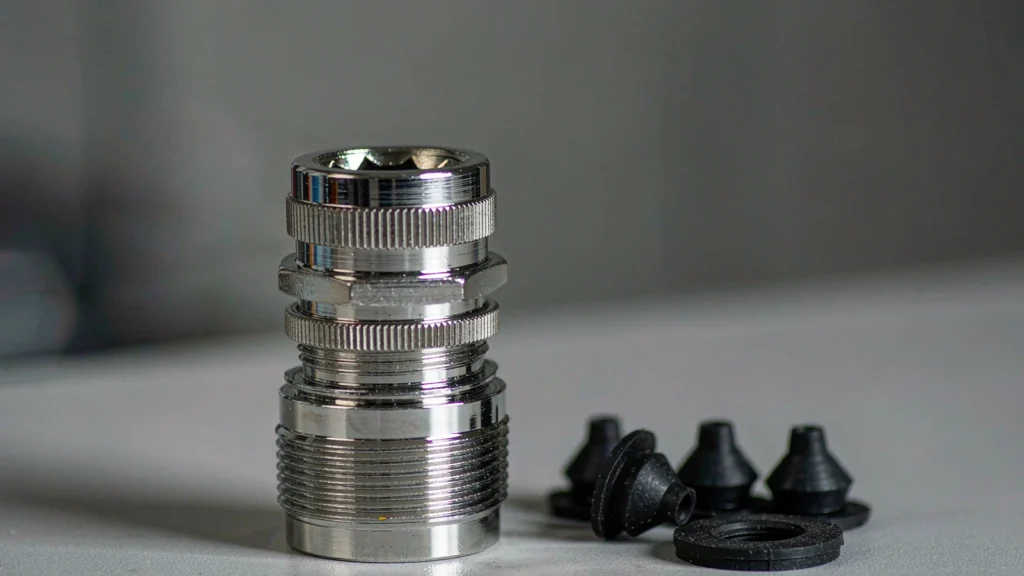
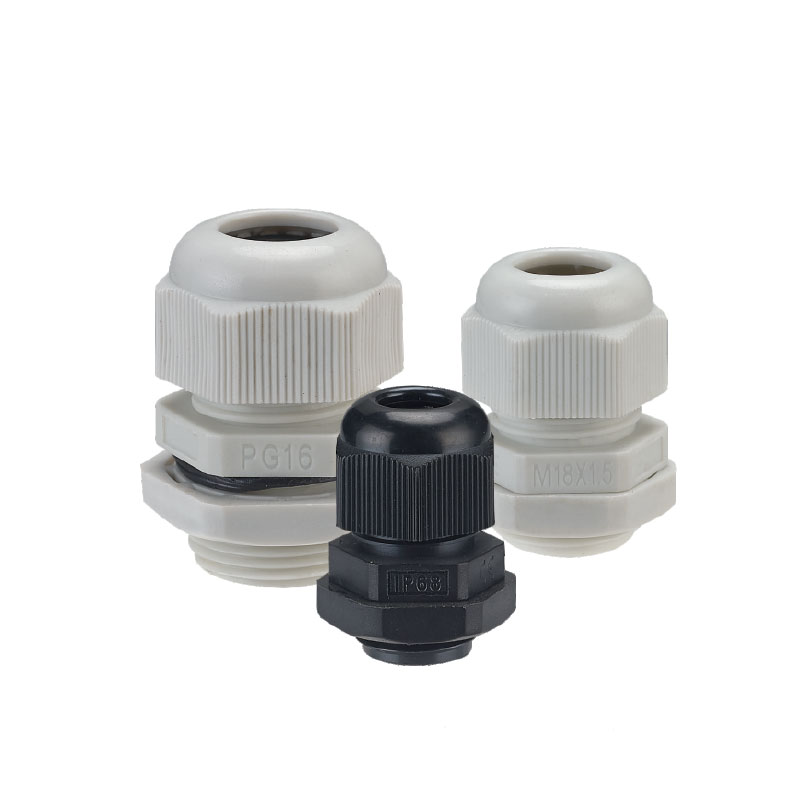
A cable gland contains two elastomer seals, and they are not always the same compound. Here is how EPDM, NBR and silicone actually differ, where each one fails, and what to put in an enquiry.
A leaking cable gland is rarely a faulty gland. Read the water to find which of the four entry routes it used, match the symptom to the interface that failed, and fix the cause instead of replacing the part again.
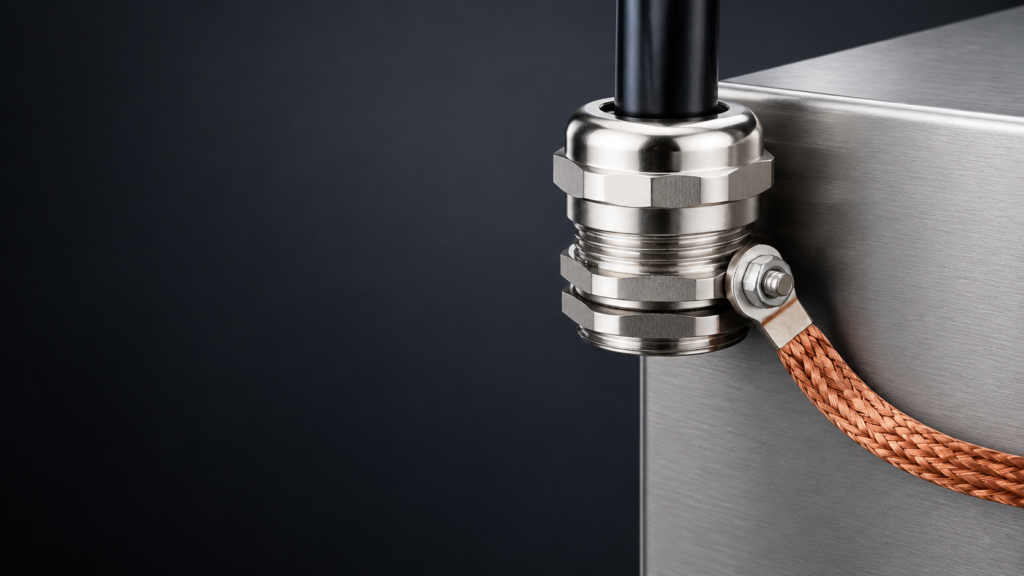
Earthing and bonding do different jobs. The three return paths a gland can provide, the seven interfaces that break continuity, and how to test them on site.
Nous répondrons à votre demande dans les 24 heures
Nous accordons de l'importance à votre vie privée
Nous utilisons des cookies pour améliorer votre expérience de navigation, vous proposer des publicités ou des contenus personnalisés et analyser notre trafic. En cliquant sur "Tout accepter", vous consentez à notre utilisation des cookies.