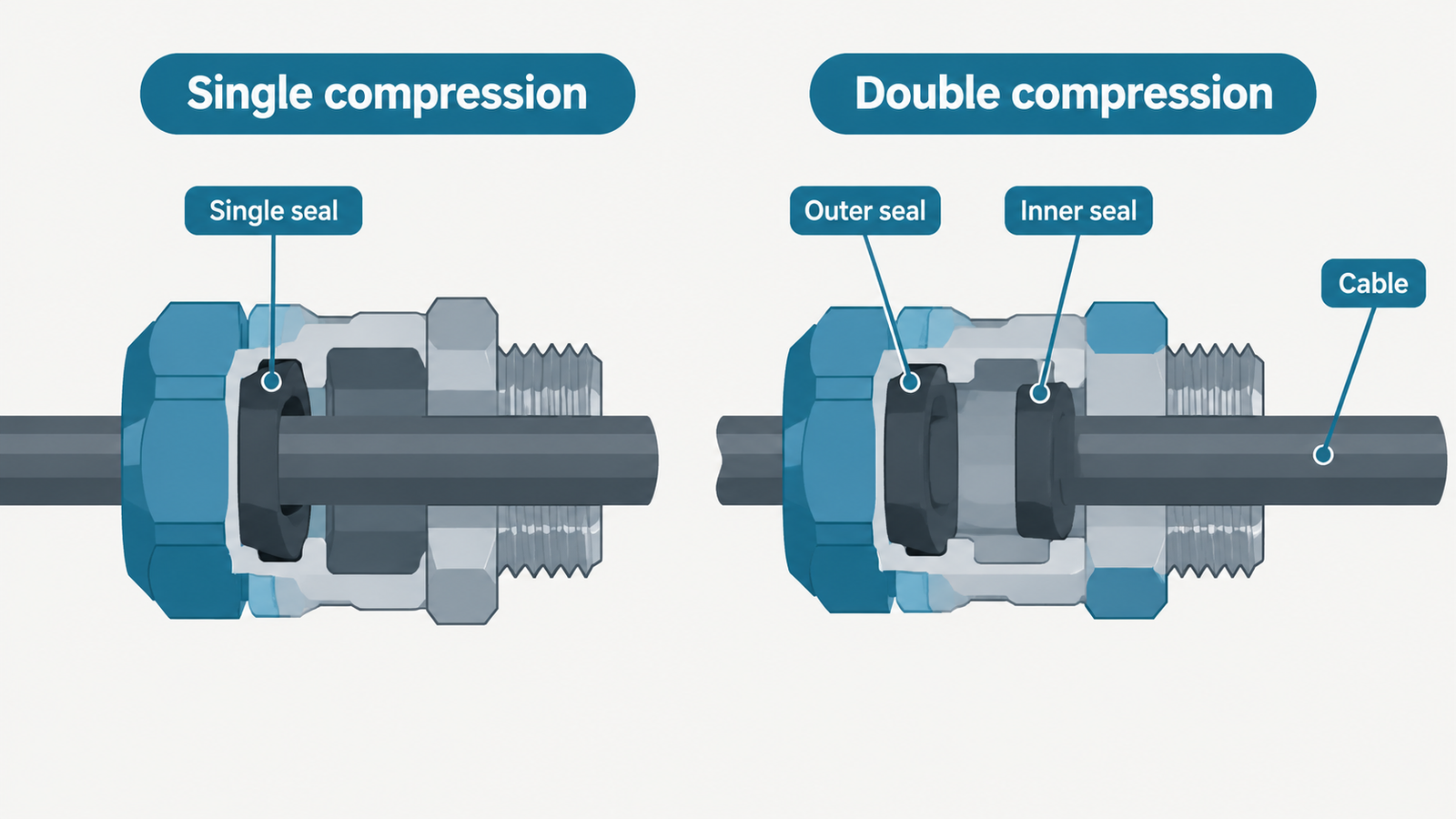
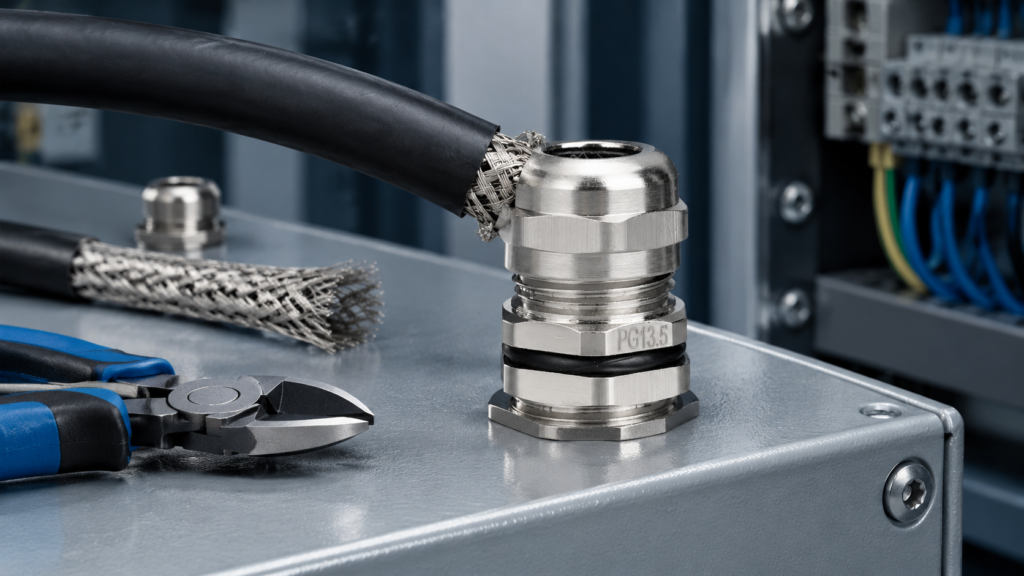
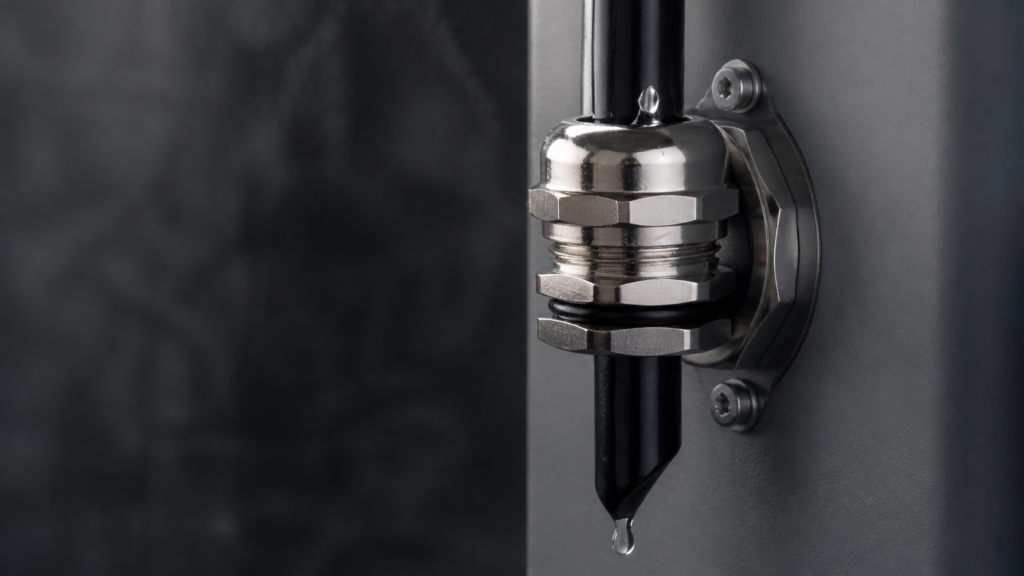
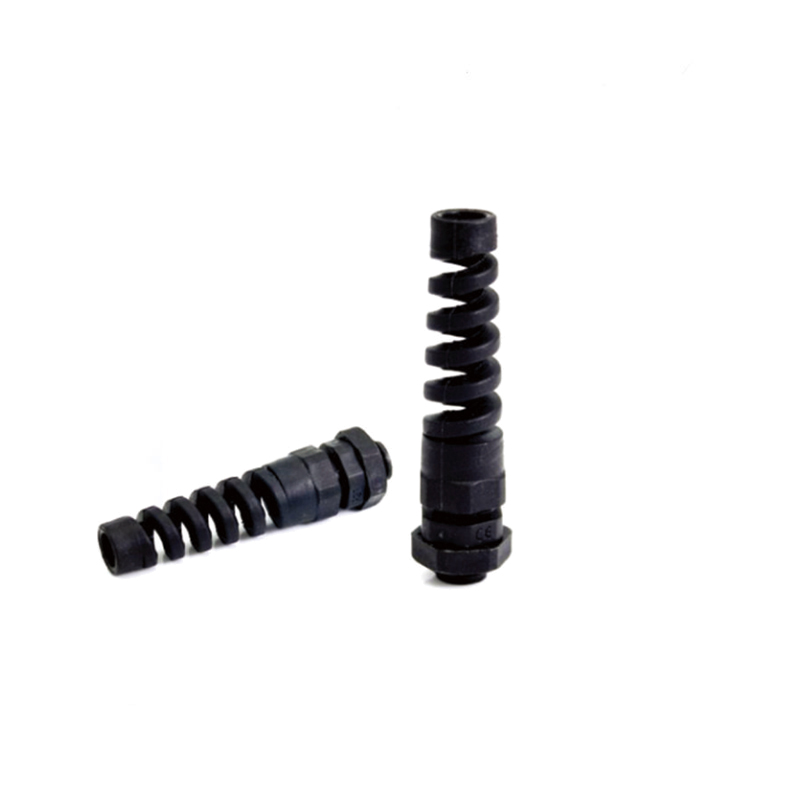
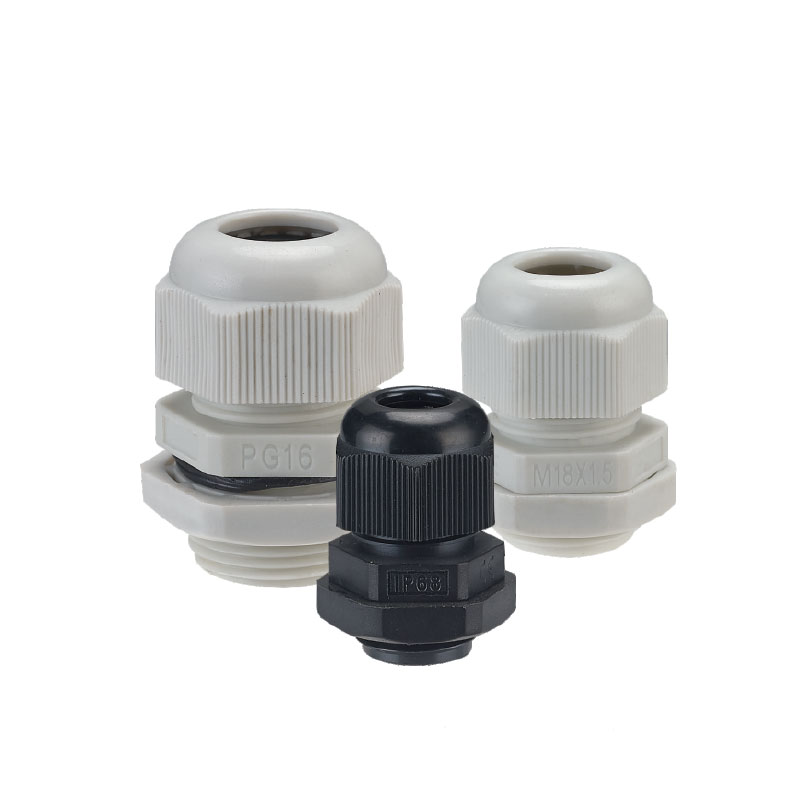
In cable gland language, compression is not a measure of how hard you tighten or how long the gland is. It refers to the number of elastomer seals that are compressed onto the cable. A single compression gland has one such seal. A double compression gland has two, in series, each compressed by its own nut.
Counting nuts is therefore the wrong test. Some single compression designs use a nut plus a separate cap; some double compression designs look only slightly longer than a single. The reliable way to tell them apart is to ask where the seals sit and what each one touches. That is also the only way to judge whether the difference matters for your installation.
Single Compression: One Seal, Two Duties
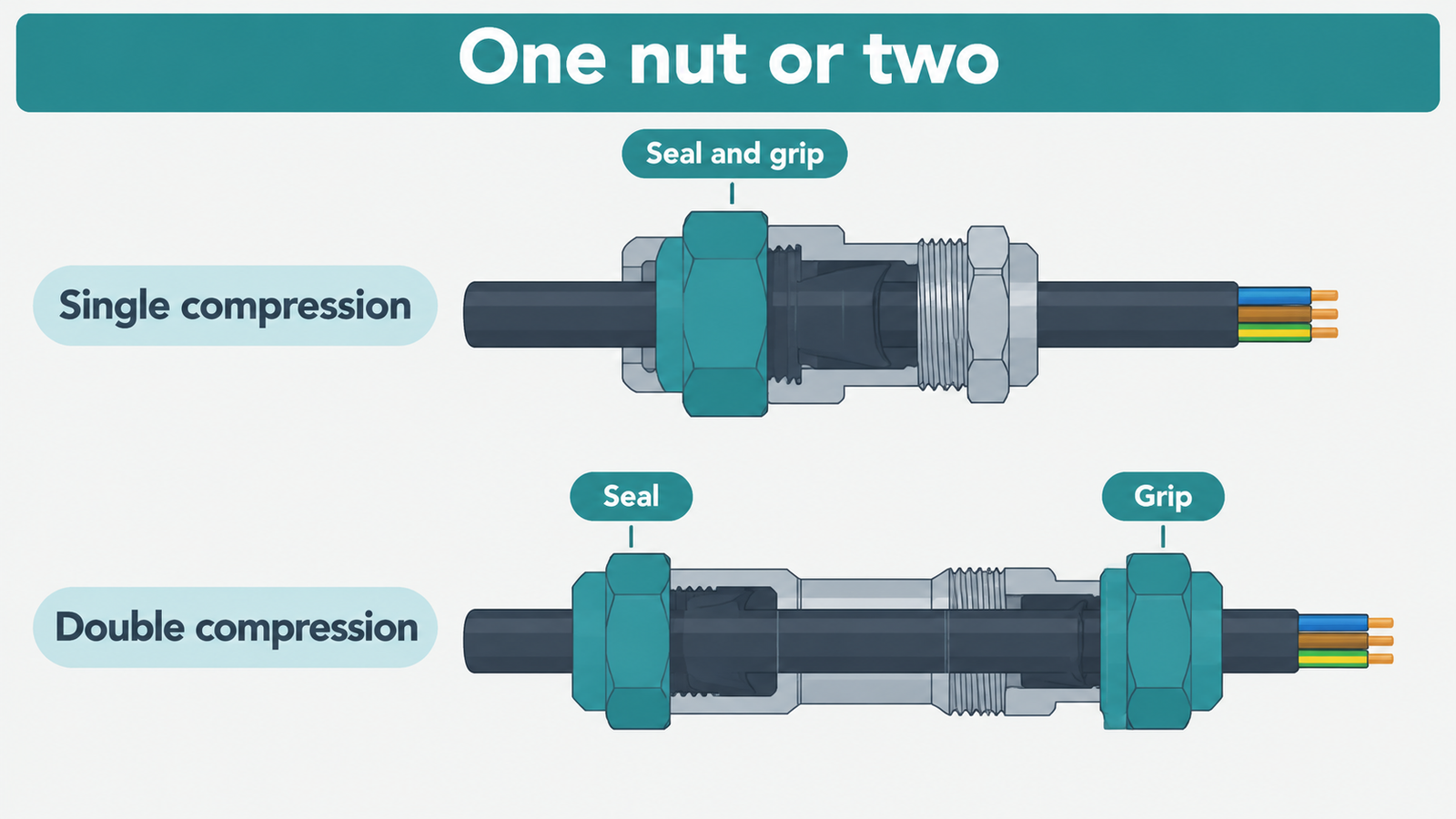
In a single compression gland, one elastomer insert is squeezed around the cable by one nut. That single insert has to do two jobs at once: seal the entry against water and dust, and grip the cable so that pull and vibration do not reach the terminals.
Both duties come from the same adjustment. Tighten the nut and you increase grip and sealing together; loosen it and you lose both. That coupling is the defining property of the design, and it explains most of what follows in this article. It is not a defect. For a short, dry, indoor run with a light unarmoured cable, one insert doing both jobs is efficient and entirely adequate.
One seal or two: where the elastomer sits decides what the gland can promise.
Double Compression: Two Seals, Two Duties
A double compression gland splits the work. An outer seal closes on the outer sheath at the cable entry. An inner seal closes further inside, on the bedding or on an internal layer, depending on the cable and the design. Each seal has its own nut and its own compression.
Two consequences follow. First, retention no longer competes with sealing: the inner assembly can grip firmly while the outer seal stays at its correct compression. Second, a second barrier exists. Anything that gets past the outer seal, through a scratched sheath or a seal that has taken a set, still meets the inner seal before it reaches the enclosure.
One nut doing both duties, or two nuts each doing one.
Where the Two Designs Actually Differ
Недвижимость
Single compression
Double compression
Sealing barriers
One
Two, in series
Retention
Shares the same insert as the seal
Separate from the outer seal
Adjustment
One setting for both duties
Two independent settings
Typical cable
Unarmoured, small to medium
Armoured, screened, large diameter
Typical location
Indoor, dry, protected
Outdoor, wet, vibrating, submerged
Part count and cost
Нижний
Higher, more SKUs to stock
The table is a starting point rather than a rule. What decides a real specification is not the label but the exposure, and the exposure is usually described badly in a quotation request.
The Trade-Off That Decides the Specification
With a single compression gland, the installer has to choose one setting that both seals and holds. On a stiff cable in cold weather, achieving grip means compressing the insert hard, which can pinch the sheath and shorten seal life. Backing off to protect the sheath costs retention. There is no setting that is optimal for both, so the result is a compromise that nobody records.
A double compression gland removes that compromise by construction. Set the inner assembly for grip, set the outer nut for seal, and each can be correct at the same time. This is why double compression appears wherever the consequences of a marginal seal are expensive: rooftops, washdown areas, coastal sites, vertical drops and anything with a motor attached.
Time sharpens the difference. An elastomer insert that was correctly compressed at commissioning takes a permanent set over months of thermal cycling; it relaxes and loses some of its squeeze. On a single compression gland that relaxation costs seal and grip at the same time, because both came from the same insert. On a double compression gland the outer seal can relax a little while the inner assembly still holds the cable, and the inner seal is still behind it. The design does not prevent ageing, it prevents ageing from affecting two functions at once.
Which Cables Each Type Suits
Unarmoured cable with a round, well-extruded sheath is the natural home of single compression. There is one surface to seal and the pull loads are modest, so a shared insert is enough. Nylon glands in this style are common on control panels and junction boxes.
Armoured, braided and screened cables change the picture, because the gland has to reach past the outer sheath to grip something else. That usually means an internal clamping stage, and once you have an internal assembly it makes sense to give it its own seal. The armoured gland parts and duties article explains what that internal stage consists of, and the SWA selection guide covers sizing it to the cable.
Where Double Compression Is Effectively Mandatory
There are situations where a single seal will pass an initial test and still fail in service. They are worth listing because they are the cases where the cost difference between the two designs is trivial compared with the cost of a return visit.
Situation
Why one seal is not enough
Vertical runs, cable entering from above
Water runs down the sheath and sits on the seal; a second barrier stops the wicking path
Submersion or an IP68 claim
Pressure acts continuously, and one barrier has no redundancy
Motors, pumps, compressors
Vibration works a shared insert loose, losing grip and seal together
Large diameter or stiff cable
Grip requires high compression, which the seal cannot tolerate
Washdown and hose-directed cleaning
Repeated thermal and pressure cycling sets the elastomer; a second seal covers the drift
Outdoor enclosures with a scratched sheath
The damaged surface is exactly where the single seal has to work
Where Single Compression Is the Right Answer
The reverse decision deserves stating, because over-specifying is a real cost. Single compression is the better choice indoors, in dry plant rooms, in sealed cabinets, on short panel internal runs and where entry density is high and space is tight. It is also the sensible choice where the enclosure itself provides the second barrier and the gland is not the sealing boundary.
The test is simple: if water can never reach the gland, a second seal adds cost and assembly time without adding protection. If water can reach it, even occasionally, the second seal is doing real work.
There is also a stock argument. Panels with dozens of entries on one cabinet are easier to specify, install and maintain when every entry uses the same type. If a handful of entries are genuinely exposed and the rest are internal, the honest answer is often two specifications in one panel: double compression where the cable leaves the enclosure, single compression where it never does. Marking that on the enclosure drawing prevents a fitter from standardising on whichever box was opened first.
Installation: Order and Criteria
The two designs are not installed the same way, and the difference is not obvious from the outside.
Шаг
Single compression
Double compression
1
Fit body to enclosure with locknut and earth tag
Same, and confirm the earth tag sits under the body, not over it
2
Pass cable through the nut and insert
Pass cable through outer nut and outer seal first
3
Tighten the single nut to compress the insert
Tighten the inner assembly first, to set grip and the inner seal
4
Check grip and seal together; adjust is a compromise
Tighten the outer nut last, to set the outer seal independently
5
Verify by pull test and visual seal check
Verify grip, then seal, as separate checks
Tightening the outer nut first on a double compression gland is a common error: it can rotate the inner assembly and disturb a seal that was already correct. Torque figures belong to the manufacturer’s datasheet rather than to a general article. The criterion that matters is the result: the cable cannot be rotated or pulled by hand, the seal is visibly and evenly compressed, and no part of the insert is extruded out of its housing. The installation sequence for screened glands follows the same logic with an added bonding stage, and the IP rating guide explains what the finished assembly can and cannot claim.
One judgement call is worth recording on the job sheet. On a single compression gland, the pull test and the seal check are the same check, so an inspector cannot record one without implying the other. On a double compression gland they are separate and should be signed off separately, because a gland can hold a cable firmly while its outer seal is still not seated. Two lines on a checklist cost nothing and catch the failure mode the design was bought to prevent.
Specifying It on a Purchase Order
Ambiguity between the two designs is expensive because they are not always interchangeable at the same thread size. The bodies can look similar while the seal sets and internal parts differ, so a single compression gland cannot usually be upgraded on site by adding a nut.
What to state
Why it removes ambiguity
“Single compression” or “double compression”, in words
Prevents substitution with whichever type is in stock
Cable construction, not just diameter
Armoured and screened cables usually force the double design
Sealing surfaces required
Outer sheath only, or outer sheath plus bedding
IP class and the exposure behind it
Turns “IP68” into a testable requirement
Material and finish
Brass, nickel plated brass or stainless, with the environment named
Whether an earth tag and shroud are in the kit
Avoids a second order and a stopped installation
For pricing context, standard brass glands sit in the low single-digit dollar range at volume while heavy duty and stainless versions cost several times more, so the decision should be made on exposure rather than on unit price alone. The wider кабельный ввод overview covers how these two families fit alongside EMC, armoured and hazardous area types.
Откройте для себя прочные водонепроницаемые кабельные вводы со степенью защиты IP68, изготовленные из нейлоновой латуни или нержавеющей стали для безопасного использования на открытом воздухе и в море.
Eight-step field procedure for EMC cable gland installation: screen exposure, braid fold-over, torque, enclosure bonding and the continuity check that proves the shield is bonded.
BW, CW and E1W differ by which cable surface they seal, not by quality. A decision guide based on the two water paths into an enclosure, the location, and the real cost of getting it wrong.
Мы используем файлы cookie для улучшения вашего восприятия, предоставления персонализированной рекламы или контента, а также для анализа нашего трафика. Нажав кнопку "Принять все", вы соглашаетесь с использованием нами файлов cookie.