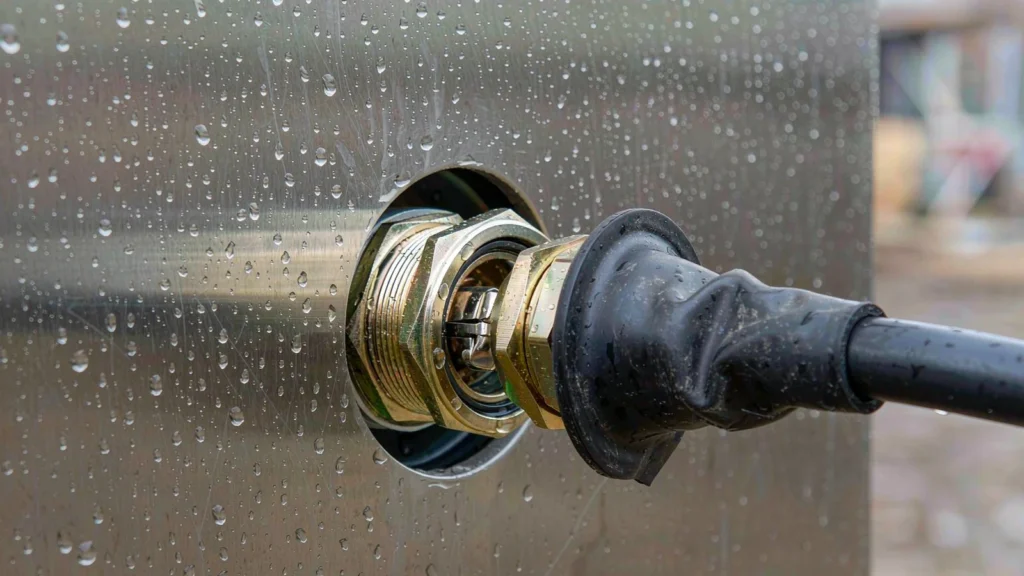
A cable gland shroud is the cheapest part on the entry and the one most often left in the box. When it does not fit, the cause is rarely the wrong part. It is a number compared against the wrong dimension: the shroud has to pass over the widest hexagonal face on the gland, and that face measures about 15% more than the spanner size printed beside it.
What follows is what a shroud is for, the three products sold under that name, how to size one from a gland you already have, and when fitting one makes an entry worse than no shroud at all.
What a Cable Gland Shroud Is Actually For
A shroud does three jobs, and none of them is sealing. It covers the cut ends of the armour wires and the clamping cone — the sharpest, least protected and fastest-rusting part of an armoured termination. It takes the abrasion and the ultraviolet load where the cable leaves the gland, the point where a sheath chafes against a cleat, a tray edge or a panel lip. And it keeps standing water out of the hex flats and off the dome nut, where a thin film sits longest.
What it is not is a seal. A shroud does not change the IP rating of the gland it covers, and it is not part of any explosion protection certificate. A gland that weeps will still weep with a boot pulled over it; the diagnosis is in why cable glands leak, and the crevice a tight boot creates is set out in the 316 stainless steel marine gland guide.
Three Products Sold Under One Name
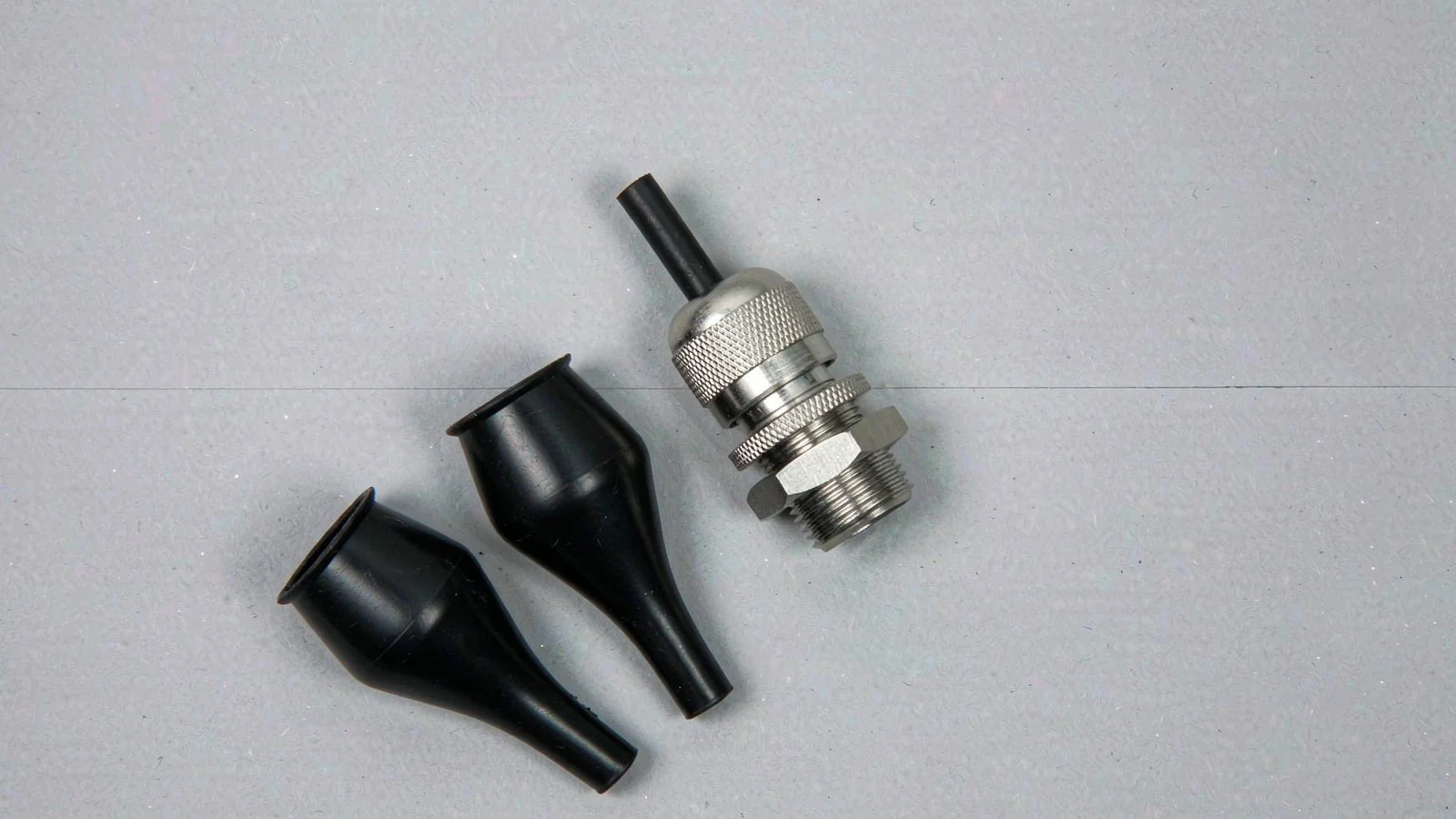
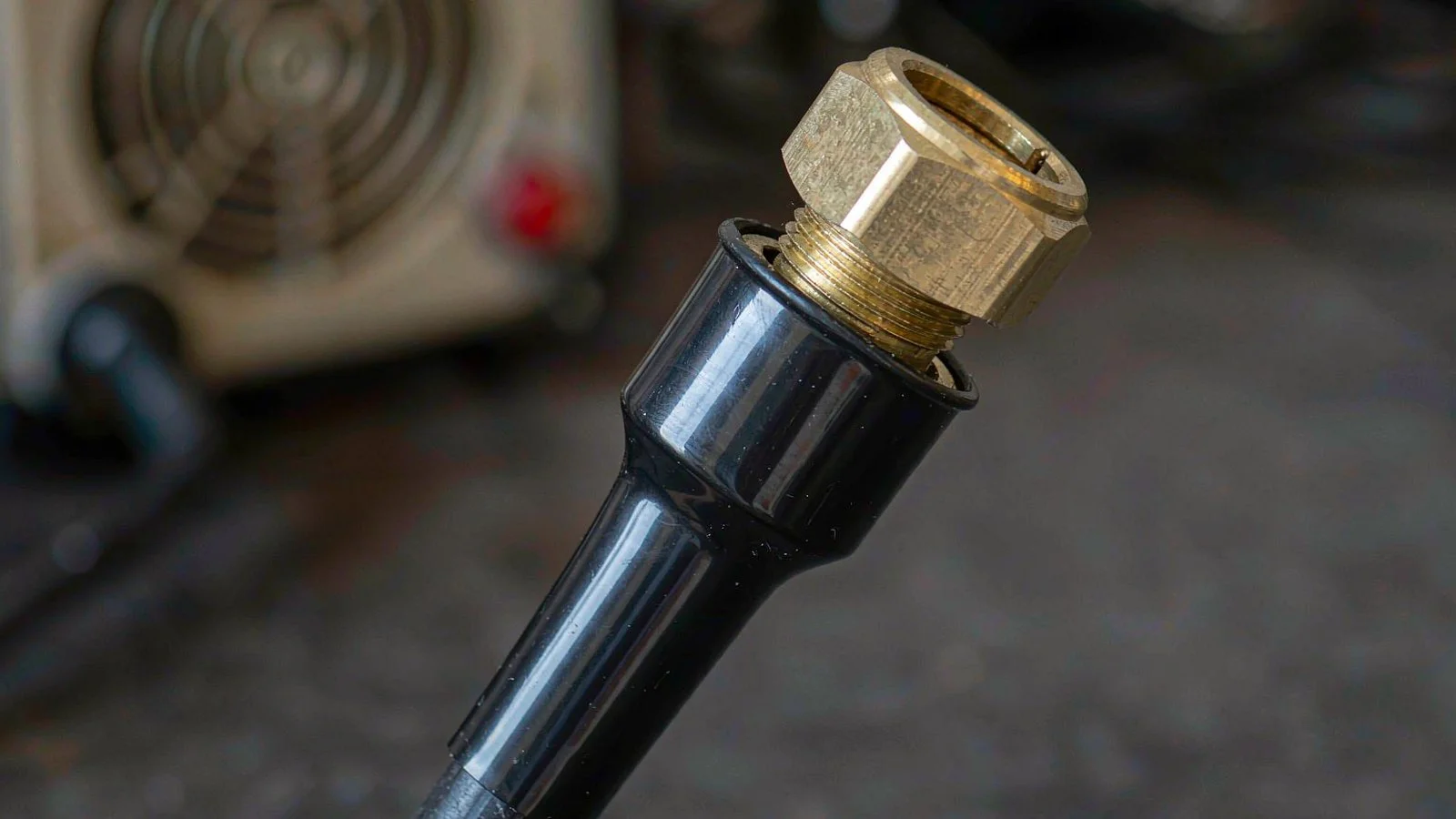
The catalogue word “shroud” covers a moulded PVC hood, a heat-shrink boot and a cold-applied sleeve, and each holds onto the gland by a different mechanism. A push-on hood relies on an interference fit over the nut plus a trimmed tail that grips the sheath by tension. A heat-shrink boot relies on its recovered diameter being smaller than the cable it lands on, so it locks where it shrinks. A cold-shrink sleeve relies on a removable core that collapses after positioning.
Тип
How it stays on
Re-entry
Best for
Usual failure
Push-on PVC hood
Interference fit over the hex, trimmed tail on the sheath
Yes, slides off and back on
Outdoor armoured entries that will be inspected or re-terminated
Tail cut too wide, so it slides down the cable
Heat-shrink boot
Recovered diameter grips the sheath; adhesive-lined grades bond to it
No — cut off and replaced
Terminations that will never be opened, buried or flooded routes
Over-shrunk at the nut, or heat applied to the seal
Cold-shrink sleeve
Elastic memory after the support core is pulled
Нет
Live or heat-sensitive areas where a gun cannot be used
Core pulled before the sleeve is in position
Tape and mastic
Adhesion only
Да
Field repair, temporary weatherproofing
Unwinds in UV; traps water in the overlap
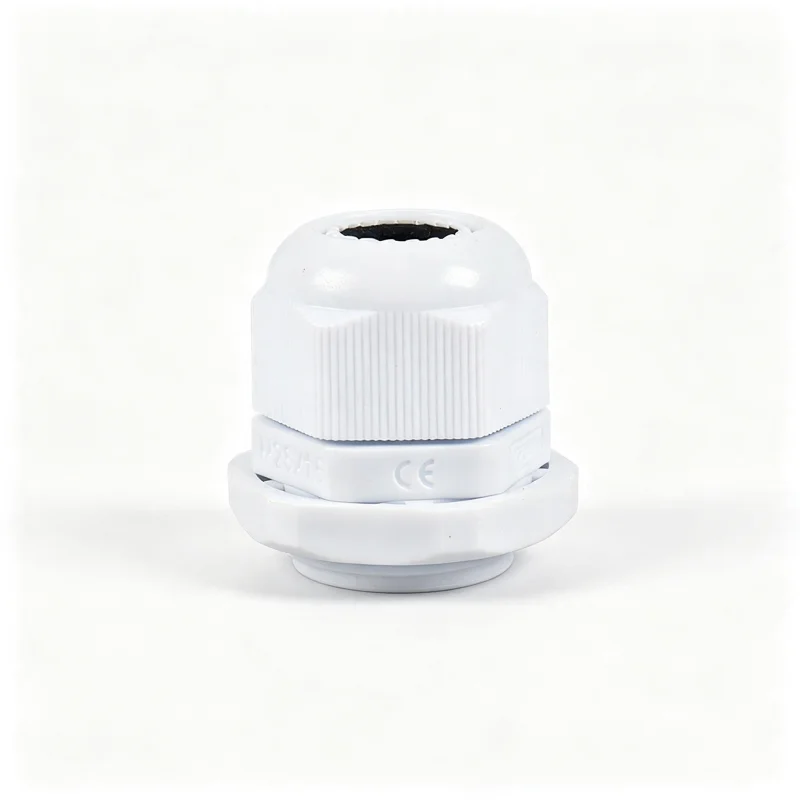
Two push-on hoods and one gland. The widest part of a hood has to clear the widest hexagon on the gland, and that is the bell mouth, not the tail.
Sizing Starts at the Hex, Not the Thread
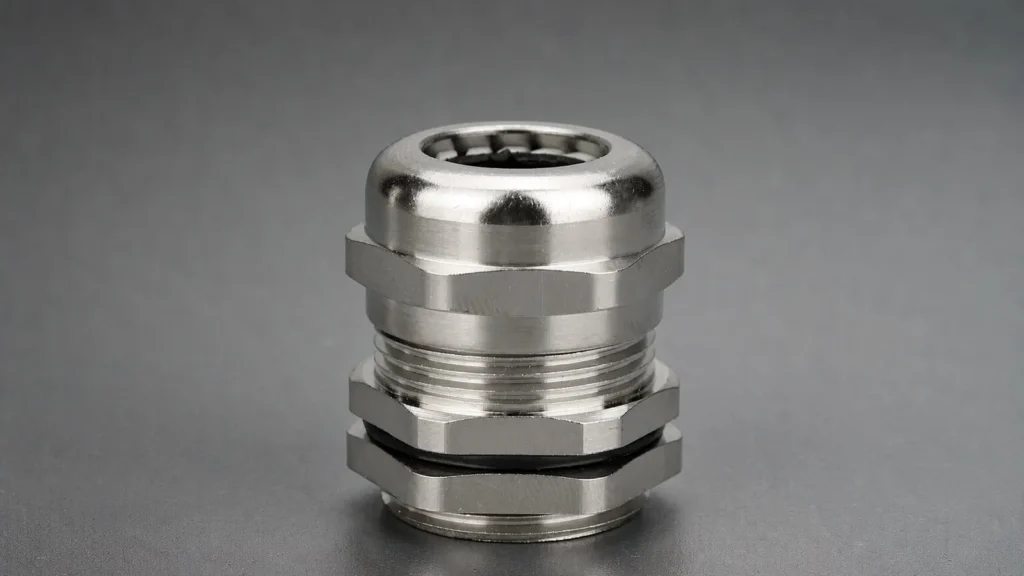
The constraint is not the thread and not the cable. It is the largest hexagon the shroud has to pass over: the dome nut, or the locknut if that is bigger. Spanner sizes are quoted across flats, which is what a tool grips, but a round bore has to clear the corners. For a regular hexagon the across-corners dimension is the across-flats figure divided by cosine 30 degrees, so about 15.5% larger. The table below applies that to the sizes where shrouds are most often specified; the underlying spanner figures are in our spanner size chart.
Gland size
Spanner, body / locknut (mm)
Largest hex across flats
Across corners (mm)
Minimum bore that will pass
M16
18
18
20.8
21 mm
M20
22
22
25.4
26 mm
M25
24 / 27
27
31.2
32 mm
M32
35
35
40.4
41 mm
M40
40 / 45
45
52.0
52 mm
M50
57 / 55
57
65.8
66 mm
PG13.5
22
22
25.4
26 mm
PG21
30 / 32
32
37.0
37 mm
PG29
40
40
46.2
47 mm
PG63
78
78
90.1
91 mm
Across corners is the minimum, not the target. One catalogue quotes a 45 to 50 mm bell bore for the hood that fits an M32 gland, against 40.4 mm across the corners of the nut it must pass — margin enough to stretch rigid PVC over it on a cold morning.
Why the Datasheet Diameter Is Not the Bore You Need
Four numbers on one page get read as “the shroud size”. Thread outside diameter drives the panel hole. Cable range is the sheath diameter the sealing insert grips. The shroud size is usually the gland size the part is intended for, not a bore at all. And the bore appears twice, because a push-on hood has a wide bell at one end and a narrow tail at the other — the tail being the end you cut. Heat-shrink boots add a ratio: a 3:1 boot quoted at 33 mm expanded recovers to about 11 mm, so the figure that decides fitment is the 33 mm, and 33 mm will not go over the 40.4 mm hex of an M32 gland however the part is labelled.
Heat-Shrink or Push-On: How to Decide
The decision is not about protection quality, because both protect. It is about whether the entry will be opened again: a heat-shrink boot is one-way, has to be cut off, and cutting it off close to a sheath is how cables get nicked. Two practical differences decide the rest. Large rigid PVC hoods are stiff enough that fitters soften them in hot water before pulling them over the nut. And adhesive-lined boots seal the tail onto the sheath, which suits washdown areas and hurts wherever water already gets in, because it then has no way out.
A boot locks where it shrinks, so the collar has to land on the sheath behind the nut. Shrink it from the tail forward and the adhesive reaches the jacket first.
Length, Material and the Temperature Chain
Length is a water-management dimension. The shroud has to reach past the dome nut and stop before the first bend, with the tail trimmed slightly smaller than the sheath so tension holds it in place. A short boot leaves the hex flats and the cone exposed. A long one holds water against the sheath, hides the seal face and chafes wherever the cable is cleated.
Material decides how long that survives. Standard PVC is cheap and UV-stabilised in black but stiff at large sizes; neoprene and EPDM stay flexible; silicone takes the most heat; polyolefin is the heat-shrink family. Declared ranges are not comparable between suppliers — one catalogue gives −20 to +70 °C for standard PVC and −40 to +90 °C for a low-temperature grade, another gives −60 to +90 °C for its compound. The logic that governs the seal in our high temperature gland guide applies here too: the shroud is the weakest link until its figure is on the drawing.
Материал
UV
Abrasion
Cold flexibility
Where it belongs
PVC, black UV-stabilised
Good when stabilised
Умеренный
Poor below zero
General outdoor industrial
LSOH / LSF compound
Умеренный
Умеренный
Умеренный
Tunnels, stations, enclosed public space
Неопрен
Хорошо
Хорошо
Хорошо
Coastal, washdown, moving cable
EPDM
Хорошо
Хорошо
Хорошо
Outdoor decks, chemical splash
Силикон
Хорошо
Fair
Best
Heat zones, cold stores
Polyolefin heat-shrink
Хорошо
Хорошо
Умеренный
Permanent, buried, sealed routes
When a Shroud Is Mandatory
No product standard we know of requires a shroud, so “mandatory” is always a site decision written into a specification. The list is short and repeatable: outdoor armoured entries with exposed cut wires, direct-buried runs, coastal and offshore positions, food and pharmaceutical washdown, vertical drops where water tracks down the sheath, and any termination where the earth tag and cone stay visible. Foundry and quarry dust belongs on it too, because there the shroud takes abrasion rather than water.
Treat it as part of the deliverable, not an accessory. If the drawing says shrouds, a quotation reading “gland with shroud” needs the shroud counted per gland, in the right material, and supplied kitted — the upgrade ladder in our harsh environment brass guide puts the shroud first for that reason.
When a Shroud Makes the Entry Worse
A shroud can be the wrong answer. If the gland already weeps, a tight boot cups water at the dome nut and holds it there, turning a visible drip into a hidden corrosion cell — fix the gland first. If the body is nylon, heat-shrinking beside it puts gun heat into the seal, and the seal decides the IP rating. If the installation is shoddy, a shroud hides the one interface an inspector wants to see.
Two more cases are worth naming. A UV-degraded PVC hood cracks where a jet hits it, so material has to match the cleaning method and not only the climate. And in a hazardous area a shroud is not part of the certified configuration: it does not invalidate a gland, but it must never be sold as a sealing upgrade, as the explosion proof installation guide sets out.
Fitting Order and the Purchase Order
The shroud goes onto the cable before anything else, because it cannot be stretched over an assembled gland — the most frequently forgotten step in the termination, and the reason a box of shrouds ends up on a bench instead of a wall. On an armoured gland that means before the armour is cut. After torque, pull the hood down over the body and against the wall, or shrink a boot from the tail forwards so the adhesive wets the sheath before the collar closes on the nut. The full sequence is in the SWA installation guide and the armoured gland overview; for the order itself, five numbers prevent a wrong part.
Field
Why it decides the part
Gland size and thread form
Sets the nominal shroud family, not the bore
Across-corners of the largest hex
The real bore constraint; 15.5% above the spanner figure
Bell bore and tail bore
Two dimensions on one part; the tail is trimmed to the sheath
Material, colour and UV grade
Decides service life; black UV-stabilised is not a decorative choice
Length and quantity per gland
Stops the shroud being quoted as one per box
Frequently asked questions
What is the purpose of a cable gland shroud?
It covers exposed armour wires and the clamping cone, takes abrasion and ultraviolet light where the cable leaves the gland, and keeps standing water out of the hex flats. It is a mechanical and weather barrier, not a seal, and it does not change the IP rating.
Does a shroud improve the IP rating?
No. The rating belongs to the gland as tested, and a shroud is fitted afterwards. A correct shroud reduces the water reaching the gland, but it cannot raise the rating, and a loose or over-long boot holds water against the body instead of shedding it.
What size shroud do I need for an M32 gland?
Look at the largest hex, not the thread. An M32 gland takes a 35 mm spanner, which is 40.4 mm across the corners, so the bore must clear 41 mm at minimum. Commercial hoods for the size are usually quoted at 45 to 50 mm bell bore to leave fitting margin.
Heat shrink boot or PVC shroud, which lasts longer?
The boot lasts longer where it is never disturbed, because it locks onto the sheath and has no tail to work loose. The PVC hood wins wherever the entry will be opened, because it slides off and back on. UV exposure and heat decide life, not the type alone.
Can a shroud be fitted after the gland is installed?
Only by cutting it, which defeats the purpose. A hood cannot pass over an assembled dome nut and a boot cannot be slid over one either. It goes onto the cable before the gland is assembled, which makes it the first component in the sequence.
ATEX, UKCA/UKEX, IECEx and NEC listing are four separate decisions, not four translations of one certificate. Which one your market accepts, what transfers between them, and what must be retested.
Водонепроницаемые кабельные вводы играют незаменимую роль в современном промышленном и коммерческом электрооборудовании. Они не только защищают кабельные вводы от пыли и влаги, но и обеспечивают безопасность оборудования и продлевают срок его службы. Правильный выбор степени защиты IP для водонепроницаемого кабельного ввода может эффективно предотвратить сбои в работе электрооборудования или инциденты с безопасностью, вызванные неблагоприятными условиями окружающей среды. [...]
IP68 reports, EN 10204 3.1 and 2.2, CE declarations and RoHS statements each prove something different. What the compliance pack covers, where each document stops, and what to reject at goods-in.
Мы используем файлы cookie для улучшения вашего восприятия, предоставления персонализированной рекламы или контента, а также для анализа нашего трафика. Нажав кнопку "Принять все", вы соглашаетесь с использованием нами файлов cookie.