A Gland Has Two Seals, and Buyers Only Ask About One
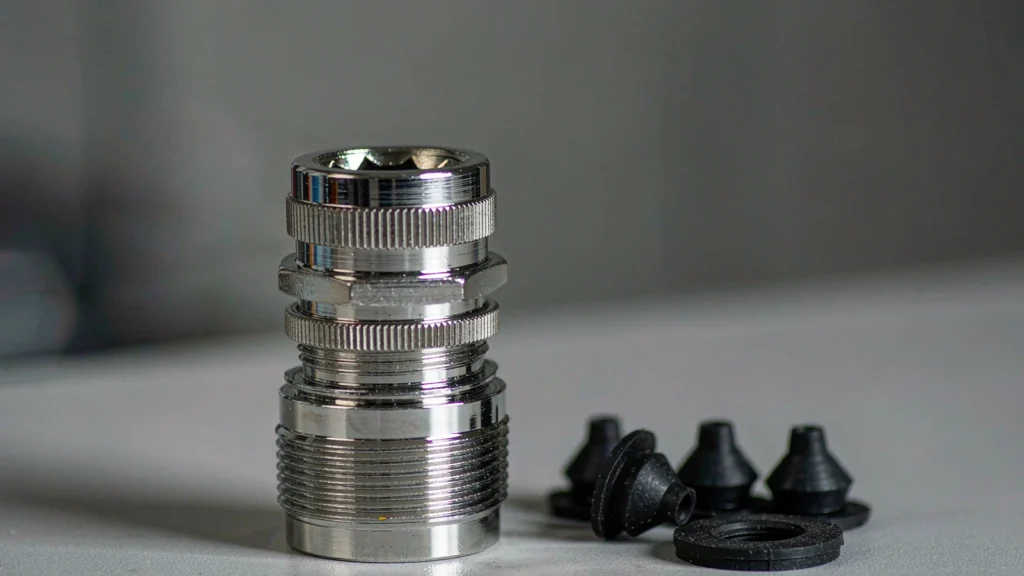
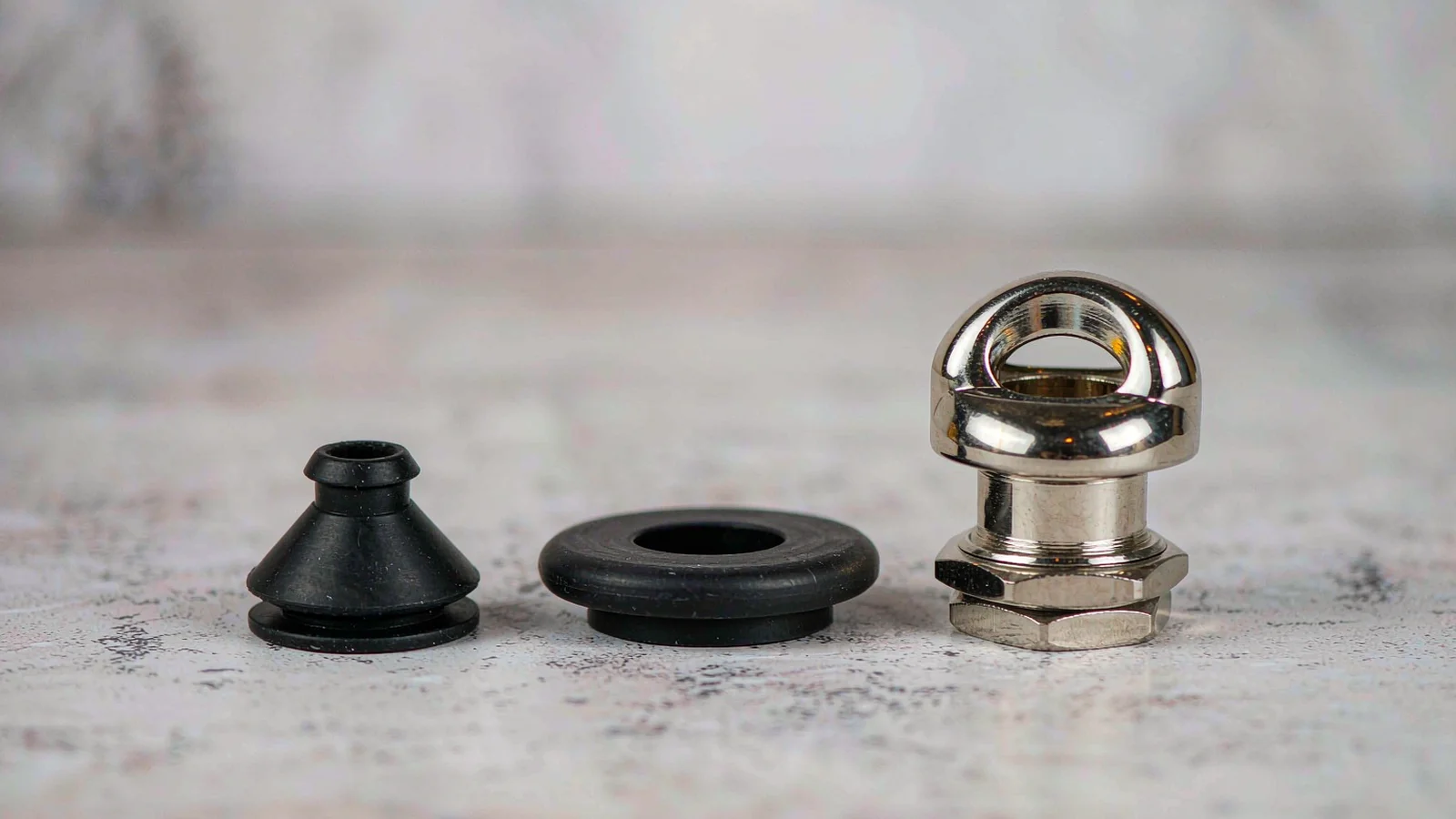
Ask a purchaser what seal material they need and the answer is usually one word: EPDM, or NBR, or silicone. That answer is incomplete in a way that causes field failures, because a standard cable gland contains two elastomer parts doing two different jobs. The seal insert grips the cable sheath and must deform around it. The sealing washer sits between the gland body and the enclosure face and must resist being squeezed flat for years. They see different fluids, temperatures and compression, and on many glands they are not the same compound.
This is why a gland can pass a bench test in the workshop and fail eighteen months later on a skid in a chemical plant: the washer hardened, or the insert swelled, and nobody specified either part separately. The body material gets the attention because it is visible, while the two components that actually stop water are chosen from a line on a quotation.
Three Jobs, and Only One of Them Is Sealing
An elastomer in a gland has to seal, which means conforming to a surface that is never perfectly round. It has to grip, generating enough friction on the sheath to resist pull without cutting it. And it has to recover, returning to shape every time the cable moves and the temperature changes.
The third job is where compounds separate. What breaks a gland seal is rarely one event; it is thousands of thermal cycles, each compressing the elastomer into a shape it cannot come back from. That permanent deformation is compression set, and it decides whether the gland is still sealing in year five.
One gland, two elastomers. The insert seals on the sheath; the washer seals on the enclosure face. They rarely fail for the same reason.
EPDM: The Default for Water, Weather and Washdown
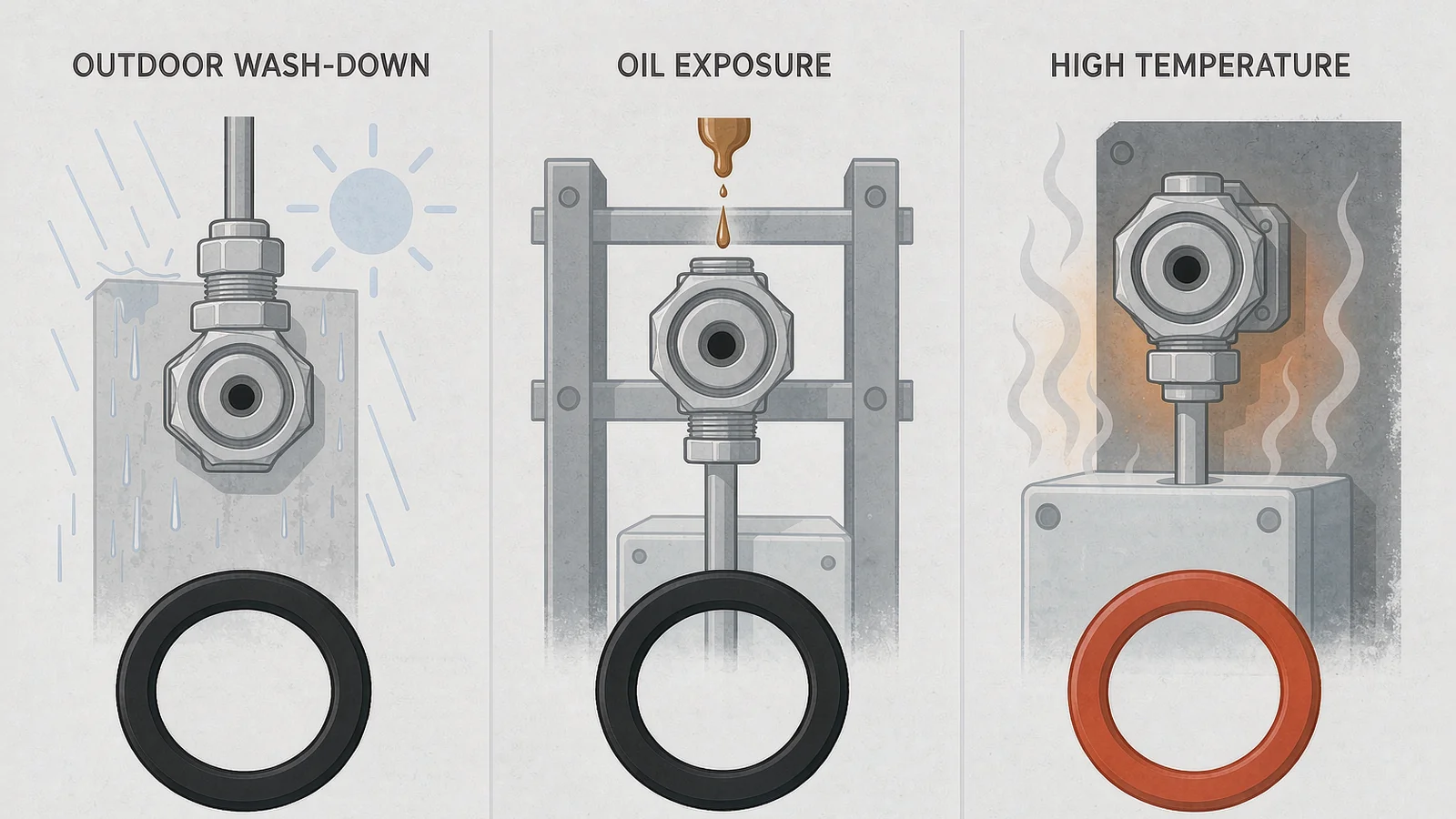
EPDM is behind most black gland seals, and it earns the position. It handles hot water, steam, ozone and ultraviolet light better than the alternatives, which is exactly the combination an outdoor or washdown installation delivers. A gland on a rooftop or a food plant wall spends its life being wetted, dried and irradiated, and EPDM tolerates all three without cracking.
Its weakness is hydrocarbon. Mineral oil, grease, diesel and most solvents make EPDM swell and soften, and a swollen insert still looks intact — the cable entry is no longer tight, the dome nut bottoms out on the body before the seal compresses, and water enters past an elastomer that appears healthy. If the enclosure sits near a gearbox breather or a hydraulic manifold, EPDM is the wrong default.
EPDM also has a wide service window, commonly quoted from about −40 °C to +120 °C continuous for gland grades. The exact figure belongs to the supplier’s datasheet, because cure system and filler content move the limits considerably.
NBR: The Oil Answer and the Outdoor Mistake
NBR — nitrile rubber — is chosen for oil. It resists mineral oil, grease, hydraulic fluid and many fuels well enough to be the standard seal in machinery, gearboxes and anything with a lubrication system nearby. Inside a plant room, on a machine frame, or on an oil-filled cable termination, NBR is sound for both the insert and the washer.
Its weakness is the opposite of EPDM’s. NBR is attacked by ozone and ultraviolet light, and an unprotected seal left in sun develops surface cracks that propagate inward, starting at the highest-strain point: the lip stretched over the sheath. A gland that has been fine for two summers and starts leaking in the third is often showing exactly this pattern. The corollary is a sourcing rule worth writing into a specification: do not accept NBR as a substitute for EPDM outdoors just because it is in stock. The two are interchangeable in dimensions and not at all in service life.
Silicone: Wide Temperature, Narrow Chemistry
Silicone rubber covers the temperature range nothing else reaches, from deep cold to continuous heat well above what EPDM tolerates, and stays flexible where nitrile has gone rigid. That makes it the material for heat-treatment areas, engine bays, oven walls, and cold stores expected to work below freezing after a long shutdown.
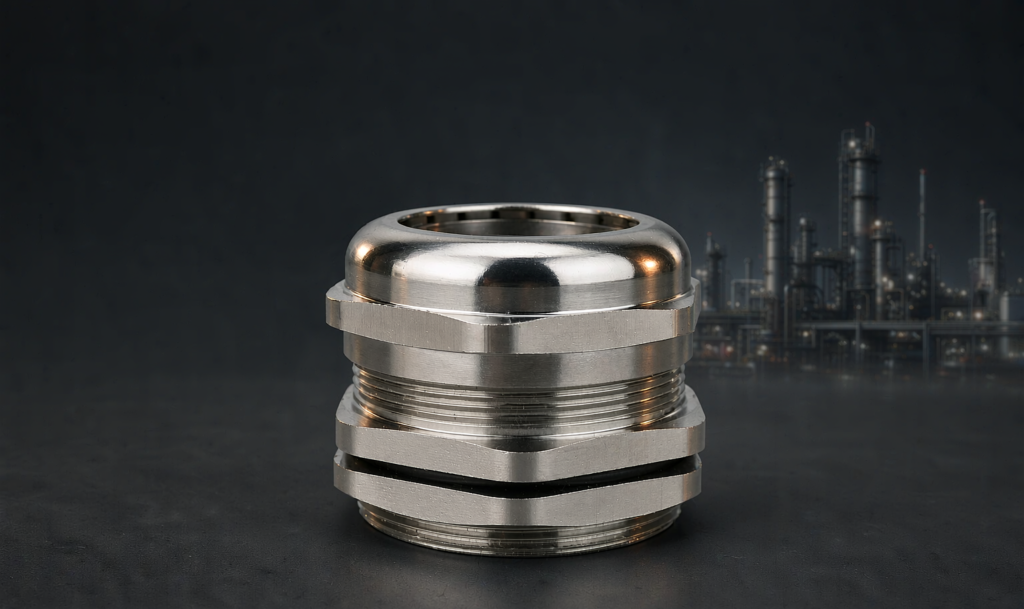
What silicone does not do is mechanical toughness. Its tear strength is low, so an insert that is over-tightened or dragged over a rough sheath edge tears rather than deforming, and once torn it does not seal. It also swells in many hydrocarbon oils and has high gas permeability. Silicone is a specialist answer, not an upgrade: fitting a silicone insert into a standard brass gland on a machine tool usually shortens life rather than extending it. Where a gland is supplied with a silicone seal — our M18 brass body is one example — the intent is high or low temperature service.
A Compatibility Matrix You Can Actually Use
The table below is a screening tool, not a substitute for the compound datasheet. Where a cell says “conditional”, the answer depends on concentration and temperature, and the enquiry should carry both.
Medium at the gland
EPDM
NBR
Силикон
Примечания
Rain, washdown, steam cleaning
Хорошо
Fair
Fair
EPDM is the outdoor default
Mineral oil, grease, hydraulic fluid
Poor
Хорошо
Poor
The clearest split between the two main compounds
Dilute acids and alkalis
Хорошо
Conditional
Conditional
Stainless body usually needed as well
Ozone, UV, weathered outdoor air
Хорошо
Poor
Хорошо
The reason an indoor-proven NBR gland fails on a roof
Continuous heat above the EPDM limit
Poor
Poor
Хорошо
Silicone is the only practical option of the three
Deep cold, repeated freeze
Conditional
Poor
Хорошо
Cold stiffening turns a seal into a bearing surface
Match the compound to what reaches the entry, not to what the gland is made of.
Compression Set Is the Real Specification
Compression set is measured by compressing a sample by a fixed proportion, holding it at temperature for a fixed time, releasing it and measuring how far it fails to return. The number that comes out predicts gland life far better than hardness or tensile strength.
Two consequences follow. A harder compound is not a better seal: higher hardness reduces the ability to conform to an out-of-round sheath, so a hard insert leaks earlier on an imperfect cable. And a compound with poor set resistance behaves like a gland left slightly loose — contact pressure relaxes and the leak appears months later without anyone touching the fitting.
What changes set resistance
Effect on the gland
Operating temperature closer to the compound limit
Set rises sharply; re-torquing only postpones the failure
Continuous compression instead of cycling
Deformation accumulates; washers flatten before inserts do
Cure system and filler in the compound
Two EPDM seals in the same size can differ by a factor
Overtightening at installation
The damage is done before service starts
When the Body and the Seal Disagree
Body and seal are chosen on different logic, which is where mixed assemblies fail. A stainless steel body is selected for a marine or chemical environment, where the aggressive agent is often a solvent as well as salt. Stainless survives it; an EPDM insert in the same gland may not. The answer is a stainless body with an NBR insert, and it has to be asked for explicitly.
The reverse mistake is common on high-temperature duty: a brass body is quoted at its own temperature limit while the seal inside has a lower one. A gland’s real limit is the lowest limit among its parts, and the parts that matter are the two elastomers. Replacement is the third case — field stores often carry one seal size in one compound, and fitting it into a different gland generation creates an assembly that was never tested as a unit. On hazardous area and EMC glands that is more than a warranty question: the certification belongs to the complete assembly.
How to Specify a Seal in an Enquiry
Most seal failures that reach a supplier as a complaint were never specified. Four lines in an enquiry remove almost all of the ambiguity.
Line in the enquiry
Why the supplier needs it
The fluid that will contact the gland
Decides the compound; “water” and “water with cutting fluid” are different problems
Continuous and peak temperature at the entry
Decides the compound and whether the body material also changes
Indoor or outdoor, and whether sun reaches the entry
Removes NBR from the shortlist on exposed installations
Whether the seal must match a certified assembly
Rules out substitution and keeps the certification valid
If an answer is unknown, say so. A supplier who understands the application can propose a compound with a documented basis, which beats accepting whatever the stock gland carries. The gland body materials article covers the other side of the decision, and the IP rating guide covers what the seal is being asked to achieve.
Questions Buyers Ask About Seal Materials
Is EPDM always better than NBR?
No. EPDM wins outdoors and in water; NBR wins wherever oil reaches the gland. Both wrong choices end in a leak rather than an obvious break.
Can I replace a seal myself with a different compound?
On a standard industrial gland, yes, if the dimensions match and the compound suits the fluid. On explosion-proof, EMC or certified assemblies, no: the approval covers the tested configuration.
Why did the seal harden instead of wearing out?
Heat and time. Elastomers continue to cure and lose plasticiser in service, faster as temperature approaches the compound limit. Hardening is compression set made visible.
Does seal colour tell me the material?
Only loosely. Black is common for both EPDM and NBR, and silicone is often coloured but not consistently. Colour is a supplier convention; the datasheet is the specification.
What seal suits a washdown food plant?
EPDM in most cases, because the cleaning regime is water and detergent rather than oil. Where oil-based lubricants are also used on the line, the requirements conflict and the entry usually needs shielding rather than a different compound.
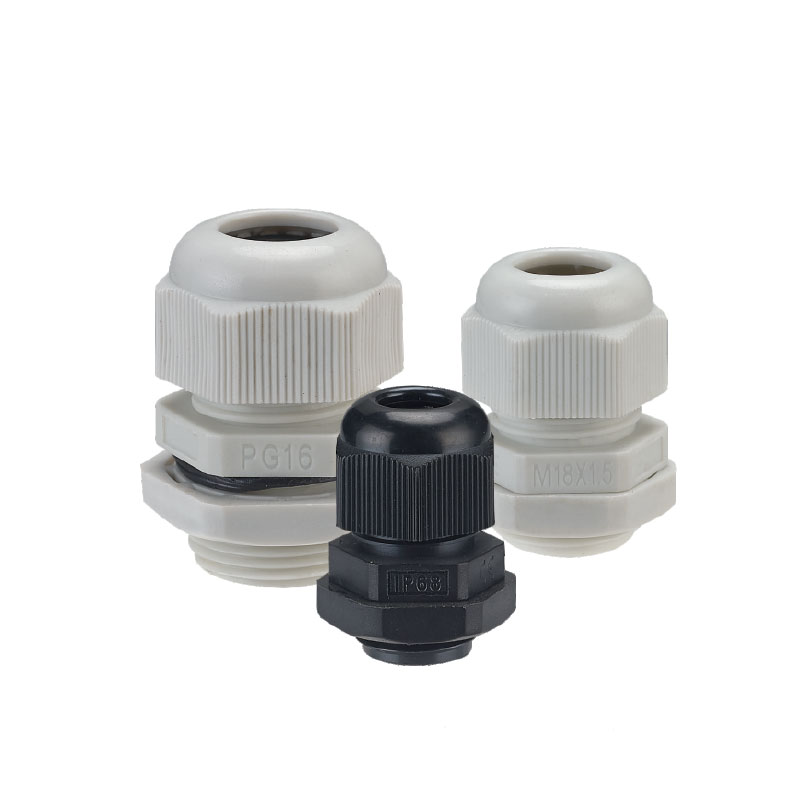
Send the fluid list, the temperature at the entry and the mounting position, and we will mark the compound for each gland size and flag where the body material has to change too. The nylon range carries EPDM seals as standard for washdown duty, and the M18 brass gland with silicone seal is the usual starting point for heat.
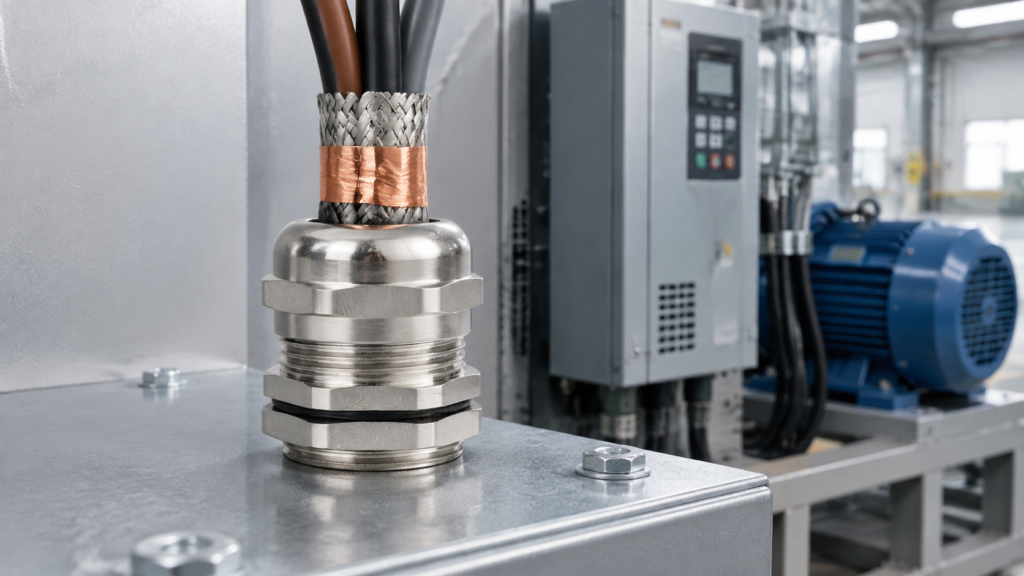
A VFD cable gland has to bond the cable screen around the full circumference at both the drive and the motor end. How to size one for drive cable, where the bond path breaks, and what a gland cannot fix.
Zone 1 and Zone 2 cable glands are selected from the area classification, not the catalogue. See how the zone sets the minimum EPL, what the gland marking must show, and the mistakes to avoid.
Nickel plating is a barrier and a hard surface, not a change of material. How thickness, process and salt spray claims actually read, where plating fails on site, and when to move to stainless instead.
Мы используем файлы cookie для улучшения вашего восприятия, предоставления персонализированной рекламы или контента, а также для анализа нашего трафика. Нажав кнопку "Принять все", вы соглашаетесь с использованием нами файлов cookie.