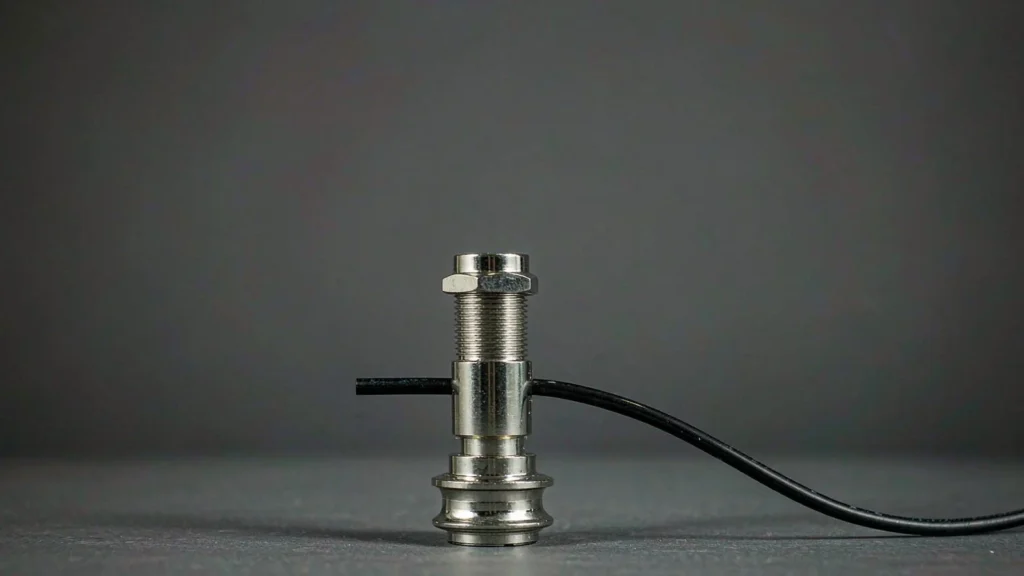
Most cable gland specifications cite three standards in one breath, as if they were three approvals of the same thing. They are not. EN 50262, IEC 62444 and IEC 60529 answer three different questions, and one of the three has been withdrawn and replaced.
This page sets out what each standard actually covers, where the scope stops, and what a purchase specification has to contain before it can be checked by anyone other than the person who wrote it.
Three Standards, Three Different Jobs
قياسي
What it covers
What it does not tell you
EN 50262:1998
Metric cable glands for electrical installations, construction and performance
Withdrawn; replaced by EN 62444
EN 62444:2013 (IEC 62444:2010)
Cable glands for electrical installations, safety requirements
Any dimension at all, including spanner size
IEC 60529
How an enclosure is tested for ingress, and how the result is coded
Anything about glands, cable grip or thread
The useful way to hold these three is by the question each one answers. The product standard asks whether the gland is safe and does its job. The IP standard asks how you prove a sealed entry under defined conditions. The thread standard asks whether the part will fit the hole. None of them answers another’s question.
EN 50262 Has Been Replaced, and Datasheets Still Quote It
EN 50262:1998 was the European product standard for metric cable glands. It has been superseded by EN 62444:2013, which adopts IEC 62444:2010 with European modifications. National withdrawals ran at different dates through the mid-2010s, which is why a datasheet written in 2014 can quote the old number and still look current.
This matters more than a paperwork technicality. A declaration against a withdrawn standard is not evidence of the same thing today, and in a tender it is the first thing a competent reviewer notices. If a supplier quotes EN 50262 without also naming EN 62444, ask which one the test report references. The answer is usually a report from before the changeover.
What EN 62444 Actually Requires
EN 62444 is a safety standard, and that word is doing real work. It sets requirements for construction and for the tests that demonstrate them: mechanical properties, sealing, electrical continuity where claimed, resistance to external influences. It deliberately does not fix the shape of the product.
That is a break from the older German dimensional standards, which prescribed the wrench flats, the diagonal and the seal geometry. Under EN 62444 a manufacturer can meet the requirements with a form of their own design, which is why two compliant glands from two suppliers can look nothing alike.
The practical consequence: conformity does not narrow the field for you. Two compliant glands can differ in spanner size, body length, thread length and seal type, and every one of those differences matters at the panel. The standard guarantees a floor, not a match.
The standard covers the gland as supplied. Locknut, washer and earth tag are separate lines with separate specifications.
The Scope Limit Nobody Reads: Metric Only
The scope of the metric gland product standard is the entry thread. EN 50262 covered metric glands and explicitly excluded glands whose entry portion was not metric; EN 62444 continues in the same direction, with a metric size range extending to M110.
PG threads are not in that scope. The PG system was withdrawn at the end of 1999 along with the German dimensional standards behind it, and the European route since then has been metric. PG glands remain in production and in service, and remain the correct choice for maintaining a PG panel, but a PG product cannot be presented as conforming to a standard whose scope is metric entry threads.
This is not an argument against stocking PG. It is an argument for stating the basis honestly: a PG part is a legacy-thread part, suitable for repair on plant built around it and the wrong default for a new enclosure. Our PG versus metric thread guide covers the dimensional side of that transition.
IEC 60529 Is an Enclosure Standard, Not a Gland Standard
IEC 60529 defines the IP code and the test methods behind it. It is written for enclosures, and a cable gland only enters the picture because it penetrates one. The gland is tested as part of an arrangement: a specific enclosure, a specific hole, a specific cable, a specific installation.
That is why an IP68 rating on a gland datasheet is a conditional statement. It describes what the assembly achieved under a stated test, not a property of the brass part in the box. Change the wall thickness, the hole finish, the cable diameter or the tightening torque and the same gland can produce a different result without anything about the gland having changed.
Used properly, IEC 60529 is the most useful of the three, because it is the only one that produces a number you can test. Used as a badge, it is the most abused. Our IP rating selection guide deals with choosing a level; this page is about what the level means.
Why “IP68” Needs a Second Line to Mean Anything
IP68 is the one code in the system that is open-ended by design. The first digit is fixed at 6 for dust, but the second digit means “conditions agreed between manufacturer and user”, and the test conditions have to be stated separately. Two glands both marked IP68 can therefore have been tested to completely different depths and durations.
A compliant IP68 claim reads as a sentence, not a badge: the code, the depth, the duration, and the standard it was tested to. Anything less is a marketing line. A gland tested for a short shallow immersion and one tested for a long deep one are different products at different prices, and a specification that cannot tell them apart will be filled by whichever is cheaper.
Claim as written
What it actually commits the supplier to
IP68
Nothing specific; the conditions are undefined
IP68 to IEC 60529
Tested to the standard, conditions still unstated
IP68, 2 m for 24 h, IEC 60529
A defined claim that can be repeated and checked
IP68, 5 m for 72 h, IEC 60529, report on request
A defined claim plus the evidence path
Our own standard rating is the middle row, with deeper ratings quoted as separate configurations rather than claimed on every part. That distinction is what you buy when two quotes both say IP68.
A sealing claim describes this assembly under stated conditions, not the metal part on its own.
Where the Thread Standards Sit
Underneath the product standard sits a separate layer that determines fit, and it is not a gland standard at all. Metric entry threads are specified in EN 60423. PG threads come from the older German system. NPT is an American tapered pipe thread under ASME B1.20.1.
These are dimensional standards, and they do not overlap. A gland can be fully conformant to the product standard and still not enter the hole, because conformity was never about the hole. The thread size chart is the reference for the dimensional layer, including the collisions where two families arrive at the same outside diameter by different routes.
Adding Explosive Atmospheres: IEC 60079 and the Ex Layer
Hazardous area installations add a fourth layer on top rather than replacing the others. IEC 60079 covers equipment for explosive atmospheres, and the ATEX directives govern how that equipment is placed on the European market. An Ex gland therefore carries the ordinary product standard, the IP standard, and the Ex certification together.
The mistake to avoid is treating Ex certification as a superset that makes the other two unnecessary. A flameproof gland still has a thread that has to fit, a seal that has to close on the cable, and an IP claim that has to be stated with conditions. Certification addresses what happens when the enclosure is compromised by an internal explosion; it does not make the entry dimensionally correct.
For the certification routes themselves, our ATEX versus IECEx comparison covers the assessment paths and the marking.
A Specification That Survives an Audit
Put the layers in order and a gland specification stops being a list of standard numbers and becomes four lines that each do a job.
Line
What to write
What it prevents
الخيط
Thread system, size and pitch, against EN 60423, DIN 40430 or ASME B1.20.1
A near-diameter part that will not enter or will not seal
Product
EN 62444:2013, with the test report reference
A declaration against a withdrawn standard
Ingress
IP code plus depth, duration and test standard
An IP68 badge with no conditions behind it
Compliance
Material declaration and, where relevant, Ex certification
Discovering at customs that a document is missing
Four lines, one page, and any buyer or auditor can check every claim against a document. The common alternative is a single line reading “IP68, CE, EN 50262” that cannot be verified and no longer refers to a current standard in one of its three items.
Our brass cable gland pages state dimensions to the thread and IP standard, and the selection guide covers which type suits which installation. Where a project needs test reports or material certificates named on the order, say so at quotation stage rather than after delivery.
Minimum order quantity for brass is normally 1,000 pieces per size with no tooling charge, and trial orders of 100 to 500 pieces are usually accepted at a slightly higher unit price. Stainless steel and Ex parts start at 300 pieces per size.
الأسئلة المتداولة
Is EN 50262 still valid?
No. It has been superseded by EN 62444:2013, which adopts IEC 62444:2010 with European modifications. National withdrawals ran at different dates, so a datasheet may still quote the older number. Ask which standard the test report references.
Does a PG cable gland comply with EN 62444?
The metric gland product standard is scoped to metric entry threads, so a PG gland falls outside it. PG parts remain valid for maintenance on existing PG plant, but a new installation defaults to metric. Claiming EN 62444 for a PG part misstates the scope.
What does IP68 mean without a depth and a duration?
Very little. The second digit of IP68 is defined as conditions agreed between manufacturer and user, so the depth and duration have to be stated separately. A claim that does not state them cannot be compared with another supplier’s claim.
Do I need IEC 60529 if the gland is already certified to EN 62444?
They cover different things. The product standard asks whether the gland performs safely; IEC 60529 defines how the ingress protection of the assembled entry is tested and coded. Most product standards reference the IP test method rather than replacing it.
Which standard covers spanner size and thread length?
None of them. EN 62444 is a safety standard and does not fix dimensions, and the older German dimensional standards that did are withdrawn. Spanner size, thread length and body length come from the manufacturer’s drawing, which is why they must be on the datasheet.
عندما يتعلق الأمر بالتركيبات الكهربائية الصناعية، فإن غدة الكابلات ليست مجرد موصل فاخر؛ إنها البطل المجهول الذي يحافظ على الكابلات الخاصة بك آمنة ومغلقة ومأمونة من المخاطر البيئية. إذا كنت قد تساءلت يومًا عن سبب وجود العديد من أنواع الخيوط على غدد الكابلات هذه وكيفية اختيار النوع المناسب لمشروعك، فهذا [...]
اكتشف غدد إدخال الكابلات المتينة المقاومة للماء مع تصنيف IP68 المصنوعة من النحاس النايلون أو الفولاذ المقاوم للصدأ للاستخدام الآمن في الهواء الطلق والاستخدام البحري
Spanner size is the width across flats, not the thread size. Full M14-M63 and PG7-PG63 charts with cut-out diameter, thread length and the body/locknut hex split.
نحن نستخدم ملفات تعريف الارتباط لتحسين تجربة التصفح الخاصة بك، وعرض إعلانات أو محتوى مخصص، وتحليل حركة المرور لدينا. بالنقر على "قبول الكل"، فإنك توافق على استخدامنا لملفات تعريف الارتباط.