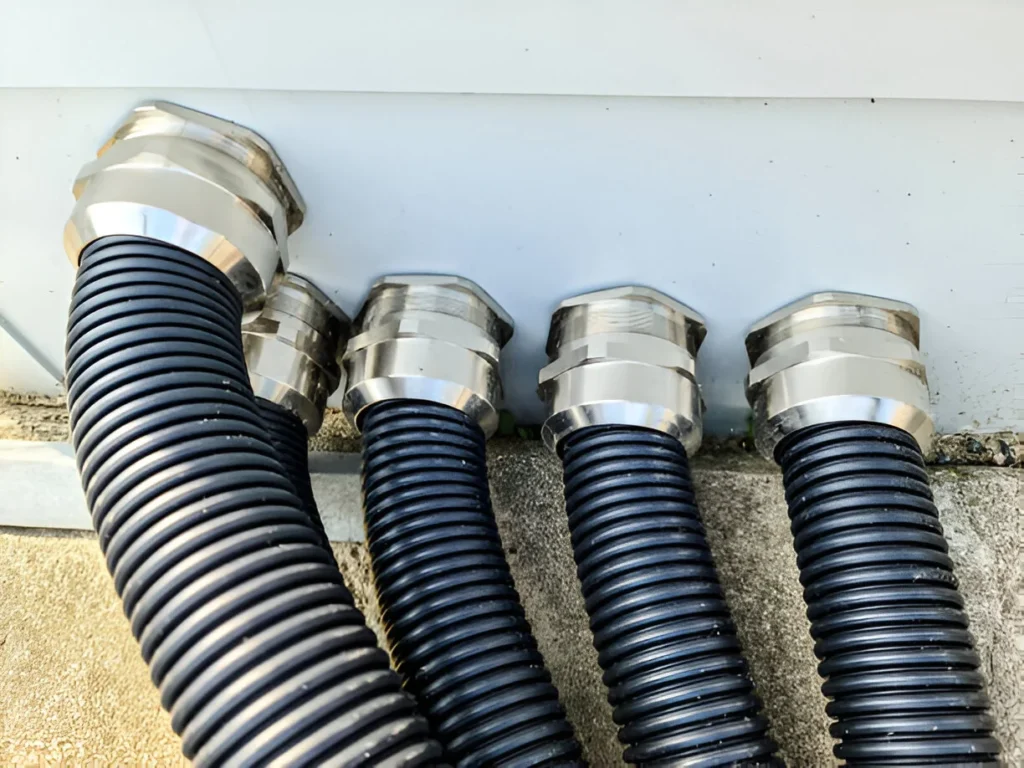
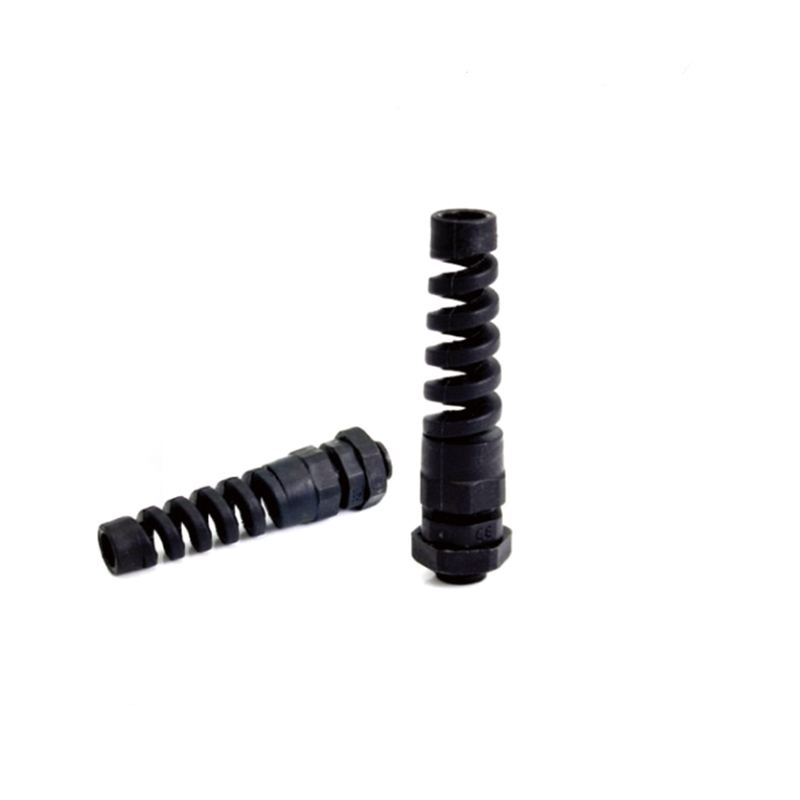
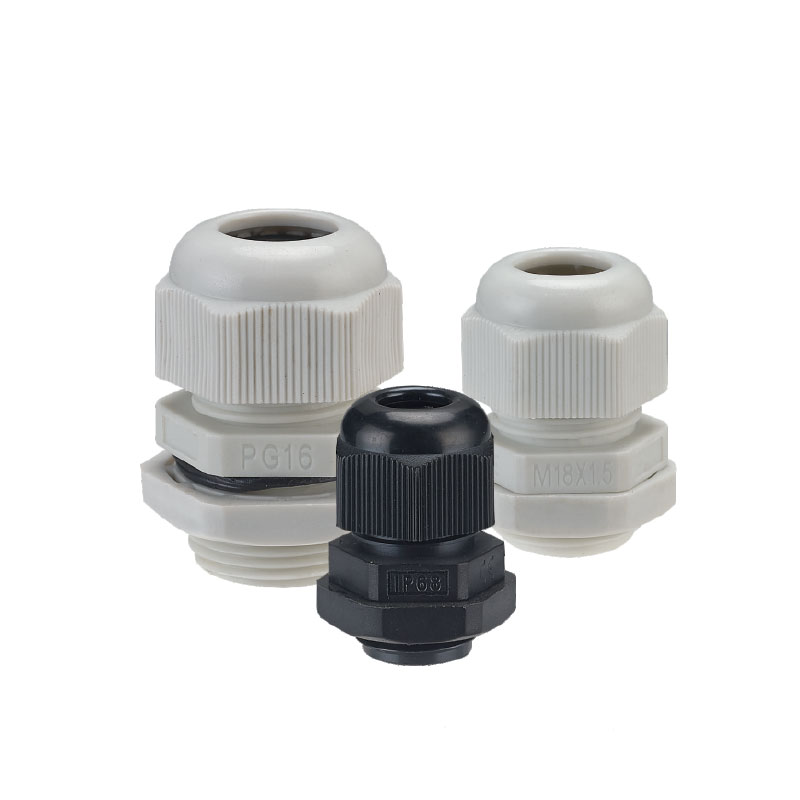
The question “which gland do I need for Zone 1?” is usually asked backwards. A Zone 1 cable gland is not a product family you pick from a catalogue: it is the smallest set of glands whose certification covers the zone your area classification drawing has already assigned to that point on site.
The zone is a site decision, not a product feature. It sets a minimum equipment protection level (EPL), a group and a temperature class, and the gland either carries a marking covering all three or it does not. This guide covers what a Zone 1 gland must satisfy, what changes in Zone 2, how dust zones differ, and the errors that show up most often on operating plants. For the background, see what an explosion proof cable gland does.
What a Zone 1 Cable Gland Has to Satisfy
Four requirements apply, and the zone sets only the first.
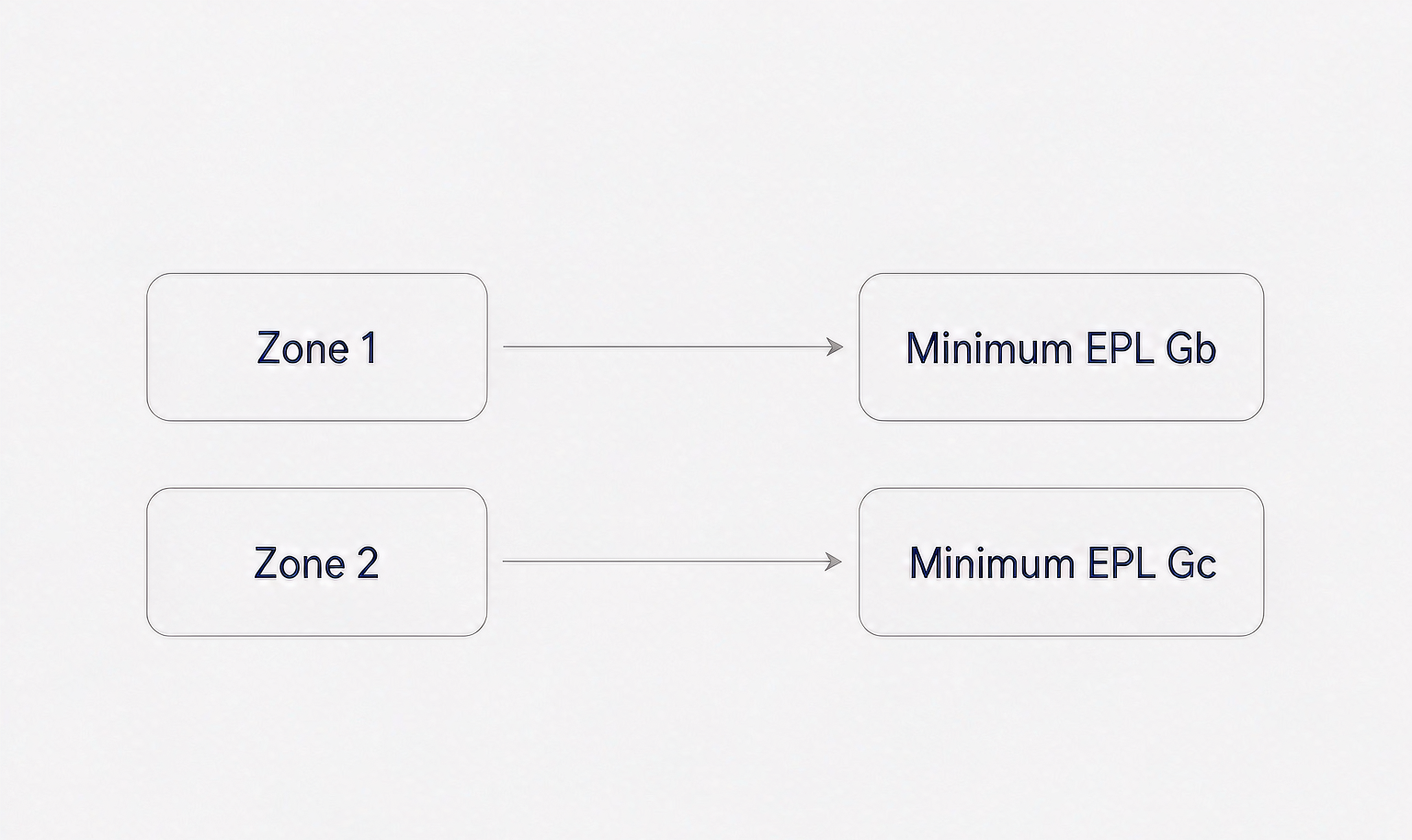
Minimum EPL. Equipment in Zone 1 must be at least EPL Gb. A gland marked Gb or Ga qualifies; a Gc-marked gland does not, however well it seals.
Gas group. The group marking must cover the gas present. IIC covers IIA, IIB and IIC atmospheres, which is why it is usual where the gas is mixed or not fully characterised.
Temperature class. The assembly must not reach a surface temperature hot enough to ignite the gas — a property of the gas and the equipment, not of the zone.
Ingress protection. The IP rating answers to the physical environment and, where dust is present, to the dust group. See choosing the right IP rating for how the levels differ.
The gland must also match the enclosure it enters: protection concept, entry thread form and size, and cable construction. A thread that does not fully engage is not a compliant entry even when the gland is certified, which is why thread form is confirmed before ordering.
Zone
Minimum EPL
What the gland marking must show
Typical location
Zone 0
Ga
Not a cable gland application for power circuits
Inside tanks, vapour space
Zone 1
Gb
Gb or Ga, group, temperature class, IP
Process areas, compressor houses, sample points
Zone 2
Gc
Gc, Gb or Ga, group, temperature class, IP
Storage, perimeter, ventilation-adjacent areas
Zone 21
Db
Db or Da, dust group, IP6X
Dust handling, milling, powder transfer
Zone 22
Dc
Dc, Db or Da, dust group, IP6X
Bagging, grain, peripheral dust areas
Zone 0 is outside the range of a standard power cable gland; it calls for the highest level of protection and is normally served by intrinsically safe circuits. Zones 1, 2, 21 and 22 are where cable entries are actually specified.
Only the minimum EPL changes between Zone 1 and Zone 2.
Where Your Zone Comes From, and What It Does Not Tell You
Zones come from area classification, which is the site’s work rather than the supplier’s: IEC 60079-10-1 for gas, IEC 60079-10-2 for dust. In the EU that duty sits with the employer under the worker protection directive — a different instrument from the equipment directive the gland is certified against, as the ATEX and IECEx comparison explains.
A zone gives a location’s minimum EPL. It does not give you:
the protection concept, which the enclosure decides, because the entry has to preserve it;
the entry thread form or size, which the enclosure also decides;
whether a barrier gland is needed, which follows from the cable construction;
the gas group or temperature class, which come from the process gas data.
Zone 1 vs Zone 2: What Actually Changes
Between Zone 1 and Zone 2, one line of the specification changes: the EPL floor. Zone 1 requires Gb; Zone 2 requires Gc, which also makes Gb and Ga equipment acceptable there. Group, temperature class, ingress protection, thread and cable compatibility are unchanged.
A Zone 2 area may therefore be served by lighter, cheaper hardware, but only where the classification genuinely holds. Glands near flanges, vents, drains and fill points sit where gas collects, and those points are often reclassified upwards at the next drawing review. A Gb version and a Gc version of the same gland usually look identical as well, so check the marking rather than the box.
Reading the marking
A marking carries group and EPL alongside the concept: Ex db IIC Gb for a flameproof entry rated for Zone 1, Ex ec IIC Gc for an increased safety entry limited to Zone 2. A marking that cannot be read after installation, because it was painted over or turned away from the inspection position, cannot be verified in an audit. The Ex d and Ex e comparison covers why the enclosure rather than the zone chooses between the two concepts.
Gas zones and dust zones are not interchangeable
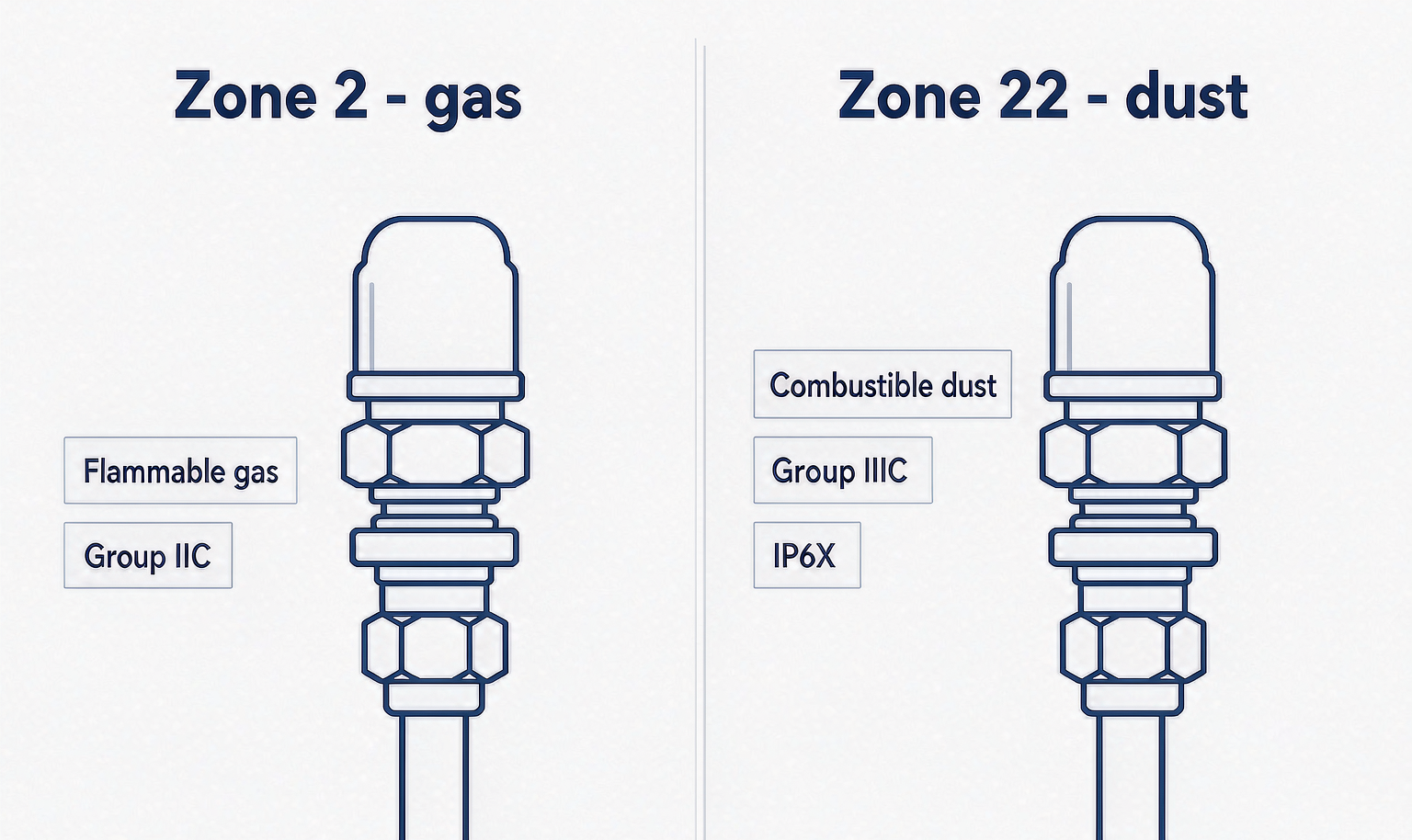
Zone 2 and Zone 22 read alike and are not. The number alone is not enough to specify from.
Point of difference
Gas zone (Zone 2)
Dust zone (Zone 22)
Hazardous medium
Flammable gas or vapour
Combustible dust or flyings
Group marking
IIA, IIB or IIC
IIIA, IIIB or IIIC
Ingress requirement
Set by the environment
Dust-tight, IP6X
Temperature assessment
Temperature class T1 to T6
Maximum surface temperature, plus dust layer build-up
A gas group approval is not a dust group approval: dust zones add an ingress requirement a gas-only gland may not carry, and conductive dust is treated more severely because it can bridge insulation.
Identical hardware, different group and ingress requirements.
Four Selection Mistakes That Show Up on Site
Treating “Zone 1 means Ex d, Zone 2 means Ex e” as a rule. It is not one. Both concepts exist at EPL Gb, and the enclosure, not the zone, picks between them.
Reading Zone 2 as permission to skip certification. Zone 2 lowers the required EPL, it does not remove it. IP68 without an Ex marking is not a hazardous area gland.
Mistake
What the requirement actually says
Consequence
The zone picks the concept
The enclosure picks the concept; the zone sets the minimum EPL
Concept mismatch at the entry, invalidating the enclosure rating
Zone 2 treated as Zone 22
Gas and dust groups, ingress and temperature rules all differ
Non-compliant entry in a dust area
Zone 2 needs no Ex marking
Zone 2 requires EPL Gc at minimum
Uncertified equipment in a classified area
Higher EPL is always better
The entry must preserve the enclosure’s concept
Unnecessary cost, unresolved mismatch
Barrier or Non-Barrier Is a Cable Question, Not a Zone Question
The most common under-specification in Zone 2 is a compression gland on a cable that lets gas travel through the core. Whether a barrier is needed depends on the cable and on whether the enclosure volume makes an internal explosion credible, not on the zone number.
If a cable can pass gas along its core into a flameproof enclosure, a barrier type is called for in Zone 1 or Zone 2 alike. If it cannot, a compression type is normally sufficient in either zone, provided the EPL, group and ingress requirements are met.
One Site, Several Zones: Stocking and Spares
Real plants are rarely uniform: a Zone 1 pocket around a compressor or sampling point usually sits inside a larger Zone 2 area, and both sit inside the unclassified balance of the site.
Strategy
المزايا
Risk
Suited to
Single SKU at the highest EPL on site
One part number, no wrong substitution, simpler spares
Pays a premium on entries that only need Gc
Plants with a small Zone 1 pocket and many Zone 2 entries
Zone-matched SKUs
Lower material cost, tighter specification
Two similar parts in one store; substitution errors
Sites with strict stores control and clear labelling
Mixed, with physical segregation
Balances cost against control
Depends on the segregation being maintained
Most operating plants
The usual compromise is to standardise on the highest EPL in use at that location, accept the small premium, then keep lower-rated items physically separate and labelled. Relying on an installer to read a marking is a weak control, especially when the marking is only legible before the gland is fitted.
Installation and Inspection After the Zone Is Fixed
Once the zone is fixed it also fixes the inspection regime: under IEC 60079-17 the schedule is risk-driven, so higher-risk zones are inspected more often and in more detail. Cable entries are among the defects inspection finds most often.
Inspectors look for predictable things: seal damage, a thread that is not fully engaged, armour that was never clamped, a missing shroud or earth tag, a gland the wrong size for the cable, and a marking painted over during maintenance.
Three habits prevent most of it:
record the gland size, cable range, marking and certificate reference for every entry, so the next inspection does not have to infer them;
fit the accessory set the entry needs — locknut, sealing washer, earth tag, shroud — and confirm the enclosure wall thickness suits the thread length;
keep the marking clean and visible, and do not paint over certified equipment.
A Spec Line You Can Copy
Most procurement failures are specification failures. A hazardous area gland order should carry every line below; anything left blank will be assumed by the supplier.
Specification line
Source of the value
Example entry
Zone and medium
Area classification drawing
Zone 1, gas
Minimum EPL
Zone
Gb
Protection concept
Enclosure
Ex db
Gas or dust group
Process gas or dust data
IIC
Temperature class or ambient range
Gas data and site conditions
Per the gas data for the duty
Entry thread form and size
Enclosure entry
M20 × 1.5.5 مليمتر × 20 × 1.5
Cable construction and OD range
Measured cable
Armoured, within the gland’s stated range
Ingress protection
Environment and dust group
IP66 or IP68
Barrier or non-barrier
Cable construction and enclosure volume
As the cable schedule requires
المواد
Corrosion environment
Nickel-plated brass or 316L stainless steel
Certificate evidence
Purchase requirement
ATEX and IECEx certificate references
Certified glands ship with their certificate and material documentation; the CMP explosion proof gland range is one example of the documentation set an Ex order should include. An order that names a certificate rather than a marketing description is far easier to verify on delivery.
Next Step
Start with the drawing, not the catalogue. Pull the zone, group and temperature class for the location, confirm the enclosure’s concept and entry thread, then specify against those values. Suitable glands are available in nickel-plated brass for most onshore service and in الفولاذ المقاوم للصدأ where chlorides, sour service or washdown are present; a representative entry is the PG42 gland for hazardous areas. If the zone boundary on your drawing is ambiguous, settle that classification question before ordering.
الأسئلة الشائعة
Can I use a Zone 2 cable gland in Zone 1?
Not if it is marked Gc only. Zone 1 requires at least EPL Gb, so a Gc-marked gland is inadmissible regardless of its IP rating or material. If the same gland exists in a Gb-marked version, that is the version for a Zone 1 entry.
Is a Zone 1 cable gland the same as an explosion proof cable gland?
Not quite. “Explosion proof” describes a protection approach, usually flameproof Ex d. A Zone 1 gland is defined by its EPL, so it may be flameproof, increased safety or another concept rated at Gb. Zone 1 is the requirement; flameproof is one way to meet it.
Do Zone 1 installations always need barrier glands?
No. A barrier is required where gas or vapour can migrate through the cable into the enclosure, which is a property of the cable construction and the enclosure rather than of the zone. A Zone 1 entry on a suitable filled cable may not need one; a Zone 2 entry on an unfilled multi-core cable may well need one.
What is the difference between Zone 2 and Zone 22?
Zone 2 is a gas zone: an explosive gas atmosphere is not expected during normal operation and, if it occurs, lasts only briefly. Zone 22 is a dust zone with the same expectation about frequency. They differ in group marking, in the ingress protection needed for dust, and in how surface temperature is assessed.
Can I use an IP68 gland in Zone 2?
Only if it also carries Ex certification for that zone. IP68 addresses water and dust ingress and says nothing about ignition risk. Many glands are both IP68 and Ex certified; the Ex marking is the part that qualifies an entry for a hazardous area.
تلعب غدة الكابلات المقاومة للماء دورًا لا غنى عنه في المعدات الكهربائية الصناعية والتجارية الحديثة. فهي لا تحمي مداخل الكابلات من الغبار والرطوبة فحسب، بل تضمن أيضًا سلامة المعدات وإطالة عمر الخدمة. إن اختيار تصنيف IP المناسب لغدة الكابلات المقاومة للماء يمكن أن يمنع بشكل فعال الأعطال الكهربائية أو حوادث السلامة الناجمة عن البيئات القاسية. [...]
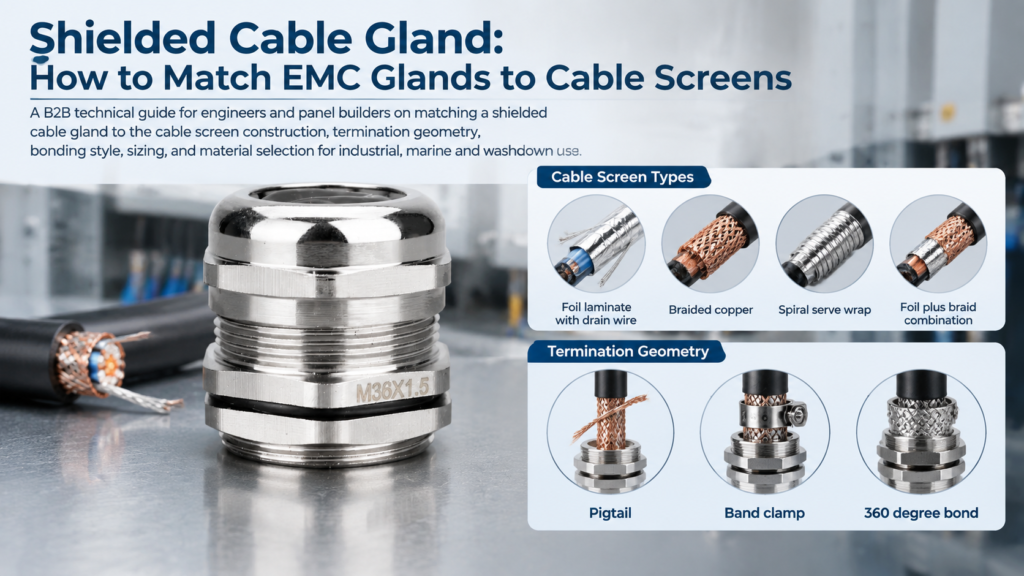
Match an EMC cable gland to the cable screen: foil, braid, spiral and combination constructions, termination geometry, bonding rules and sizing on jacket OD.
تعرّف على كيفية تركيب غدد الكابلات المقاومة للماء من خلال أدلة تفصيلية خطوة بخطوة لإحكام غلق IP68 باستخدام غدد النايلون النحاسية أو الفولاذ المقاوم للصدأ من GHX.
نحن نستخدم ملفات تعريف الارتباط لتحسين تجربة التصفح الخاصة بك، وعرض إعلانات أو محتوى مخصص، وتحليل حركة المرور لدينا. بالنقر على "قبول الكل"، فإنك توافق على استخدامنا لملفات تعريف الارتباط.