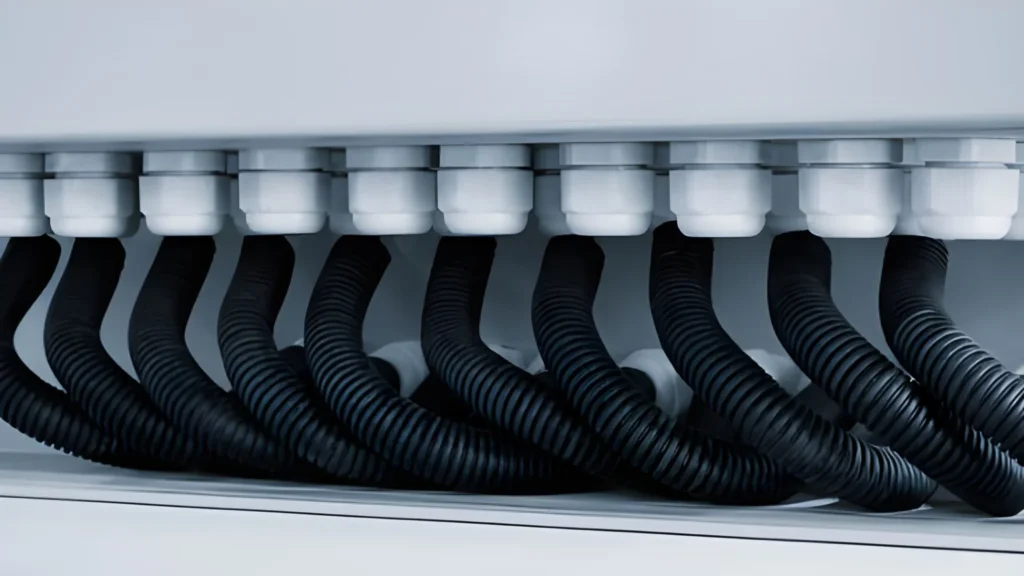
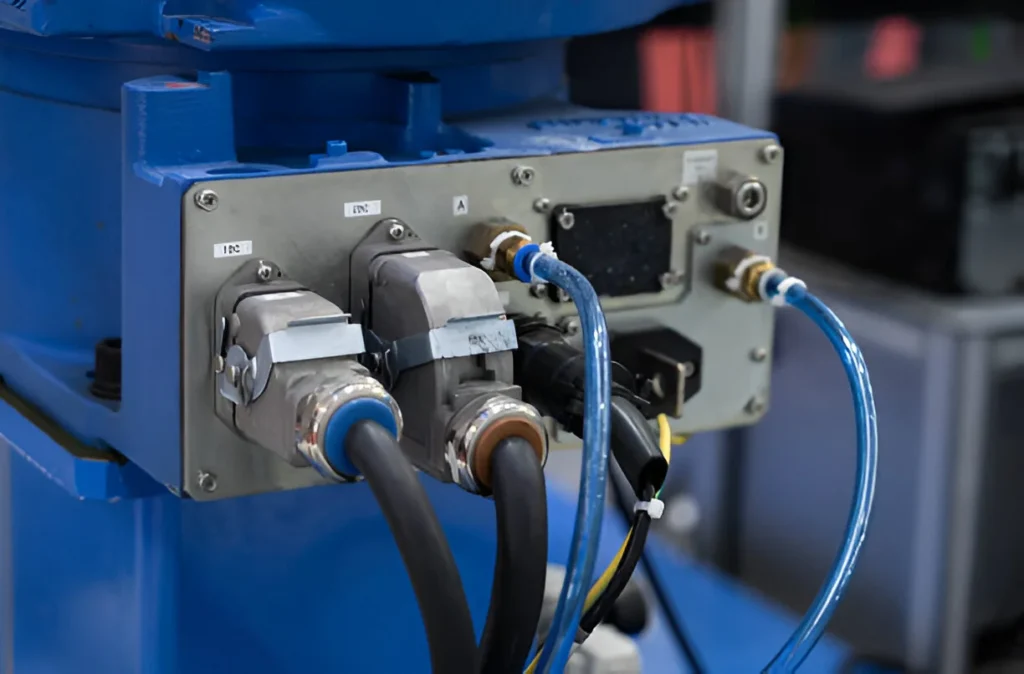
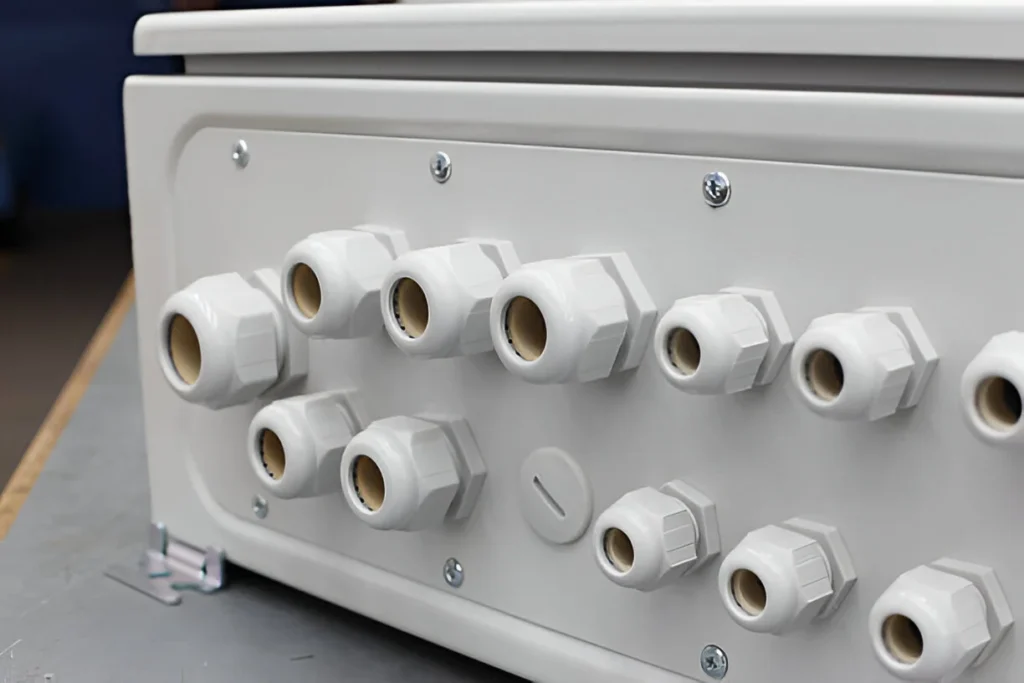
If you work in shipbuilding, port equipment, offshore systems, or coastal control cabinets, you already know one truth: water always wants in. Salt fog, vibration, UV, washdown, and tight panel space turn a simple cable entry into a surprisingly expensive weak point. That is why marine prensa-cabos à prova d'água matter so much in real projects. They are small parts, yes, but small parts have a bad habit of causing very large complaints.
I have spent years working with industrial cable entry products for procurement teams, panel builders, distributors, and OEM customers, and I can say this with a straight face: a good gland is never exciting, and that is exactly the point. When selected correctly, it seals, grips, protects, and quietly does its job for years. When selected badly, it becomes the star of your after-sales meeting. Nobody wants that kind of fame.
In marine and coastal applications, buyers usually care about three things at once: reliable sealing, long service life, and supply stability. Price matters too, of course. But in this segment, “cheap” and “low total cost” are not always good friends. The better buying decision often comes from matching structure, material, and installation conditions to the actual job, not from choosing the lowest quote on a spreadsheet and hoping the ocean will be kind.
Why Marine Cable Entry Fails First
Marine environments are hard on cable accessories because the risk does not come from one direction. Moisture attacks from outside, condensation forms inside, vibration loosens weak assemblies, and salt speeds up corrosion in all the wrong places. In our internal after-sales review of marine and coastal enclosure projects, cable entry issues represented roughly one in five leak-related troubleshooting cases. That is not a universal industry number, so please treat it as directional field experience rather than a formal global statistic, but the message is clear: the entry point deserves more attention than it usually gets.
What makes this especially important for B2B buyers is that failure is rarely isolated. One bad sealing point can affect the cabinet rating, cable jacket, terminal block condition, and maintenance schedule. A gland that looked “close enough” during purchasing can turn into extra labor, repeated site visits, or warranty arguments later. Salt water, I like to joke, does not negotiate; it simply sends the invoice later.
Marine risk
What happens in the field
What the gland must do
Commercial impact
Salt spray
Metal parts corrode, threads seize, sealing weakens
Use corrosion-resistant Brass or Stainless Steel, or Nylon where appropriate
Lower replacement rate and fewer maintenance claims
Washdown and rain
Water enters enclosure through cable entry
Maintain stable sealing under pressure and splash
Protect panel rating and reduce downtime
Vibration
Cable loosens or moves at entry point
Provide strong clamping and strain relief
Avoid intermittent faults and rework
UV exposure
Plastic ages and becomes brittle
Use UV-stable materials for outdoor use
Improve service life in open deck installations
Tight routing
Cable bends sharply near entry
Choose correct body shape, including side-entry options
Easier assembly and cleaner cable management
A common example is a deck-mounted junction box where the cable approaches from the side rather than from below. If the buyer chooses a straight entry without checking bending radius, the installer may force the cable into a tight curve. The seal might hold at first, but strain builds over time. In contrast, a side entry waterproof cable gland can reduce stress on the cable jacket and make the assembly much neater. Sometimes the right product saves more labor than people expect.
Material Choice Changes the Whole Story
For marine applications, Marine Waterproof Cable Glands material is not just a specification line; it is the personality of the product. Brass, Stainless Steel, and Nylon can all be suitable, but not in the same way and not for the same customer expectations. A procurement team buying for a control cabinet inside a protected machinery room may reach a very different conclusion from a buyer sourcing fittings for exposed deck equipment or offshore lighting.
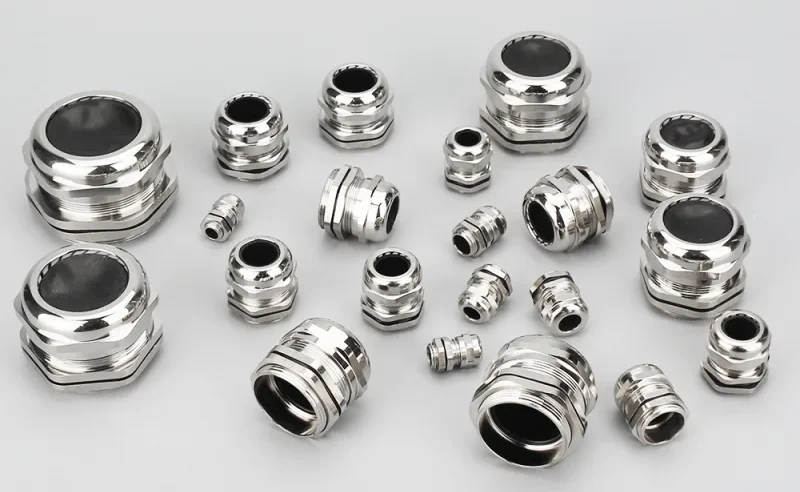
Prensa-cabo de latão is a strong all-round option when you want good mechanical strength, reliable threads, and competitive cost. Nickel-plated Brass is popular because it balances price and durability well. Stainless Steel goes further when corrosion resistance is critical, especially in aggressive salt environments or where appearance and long-term surface condition matter. Nylon is often the smart choice for lightweight assemblies, non-corrosive environments, and cost-sensitive projects, particularly when electrical insulation and easier installation are helpful. Nylon also earns points when buyers want a dependable solution without paying for metal where metal is not necessary.
Material
Best-fit marine scenario
Main strengths
Possible limits
Typical B2B buyer profile
Latão
Shipboard panels, machinery spaces, control cabinets
Strong threads, good durability, balanced price
Less corrosion resistance than Stainless Steel in the harshest exposure
OEMs, panel builders, wholesale buyers
Aço inoxidável
Open deck, offshore units, coastal outdoor equipment
Excellent corrosion resistance, premium feel, long service life
Lower mechanical strength than metal in heavy-duty conditions
Distributors, large-volume buyers, standard equipment lines
When buyers ask me, “Which one is best?” my honest answer is annoyingly professional: best for what? If the enclosure sits in a mild indoor compartment and needs competitive pricing for bulk purchase, Nylon can be the smartest answer. If the unit is mounted where salt spray is a daily guest, Stainless Steel is often worth the extra cost. If the project needs a balanced solution for power and control systems, Brass usually wins a lot of tenders for a reason.
This is also where B2B sourcing gets interesting. A capable manufacturer or factory should not simply push one material across all projects. A real supplier asks about cable type, mounting location, thread standard, exposure level, and target price. That is how good products are chosen, and honestly, that is how good suppliers reveal themselves.
If you are unsure what type of waterproof cable gland your project requires, please feel free to Entre em contato conosco.
Structure Matters More Than Many Buyers Expect
Not all marine cable entry products solve the same problem. The body shape, seal design, and entry method directly affect installation speed, sealing performance, and cabinet layout. This is where many of the high-intent search terms become commercially relevant, because buyers are often searching for a very specific fit, not a general concept.
A waterproof rubber cable gland is often preferred when a buyer wants flexible sealing around cable diameter variation and dependable grip on soft or standard sheathed cable. A waterproof cable gland connector may be the better term when the customer focuses on connection security and enclosure integration. A waterproof multi cable gland is useful where several cables must pass through one compact point, especially in space-limited panels. A waterproof single cable entry gland remains the most common choice for straightforward one-cable-per-entry layouts. And as mentioned earlier, the side entry waterproof cable gland solves routing headaches where a straight body would create awkward bends or wasted space.
Product type
Where it works well
Why buyers choose it
What to confirm before ordering
Waterproof rubber cable gland
General marine control and power cable entry
Flexible sealing and stable grip
Cable outer diameter range, seal material, IP rating
Side entry waterproof cable gland
Tight cabinets, lateral cable approach, retrofit jobs
Better routing and reduced bend stress
Available thread types, clearance around enclosure wall
Let me give a real-world style example. In one marine lighting control project, the original bill of materials used individual entries for every small signal cable. It worked, but the panel became crowded, drilling time increased, and the installers were not exactly writing thank-you notes. After changing selected positions to a waterproof multi cable gland, the assembly became cleaner and faster without sacrificing sealing performance. The part cost was slightly higher per entry point, but the labor savings more than compensated. That is the kind of comparison procurement teams should care about.
On the other hand, if the cables are mixed in size or if maintenance teams prefer clear one-cable isolation, a waterproof single cable entry gland can still be the wiser option. Neatness is nice, but serviceability matters too. A beautiful cabinet that is painful to maintain is still a problem wearing good makeup.
What Smart Buyers Specify Before RFQ
In B2B purchasing, vague RFQs create vague quotations, and vague quotations usually create very specific problems later. When a buyer asks for marine waterproof cable glands without defining the actual conditions, suppliers may quote very different products under the same broad label. Then price comparison becomes misleading.
I always encourage buyers, distributors, and project engineers to align on a short but practical specification package before asking a manufacturer, exporter, or trading company for pricing. This does not need to be complicated. It just needs to be clear enough that the product selected can actually perform on the vessel or equipment.
RFQ item
Why it matters
Common sourcing mistake
Better purchasing practice
Cable outer diameter
Determines sealing range and clamping
Choosing based on nominal cable size only
Confirm actual jacket OD tolerance
Thread type
Must match enclosure or adapter
Mixing metric, PG, and NPT threads
State exact thread standard and size
Material
Affects corrosion resistance and cost
Over-specifying Stainless Steel everywhere
Match material to real exposure level
IP requirement
Defines water ingress performance
Assuming all “waterproof” products are equal
Request tested rating and sealing details
Cable type
Influences grip and strain relief
Ignoring soft, armored, or special jacket cable
Tell supplier cable construction
Mounting space
Affects body shape selection
Forgetting bend radius and nearby components
Review panel clearance before approval
Branding need
Impacts packaging and production plan
Asking late for label changes
Mention OEM, ODM, private label, or white-label early
Here is the practical part buyers often ask for: how do you choose which model? Start with cable OD, not wishful thinking. Then match the thread to the panel opening. Next, check whether the route is straight or lateral. After that, decide whether the environment needs Brass, Stainless Steel, or Nylon. Finally, confirm whether the job uses one cable per entry or several. It sounds simple because, well, it is simple. The trouble begins only when somebody skips one of those steps.
And yes, how to connect matters. The Marine Waterproof Cable Glands correct assembly usually includes the gland body, sealing insert, clamping component, locknut, and sealing washer where required. On marine enclosures, the washer choice and the panel surface condition can make a visible difference to sealing reliability. If the enclosure wall coating is uneven, the buyer should flag that early. A good supplier can recommend a better sealing arrangement before production, which is much cheaper than explaining moisture marks later.
For procurement teams handling bulk orders, this is also the stage to discuss packaging, labeling, carton quantity, barcode needs, and inspection standards. If you need custom part numbers, OEM packaging, ODM support, or white-label supply for your brand, say it up front. Factories prefer clarity, and so do shipping schedules.
If you are unsure what type of waterproof cable gland your project requires, please feel free to Entre em contato conosco.
Installation Reality: The Product Is Only Half the Story
Even a well-made Marine Waterproof Cable Glands can underperform if installed carelessly. I know, that sounds unfair to procurement, but installation reality affects product selection more than many tenders admit. Some cable entry designs are more forgiving than others, and that matters in marine projects where installers work in narrow spaces, awkward positions, and less-than-perfect weather.
The most frequent field issues are surprisingly ordinary: selecting a cable outside the stated sealing range, over-tightening plastic bodies, under-tightening metal locknuts, forgetting the sealing washer, or forcing the cable into a bend right at the gland exit. None of these failures are dramatic at the moment of assembly. They become dramatic later, which is procurement’s favorite kind of surprise.
Installation factor
What can go wrong
Better product or practice
Result
Incorrect cable OD
Seal does not compress correctly
Match sealing range carefully
Stable ingress protection
Poor panel surface
Washer cannot seal evenly
Use proper gasket or washer, inspect mounting face
Lower leak risk
Tight bend radius
Cable strain damages entry point
Consider side-entry design
Longer cable life
High vibration area
Parts loosen over time
Choose strong clamping design and proper torque
Better retention
Multi-cable crowding
Cables rub or seal unevenly
Use purpose-built multi-cable solution
Cleaner and safer routing
In one coastal pump-control cabinet case, the buyer originally selected Nylon glands for all positions. Most were perfectly fine, but a few high-vibration motor feeder entries near the lower frame kept needing attention. The final solution was not to replace everything. The team upgraded only those critical points to metal versions and kept Nylon where the environment was lighter. That is a very B2B-friendly lesson: smart specification is usually selective, not excessive.
If you are a contractor, wholesaler, or distributor supporting end users, this is also where technical support becomes part of your value. Customers remember who helped them avoid rework. A supplier that can explain how to connect, how to seal, and which body style fits the cabinet will usually keep the account longer than a supplier who only sends a PDF and a price list.
And if you are planning a new project right now, sending one sample cable and one panel drawing with your inquiry can save a surprising amount of time. I have seen weeks of email back-and-forth disappear because one customer simply shared the real dimensions early. Beautiful. Efficient. Almost suspiciously sensible.
How B2B Buyers Compare Suppliers
At the sourcing stage, most buyers are not only choosing a product; they are choosing a supply model. The right marine cable gland supplier could be a manufacturer, factory-direct exporter, distributor, or trading company, depending on order volume, customization needs, documentation, and delivery expectations. There is no single perfect channel, but there is definitely a wrong one for your project.
For standard replacement demand and mixed small quantities, a local distributor may be the most practical. For container-scale procurement, recurring OEM demand, or private label programs, working directly with a China manufacturer or exporter often makes more sense. This is especially true when buyers need custom thread combinations, packaging changes, branded labeling, or special material plans.
Supplier type
Best for
Main advantage
Main trade-off
Supplier type
Best for
Main advantage
Main trade-off
Manufacturer / factory
Bulk purchase, OEM, ODM, custom products
Better control of production, customization, and unit price
May require MOQ and forecasting
Exporter
International shipments and documentation support
Good for overseas procurement and compliance handling
Product range depends on factory network
Distributor / wholesaler
Fast local stock and mixed orders
Convenience and quick delivery
Higher unit price, less customization
Trading company
Multi-category sourcing
Easy consolidation of many products
Less direct control over manufacturing details
A strong B2B supplier should be ready to discuss more than just price. Ask about lead time stability, material traceability, incoming inspection, salt-environment suitability, available thread standards, quality documents, and sample policy. If the project needs Marine Waterproof Cable Glands custom branding, ask whether the company supports OEM, ODM, private label, or white-label service. If you plan long-term cooperation, ask about stock planning and annual volume support too.
Price, of course, still matters. But the smartest buyers compare total supply value, not just ex-factory numbers. A slightly higher quote from a factory that understands Marine Waterproof Cable Glands, offers consistent quality, and supports documentation can be cheaper overall than a lower quote that creates fitting mismatches, delay claims, and return discussions. We have all seen that movie before, and the ending is never fun.
For buyers looking at China supply, the opportunity is clear: broad manufacturing capacity, strong customization flexibility, and competitive wholesale pricing. The key is selecting a company that can translate your project conditions into the right Marine Waterproof Cable Glands, not merely copy a part number and hope for the best.
In the end, marine prensa-cabos à prova d'água are not glamorous products, and that is perfectly fine. Their job is to protect the system, simplify installation, and disappear into reliable service. For shipyards, panel builders, distributors, and OEM buyers, the best result comes from matching the right structure and material to the real working environment, then partnering with a supplier who understands both engineering and procurement logic.
If your team is comparing Brass, Stainless Steel, and Nylon options, or deciding between a waterproof single cable entry gland and a waterproof multi cable gland, the smartest move is to evaluate the application first and the unit price second. Good cable entry products do not just seal holes in enclosures; they protect schedules, reduce rework, and make your equipment easier to trust. And in marine business, trust is worth far more than the tiny component that quietly earns it. If you are preparing a bulk inquiry, trial order, or OEM project, now is a very good time to put the right specification on the table and let the right supplier quote it properly.
PERGUNTAS FREQUENTES
Is Stainless Steel always better than Brass?
Not always. It is better in harsher corrosion environments, but Brass may be more cost-effective for many shipboard applications.
When is Nylon the right choice?
For protected environments, lightweight assemblies, and cost-sensitive bulk orders where metal is unnecessary.
Should I use a waterproof multi cable gland or separate entries?
Use multi-cable designs when space and assembly efficiency matter; use separate entries when maintenance isolation is more important.
Is a side entry waterproof cable gland worth it?
Yes, when cable routing is lateral or when bend radius is tight near the enclosure wall.
Can I order private label or OEM packaging?
Usually yes, if the supplier or factory supports OEM, ODM, private label, or white-label programs.
What affects price most?
Material, size, thread type, sealing design, customization, and order quantity.
Quando se trata de garantir a segurança, a durabilidade e a eficiência das instalações elétricas, o humilde prensa-cabo desempenha um papel fundamental. Quer você trabalhe com automação industrial, petróleo e gás, telecomunicações ou energia renovável, a escolha do prensa-cabo correto pode fazer toda a diferença no desempenho e na longevidade de seus sistemas. Neste artigo, exploraremos [...]
Cable gland are small components, but they sit at every cable entry point in your panel, enclosure or machine, and they do three jobs at once: they hold the cable mechanically, they seal the opening against dust and water, and — depending on the type — they provide earthing or electromagnetic shielding. Specify the wrong […]
Usamos cookies para aprimorar sua experiência de navegação, veicular anúncios ou conteúdos personalizados e analisar nosso tráfego. Ao clicar em "Aceitar tudo", você concorda com o nosso uso de cookies.