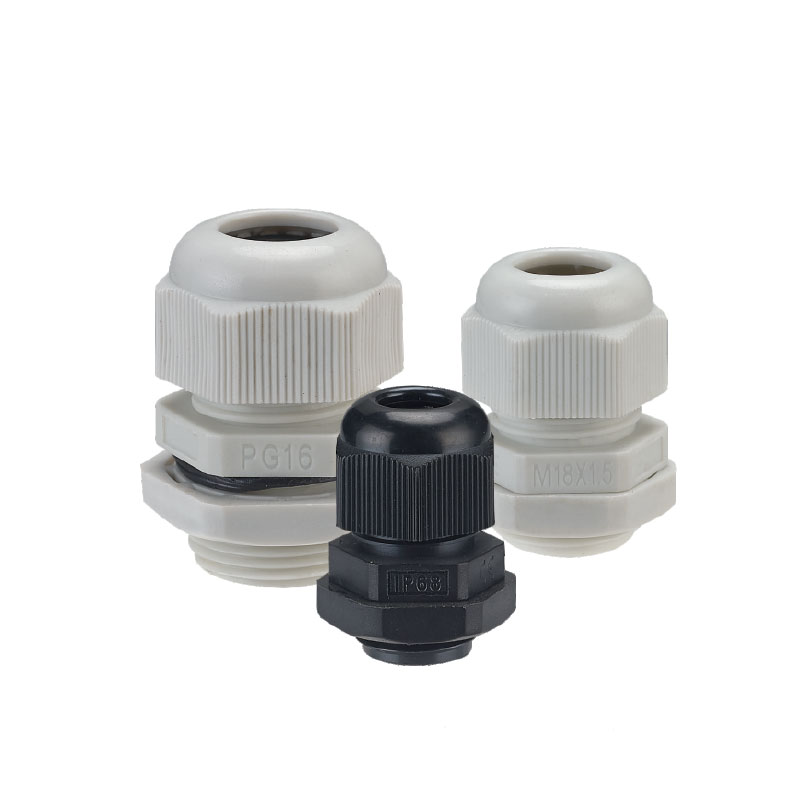
غدة الكابل المقاومة للماء
Waterproof Nylon Cable Gland for Industrial Cable Entry
Learn how to choose a waterproof nylon cable gland by thread type, cable range, IP68 sealing, and application needs for OEM, export, and bulk buying.
قراءة المزيد
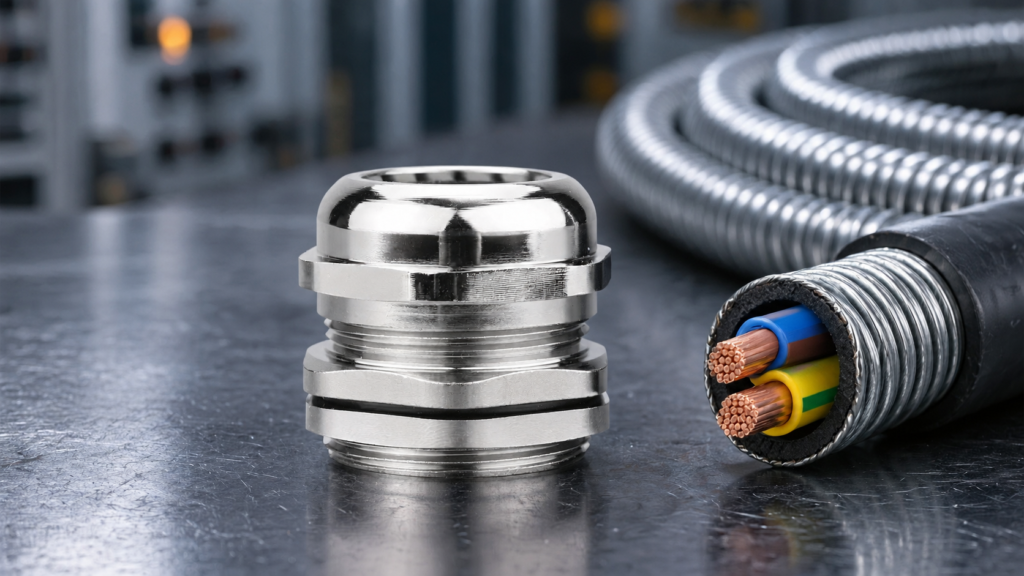
An SWA cable gland is a cable entry device built for steel wire armoured cable. “SWA” describes the cable, not the gland. The gland exists because that cable carries a layer of round steel wires between the bedding and the outer sheath, and something has to grip those wires, bond them to the enclosure earth and still seal the cable where it passes through a wall.
That is why the buying question is never “which SWA gland” but “which SWA gland for this cable”. Two cables with the same nominal conductor size can need different glands. Two drums carrying the same cable part number can occasionally need different glands as well. Selection is a measurement exercise before it is a catalogue exercise.
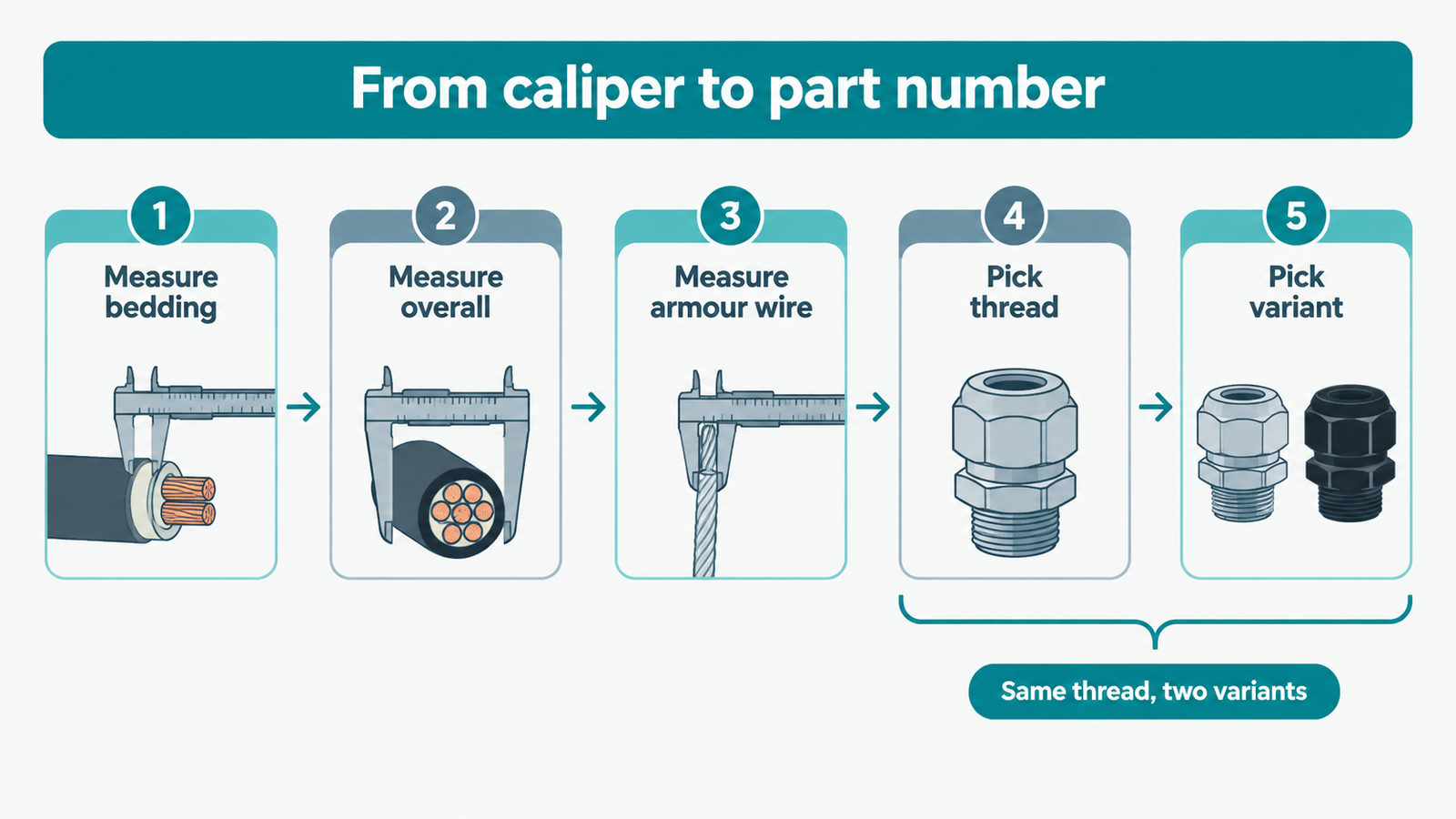
This guide takes you from a cable on the floor to a part number you can order, using the three dimensions a gland actually fits and the table a manufacturer publishes for them. If you need the product anatomy first, what an armoured cable gland does covers the parts and their individual duties.
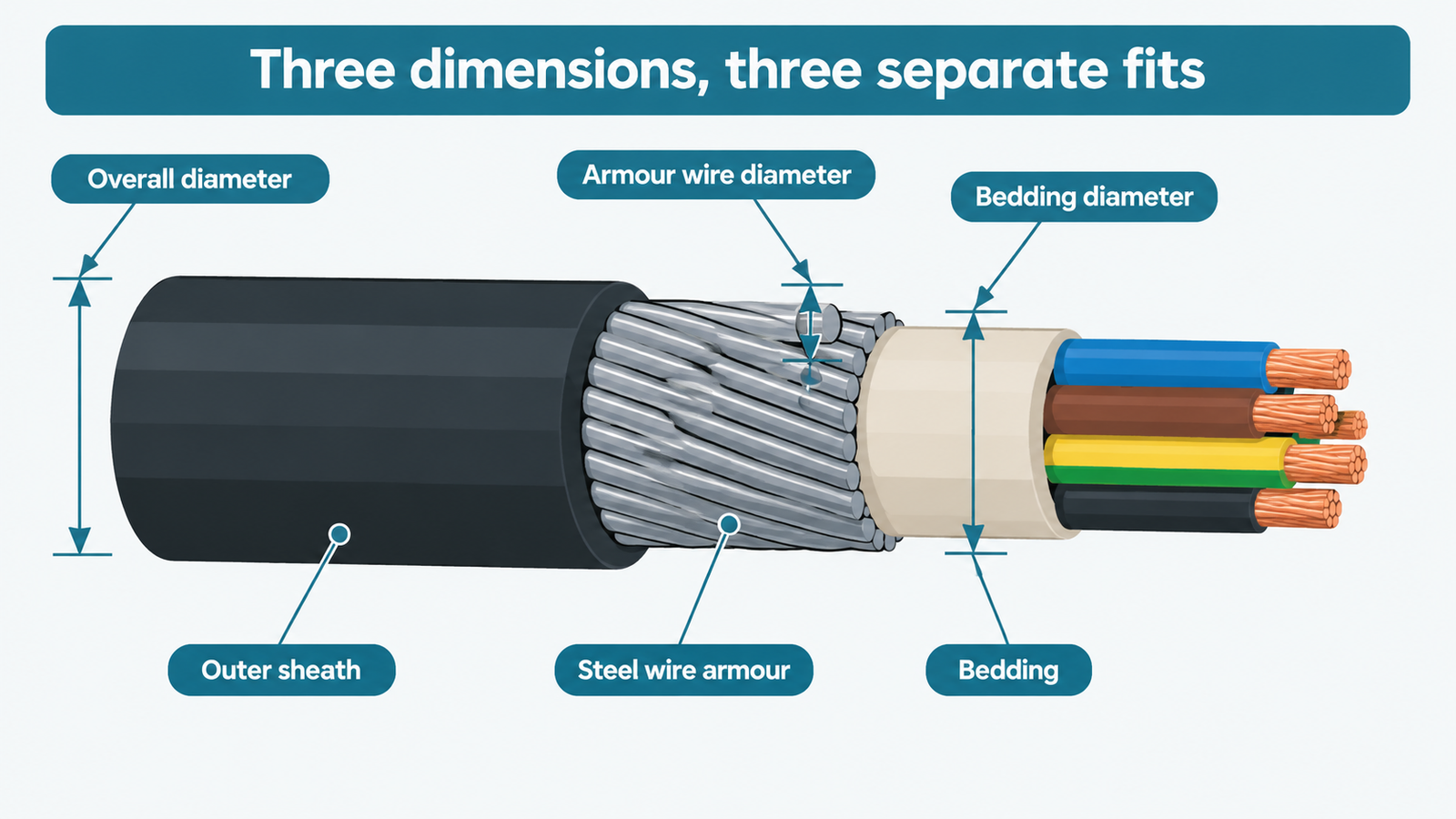
A gland makes three separate fits on one cable, and each fit is set by a different dimension. A gland that matches on one fit and misses on another is the wrong gland, even when it threads into the enclosure perfectly.
| Fit | What it acts on | Dimension that sets it | What fails if it is wrong |
|---|---|---|---|
| Inner seal | Bedding, the layer under the armour | Bedding diameter | Water tracks along the wire cage into the enclosure |
| Armour clamp | The steel wires themselves | Armour wire diameter, plus wire count | Armour is neither gripped nor bonded; pull load reaches the terminals |
| Outer seal | Outer sheath | Overall diameter | Ingress at the sheath; gland fails an IP test it was bought for |
The important consequence: the thread size tells you nothing about the cable. M25 is a statement about the hole in the enclosure. Whether an M25 gland accepts your cable depends on the three ranges printed beside it, and those ranges differ between product families even at the same thread.
This is the most common wrong-part order in armoured work. At a given thread size, most ranges offer a standard version and an “S” version. The thread is identical. The armour clamping geometry is not.
The S variant is built around a smaller armour wire range at the same thread. Put a small-wire cable into a standard gland and the cone cannot wedge the wires properly; they splay instead of being trapped. Put a large-wire cable into an S gland and the wires will not pass through the cone at all, or they pass only by force, which damages the bedding underneath.
Both mistakes look like a fitting problem on site, and neither is fixed by tightening harder. The purchase order has to carry the variant, and the variant is decided by the armour wire, not by the cable current rating or its overall diameter.
Selection tables look alike and none of them are interchangeable. Ranges are set by each maker’s own seal and cone geometry, so one supplier’s gland will not necessarily cover the same cable as the same nominal size from another. Read the table as four conditions that must all hold at once.
| Column | What it fixes | How to check it |
|---|---|---|
| Thread size | Enclosure entry thread and wall engagement | Match the enclosure entry, then confirm thread length covers wall, locknut and tag |
| Overall cable range | Outer seal compression | Measured overall diameter should sit inside the range with margin at both ends |
| Bedding range | Inner seal compression | Measured bedding diameter, taken under the cut-back armour |
| Armour wire range | Cone wedge and clamp | Wire diameter by micrometer, plus wire count |
Two practical notes. The range limits are not targets: a cable at the very top of a seal range leaves no compression left for the seal to make, and a cable at the very bottom sits loose. Aim for the middle of the range where the choice allows. Second, the armour column is often given as a wire diameter, or as a diameter and count pair. Check both, because more thin wires behave differently under the cone than fewer thick ones.
The drum label gives nominal dimensions and, on good drums, the armour wire size. Treat it as a starting point rather than a measurement. Extrusion tolerance, drum crush and cold weather all move the outside diameter enough to matter at a range boundary.
If the three overall readings disagree by more than a fraction of a millimetre, the cable is out of round or the sheath is damaged. That is a cable problem worth raising before it becomes a gland problem.
“Gland” in a quotation can mean a body only, a body with seals, or a full kit. On an armoured termination the difference matters, because the parts that finish the electrical and environmental job are often priced separately.
A full termination normally needs the gland body, armour cone, clamping ring, inner and outer seals where the design has both, a locknut, an earth tag and a shroud. Suppliers differ on which of those are in the box. Ask for kit contents in writing and compare quotations on that basis: a cheaper gland arriving without an earth tag is not cheaper once the tag is ordered separately and the site is waiting for it.
Long runs often arrive on more than one drum, and drums can come from different production. The cable certificate may list a single nominal size while the drums in front of you measure slightly differently. At a range boundary this decides whether the job leaks.
Three workable responses, in order of preference:
Sizing errors rarely appear at installation. They appear at commissioning, at the first IP test, or a season later when a terminal box is found wet. The symptom usually points somewhere other than the gland.
| What you see | Likely cause | What it costs |
|---|---|---|
| Water in the enclosure after rain | Outer seal outside its range, or cable at the top of the range with no compression left | Re-termination plus drying time; corrosion on terminals |
| Armour continuity fails the earth test | Wrong variant, wires splayed instead of clamped | Rework on every affected entry; non-compliance at handover |
| Cable will not enter the gland | Gland sized on nominal diameter rather than measured | Site stoppage, expedited replacement, cut-back and re-terminate |
| Sheath or bedding scored during assembly | Wires forced through an undersized cone | Shortened cable, new termination, possible dielectric damage |
| Gland loosens under vibration | Clamp not loaded because the wire range was wrong | Recurring inspection finding; long-term fatigue of the armour |
Only once the three fits are settled does the rest of the specification matter. Thread form, whether metric, PG, NPT or G, must match the enclosure entry; the thread types guide covers the differences and the conversion traps. Material follows the environment: brass for general industrial and indoor work, الفولاذ المقاوم للصدأ where chlorides, washdown or coastal air are present. Finish and IP class should be stated rather than assumed, because the same body is sold in several sealing configurations.
What brass does well as a body material, and the point at which it stops being the right choice, is covered in what a brass cable gland is.Two sizing-adjacent checks are easy to forget. The thread length must suit the enclosure wall plus any locknut and earth tag, and the cable bend radius immediately behind the gland has to be respected. A correctly sized gland forced into a tight bend loads its seal unevenly and will leak at the low side. The IP rating guide explains how the sealing class should be chosen against the actual exposure.
Most sizing errors come from a quotation request that carries only a cable description. Six lines close the gap, and they cost nothing to write.
| Line | What to state |
|---|---|
| 1 | Cable type and construction, for example steel wire armoured, number of cores and conductor size |
| 2 | Measured overall diameter, with the highest of three readings |
| 3 | Measured bedding diameter |
| 4 | Armour wire diameter by micrometer, and wire count |
| 5 | Enclosure entry thread form and size, plus wall thickness |
| 6 | Environment and required IP class, with material preference and whether an earth tag and shroud are needed |
With those six lines a supplier can quote a specific variant instead of the nearest size in stock. If the measured numbers sit near a range boundary, say so; a good supplier will tell you which side of the boundary to order, and that conversation is far cheaper than a return shipment. For the wider principles behind the product, the غدة الكابل overview and the brass gland range cover standard types and how they differ from armoured versions.
If the termination needs two sealing stages rather than one, the comparison of single vs double compression cable glands explains what the second seal actually adds.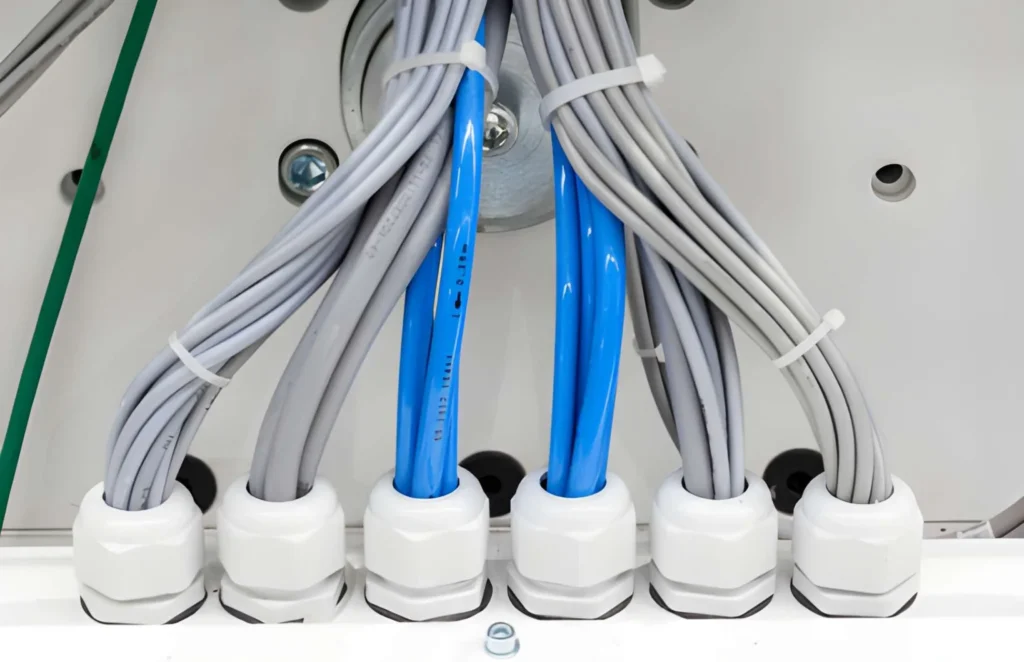
Learn how to choose a waterproof nylon cable gland by thread type, cable range, IP68 sealing, and application needs for OEM, export, and bulk buying.
قراءة المزيد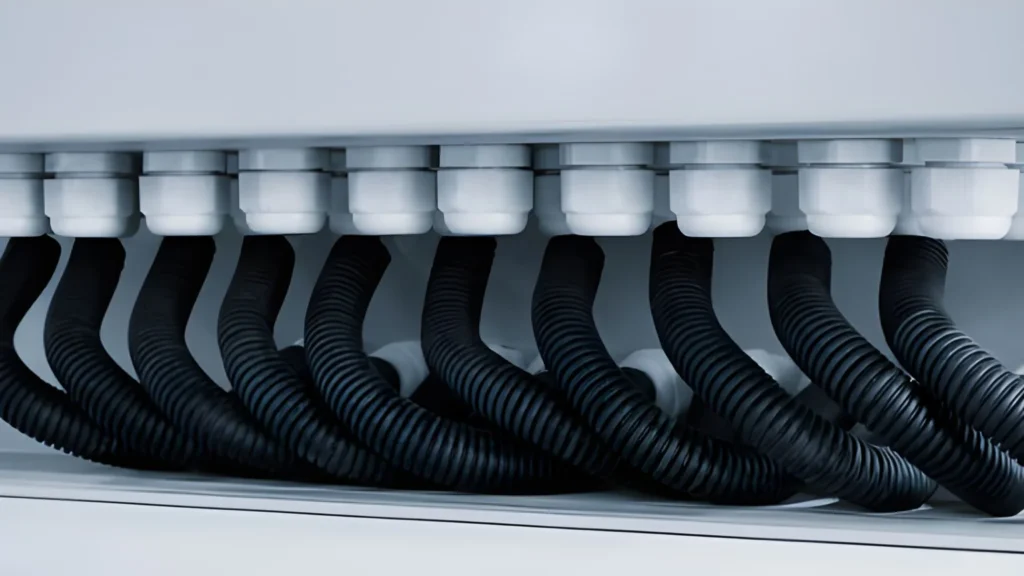
If you work in shipbuilding, port equipment, offshore systems, or coastal control cabinets, you already know one truth: water always wants in. Salt fog, vibration, UV, washdown, and tight panel space turn a simple cable entry into a surprisingly expensive weak point. That is why marine waterproof cable glands matter so much in real projects. […]
قراءة المزيد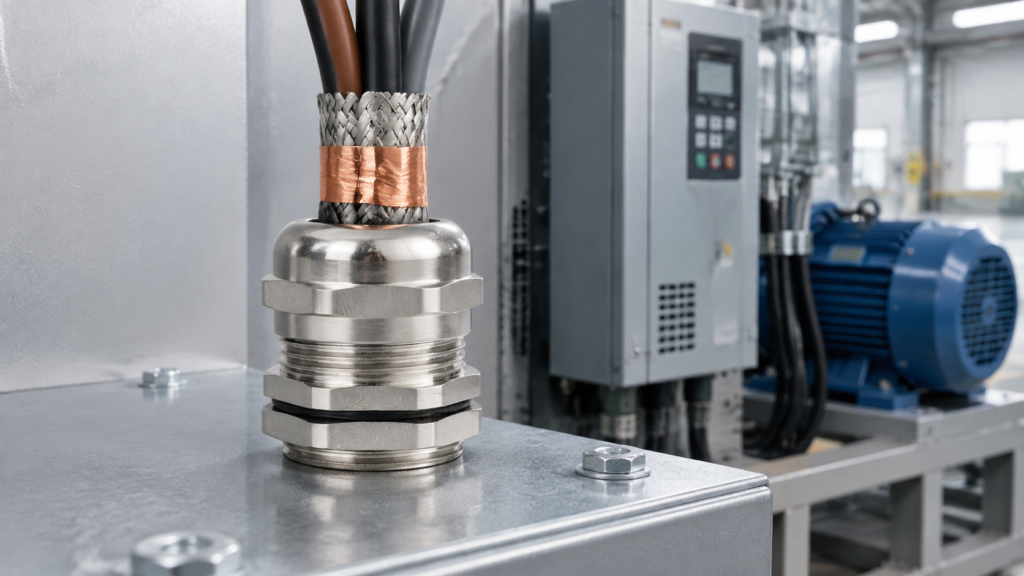
A VFD cable gland has to bond the cable screen around the full circumference at both the drive and the motor end. How to size one for drive cable, where the bond path breaks, and what a gland cannot fix.
قراءة المزيد