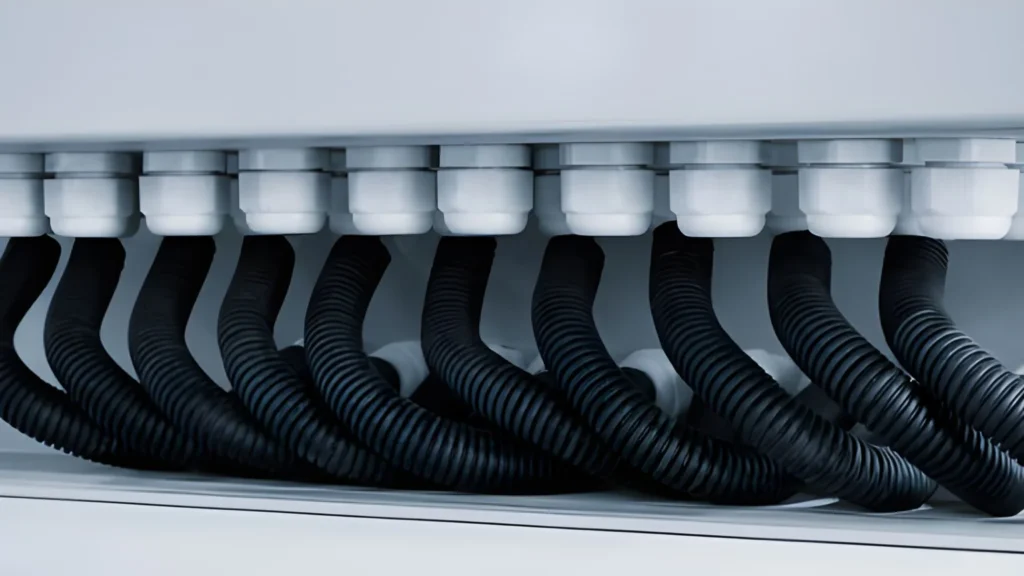
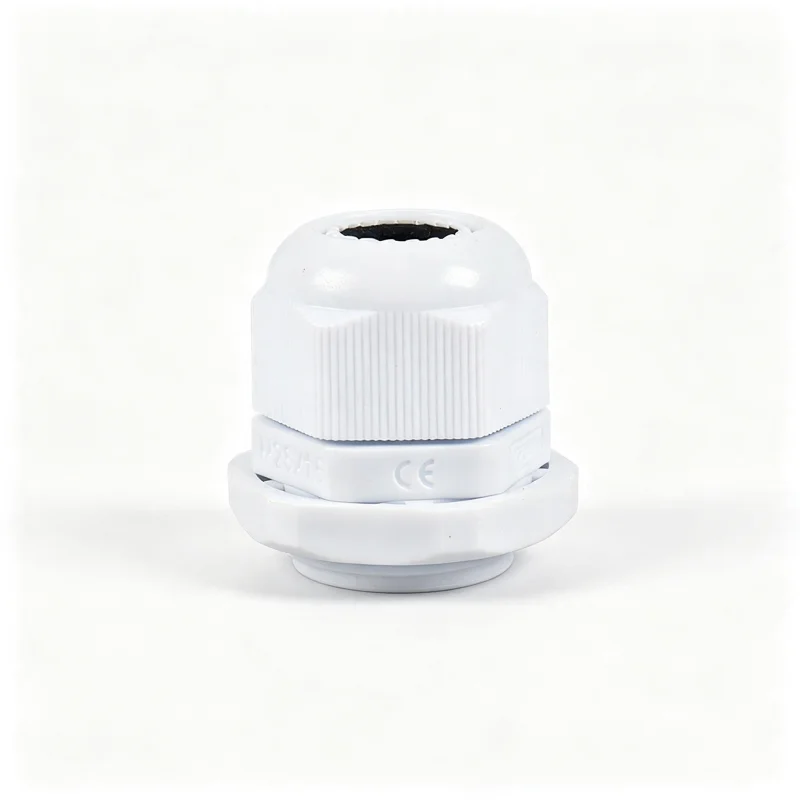
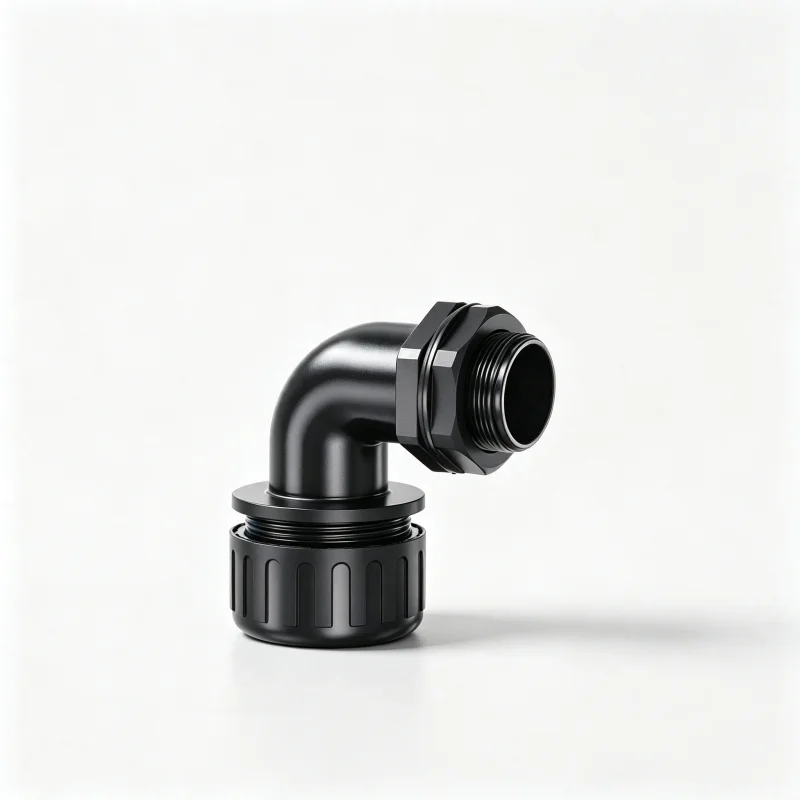
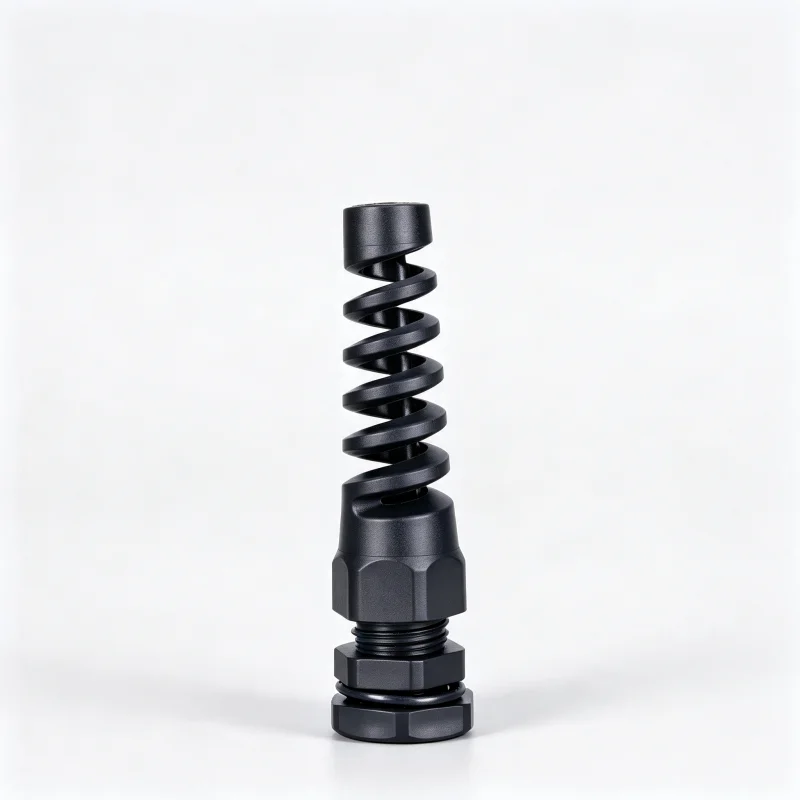
Cable gland accessories are where a purchase order stops matching the installation drawing. The gland itself is specified carefully, then the locknut, washer, earth tag and shroud are added from memory, from a different supplier, or not at all — and the shortfall is discovered by an electrician on a roof with the gland already through the hole. The problem is not that the parts are expensive. It is that nobody wrote down which of them are inside the box, and the datasheet does not answer that question: it describes the prensa-cabo assembly in fitting order, not the contents of the carton.
What Counts as an Accessory
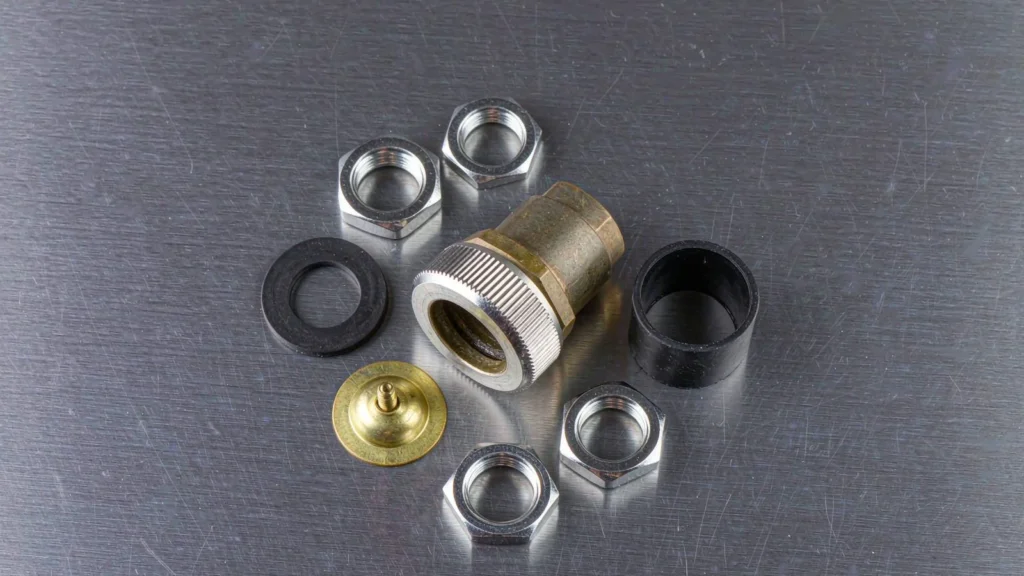
An accessory is any part that does a defined job at the entry but is not the body. Five of them account for almost every shortfall, and each is decided by a different thing — mounting arrangement, electrical design, exposure, or thread mismatch. Treating them as one shopping list is what causes both missing parts and surplus stock.
Accessory
Job at the entry
What decides whether you need it
Belongs on the PO as
Porca de fixação
Pulls the body down onto the washer through a clearance hole
Whether the hole is drilled through or tapped
Named line with thread and material
Sealing washer or O-ring
Closes the joint between body shoulder and panel face
Body style: plain shoulder or groove
Named line with bore and outer diameter
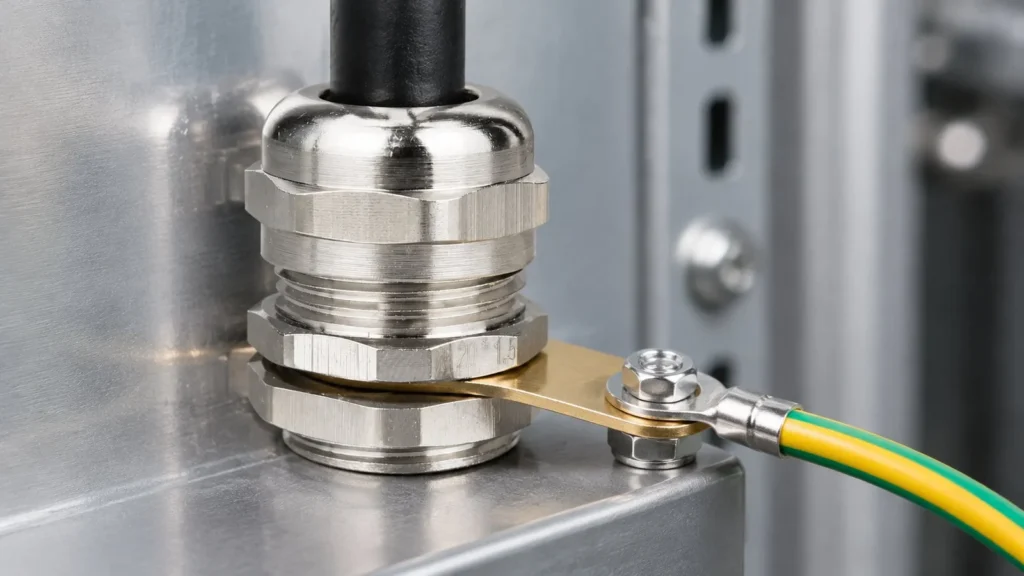
Earth tag
Gives an external conductor a fixed landing point
The electrical design, not the gland material
Named line with stud size
Shroud or boot
Covers the dome nut against exposure or touch
UV, washdown, or a specific touch requirement
Named line with bore and length
Adapter or reducer
Joins a gland thread to a different entry thread
An existing hole in the wrong thread system
Separate line, both threads written out
Shortfalls run in both directions. A site that ordered locknuts for every entry ends up with a box of unused nuts when half the entries turned out to be tapped; a site that ordered none ends up drilling holes larger than the drawing to make a nut fit. The cost of the mistake is never the part — it is the second delivery, the drilled-out hole, or the entry left without a washer because nobody wanted to stop work.
What Ships Inside the Gland
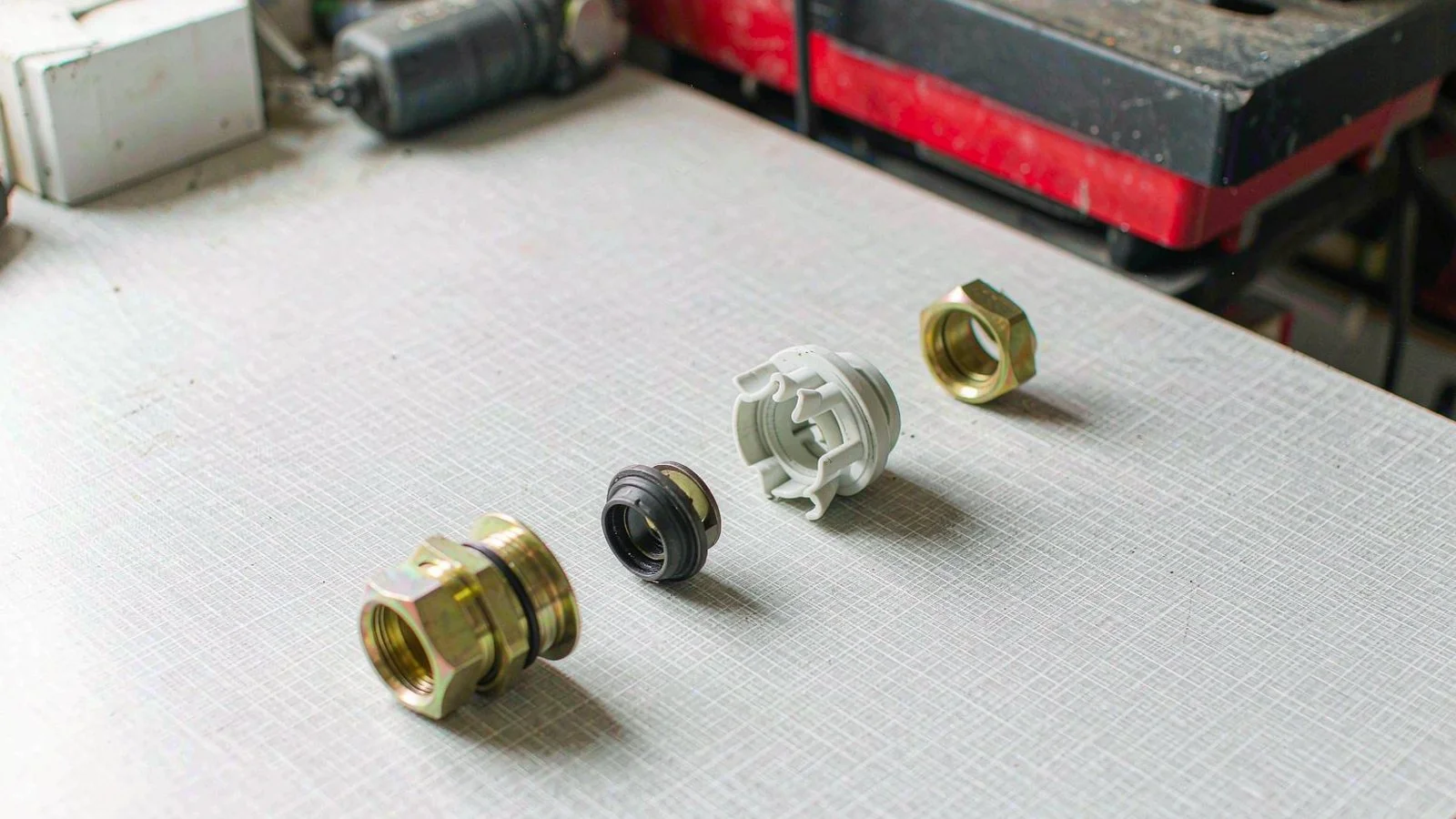
A gland arrives as an assembly of four to six parts that have to stay together: body, sealing insert, clamping claw, dome nut, and on most designs the panel washer. The claw and insert are matched to the cable range, so they are never ordered separately in normal service — but they are also the two parts that are lost when a gland is dismantled on site and the old insert is thrown away with the packaging. Because the assembly is what the price covers, the honest question is not “what does a gland include” but “which of the five accessories is inside this particular article”.
What arrives as one article: body, insert, claw, dome nut. The panel washer may or may not be in the same bag.
Locknut and Washer Status
These two are the parts most often assumed and least often confirmed. On a stainless series the locknut is normally supplied with the gland, in the same grade and finish — on the PG19 version the page commits to a complete assembly of body, insert, dome nut, washer and locknut, with the nut included at the 300-piece MOQ. On the EMC series the same four items are offered as options that can be placed on a single order line rather than being automatic. Between those two positions sits every other series, which is exactly why the quotation has to say. A one-word answer is not enough either: “included” should mean the same material grade and the same finish as the body, because that is what the tested configuration used. On a stainless entry with a plated nut, the joint between the two is the first place corrosion appears, and it appears under the nut where nobody inspects it.
Checklist by Gland Series
The table below records what each series page actually commits to. It is a starting point for the enquiry, not a substitute for the packing list — read the column that matters to your installation and put the answer in writing before the order is released.
Series
Body and insert
Porca de fixação
Sealing washer
Quoted as options
Brass standard, metric and PG
Nickel-plated brass body, nylon clamping parts, NBR seals and O-rings
In the fitting sequence at every size
In the fitting sequence at every size
Earth tag, shroud, long thread
Nylon standard
PA66 body and dome nut, one-piece or split body
Counted in the thread budget
Counted in the thread budget
Long thread, elbow, flexible body
Nylon long thread
Same body, 15 mm thread instead of 9 mm
Counted in the thread budget
Counted in the thread budget
Earth tag in series with nut and washer
Stainless PG series
304 or 316L body, silicone insert, nitrile washer
Supplied in the same grade
Nitrile, supplied
Earth tag, shroud
Stainless with locknut, PG19
Complete assembly stated on the page
Included at 300 pcs per size
Included
Earth tag, shroud
EMC, 360° contact
Nickel-plated brass or stainless, shield contact ring
Option, one order line
Option, one order line
Locknut, earth tag, washer, shroud together
Stainless Ex, PG42
304 or 316L body and locknut, silicone insert, nitrile washer
Supplied in the same grade
Nitrile, supplied
Certificate package per size and thread
Parts Never in the Box
Some parts are so routinely assumed that buyers stop ordering them. None of these arrive with a standard gland, and each one stops an installation when it is missing.
Ask for inserts as a separate line, matched to the cable range
Thread adapter
The existing hole is “the same size”
Order by both thread designations, never by diameter
Barrier compound
Hazardous-area glands are assumed to include it
Ordered per gland with a shelf life on the tin
Spanner or setting tool
Nothing else in the trade arrives without one
Buy separately; hex sizes differ between body and nut
Counting a Sample First
Before a bulk release, open one bag and count against the quotation. This takes a few minutes and catches every packing error that would otherwise be found on site. Count the parts per gland for the size being ordered, check that the locknut and body take the same spanner, confirm the locknut spins on by hand for its full length, and confirm the washer bore passes the thread. A sample of one or two pieces is enough for this check, and it is the same sample that verifies the thread against the actual enclosure — worth doing before a 1,000-piece run is committed. Record what the count should have been, size by size, and keep the sheet with the order. The most common discrepancy is not a missing accessory but a substituted one: the right quantity of the wrong washer bore, which passes a visual check and fails on the panel.
Material and Thread Matching
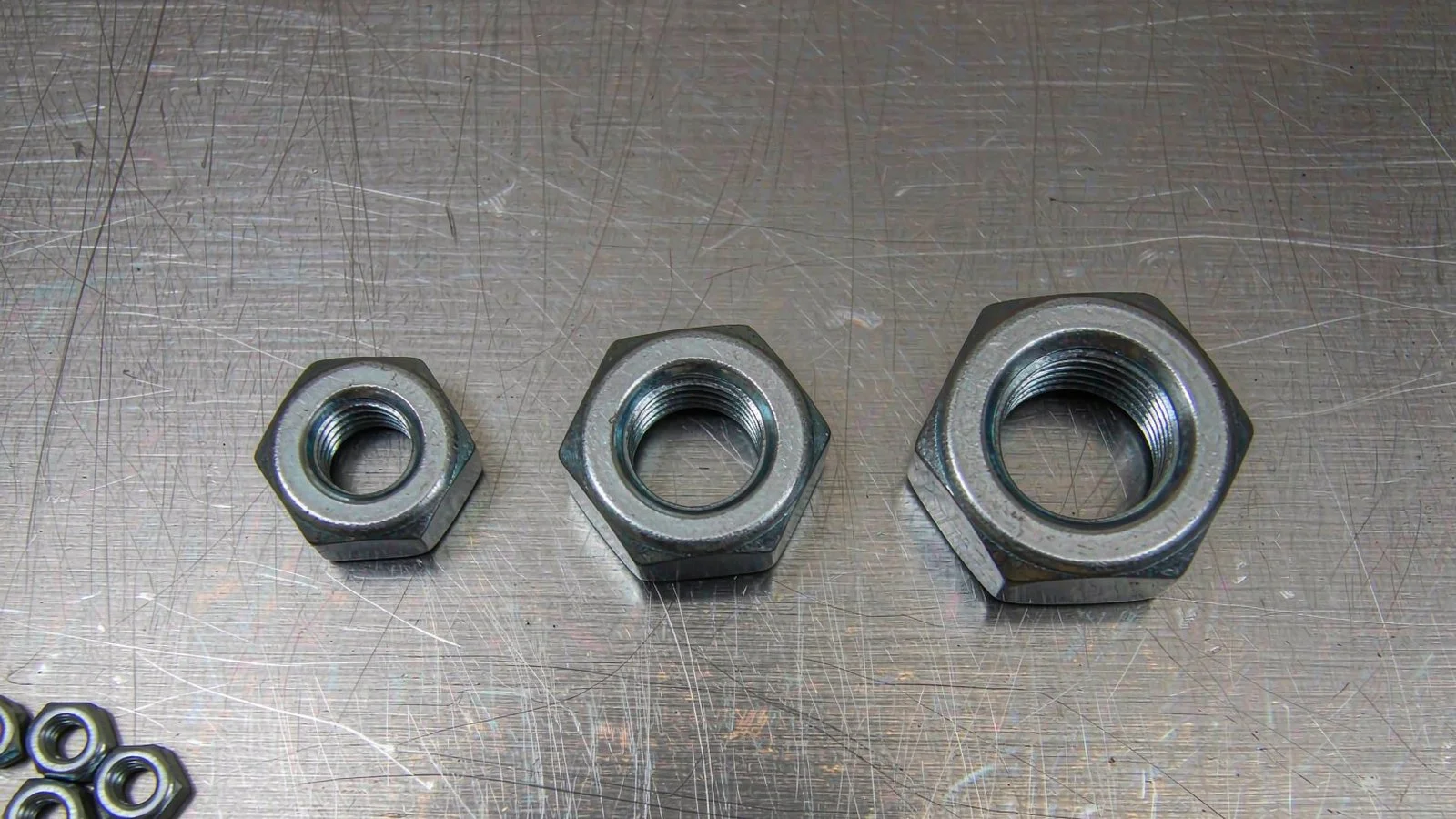
A locknut is not a generic fastener. It has to match the body in thread class and in surface treatment, because the two are in contact for the life of the installation. A plated nut on a stainless body is a galvanic pair waiting for a wet environment; a nut from a different supplier can be a different hex, so the fitter needs a second spanner mid-installation. At PG19 the body is 24 mm across flats and the locknut 27 mm, which means a substitute nut is often a substitute tool as well. The same rule applies to the washer: nitrile on a stainless gland is the standard pairing, and swapping it for a different compound changes the temperature limit of the whole entry, not just of one part.
Same series, three sizes. A substitute nut is usually a substitute spanner as well.
Spares and Field Kitting
Accessories are consumed at a different rate from glands. Washers and inserts are replaced at every re-termination, tags and shrouds are fitted once and stay, and locknuts disappear into tool bags. A commissioning kit built on that pattern — one spare washer and insert per ten entries, tags and shrouds to the drawing, no spare locknuts — covers the first year without creating a shelf of unmatched parts. Kit by size and thread, never by “assorted”, because a mixed bag of 20 mm rings will contain both M20 and PG13.5 bores and nobody will be able to tell them apart later.
Purchase Order Lines
The order document is the only place these decisions survive. Four lines are enough, and each one prevents a specific failure.
Line
Write it as
Prevents
Gland
Series, thread with pitch, cable range, material, quantity
A gland that fits the cable but not the hole
Included parts
“Complete assembly per packing list” or the named parts
Assuming a locknut that was never quoted
Accessories
Each part with its own size: tag stud, shroud bore, washer bore
A bag of parts that fit nothing
Documents
IP report, material certificate, Ex certificate per size
A delivery that cannot be accepted on site
Standard sizes are 1,000 pcs per size for brass and nylon with no tooling charge, and trial orders from 100 to 500 pcs are enough to run the sample count above. Stainless and hazardous-area versions start at 300 pcs per size. Where an entry needs more than a gland and a nut, the type selection guide sets out which body style suits which cable, and the six components of a waterproof gland explains what each part in the assembly does. On our EMC series the four accessories can be quoted together, which is the arrangement that removes the most risk: one order line covering locknut, earth tag, washer and shroud, matched to the body. For hazardous-area work the accessory question is not commercial at all — the certificate covers a tested configuration, and the Ex-certified assembly is the configuration to order.
Frequently asked questions
Does a cable gland come with a locknut?
It depends on the series. Stainless glands normally ship with a matched locknut, EMC glands list it as an option on one order line, and brass and nylon series should be confirmed on the quotation. Never assume it from a photograph.
What is the difference between a gland accessory and a gland part?
A gland part is required for the gland to work at all — body, insert, claw, dome nut. An accessory is fitted for a specific installation reason: a locknut for a clearance hole, a tag for earthing, a shroud for exposure.
Can I buy accessories separately later?
You can, but the thread and material must match the original gland exactly. Buying a locknut from a different source usually means a different hex, a different thread class or a different plating, and all three cause problems at installation.
How many spare washers should I keep?
Roughly one per ten entries at commissioning, matched to each thread size in use. Washers are replaced whenever a gland is re-terminated, so the spares are consumed during the first maintenance cycle, not during installation.
Do accessories change the IP rating?
The rating belongs to the tested assembly, not to the gland alone. Adding a washer the body was not designed for, or omitting one it needs, changes the entry; the IP68 grade only holds for the configuration that was tested.
The earth tag is the cheapest part in the earthing chain and the one that quietly disqualifies the assembly. How to size it, the thread it consumes, and why a nylon gland cannot carry one.
Entre os muitos acessórios de conexão elétrica, o prensa-cabo à prova d'água desempenha um papel fundamental. Ele não apenas protege os cabos que penetram nas carcaças dos equipamentos contra a entrada de água e poeira, mas também aumenta a segurança e a confiabilidade gerais do sistema. A compreensão dos materiais e das aplicações dos prensa-cabos à prova d'água ajuda os engenheiros e compradores de setores como o industrial, o de comunicações, o [...]
If you work in shipbuilding, port equipment, offshore systems, or coastal control cabinets, you already know one truth: water always wants in. Salt fog, vibration, UV, washdown, and tight panel space turn a simple cable entry into a surprisingly expensive weak point. That is why marine waterproof cable glands matter so much in real projects. […]
Usamos cookies para aprimorar sua experiência de navegação, veicular anúncios ou conteúdos personalizados e analisar nosso tráfego. Ao clicar em "Aceitar tudo", você concorda com o nosso uso de cookies.