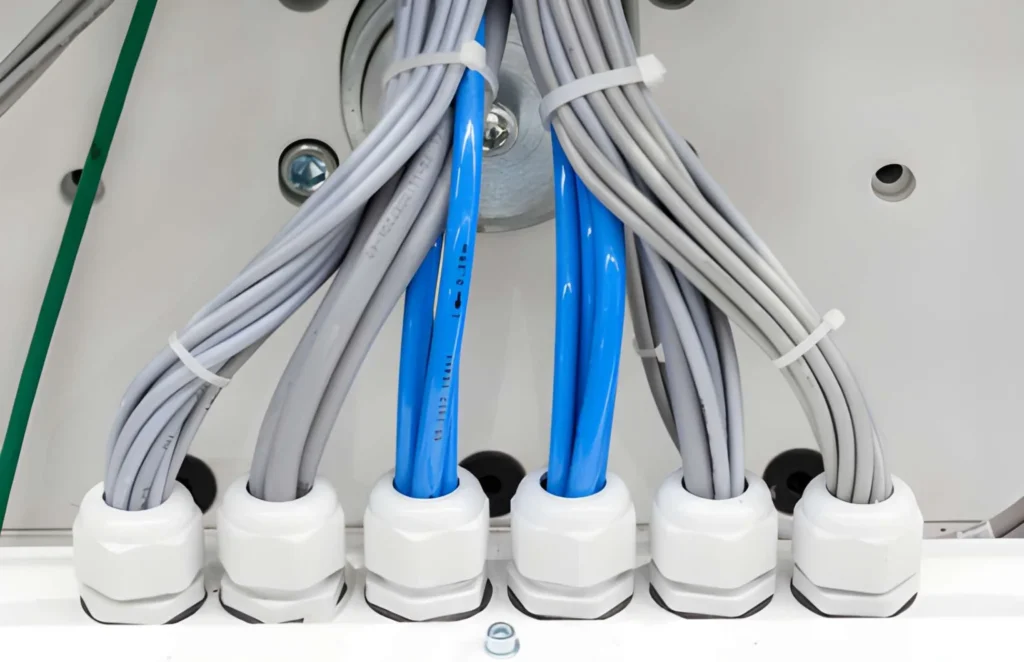
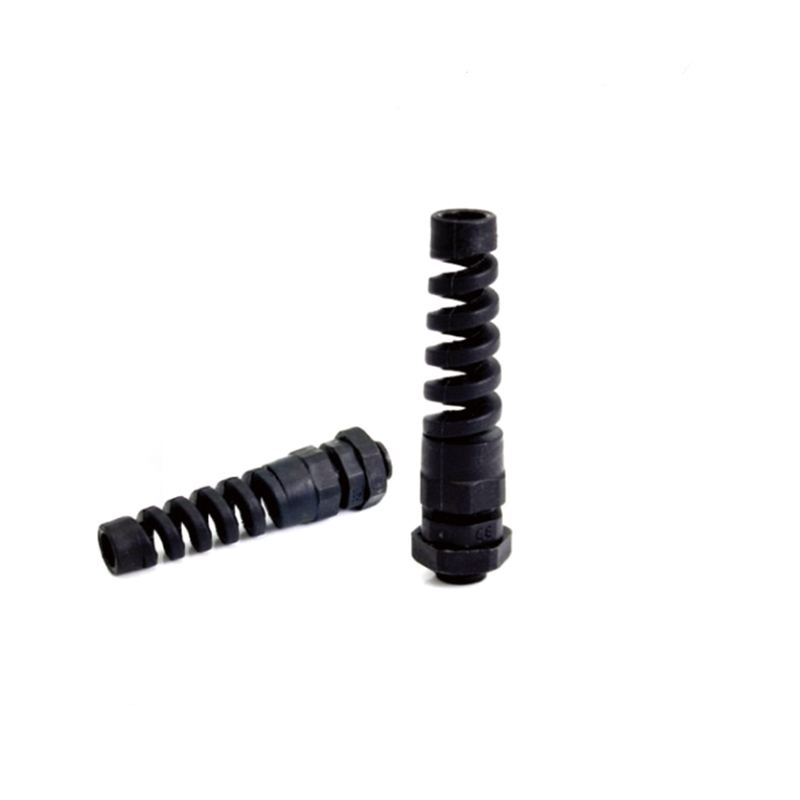
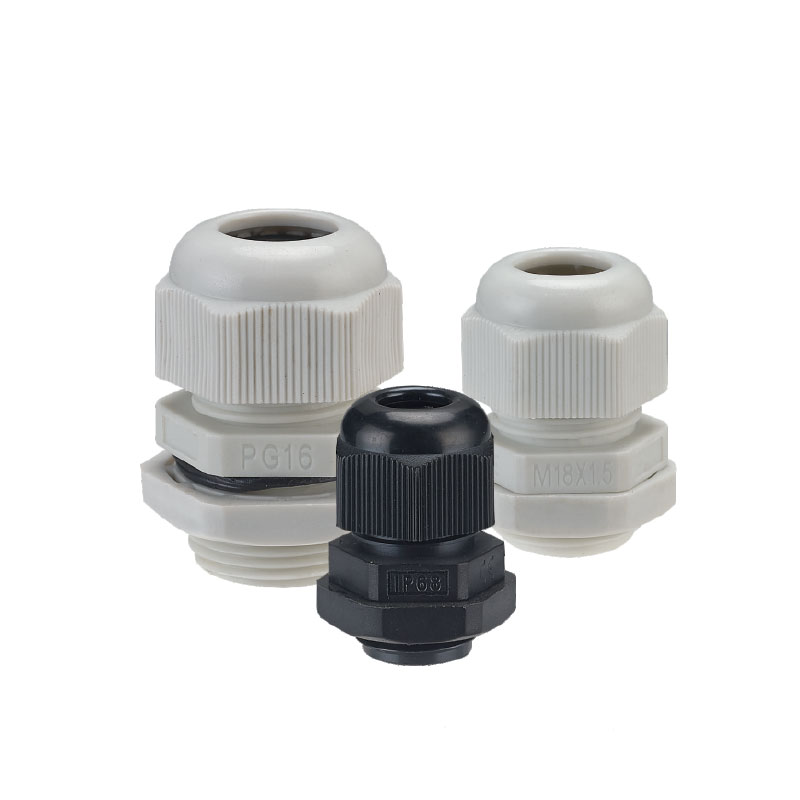
A waterproof nylon prensaestopas is not just a small cable accessory. If you choose the wrong thread, cable range, or sealing structure, the result can be water ingress, loose cable entry, failed enclosure protection, and repeated field maintenance. This article explains how waterproof nylon cable glands work, where they fit, how to compare options, and what buyers should confirm before sending an RFQ.
What Is a Waterproof Nylon Cable Gland?
A waterproof nylon cable gland is a cable entry component used to fix, seal, and protect a cable where it passes through an enclosure wall, junction box, control cabinet, or equipment housing. In practice, it does three jobs at the same time: cable retention, environmental sealing, and basic strain relief.
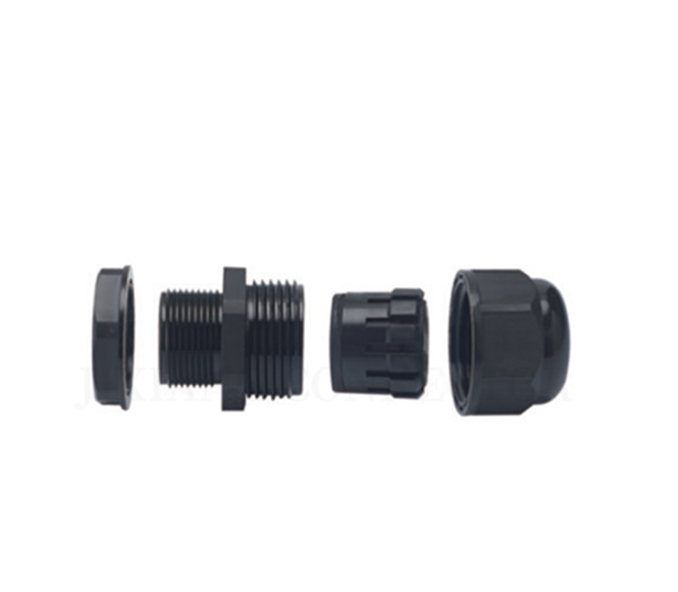
Unlike a simple plastic fitting, a waterproof nylon cable gland is built around a sealing structure. It usually includes a nylon body, sealing insert, locknut, and clamping section that compresses around the cable outer jacket when installed correctly.
This matters because the cable entry point is often one of the weakest parts of an enclosure. Even when the cabinet body is well designed, a poorly selected gland can let water, dust, or cleaning moisture enter through the cable opening.
Tipo
Función principal
Typical Strength
Main Limitation
Waterproof nylon cable gland
Seals and secures cable entry
Good balance of sealing, insulation, weight, and cost
Seals and secures cable entry with stronger mechanical body
Better for higher mechanical demand or special environments
Higher cost, more weight, and not always necessary
How IP68 Waterproof Protection Actually Works
Many buyers search for an IP68 waterproof nylon cable gland as if IP68 Protection Rating alone guarantees field performance. In reality, IP68 depends not only on the gland design, but also on cable diameter match, installation quality, thread fit, and sealing compression.
The most common mistake is treating IP68 as a label instead of an installation result. If the cable outer diameter is smaller than the clamping range, the seal may never compress correctly. If the panel hole or thread is wrong, the enclosure side can also become the leakage point.
A practical way to evaluate waterproof performance is to check the full sealing path:
Cable jacket to inner seal.
Gland body to enclosure entry point.
Thread and locknut fit.
Compression after tightening.
What IP68 Means in Practice
IP68 usually indicates protection against dust ingress and suitability for water exposure under defined conditions. That does not mean every IP68 Protection Rating Sealing Cable Gland the same way in outdoor cabinets, washdown areas, or long-term wet environments.
Buyers should also remember that the enclosure, cable jacket, sealing material, and installation torque all affect the final result. A good gland cannot compensate for a wrong cable size or a damaged mounting surface.
Check Item
What to Confirm
Common Failure
Cable outer diameter
Falls within the clamping range
Seal does not compress fully
Thread and mounting hole
Match exactly
Loose fit or leakage at entry
Tightening condition
Enough compression without over-tightening
Seal damage or unstable fixation
Enclosure surface
Flat and clean contact area
Water path remains around the fitting
Nylon vs Metal Cable Gland
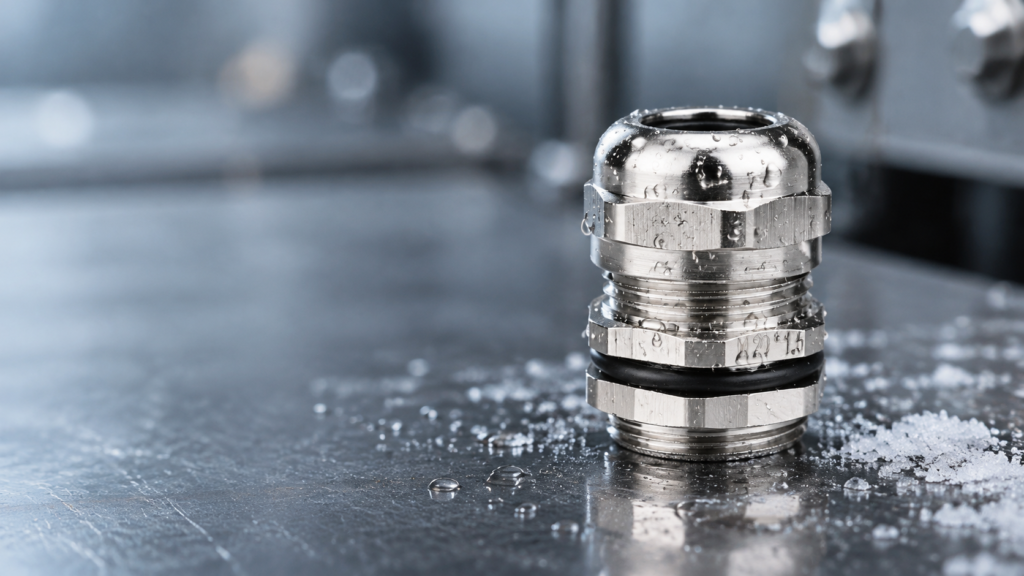
A nylon gland is not automatically better than a metal gland, and a metal gland is not automatically more professional. The right choice depends on environment, mechanical demand, corrosion exposure, insulation needs, and project budget.
Prensaestopas de nylon are often preferred when buyers need a lightweight, corrosion-resistant, electrically non-conductive option for control boxes, automation equipment, junction boxes, and general industrial enclosures. They also make sense when large-volume procurement, export assembly, or OEM equipment cost control matters.
Metal cable glands deserve more attention when the installation faces stronger mechanical abuse, stricter EMC considerations, or harsher industrial conditions where body strength matters more than weight or insulation.
Factor
Prensaestopas de nylon
Prensaestopas metálico
Selection Logic
Peso
Lighter
Más pesado
Nylon is easier for many cabinet and equipment builds
Resistencia a la corrosión
Good in many humid settings
Depends on metal type and finish
Nylon often works well in wet or corrosive air
Electrical behavior
No conductor
Conductor
Nylon is useful where insulation is preferred
Resistencia mecánica
Moderado
Más alto
Metal may fit tougher mechanical conditions
Coste
Usually lower
Usually higher
Nylon often fits bulk procurement better
When Nylon Is the Better Choice
Nylon is often the better choice when the main task is sealing cable entry in control cabinets, distribution boxes, automation equipment, outdoor housings, or OEM assemblies without unusual mechanical stress. It is also practical for distributor, wholesaler, and exporter projects that need stable batch supply, lighter packaging, and cost control.
When Metal Should Be Considered
Metal becomes more suitable when the application needs stronger mechanical protection, possible shielding-related considerations, or compatibility with tougher industrial environments. In those cases, buyers should compare not just price, but the full operating condition of the equipment.
How to Select the Right Size, Thread, and Clamping Range
This is where many procurement mistakes happen. Buyers often search by product name, but the actual selection depends on three checks: cable outer diameter, thread standard, and mounting hole compatibility.
If your cable is outside the gland’s clamping range, the sealing structure may not work as intended. A search phrase like “black nylon waterproof cable gland 3-6.5mm dia” reflects a real selection situation: the buyer is not just looking for a black gland, but for a gland that fits a specific cable diameter range.
PG, Metric, and NPT Threads
PG, metric, and NPT are not interchangeable naming styles. They reflect different thread systems, and choosing the wrong one can create installation problems even if the cable range looks correct.
For B2B buyers, the simplest rule is to match the thread standard to the enclosure hole specification, target market standard, and existing design drawings. This matters especially for OEM, ODM, and white label projects where assembly consistency affects production efficiency.
Tipo de hilo
Typical Use Context
What Buyers Should Check
PG
Common in some legacy or existing equipment designs
Existing panel hole and replacement compatibility
Métrica
Very common in industrial equipment and export projects
Exact thread size and installation drawing
NPT
More common in certain regional standards
Taper thread compatibility and market requirement
How to Match Cable Outer Diameter Correctly
Do not estimate the cable size visually. Confirm the actual cable outer diameter, then compare it with the gland’s clamping range.
This is the point where a standard product specification can help. Buyers comparing thread options or clamping ranges can review a standard nylon cable gland example to narrow the correct size before RFQ.
What Buyers Should Confirm Before RFQ
Before contacting a manufacturer, supplier, or factory, confirm:
Cable outer diameter range.
Thread standard and size.
Panel hole or enclosure wall opening.
Indoor or outdoor use.
Exposure to UV, water spray, oil, dust, or cleaning process.
Quantity, customization need, and whether OEM or private label service is required.
Contact us to discuss the right waterproof nylon cable gland for your application, cable size, and installation requirements.
Where Waterproof Nylon Cable Glands Are Commonly Used
A prueba de agua Prensaestopas de nylon estándar makes the most sense in places where cable entry is exposed to moisture, dust, vibration, or repeated operating conditions that can loosen an unprotected cable opening.
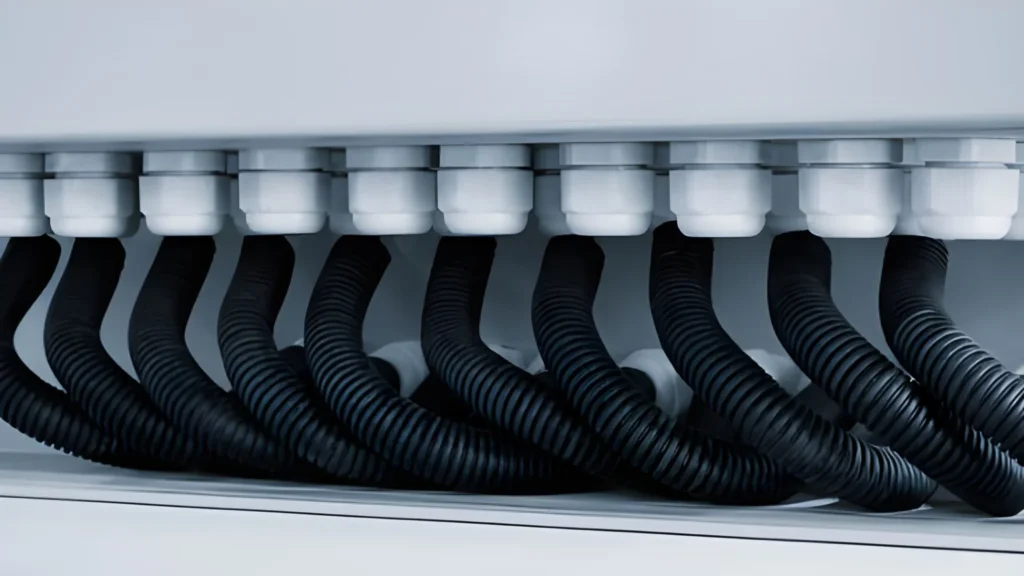
Typical examples include control cabinets, junction boxes, compact electrical enclosures, equipment housings, and outdoor boxes where cables enter from the side or bottom. In these cases, the gland is not only holding the cable, but protecting the enclosure rating at the entry point.
Control Cabinets and Junction Boxes
In panel building and electrical assembly, a gland is often selected to keep dust and moisture out while preventing cable movement around the entry hole. This is common in control cabinets, terminal boxes, small power distribution housings, and machine-side electrical enclosures.
Outdoor and Wet Environments
Outdoor monitoring boxes, pump control units, fan systems, communication housings, and solar-related electrical boxes often need better cable entry sealing than a basic fitting can provide. In such cases, buyers may compare different options within a broader prensaestopas estanco category before deciding on thread type, body material, and cable range.
OEM Equipment and Export Projects
For OEM equipment manufacturers, bulk buyers, distributors, and China sourcing teams, the gland also affects assembly speed, product consistency, and after-sales risk. A part that looks minor can create repeated claims if the cable range is inaccurate or the supplied batches are inconsistent.
A waterproof gland can still fail if the wrong assumptions are made during buying or installation. The most common issue is not product defect, but mismatch between the gland, the cable, and the actual field condition.
One example is ordering by thread size only. That may solve the panel-hole problem while creating a cable sealing problem because the cable outer diameter does not fit the compression range.
Another common mistake is assuming black nylon always means outdoor suitability. In reality, buyers should check whether the material and sealing components match the expected UV exposure, moisture condition, and service environment.
Mistake
What Happens
How to Prevent It
Only checking thread size
Cable does not seal properly
Confirm cable OD and clamping range together
Assuming all IP68 glands work the same
Field leakage still occurs
Review seal path and installation condition
Ignoring installation environment
Material aging or sealing decline
Match gland material to actual exposure
Buying only by unit price
More assembly and after-sales issues
Evaluate consistency, QC, and supply capability
Why Water Still Enters the Enclosure
Water often enters because the weak point is not the gland body itself, but the wrong cable size, an uneven mounting surface, poor tightening, or a mismatch between thread and enclosure. This is why selection and installation have to be treated as one process.
How to Evaluate a Waterproof Nylon Cable Gland Supplier
For commercial research, choosing between a manufacturer, supplier, exporter, wholesaler, or trading company should not stop at price comparison. Buyers should ask whether the supplier can maintain consistent dimensions, stable sealing quality, batch traceability, and communication clarity for export orders.
A stronger evaluation method is to look at manufacturing control, certification background, and project support. In your case, GHX presents itself as a professional cable gland manufacturer focused on R&D, production, and sales, with ISO9001 and IATF 16949 certifications and an emphasis on cable gland quality control and production management.
What Buyers Should Check
When comparing factories or suppliers, check:
Whether the company has stable production and QC process.
Whether it supports OEM, ODM, custom packaging, private label, or white label supply.
Whether it can handle bulk purchase and repeat orders consistently.
Whether technical data is clear enough for engineering confirmation.
Whether export communication and lead time control are reliable.
Why Process Control Matters More Than Unit Price
A low quoted price may not help if thread dimensions drift, seals vary between batches, or product data is incomplete. For distributors, brand owners, and project procurement teams, repeatability often matters more than saving a small amount on the initial unit cost.
If you are comparing suppliers for bulk orders, it is usually more useful to confirm cable range, thread standard, application environment, and customization needs first, then ask for samples or a quotation based on those details.
Supplier Check Point
Por qué es importante
Preguntas
Quality system
Supports consistency
How do you control dimensional stability?
Export capability
Reduces communication and delivery risk
What export markets do you already supply?
OEM/ODM support
Helps brand or project adaptation
Can you support custom packing or marking?
Batch consistency
Reduces field complaints
Are samples and mass production controlled the same way?
Send your inquiry now for technical support, product details, or a quotation based on your project needs.
PREGUNTAS FRECUENTES
What does IP68 mean for a waterproof nylon cable gland?
It usually means the gland is designed for dust-tight sealing and water protection under defined conditions. In actual use, performance still depends on the right cable diameter, correct thread fit, and proper installation.
How do I choose the correct cable diameter range for a nylon cable gland?
Measure the cable outer diameter and match it to the gland’s clamping range. If the cable is too small or too large for that range, the sealing function can be reduced or lost.
Is a nylon cable gland better than a metal cable gland for outdoor use?
Not always. Nylon can work well outdoors in many enclosure applications, but the better choice depends on UV exposure, mechanical demand, environmental conditions, and project requirements.
What is the difference between PG and metric cable gland threads?
They are different thread standards and should not be treated as interchangeable. The correct choice depends on the enclosure protection, drawing requirements, and the market standard used in the project.
Can black nylon waterproof cable glands be used in UV-exposed installations?
They can be used in some outdoor conditions, but buyers should not assume color alone proves UV suitability. The better approach is to confirm material suitability and intended environment with the supplier before bulk procurement.
What should buyers check before ordering waterproof nylon cable glands in bulk?
Check cable diameter range, thread type, enclosure hole size, installation environment, required quantity, and any OEM or labeling requirement. That reduces sizing mistakes, communication delays, and batch mismatch in production orders.
Los prensaestopas estancos desempeñan un papel vital en el mercado B2B. Ya sea usted fabricante de equipos solares, contratista de ingeniería naval o integrador de automatización industrial, la elección del prensaestopas estanco adecuado afecta directamente a la durabilidad y seguridad de sus dispositivos. ¿Se ha preguntado alguna vez qué es lo que mantiene nuestros cables sanos y salvos, incluso bajo fuertes lluvias [...]
Nickel plating is a barrier and a hard surface, not a change of material. How thickness, process and salt spray claims actually read, where plating fails on site, and when to move to stainless instead.
If you work in shipbuilding, port equipment, offshore systems, or coastal control cabinets, you already know one truth: water always wants in. Salt fog, vibration, UV, washdown, and tight panel space turn a simple cable entry into a surprisingly expensive weak point. That is why marine waterproof cable glands matter so much in real projects. […]
Utilizamos cookies para mejorar su experiencia de navegación, publicar anuncios o contenidos personalizados y analizar nuestro tráfico. Al hacer clic en "Aceptar todo", aceptas el uso que hacemos de las cookies.