Packing is the last line on a quotation and the first thing to go wrong at the destination. Two numbers decide all of it: how much one gland weighs, and how much space it takes. Carton count, freight per piece and whether the count is right at the far end all follow from those two, and neither is printed on most datasheets.
This page sets out how to establish both without a published figure, how a carton quantity is actually calculated, and which packing lines belong on the purchase order rather than in a claim six weeks later. The cost side of the same order is on the cable gland price guide.
Four Levels of Packing
A purchase order says “packing” and means at least four separate decisions. They fail in different ways, and only one of them is usually written down.
Level
What it fixes
What goes wrong without it
Unit — one gland
The insert keeps its shape, the thread stays undamaged
Inserts take a permanent set under load in a loose sack
Inner — poly bag per size
Count integrity and size separation
Mixed cartons, short count at the end of a build
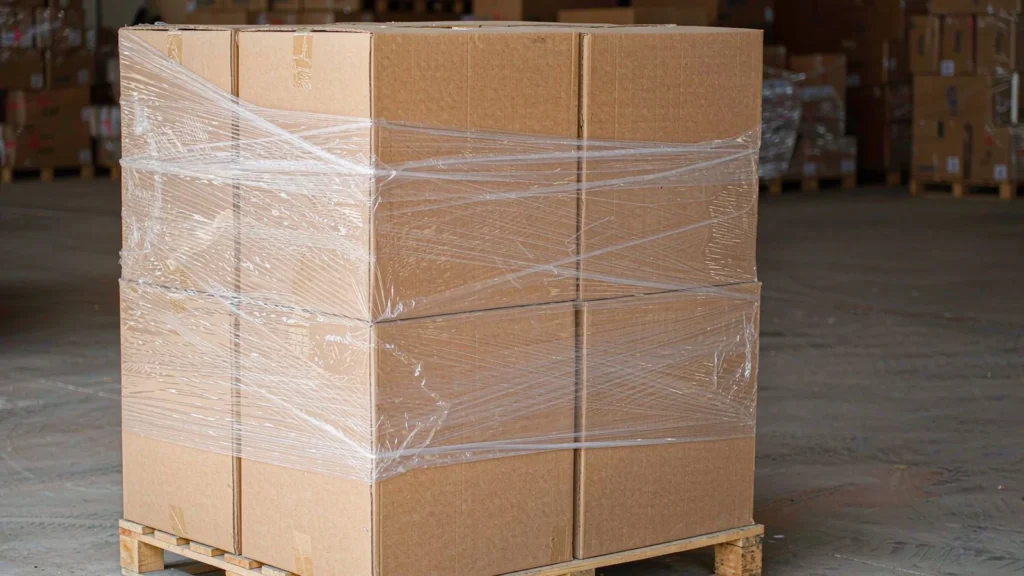
Outer — export carton
Handling weight and corner protection
Over-weight cartons refused at the dock; crushed corners
Unit load — pallet
Mechanical handling and stacking strength
Hand-unloaded containers, collapsed bottom layer
Marking
Identification on receipt and at customs
Cartons opened just to find out what is inside
Bagging per size is a packing instruction rather than an added cost item, and it is the single line that prevents the most common dispute: a bulk carton of small glands that arrives two hundred pieces short after a month on site.
One bag, one size. The instruction costs a handling step, not a material cost, and it makes the count checkable at goods-in.
Weight of One Gland
There are three legitimate ways to get the number, and they answer slightly different questions. Confusing them is how freight gets under-quoted.
الطريق
What it gives
When it can be trusted
Supplier datasheet
Usually a packed gross weight per carton
Only if it separates net part mass from carton and bag
Weigh ten pieces
Part mass to within a gram
Always; it is the only figure measured on the actual goods
Hex envelope calculation
An upper bound on the brass blank
Brass only — a moulded nylon body is not turned from hex bar
Carton gross weight on the packing list
The number the forwarder will use
At shipment, for freight; not for design
The envelope calculation is worth knowing because it needs no supplier input: a brass blank is a hexagonal prism whose across-flats equals the body spanner size, so volume is 0.866 × across-flats squared × cut length, and brass runs at 8.4 g/cm³. It over-states the part, because the blank ends at the shoulder and everything turned away leaves as swarf, but it ranks sizes correctly and it makes an implausible datasheet figure obvious at a glance.
Carton Quantity Calculation
A carton quantity is not chosen. It is whichever of two limits is reached first: the handling weight of a full carton, or the usable volume inside it once the packing has taken its share.
Pieces per carton = the lower of (carton weight limit ÷ gross mass per piece) and (usable volume × fill factor ÷ unit envelope). The fill factor for loose glands in a bagged carton sits near a third to a half of the box; the rest is air and bag.
العنصر
Brass M20
Nylon M20
Gross mass per piece (assumed input)
60 g
12 g
Carton 600 × 400 × 300 mm, 72 L
20 kg limit
20 kg limit
Pieces allowed by weight
333
1,666
Unit envelope (cm³)
10.5
18.9
Usable volume at 0.35 fill (cm³)
25,200
25,200
Pieces allowed by volume
2,400
1,333
Carton quantity that binds
330 — weight
1,300 — volume
The inputs above are a worked example, not a catalogue figure: substitute the measured mass and the supplier’s carton dimensions and the arithmetic gives the real count. What the example demonstrates is that the binding limit swaps between materials at the same nominal size.
Weight Limits and Volume Limits
نحاس at 8.4 g/cm³ is dense enough that a small carton reaches a sensible handling weight long before it is full. نايلون at about 1.14 g/cm³ is roughly seven times lighter for a similar envelope, so its cartons fill up on space and never approach the weight limit — which means nylon pays far more freight per piece relative to its own piece price, even though the freight per kilogram looks cheaper.
The relationship also turns over at the top of the brass range. At M50 and above, glands are bulky parts and the export carton is sized per piece rather than per weight, so the count is set by how they stack, not by what they weigh. Per-size dimensions, including the body thickness that sets the envelope, are listed on the standard nylon series and the brass range separately.
Carton Specification
Seven lines cover almost everything that goes wrong in transit. They belong on the order, because a supplier cannot guess which ones matter for a sea freight or an air freight shipment.
السطر
What to state
لماذا هذا مهم؟
Board grade
Five-ply export grade for sea freight
Stack strength at the bottom of a container
Internal dimensions
Length × width × height in millimetres
Carton count, CBM and the freight calculation
Gross weight
Maximum per carton, and the actual figure
Manual handling limits and dock acceptance
Inner packing
Poly bag per size, quantity per bag
Count integrity through to the build stage
Closure
Water-activated tape, two strips
Cartons that open in transit lose pieces, not labels
Marking
Size, quantity, batch, protection rating
Receiving without opening every box
Pallet
Heat-treated timber, 1200 × 1000 footprint
Phytosanitary compliance on wood packaging
Corrugated board is the one line that is usually absorbed by the supplier. It shows up only when the carton count is high, which is another way of saying that small, light, expensive parts are the ones whose packing cost is invisible in the piece price.
Pallet and Container Loading
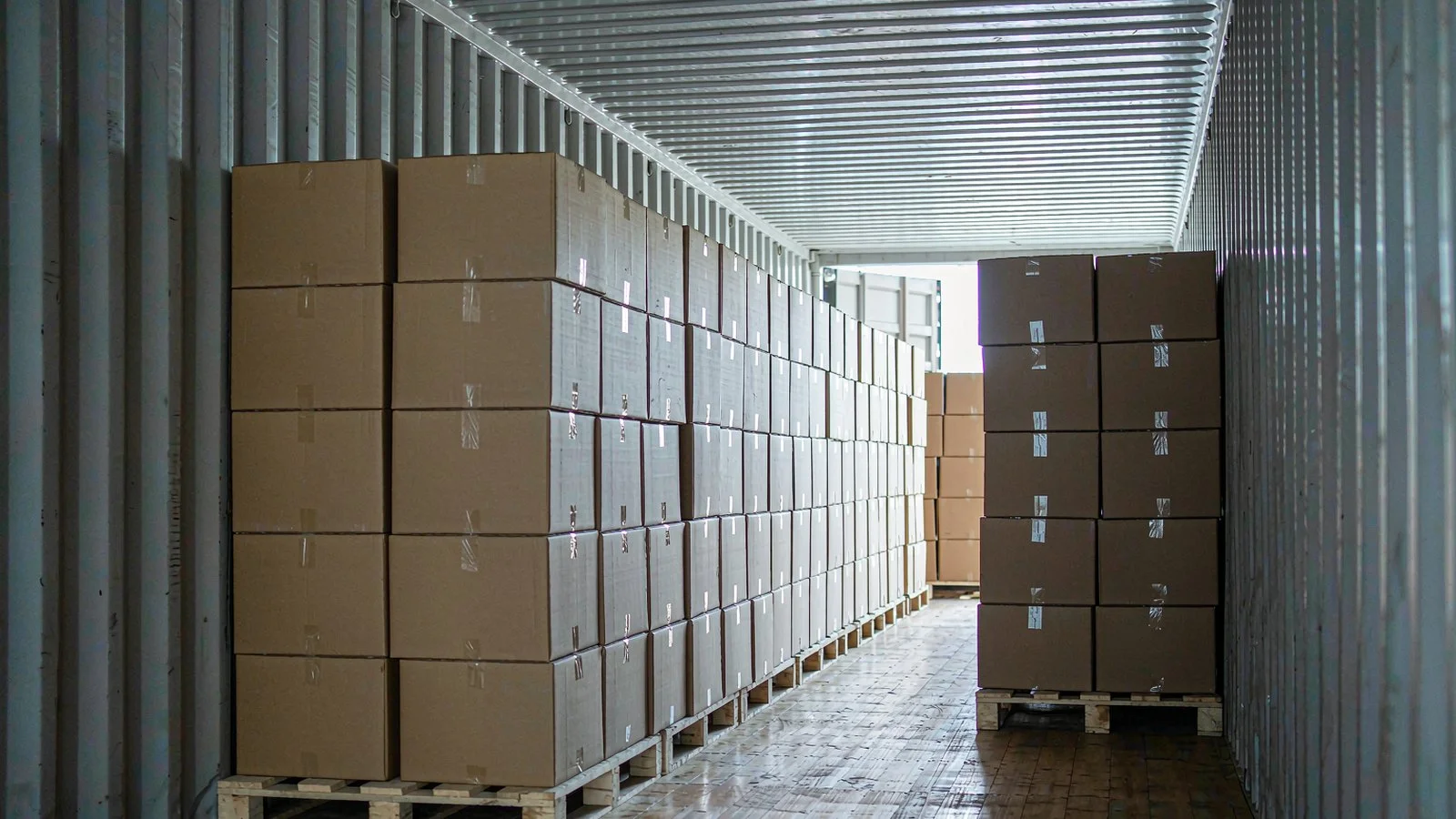
Container freight is bought in cubic metres, so the figure that matters is cartons per pallet times pallets per container — not the weight. A 1200 × 1000 pallet at 1.8 m including the pallet itself holds about twenty-four cartons of 600 × 400 × 300, and a 20 ft container takes ten such pallets, or twenty if they are single-stacked and the height allows.
That is a rough envelope, and it changes with stack height and pallet pattern. What does not change is the ordering: agree the carton dimensions before the freight is booked, because the difference between a 300 mm and a 400 mm carton height is a third of the container.
A container is filled by volume, not by weight, which is why a taller carton costs freight even when the piece count has not changed.
Packing That Protects the Seal
The fragile part of a cable gland is not the metal. It is the elastomer insert, which is designed to be compressed once and hold that compression for years; a carton stacked three high for six weeks applies a compression nobody designed for, and the insert comes out with a set that shows up as a leak at commissioning.
Two habits prevent it. Keep the glands in their bags so the load is shared by the bag rather than borne by a single insert, and keep the cartons within the gross weight stated on the order so the bottom layer is not carrying more than the board was specified for. Dome nuts with a coarse thread can also be dented on the crest, and a dented crest is a thread that will not start cleanly on site.
Packing Instructions for the Order
Write the packing lines into the purchase order rather than the email thread. The minimum useful set is: bag per size, quantity per bag, quantity per carton, carton dimensions, gross weight, pallet type and marking text. If locknuts and washers are supplied, say whether they are bagged with the body or separately, because a locknut loose in a carton of M20 bodies is the most common cause of a mixed count — the accessories guide sets out which parts are normally packed with the gland and which are not.
The order line also decides what can be checked at goods-in. Five lines of packing instruction give the receiving team five checkable facts; “export packing” gives them none.
Export Marking and Documentation
Shipping marks on the carton and the classification on the paperwork have to agree, because customs reads both. Cable glands are not classified as a single article — النحاس, stainless و نايلون bodies do not fall in the same heading, and the HS code guide covers the difference and what supporting evidence a broker will ask for.
Marking should carry the size, the quantity in the carton, the batch or date code and the protection rating, because those four are what the receiving inspection checks. Anything else on the label is decoration. Wood packaging needs heat treatment and the ISPM 15 stamp, and every carton needs to survive being handled by someone who has no idea what is inside.
الأسئلة الشائعة
How many cable glands fit in one carton?
It depends on which limit is reached first. For small brass sizes the 20 kg handling weight is reached long before the box is full; for the same nominal size in nylon the carton fills on volume. The calculation is carton weight limit divided by gross mass, against usable volume divided by unit envelope.
What does one cable gland weigh?
Weigh ten and divide. That is the only figure measured on the actual goods, and it takes a minute. A datasheet figure is only useful if it separates the packed gross weight from the net part mass, and a geometric estimate from across-flats gives an upper bound rather than a shipping weight.
Why do nylon glands cost so much to ship?
Because freight is bought on volume, and nylon at about 1.14 g/cm³ is roughly seven times lighter than brass for a comparable envelope. A carton of nylon glands fills up long before it reaches a useful weight, so the freight per piece is a much larger share of a much smaller piece price.
Should glands be bagged individually?
Rarely. Bagging per size is the useful level: it keeps sizes separate, protects the inserts from each other and makes counting possible. Individual bags are specified for retail packaging or for parts that will be issued one at a time from a stores counter.
Does packing change the lead time?
It can. Bulk cartons ship from stock programmes, while bagging per size, individual labelling and printed retail headers add a handling step after production. State the requirement at enquiry so it is priced and scheduled with the goods rather than added at shipment.
اكتشف غدد إدخال الكابلات المتينة المقاومة للماء مع تصنيف IP68 المصنوعة من النحاس النايلون أو الفولاذ المقاوم للصدأ للاستخدام الآمن في الهواء الطلق والاستخدام البحري
يُثبت المقياس PG21 الكابلات التي يتراوح قطرها بين 13 و18 ملم عبر فتحة يتراوح قطرها بين 28.3 و28.5 ملم، بينما يقع منافسه الحقيقي على بعد 0.3 ملم عند المقياس M28. ولماذا يُعد السؤال “PG21 مقابل M20” سؤالًا خاطئًا، ولماذا تُحدد الفتحة — وليس الكابل — هذا الحجم.
تلعب غدة الكابلات المقاومة للماء دورًا حيويًا في الصناعات الحديثة، خاصةً في قطاع الأعمال التجارية. فهي لا تضمن فقط إحكام غلق وصلات الكابلات ومنع دخول الماء والغبار، ولكنها أيضًا تعزز السلامة العامة واستقرار الأنظمة الكهربائية. هل تعلم أن التركيب غير الصحيح لغدد الكابلات لا يؤدي فقط إلى تقصير عمر المعدات [...].
نحن نستخدم ملفات تعريف الارتباط لتحسين تجربة التصفح الخاصة بك، وعرض إعلانات أو محتوى مخصص، وتحليل حركة المرور لدينا. بالنقر على "قبول الكل"، فإنك توافق على استخدامنا لملفات تعريف الارتباط.