Search for the HS code of a cable gland and you will find at least five answers, all of them in use by real shippers. That is not because the tariff is ambiguous about cable glands. It is because the tariff never had a heading called cable glands in the first place, so the classification has to be argued from what the article is made of and what it actually does. Two suppliers can ship identical parts under different codes and both be defensible, which is exactly the problem.
This article sets out how the classification is reasoned rather than offering a single number: the material question that decides the chapter, the four copper headings a brass gland can legitimately occupy, one published advance ruling for stainless steel, and the consequences that make the difference worth arguing about. It is a starting point for a customs broker, not a ruling on your goods.
Why One HS Code Cannot Cover Cable Glands
The Harmonized System sorts goods first by what they are made of and only then by what they do. A cable gland has no dedicated heading, so it is classified either as an article of its material or as electrical apparatus, and which of those wins depends on the wording of the heading, the section notes and, in practice, the national tariff line.
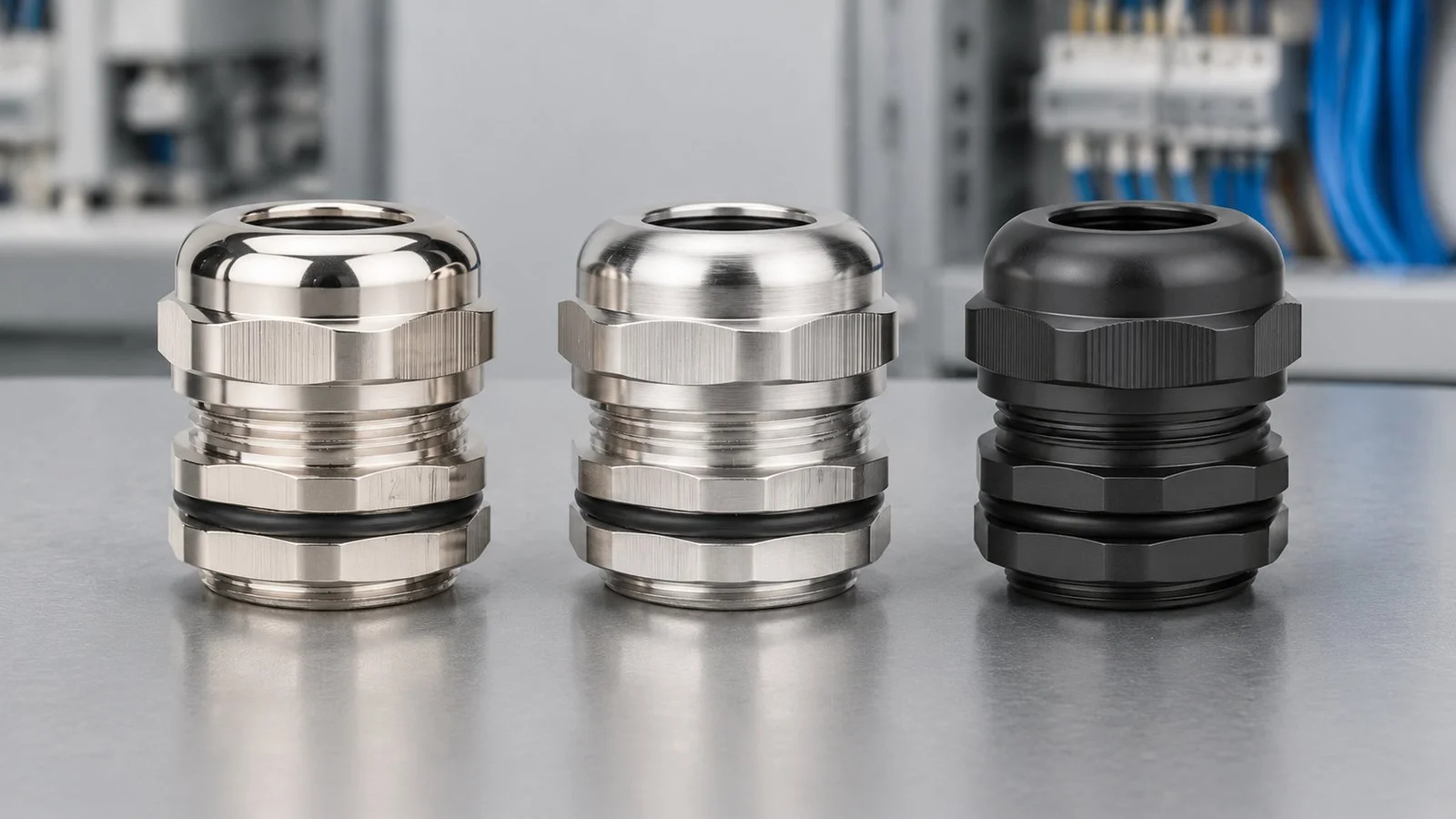
The consequence is structural rather than a quirk of one country. A brass gland, a stainless gland and a nylon gland are the same product in three chapters before anyone has considered their function. Whatever else is true, the first question on the customs entry is the material.
What the Gland Is Predominantly Made Of
Predominant material
Chapter
Headings seen in practice
Comment
Copper alloy: brass, nickel-plated brass
74
7415.39, 7419.80, 7415.33 on parts, occasionally 7412.20
The most contested of the three materials
Iron or steel: 304, 316L, plated steel
73
7326.90, sometimes 7318
Supported by at least one published advance ruling
Polyamide, nylon
39
3926.90
The most consistent of the three across markets
Any material, argued on function
85
8536.90, 8538.90, rarely 8547
Turns on whether the national schedule names cable glands
Note what is not in the table: the IP rating, the thread system, the size and the certification. None of them classify anything. They describe the goods and they belong in the description, but a customs officer is not choosing between headings on the basis of IP68.
Three products, three chapters. The material decides the chapter before the function is argued, which is why one code cannot cover a mixed catalogue.
Brass: The Hard One
Copper alloy glands are contested because the natural heading for small copper hardware is written around fasteners, and a cable gland is a threaded article that is not a screw, a bolt or a nut. It is a body with a nut on it. Depending on which part of that sentence a declarant emphasises, four different headings become arguable.
Heading
What it is written for
How a gland lands there
Where the argument breaks
7415.33
Screws, bolts and nuts of copper
The locknut or dome nut imported as a separate part
It is a part, not the complete gland
7415.39
Other articles of the copper fastener family
Complete gland treated as a threaded copper article
A gland is not a fastener, so the fit is loose
7419.80
Other articles of copper, not specified elsewhere
Machined body that is not a fastener and not electrical
A residual heading, so it applies only after the others fail
8536.90
Electrical apparatus for making connections to circuits
Where the national schedule carries a cable gland line
A gland seals and retains; it does not make a connection
Two observations follow. The first is that a complete gland and the nut that goes with it are not necessarily the same code, which is why shipment records show gland nuts under a fastener subheading and complete glands under a residual one. The second is that 7419.80 and 8536.90 are answers to different questions, and a supplier who has always used one of them is not necessarily wrong; they may simply be working to a national line that does not exist in your tariff book.
Stainless Steel: A Published Ruling Exists
For stainless steel the argument is shorter, because there is a published advance ruling to point at rather than an inference. A double-seal stainless cable gland with an inner seal assembly, armour cone, clamping ring and outer seal nut was ruled to fall under 7326.90 as an article of iron or steel, at the MFN rate applying to that line, on the reasoning that the heading covers iron or steel articles produced by turning, milling or assembly and not more specifically covered elsewhere.
That type of ruling is worth more than any blog’s opinion because it is specific, documented, and has a stated reasoning you can show a broker. It also demonstrates the mechanism: the classification followed the material and the method of manufacture, not the fact that the part is used in an electrical installation.
Nylon: Consistent Across Markets
Moulded polyamide glands are the least disputed of the three. The material heading for other articles of plastics absorbs them cleanly, and the trade data reflects it: for cable glands as a whole, the single most used code in Chinese export records is the plastics residual line, by a wide margin over any metal heading.
That is a statement about volume rather than correctness. Nylon outsells metal by piece count, so the plastics heading dominates the shipment statistics. It does not mean a brass gland belongs in Chapter 39, and a supplier quoting one code for a mixed-material catalogue is describing their own product mix rather than the tariff.
Where the Electrical Headings Fit
Chapter 85 becomes relevant when the article is genuinely part of electrical apparatus, or when the national tariff names it. Some schedules carry a dedicated sub-line inside 8536.90 for cable glands and similar entries, and where that line exists it usually beats a generic residual heading, because a specific provision outranks a general one.
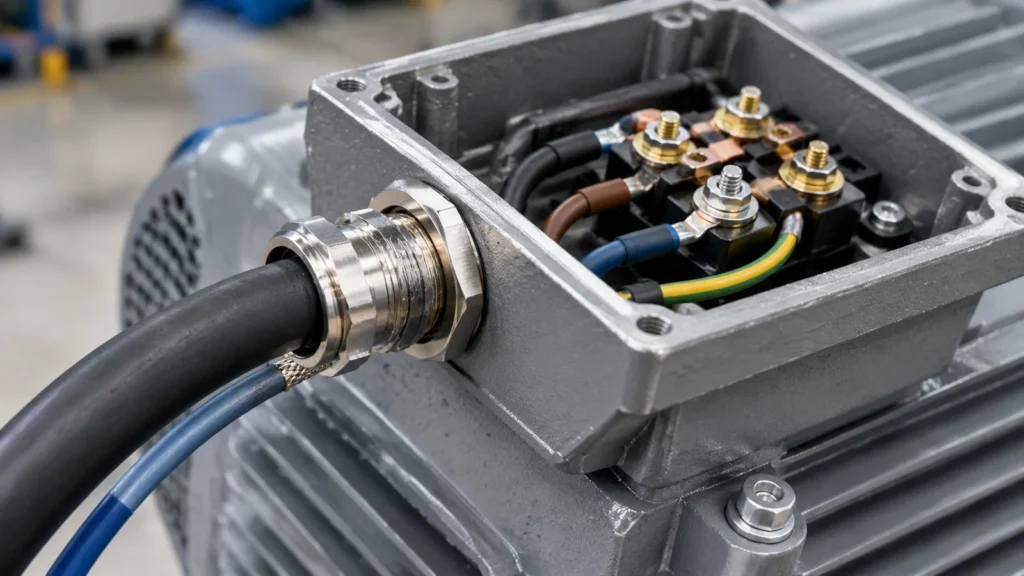
Where no such line exists, the electrical argument is weaker than it looks. A gland does not make or break a circuit. Its electrical role is bonding and, in EMC versions, shielding, both of which are addressed in cable gland earthing. That is a real function and it is not a connection, and a broker who classifies it as connecting apparatus should be able to explain which line in the schedule names it.
What Changes If You Pick the Wrong One
Consequence
Why the heading decides it
Duty rate
Chapters carry different MFN rates; the spread between a metal residual line and an electrical line is often several points
Preferential origin
An origin claim is made per heading, so a certificate issued against one code does not support an entry under another
Additional duties
Where a market has imposed measures on copper articles, those measures attach to Chapter 74 headings
Document consistency
Invoice, certificate of origin and packing list must agree with the declared code
Retrospective correction
Reclassifying after entry exposes the importer to duty plus penalty, not just the duty
The third row is the one that catches buyers by surprise. Duties aimed at a material attach to the chapters that material occupies, so the same brass gland can carry a different total burden depending on which heading it is declared under. That cuts both ways: it makes a considered classification more valuable, and it makes a careless one an audit risk rather than a saving.
Six Facts That Make a Classification Defensible
A customs broker needs six things to argue a line, and all six come from the drawing rather than from the catalogue photo. The material and its grade. The method of manufacture, machined or moulded or cast. Whether the item is a complete gland or a component. The function in one sentence, including whether it makes an electrical connection. The thread, because it identifies the article as threaded rather than as a plain fitting. And the country of origin with the document that supports it.
Nothing on that list is a marketing claim. A description that says “IP68 waterproof EMC cable gland, CE certified” and stops there gives a broker nothing to work with, which is how a shipment ends up on whichever code the forwarder used last.
What the Invoice Should Say
Field
What to write
Why it matters
Material and grade
Nickel-plated brass, alloy designation, or 316L
The chapter is chosen by material first
Función
Cable entry, sealing and retention; bonding on EMC versions
Separates a material heading from an electrical one
Construction
Complete gland with locknut and washer, or body only
Complete articles and parts can split across headings
Hilo
Metric, PG or NPT, with size and pitch
Identifies it as a threaded article
Intended use
Entry into an electrical enclosure, with the equipment type
Supports an electrical heading if that route is claimed
Origin
Country, with the certificate that supports any preferential claim
A mixed consignment crosses several chapters, so classification belongs on each line of the entry rather than on the shipment as a whole.
Getting It Right Before the First Shipment
For a high-volume part, apply for a binding ruling in the destination country before the first shipment rather than after the first query. A ruling is specific, it is documented, and it removes the argument from every subsequent entry. The cost is administrative and the alternative is a retrospective assessment with penalties attached.
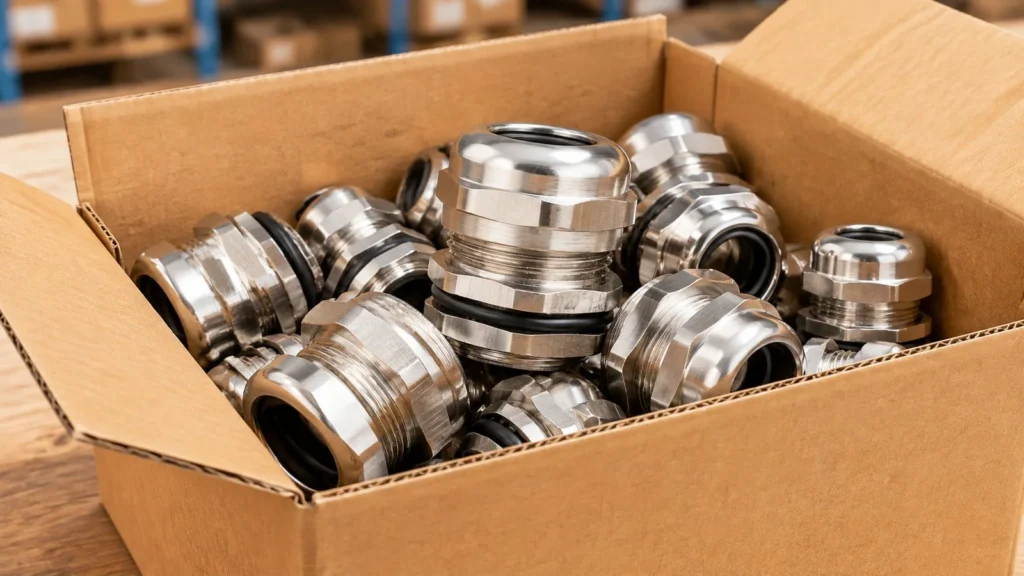
For a mixed consignment, classify per line rather than per shipment. A carton containing brass, stainless and nylon glands crosses three chapters, and a single code on the entry is wrong for two thirds of it. Where the goods are consistently supplied together, ask the broker whether a single residual line with an itemised description is acceptable in that market; in some it is, and in some it is the beginning of the problem described above.
What is the HS code for a brass cable gland?
There is no single answer. Complete brass glands appear in trade data under 7415.39 and 7419.80, brass gland nuts under 7415.33, and some schedules place them in 8536.90 where a cable gland line exists. The material decides the chapter, so a brass gland is a Chapter 74 question first.
What is the HS code for a nylon cable gland?
The plastics residual heading, 3926.90, in most markets. It is the least disputed of the three materials, and it is also the largest single code by shipment volume for cable glands overall.
What is the HS code for a stainless steel cable gland?
7326.90 in at least one published advance ruling, on the basis that it is an article of iron or steel produced by turning and assembly. Confirm the national sub-line, since the six-digit heading is only the start of the entry.
Does the IP rating affect the HS code?
No. IP ratings, thread systems, sizes and certifications describe the goods but do not classify them. A description built from those alone gives a broker nothing to work with.
Can a supplier and a buyer use different HS codes for the same gland?
Yes, and it is common. Each side classifies for its own customs territory, and national tariff lines diverge below six digits. What matters is that the code on each entry is defensible with the material, construction and function of the goods.
Si se dedica a la protección de cables, sabrá lo importante que es un buen prensaestopas impermeable. Piense en los prensaestopas como los héroes anónimos que mantienen su cableado a salvo del agua, el polvo y los daños mecánicos. Especialmente en entornos industriales difíciles, la elección del tipo adecuado de prensaestopas puede [...]
A motor terminal box is the least forgiving entry on site: rotor vibration, winding heat, thin cast aluminium threads and a warranty boundary. What to measure before choosing a motor cable gland.
Brass cable glands for harsh industrial environments: the load combinations that break them, where brass beats stainless, what heavy duty really changes, and the upgrade order.
Utilizamos cookies para mejorar su experiencia de navegación, publicar anuncios o contenidos personalizados y analizar nuestro tráfico. Al hacer clic en "Aceptar todo", aceptas el uso que hacemos de las cookies.